Tag: Resilience

  • Promoting and Sustaining a Growth Mindset in Online Classrooms – Faculty Focus

    Promoting and Sustaining a Growth Mindset in Online Classrooms – Faculty Focus

    Source link

  • The Resilience of First-Generation Students

    The Resilience of First-Generation Students

    First-generation students face a host of barriers when they go to college. Terms commonly used in higher ed, like “registrar,” “provost” or “credit hours,” can be mystifying. They’re confronted with a hidden curriculum, a set of unspoken expectations for how to succeed. And they don’t always know whom to turn to for help.

    But a new book, the first of three volumes on first-generation students, argues that these challenges, while important to study, offer an incomplete picture of who these students are.

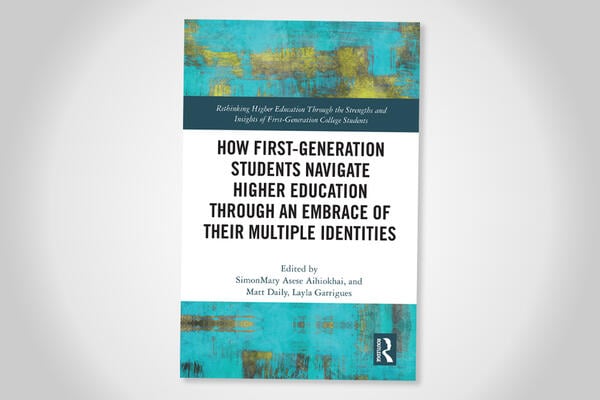
    The book, How First-Generation Students Navigate Higher Education Through an Embrace of their Multiple Identities (Routledge, 2025), explores in a series of essays how different identities, including class and race, affect the first-generation student experience and how these students bring unique strengths and assets to the classroom. It also offers guidance to different types of institutions about how to support first-generation students better and highlights colleges and universities that have modeled successful reforms and programs. Some of the essays are research-focused and written by scholars, while others are personal narratives authored by first-generation college graduates.

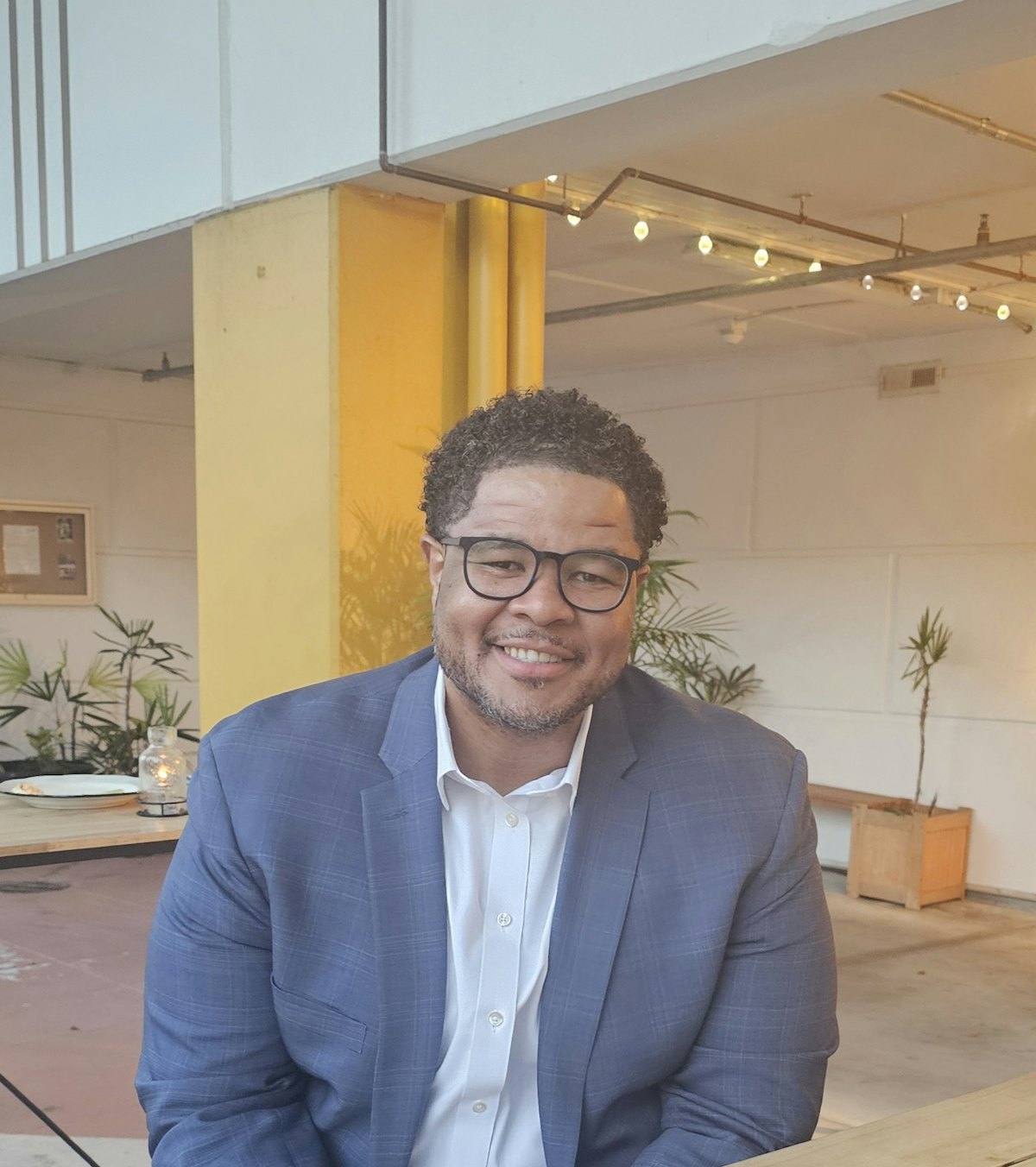
    Co-editor Matt Daily, assistant vice president and dean of students at Idaho State University, spoke with Inside Higher Ed about why he’s working to change the discourse around first-generation students, alongside his co-editors, University of Portland professors SimonMary Asese Aihiokhai and Layla Garrigues. The conversation has been edited for length and clarity.

    Q: A theme throughout this book is the idea that too often first-generation students are studied through a deficit-focused lens that emphasizes their challenges rather than their strengths. Why was it important to you to shift that approach?

    A: For a long time, when we’ve talked about first-gen, we’ve come in thinking that they need something, that they are lacking something, and I think for the last five years or so, that narrative has really shifted. It’s shifted from “What are they lacking?” to “What are they contributing?”

    As we were doing a lot of research, as we were having a lot of conversations, while that’s something that we’re talking about at our respective institutions and starting to do more across the United States and beyond, it’s still something that we have to keep reminding ourselves is important—to really focus on the assets or the strengths that students bring.

    And so, we thought that when we were dreaming up this project—and that’s a fun story, too, about how it came to be—we thought it really needs to be based in the strengths. And it would be so nice for practitioners, scholars, students, that they could find that the real theme and the real foundation and the real thread through it is the strengths of first-gen students, and what it is that they’re really bringing to these college campuses.

    Q: What are some of the strengths and assets of first-generation students that you think are too often overlooked?

    A: There’s really no one-size-fits-all for first-gen. Each first-gen student is as unique as the experience itself. I think that’s actually one trap we fall into: We really have to take each case as they come in and create that space.

    In the introduction, I mention how Tara Yosso talks about her “community cultural wealth” model and cultural capital and talks about this idea of [ties to] family and culture [as] strengths. I think those are strengths that are really important. Laura Rendón also talks about—what Yosso was saying and building on it—this idea of ganas or perseverance, which is that ability to really develop inner strength and becoming self-reliant and determined to succeed.

    There’s something about first-gen students where they are just so gritty. They really stick with it, and they are so inspiring. I love the way that they’re able to sort of exist in multiple worlds. I could have my college world, my peers, but also a lot of first-gen students work, so I can have that world, and then my family, and then maybe I’m from a different country. Really understanding how to exist in all those different worlds and being able to do that successfully, I think that is an incredible strength.

    My biggest criticism of first-gen students is that they are too humble. They don’t think that their story is worthy enough to share. They don’t think it has worth, and I think they’re dismissive [of themselves], and that is my biggest criticism. Because for the amount of different first-gen students we have, there are an equal amount of stories that come with them. We need to encourage them to really share those and know that they have worth.

    Q: Going off of that, you interspersed scholarly research with student narratives in this essay collection. Why was it important to you to include both perspectives?

    A: That was really intentional. I think that the student voice gets ignored if we’re just talking about theory. If we’re going to talk about students, we need to hear their voice, right? It needs to be expressed, and we need to really have that authentic perspective. And so that was something we talked about early on in the project … especially in the last chapter, where we wanted to have students themselves or recent graduates share.

    And I think that there’s equally as much value in terms of the research as to what the students are expressing, as they’re sort of in the moment, so to speak. I think [it’s important] even just coaching students that their voice matters … that you can go up and talk to senior administrators … and there’s value in that. I think that was one thing we were really hoping with this anthology was that maybe a graduate student or an undergraduate student could read that and feel inspired and go, “Oh, you know, this is something I could see myself doing,” and really get that spark, too. Gosh, if that happened, I would be over the moon.

    Q: The book also emphasizes taking an intersectional approach to serving first-generation students. What does that mean to you? And what do you think we miss when we don’t factor in these students’ other identities?

    A: I think that’s just so important. And I have to kind of acknowledge my own positionality. I’m a white male. And I am not first-gen. I will never understand a lot of these identities because I don’t identify that way. And so that’s something that’s been a part of my own journey. That was why it was so important with Simon, myself and Layla—we’re just a diverse collection. And then when you get to the other contributors, they do identify in a variety of different ways.

    But that being said, identity is so important to the cultural richness of our college campuses. When I talk to college students, we talk about their gender identity, and sometimes that can be fluid; we talk about their racial or ethnic identity. We talk about their sexual identity, even their academic identity—meaning, what does it mean when I go from high school to college? Does that academic identity come into question when I experience different levels of success? But I think a lot of those identities we talk about, they’re visible. A lot of those identities we can see.

    First-gen is not one of them. And that’s what’s interesting about being first-gen is you will never see physically if someone is first-gen. And so, it’s sort of this hidden identity. In a lot of my experiences working with first-gen students, I almost feel that I’ve outed them. When I explain to them, “Hey, I think you’re first-generation based on the information you’ve given me,” there’s a variety of different reactions, because it’s sort of a later-emerging identity. It’s not maybe one that’s discussed when a student is in elementary school, [with someone telling them], “Hey, you’re going to be a first-generation college student.” And so, I think what’s interesting is when you talk about this identity with other first-gen students, it’s one of many that intersect. But I think the timing of the intersection is so different for every first-gen student, if that makes sense.

    In my previous role in Portland, when I would reach out to say, “I think you’re a first-gen student,” a lot of students would say, “No, I don’t want to be a first-gen student,” because they would think me identifying them in that way is something that’s negative. And part of that was really [making] that shift and going, “I am identifying you based on your mom and dad’s educational history or parent or guardian, and you might be first-gen—and that is so beautiful. Let’s celebrate that.”

    I can be first-gen and a male or first-gen and African American male or I can be first-gen and a student athlete. What do those identities mean? Just being able to share what that identity means is so important for why a student is in college.

    And I think that they forget that even as they graduate and go on to whatever’s next after college, to share that they’re first-gen is something that graduate schools, employers, what have you—they really value that.

    It’s been programmed for so long that this is such a deficit. We’re working really hard at institutions to say, “Yeah, share that out—because of those qualities we talked about, this makes you a valuable part of this community.”

    Q: I thought it was interesting that multiple chapters described how first-generation students can feel isolated from campus life, but also that campus life made them feel isolated from their home lives and families. How do you see the role of family and community for first-generation students’ success, and how do you think higher ed institutions can better account for that?

    A: We assume that for first-gen students, when they go to college, that their families are behind it 100 percent, and that is not always the case. I think a lot of times the person that’s the most in favor of them going to college is themselves. And there’s a lot of, you know, “Why don’t you just work at the store?” The argument to convince others to go to college sometimes falls on the first-gen student, and we forget that. And so that kind of carries on through the experience, [family] going, “Why do you need to go to these programs?” or “Why do you need to go abroad?” It’s sort of having to be the explainer and the decoder for college life, and that is a lot for one student.

    And so, I think that there is some push and pull with families sometimes, because the family wants to be supportive, but they don’t know how to be supportive strategically. In talking to a lot of families, I’ve coached them, saying, “Hey, you can just call your daughter or son and just say, ‘I love you. I support you doing this. I don’t know how I can strategically do that, but I want you to know I support you.’” That type of thing just goes so far.

    The thing that’s also interesting, to your point about feeling isolated, we talk about programs and strategies that can really help first-gen students. But also on college campuses, the onus is on the student. You need to go do these things to be successful. And that’s not a first-gen thing, that’s a college thing. And I sort of push back on that. I think it’s on the institution to really create these spaces, to make students feel welcome, that they belong, that they matter, that they feel that they can have some sense of value in these spaces with their peers. And going back to first-gen identity, they’re not going to know who else is first-gen unless we create spaces where the students can find who else among their peer group is. And so, I think you kind of have to shift it a little bit.

    They maybe feel isolated from family because we’re asking them to do a lot of things, such as engage with campus community, campus life, but sometimes that might come into conflict with what they’re being asked to do with their families, whether it’s watch my little brother or go to Grandma’s birthday party. That happened one time where a student really had to negotiate why they had to be on campus that first weekend of school for a lot of the programming [when] they were going to miss Grandma’s birthday. It really puts them in this code-switching situation where they feel isolated because they don’t feel anyone really gets what they’re going through.

    Q: The book also offers a lot of concrete advice on how to better structure services and support for first-generation students and ensure they’re engaged and able to take advantage of opportunities like internships and study abroad. What do you think are some of the practical action steps you want to see higher ed leaders take away after reading this book?

    A: I think high-impact practices are so important.

    We talk so much about what student success means—what does it mean to have a sense of belonging, that type of thing—but I think one thing we really don’t talk a lot about is, other than the degree that the students are seeking, what is it that we really want them to take away from the college experience? What type of skills? Do we want them to think critically? Do we want them to be really engaged with the community? I think that we need to be really intentional on our college campuses about talking about what we want the students to take away, besides the degree. That can really help them in their next step. And I hope that maybe this book can talk a little bit about that. Can we really reimagine what we’re trying to do rather than just be very transactional about the degree?

    I hope that they realize that it’s important to invest in this, that we need to invest in sustainable programs. Because I think a lot of times, what you have happen is different leaders or champions of first-gen work will leave institutions and then these initiatives really fizzle out. So, how can we think strategically that it’s not about the person, it’s about the program and initiatives. I think some of the things we talk about in here are almost a love letter to higher education institutions to say, “Look, this population is worth investing in, and it’s not just a one-size-fits-all, but if we can all adopt something that’s really creative and sustainable, all these students across the United States and even globally can benefit.”

    Source link

  • College business officers survey finds risks, resilience

    College business officers survey finds risks, resilience

    The latest Inside Higher Ed/Hanover Research Survey of College and University Chief Business Officers, released today, reveals concerns about near-term uncertainty and financial sustainability—buoyed by confidence in the longer-term outlook.

    One of the most significant findings is that federal policy uncertainty has created difficulties in conducting basic financial planning as the Trump administration has introduced a flurry of changes impacting federal funding for higher education, international students, how students pay for college and more.

    That uncertainty, experts noted, has had a palpable effect on the sector.

    “Chief business officers like certainty, whether it’s certainty about revenue streams or potential costs,” said Kara Freeman, president and CEO of the National Association of College and University Business Officers. “And right now they just are not getting it and that leads to anxiety.”

    The annual Survey of College and University Chief Business Officers, now in its 15th year, offers insights from financial leaders at 169 institutions in 2025, both public and private nonprofits. Responses were gathered in April and May.

    Amid the uncertainty, about three in five CBOs (58 percent) rate their institution’s financial health as good or excellent, with differences by institution type.

    Pressure Tests

    In last year’s survey, 56 percent of CBOs expected that their institution would be in better financial shape a year later. That number fell to 43 percent in this year’s survey, which asked the same question.

    CBOs who believe their institution will be worse off financially next year cited concerns about the federal policy/funding environment for the sector (82 percent), potential increases to nonlabor operating costs (67 percent), rising labor costs (67 percent) and general economic concerns (62 percent).

    More on the Survey

    On Wednesday, Aug. 20 at 2 p.m. E.T., Inside Higher Ed will present a free webcast to discuss the results of the survey, with experts who can answer your most pressing questions about higher education finance—including how to plan effectively amid the current financial and policy uncertainty. Please register here.

    The 2025 Survey of College and University Chief Business Officers was made possible by support from Strata Decision Technology and CollegeVine.

    Inside Higher Ed’s 15th annual Survey of College and University Chief Business Officers was conducted by Hanover Research. The survey included chief business officers, mostly from public and private nonprofit institutions, for a margin of error of 7 percent. The response rate was 7 percent. A copy of the free report can be downloaded here.

    Larry Ladd, a subject matter specialist at AGB Consulting, noted that colleges are taking a number of measures to protect themselves in the short term, such as delaying building projects, freezing hiring and/or travel, and pulling other levers to protect themselves this coming fall.

    “You’re seeing colleges do everything they can to preserve their liquidity,” Ladd said. “The biggest reason to do that of course is that they don’t know what their fall enrollment will be.”

    Of particular concern, he noted, is the potential for disruption to federal financial aid funds, given mass layoffs at the Education Department, which has raised concerns about disbursement. Just 12 percent of CBOs support the elimination of the department.

    Other possible signs of caution: On deferred maintenance, 63 percent of respondents said that their institution was poised to fund less than a quarter of identified needs in the then-current fiscal year. Some 24 percent said their institution was freezing hiring to control costs for students; another 62 percent said their institution would consider doing this.

    Despite these challenges, respondents were much more confident in their institution’s five- to 10-year outlooks, with 73 percent believing their college or university will be financially stable over the next five years and 71 percent expressing that same level of confidence over the next decade. For reference, in 2024, 85 percent of CBOs were confident in the five-year outlook, and 73 percent in the 10-year outlook.

    Some 11 percent of CBOs say senior administrators at their institution have had serious internal discussions in the last year about merging with another college or university, about the same as last year’s survey. Most of these CBOs indicate such conversations are about proactively ensuring the institution’s financial stability rather than risk of imminent closure.

    Another 16 percent of CBOs report serious internal discussions about consolidating some programs or operations with another college or university. Two in five (42 percent) say it’s highly likely that that their college will share administrative functions with another institution within five years. CBOs in the Northeast, with its relative concentration of institutions, are especially likely to say so, at 63 percent.

    Beyond the Fog

    Ruth Johnston, vice president of NACUBO consulting, said that while business officers may be stressed by the immediate pressures, they are confident in their scenario planning for the future.

    “I think we’ll figure it out. Higher ed, even if it’s slow to change, is resilient. So I expect that we’re going to see new, creative solutions that will help bolster higher education,” Johnston said.

    That said, just 28 percent of CBOs described themselves as very or extremely confident in their institution’s current business model. Another third expressed moderate confidence.

    View online

    Top issues for those CBOs with just some or no confidence in their institution’s business model: lack of diverse revenue streams (64 percent of this group), ineffective cost containment and/or operational efficiency (54 percent), and insufficient cash reserves for “rainy days” or strategic investments (50 percent).

    Tuition discounting is another standing concern. Among all CBOs, more than half (54 percent) are at least moderately concerned about the financial sustainability of their institution’s tuition discount rate; two in 10 (21 percent) are highly concerned. Similarly, 50 percent of CBOs are at least moderately concerned about the sustainability of their institution’s tuition sticker price increases. In both cases, private nonprofit CBOs are the most concerned, by sector.

    Respondents also saw government efforts to influence institutional strategy and policy as an increasing risk to their institutions, with 71 percent registering this as a concern. That number is up slightly from last year’s 65 percent.

    CBOs in 2025 were much less concerned about donor efforts to influence institutional strategy, with 16 percent worrying that this amounts to an increasing financial risk to their college or university.

    Internally, at least, some 81 percent of CBOs agree that they have sufficient agency influence within their institution to ensure its financial stability. Most also report a strong working relationship with their president, and understanding among trustees of the financial challenges facing their institution.

    Survey respondents were notably concerned about federal student aid policies, overwhelmingly picking that as the top federal policy-related risk over the next four years, at 68 percent. Some experts suggest that concerns about other federal policy matters may have been heightened if the survey were administered after the One Big Beautiful Bill Act passed earlier this month. It included major changes for higher education as well as cuts to other public programs that could have downstream effects on the sector.

    “There are both direct and indirect implications of the bill, some of which have not fully been explored by colleges and universities,” Ladd said. “I think of the Medicaid cuts—even those will have implications for colleges and universities.”

    When asked about general financial risks to their institution over the next five years, many CBOs—especially those at publics—flagged state and federal policy changes, along with state and federal funding reductions. Enrollment declines, rising personnel costs and infrastructure and deferred maintenance costs also registered.

    As for what would most improve their institution’s financial situation and sustainability, CBOs’ top responses from a list of options were: growing enrollment through targeted recruitment and improved retention programs; optimizing operational efficiency through process improvement and strategic cost management; and—in a more distant choice—forming strategic partnerships with employers, community organizations and/or other educational institutions. Cutting faculty and cutting staff were especially unpopular options.

    Asked about value and affordability, CBOs largely agreed that their institution offers good value for what it charges for an undergraduate degree (93 percent) and that its net price is affordable (88 percent). Two in three (65 percent) said their institution has increased institutional financial aid/grants in the last year to address affordability concerns.

    The survey also found that CBOs are increasingly using artificial intelligence. Nearly half of respondents—46 percent—indicated that AI helps them make more informed decisions in their role. That number is up from 33 percent in last year’s survey.

    Despite that uptick, respondents at most institutions aren’t all-in on artificial intelligence yet. Only 6 percent reported that their college has made a comprehensive, strategic investment in AI. But many are experimenting: 39 percent of CBOs noted that their institution is in the early exploration phase with AI, while another 28 percent are piloting such tools in select departments.

    “AI is here to stay,” Johnston said.

    Source link

  • Summer 2025 | HESA

    Summer 2025 | HESA

    So. This is the last blog of the academic year. Service resumes Tuesday, 2 September.

    It’s been a long year. I’m pretty tired. How about you?

    This was the year it all kind of came crashing down: not just here in Canda, but everywhere else too. It’s too long to go through and my more faithful readers already know the story. It’s not just in Canada. In France, Australia, and the UK, we saw institutions having similar problems: all these fantastic higher education institutions we’ve collectively built and, quite simply, nobody wants to pay for it. Not through public funds, not through private fees. Nobody wants to pay for it.

    And then there’s American higher education would probably be going through something similar this year, only a greater catastrophe arrived first. I’ll pass over this in silence.

    Here in Canada, the sector is increasingly friendless. Parents and students seem less convinced that universities in particular represent good value. And governments are simply indifferent, not because they dislike universities necessarily, but because they dislike or distrust the knowledge economy universities are built to serve.

    Unfortunately, I think it is going to get worse. Not a single government in Canada released a budget this year which took into account the effects of US tariffs. The result? Allegedly healthy federal and provincial balance sheets are going to get pounded this year and next (and the especially unhealthy ones — BC and Quebec in particular — are going to be especially ugly). Deficits as far as they eye can see. As the saying goes, no one is coming to save us.

    I have no doubt that community colleges will find ways to get through this, because they have so far through this crisis mostly shown themselves to have the ability to do what it takes to right the ship. They might not look too good after another round or two of cuts, and it’s not impossible that a few rural colleges might disappear or shrink radically because what they get from governments and domestic tuition fees just isn’t enough to properly serve their communities, but on the whole, I think they will be ok.

    Universities, on the other hand. Well, that’s a different story.

    About a year ago, I said that the biggest change universities were going to have to undergo in this new financial age was shifting from a belief that every problem had a revenue-side solution to one in which every problem has a cost-side solution. Institutions can no longer solve their short-term problems by just recruiting another hundred international students. They actually have to change the way they do business. They have to change processes. They have to think about production functions and work processes in a way they haven’t before. And they have to do it while trying to pivot to new missions that give them more traction with government and the public.

    I am here to say that I don’t think it’s going so well.

    The message that “there is no one coming to save us” has, thankfully, penetrated fairly deeply in universities. Maybe not quite everywhere (hello, VIU!), but in most places. But what I am not sure has penetrated quite so deeply is the corollary that actual change is necessary. My (admittedly limited) vantage point on the sector is that:

    • I still see universities spending inordinate amounts of time trying to come up with new revenue-based solutions. It’s a habit they have a hard time kicking.
    • Universities are deeply resistant to doing more than the bare minimum of restructuring to meet immediate financial needs. The idea that deep structural change might be necessary remains pretty much anathema. This bare minimum approach means that when the next round of government cuts come – due to recession, or national re-armament or whatever – they are just going to have to cut again, and again, and again. There is very little sign of anyone trying to get ahead of the curve to make both big cuts and big investments in new areas that will help them survive the turmoil.
    • I still hear, distressingly often, senior people in universities utter the worst seven words in all of higher education: “we just gotta tell our story better”. Universities are reluctant to face the possibility that governments and the mass public don’t love them the way they are and that they may need to actually, you know, change.

    We need to stop acting like the research university of today – which in Canada is really only a creature of the 1970s or perhaps 1960s — is eternal. Universities can die, and have done so rather frequently across history. Universities are the product of particular configurations of social and economic forces. And now, at the moment when the western world is basically re-considering the entire post-WWII order, the idea that universities are going to be uniquely immune to change is bananas. Past performance — which I think has been pretty good — is not a guarantee of future safety.

    I am not saying here that universities shouldn’t fight for their own corner: they should! Often more vigorously than they currently do (see my piece on Bill 33, or on how they need to gear up for a fight with Bay Street over whether temporary residents will be international students or TFWs). But they can’t do it by digging in on the status quo.

    And so, I will end the academic year by repeating something I said a few months ago. To survive this coming period, universities are going to need:

    1. Ambition. Don’t waste time doing small things.
    2. Experimentation. The worst possible thing right now is an addiction to “the way we’ve always done things”
    3. Dissemination. No one institution got us into the mess. No one institution is going to get out of it alone, either. Institutions need to commit to sharing the results of their experimentation.

    I know every university in Canada can, if it chooses, commit to those three things. I have faith. And I believe that if they do, our university sector will come out as strong or stronger than any system in the world.

    But any institution that chooses not to commit to them…well, I think they are going to have some issues in the next three years. Serious ones.

    It’s up to us. Rest up this summer. Re-charge. We’re all going to need it in ‘25–’26.

    Source link

  • Negotiating the Future: How HBCUs and MSIs Can Leverage Strategic Enrollment Management for Institutional Resilience

    Negotiating the Future: How HBCUs and MSIs Can Leverage Strategic Enrollment Management for Institutional Resilience

    Dwight SanchezIn today’s hyper-competitive higher education landscape, the challenges facing Historically Black Colleges and Universities (HBCUs) and Minority Serving Institutions (MSIs) are immense. Declining birth rates, changing student expectations, shifting public sentiment, and persistent underfunding place extraordinary pressure on institutions that have long served as lifelines for students of color and first-generation learners. Yet amid these challenges lies an opportunity. By reimagining Strategic Enrollment Management (SEM) through the lens of negotiation theory, HBCUs and MSIs can increase their strategic agility, strengthen institutional partnerships, and yield more robust enrollment outcomes.

    SEM as Negotiation

    Strategic Enrollment Management isn’t merely about admissions and financial aid—it’s about aligning institutional mission with market realities in ways that are both student-centered and data-informed. Viewed through the lens of negotiation, SEM becomes a dynamic system of interdependent relationships: with prospective students, families, community influencers, K-12 schools, alumni, faculty, and internal staff. Drawing from 3D Negotiation: Powerful Tools to Change the Game in Your Most Important Deals by David Lax and James Sebenius, and Essentials of Negotiation by Lewicki, Saunders, and Barry, three principles become especially relevant: setupdeal design, and tactical interaction.

    • Setup involves determining who needs to be at the table, what interests are at stake, and which parties have influence over enrollment decisions. For HBCUs, this means engaging not just students, but parents, clergy, high school counselors, and community mentors who shape the decision-making ecosystem.
    • Deal Design refers to how institutions create value through the student’s experience. It’s not just about price; it’s about crafting offers that resonate emotionally and practically with underserved populations. This might include mentorship programs, clear career pathways, and intentional support systems.
    • Tactics, while often emphasized, should follow—not lead—strategy. Scripts matter less than systems, and strategic enrollment leaders must know when to pivot from persuasive messaging to coalition-building and issue reframing.

    The Cultural Context

    The diversity within HBCUs and MSIs also means that enrollment negotiations occur across varied cultural, economic, and generational dimensions. Chapter 11 of Essentials of Negotiation reminds us that in international and cross-cultural negotiations, assumptions can be fatal. For instance, assuming that all Black or Latino students respond similarly to recruitment strategies ignores regional, familial, and economic differences. Strategic enrollment leaders must develop cultural humility and data literacy to avoid overgeneralization and instead build nuanced personas that guide outreach.

    Equally important is the political environment. Public perceptions of DEI initiatives, affirmative action, and federal funding can dramatically alter an institution’s appeal and perceived legitimacy. In this context, setup becomes a shield—anticipating changes, diversifying recruitment pipelines, and framing the institutional value proposition in ways that transcend political cycles.

    Leadership and Accountability

    Leading enrollment through this lens requires a shift from short-term performance metrics to long-term strategy. Enrollment managers must adopt a leadership posture that blends transformational vision with collaborative execution. As Lewicki et al. note in Chapter 10, multiparty negotiations (such as cross-department SEM committees) require clear roles, shared goals, and open channels of communication. Leaders must foster psychological safety while holding teams accountable to institutional KPIs—bridging the often-siloed worlds of marketing, academic affairs, and student support.

    Professional development plays a critical role here. Too often, enrollment teams are equipped with tactical training (CRM usage, phone scripts, event planning) but lack exposure to systems thinking, data storytelling, or negotiation dynamics. Embedding professional learning communities and creating leadership pipelines within SEM units allows HBCUs and MSIs to develop internal change agents who can sustain innovation over time.

    The Path Forward

    HBCUs and MSIs are more than educational institutions—they are engines of social mobility and cultural affirmation. But to thrive, they must adopt a strategic posture that sees every element of SEM as a negotiation: from brand positioning to student engagement, from financial structuring to internal alignment.

    Consider this: An HBCU looking to boost STEM enrollment among underrepresented males recognizes that traditional outreach and scholarship packages have limited impact. Instead of only increasing merit aid, the institution reframes its offer through negotiation theory. They partner early with high schools, launch a summer bridge program co-led by STEM faculty and alumni, and guarantee every enrolled student a faculty mentor and paid internship by year two. They also engage parents and community leaders as ambassadors—tapping into local trust networks. At the internal level, they align academic and student affairs teams through shared enrollment metrics and regular scenario planning meetings, increasing accountability and cohesion.

    This isn’t just marketing—it’s “setup” and “deal design” in action. It expands the scope of stakeholders, adds value beyond dollars, and creates a win-win proposition for the student, family, and institution. It also reflects a broader institutional willingness to act as a proactive negotiator in shaping its market position.

    By leveraging the principles of negotiation—particularly setup, value creation, and coalition building—enrollment leaders can develop strategic enrollment plans that are not only adaptive but transformative. In doing so, they ensure their institutions remain vital pathways for generations of students yet to come.

    Dwight Sanchez is the Executive Director of Enrollment Management at the University of Maryland School of Pharmacy.

    Source link

  • Resilience is a matter of national health

    Resilience is a matter of national health

    With ongoing shortages of some 40,000 nurses and a 26 per cent drop in applicants to nursing degree courses in the last two years the staffing crisis in the NHS is set to get more acute.

    There is the backdrop of strikes, the legacy of Covid, low pay, the costs of studying along with the cost of living crisis.

    It is, perhaps, little wonder that around 12 per cent of nursing students in England fail to complete their degrees – twice the average undergraduate drop out rate. As health students tell us, “there are times when the NHS is not a nice place to be.”

    The constant cycle of coursework and clinical placements is “a treadmill, hard graft.” Students talk about feeling isolated, particularly during placements.

    The pressure to succeed and the fear of judgment from peers and professionals over not being able to “tough it out” can get in the way of students accessing support. The emotional toll of the work, coupled with the expectation to maintain a brave face, leads to compassion fatigue, burnout and a sense of depersonalisation.

    “It’s not,” students tell us, “what I thought it would be.”

    The resilience narrative

    Of course, the notion that healthcare is inherently tough and that only the most resilient can survive is not new. In fact, it’s something of a badge of honour.

    As one student told us, “there is this echo chamber. Students all telling each other about how tough it is, about the pressure, the volume of work, how it is non-stop and overwhelming.”

    But tying students’ worth to their ability to withstand adversity, that it is up to them to make up for something lacking in themselves instead of focusing on their capacity to thrive and grow, can be disempowering and debilitating.

    It’s time to change this corrosive resilience narrative, to bury the notion that it is the student who is somehow coming up short, who needs fixing. Resilience is not about survival and just getting through. It’s about coming back from set backs and thriving. It is about learning and growing. And it’s about something that is fostered within a supportive community rather than an ordeal endured alone by every student.

    So resilience becomes about putting in place support, about gathering what you need to be a success instead of simply finding a lifeline in a crisis.

    It is community that becomes a building block of resilience: the pro-active building of strong networks among students that enable and encourage them to support each other; building a wider support network of academic staff, supervisors in placements, of family and friends. It is here you find fresh perspective, the space to come back from setbacks.

    A midwifery student describes the: “WhatsApp group to keep in touch, check in and support each other. We’ve got a real sense of community;” a nursing student talks about how “it turned out that other students were just as terrified and felt like they were starting from scratch with every new placement.

    Sharing our feelings and experiences really helped normalise them;” and the medical student who suddenly “realised that everyone else was struggling. I wasn’t the only one who didn’t have confidence in themself and their abilities.”

    And by challenging negative interpretations of themselves, the “I can’t do it”, “I don’t belong”, “I’m the only one who’s struggling,” students begin to see new choices. Resilience becomes about developing the sense of agency and the confidence to respond differently, to challenge, to get the support you need to navigate towards your own definition of success.

    What matters

    So, to be resilient also means making the space to reflect on what truly matters to you when the norm, as a health student, is to focus only on the patients.

    Our medical student talks about how:

    …I spend a lot of time focused on looking after others and have seen myself as a low priority. This lack of self care used to result in things building up to breaking point. I needed a place to reflect, away from all the academic pressures. A time to focus on myself.

    It can take courage to do different, to do what is right for you rather then what people expect you to do. It takes courage not to join in with the prevailing culture when it doesn’t work for you. So resilience is also about bravery.

    The midwifery student again:

    I’m stopping negative experiences being the be all and end all of my experience.

    Disruptors and modellers

    What we’re talking about here is a cultural shift, about redefining the resilience narrative so it is about enabling students to discover their strengths and navigate their challenges with confidence.

    The role of staff is critical – as disruptors of the prevailing narrative in healthcare; in modelling behaviour; and re-inventing their everyday interactions with the practitioners of tomorrow.

    By using coaching tools and techniques, those of whose job it is to support students can:

    • Create a supportive environment that mitigates against self-stigma and provides students with permission and opportunities to be proactive in disclosing needs and unconditional reassurance that they feel they will be heard and valued;
    • Work in relationship with the whole student, supporting students to reflect on who they are and where they are going, and to make courageous choices;
    • Foster a sense of community to create a more supportive and effective learning environment

    We know there are places where this work has already getting results.

    A Clinical Skills Tutor describes how this approach:

    …has made me rethink my relationship with students, opened me up to working with students in a way I’d not thought about. I’ve seen how empowering it can be. I’m much more effective at making sure they get the support they need.

    Empowering students to redefine “resilience” on their own terms makes it a platform for learning and growth, rather than a burden to bear. There are more likely to succeed in their studies and will be better prepared for the challenges in their professional lives.

    As our student nurse puts it:

    “Grit turns your thinking on its head. I’ve been happier, calmer, better able to cope. I ask for help and support when I need it. I don’t bottle things up to breaking point. Things just don’t get to crisis point any more.

    Source link

  • Resilience and Psychological Safety: Navigating Uncertainty

    Resilience and Psychological Safety: Navigating Uncertainty

    by Julie Burrell | February 26, 2025

    The first two months of 2025 have brought no shortage of change and uncertainty to higher ed institutions. Amid that uncertainty, you may find yourself not only navigating a wave of new compliance requirements, but also supporting employees who are feeling overwhelmed or worried. When change is happening at a rapid pace, it can be challenging to think strategically about how to manage emotional responses to change.

    However, two approaches you probably honed during the COVID-19 pandemic — fostering resilience and psychological safety — can be particularly useful in times like these.

    Resilience is a set of tools we use to regulate our response to stress. It’s what allows us to survive during moments of crisis and learn to grow. Psychological safety is a management approach that allows employees to thrive and adapt to stressful situations. We feel psychologically safe when we’re able to take risks knowing we’ll be supported.

    Combined, these workplace strategies tap into emotional resources we already have and can further develop and strengthen.

    Strengthening Internal Resilience

    You may never have stopped to reflect on how you endured the pandemic, but it likely took a great deal of resilience. Learning to survive, and even flourish, in tough times calls for a store of personal resilience, which the American Psychological Association defines as “successfully adapting to difficult or challenging life experiences, especially through mental, emotional, and behavioral flexibility.”

    Some people just appear to be more naturally resilient than others. Maybe they seem tougher or more inclined to go with the flow. But resilience isn’t an innate trait we’re born with. It’s a skill that can be learned and practiced.

    In her Resilience in the Workplace webinar, Maureen De Armond, chief human resources officer at Des Moines University Medicine and Health Sciences, identified the four key factors that make up resilience:

    1. Identifying your purpose and values
    2. Gaining confidence
    3. Seeking support from your networks
    4. Learning adaptability

    A Quick Resilience Exercise on Personal Values

    Even a 15-minute resilience-building exercise can be effective, such as this brief reflection shared in the webinar.

    First, write down a list of five answers to the question, “why is it worth it to persevere and get through this challenging time?” For example, do you want to model certain behavior for your children? Do you want to be compassionate to your coworkers? Do you want to steward your team through change? Do you want to support your friends and family?

    Second, figure out the why behind each of these five answers by identifying the value behind each. Values can include achievement, compassion, economic security, humor, leadership, passion, etc. (Here’s a handy checklist.)

    Finally, be proactive about reminding yourself of these values:

    • Display photos that represent your values so that you see them every day — a loved one, beloved pet, a favorite spot on a hike, a trip you’re planning, an inspirational public figure.
    • Place quotes that illustrate these values around your workspace.
    • Craft an inspiration board, either on a digital whiteboard or as a physical craft, that contains photos, symbols, images and words that demonstrate your values.
    • Get out of your office and take a walk. Especially if you work on campus, this can be a reminder of your community and of the student population the higher ed workforce serves.

    Think of these proactive reminders as a “battery pack,” De Armond says, that will give you a boost or a nudge to get out of a negative head space. Helping employees tap into and strengthen their own resilience will equip them for whatever lies ahead.

    The Role of Psychological Safety in Managing Uncertainty

    While it’s natural for people to seek safety and solace in a time of upheaval, psychological safety isn’t about providing comfort or promoting kindness, as important as these are. Rather, it’s about candor, trust and accountability among teams. It allows team members to speak up about mistakes (including their own), tolerate risk, and embrace discomfort and change.

    Amy Edmonson, an expert on team psychological safety in the workplace, defines psychological safety as “the shared belief that’s it’s okay to take risks, express ideas and concerns, speak up with questions, and admit mistakes without fear of negative consequences.”

    For example, what happens when a team member goes to their supervisor with a question, admits a mistake, or notices a colleague’s error? If that supervisor gets angry or becomes dismissive, the employee may stay quiet in the future and even cover up mistakes to avoid that reaction again. But if the supervisor adopts some of the tips below, the team feels safe enough to take risks and can weather storms as a group.

    Recommendations to Increase Psychological Safety

    • Encourage people to come to you with problems and thank them for doing so. Also ask, “how can I help?”
    • Adopt a learning mindset. In the example above, an angry or dismissive supervisor also missed the chance to ask, “what did you learn?” As psychological safety experts know, “organizations characterized by a learning orientation focus on curiosity and continuous improvement, and they make it safe for organizational members to admit what they do not know or perhaps got wrong.” If you have a Learning and Development team, they can offer practices for adopting a learning mindset.
    • Listen rather than talk. Leaders are expected to have all the answers, but unless immediate action is needed, pausing and getting all the facts, and listening to feelings, can be an important leadership tool. Reflective listening — repeating or paraphrasing what’s said or reflecting a feeling that’s expressed — is a particularly useful skill for creating trust.
    • Say, “I don’t know.” Leaders modeling psychological safety admit when they don’t know something, allowing others in their organization to adopt a curious mindset. This is what Brené Brown calls “the courage to not know.”
    • Celebrate small wins. Appreciating your employees matters now more than ever.
    • Take care of yourself and your team. HR is often expected, fairly or not, to manage tension and conflicting emotions. How are you showing up for yourself and your team?

    For more tips on increasing psychological safety, see the article Why Psychological Safety Matters Now More Than Ever by Allison M. Vaillancourt, vice president and senior consultant at Segal.

    Finally, Give Grace

    Giving grace to others during stressful and uncertain times can be a small but critical daily practice, one that builds compassion and trust. But we need to extend that same grace to ourselves. Set boundaries, take breaks, practice going slow, and share the load.

    Related CUPA-HR Resources

    Resilience in the Workplace — This CUPA-HR webinar, recorded in 2021, was designed to serve as resilience training for attendees, as well as a model that could easily be replicated at your institution for HR teams and other employees.

    Why Psychological Safety Matters Now More Than Ever — This article offers practical advice for increasing psychological safety, specifically for the higher ed workplace.

    Recent Executive Orders and Higher Ed HR’s Role in Creating and Sustaining an Inclusive Campus Community — A message from CUPA-HR President and CEO Andy Brantley.

    Mental Health Toolkit — This HR toolkit includes resources on sustaining mental health programs on campus and addressing problems like burnout.

    The Great Pivot from Resilience to Adaptability — This article explains how to move from resilience to adaptability and, ultimately, growth in challenging times for higher education.

    Managing Stress and Self-Care: “No” Is a Complete Sentence — This highly rated webinar shows how and why setting boundaries is critical to thriving.

    Trauma-Informed Leadership for Higher Education — This webinar explores how to develop a supportive leadership style and how to create a culture where team members can depend on each other for support during times of hardship.


    Source link

  • Resilience, flexibility and inclusion: digital transformation at The University of Manchester

    Resilience, flexibility and inclusion: digital transformation at The University of Manchester

    As Chief Information Officer, PJ Hemmaway is driving innovation at Manchester to future-proof the university and deliver the best possible day-to-day experience. In this recent interview with Melissa Bowden, Content Writer at Kortext, he shared insights on creating a sector-leading learning environment where everyone can thrive. PJ Hemmaway will be speaking at Kortext LIVE in Manchester on 6 February 2025: you can register here.

    Building resilient and flexible systems

    The University of Manchester has a bold ambition: to ‘be recognised globally as Europe’s most innovative university’. Since 2022, Hemmaway has been tasked with realising this vision, leading the institution’s digital transformation as Chief Information Officer.

    ‘As CIO, I have two core aims,’ he says. The first is ‘keeping the operational lights on’ so the university functions effectively now. The second is ensuring ‘we’re future ready – not just for one, three or five years, but for the next fifteen to twenty years’. For Hemmaway, this means making decisions that deliver long-term value, not just quick wins, and taking calculated risks.  

    Over the last two years, Hemmaway has been implementing several high-level technology strategies, all of which are underpinned by a focus on resilience and flexibility. One project has enhanced digital capabilities by laying ‘foundational building blocks’, such as a new enterprise service management system and a new integration platform, that ‘allow us to streamline workflows and improve access to services that align to our one university theme,’ he says.

    Hemmaway’s philosophy of ‘buy, don’t build’ is central to achieving his aims. ‘In the university sector, we’ve got very intelligent people who love to build things,’ he says, ‘but that creates technical debt, skills debt and data debt.’ Instead, he prefers a modular, scalable approach. ‘One of the reasons Manchester’s technology transformation has been so successful is that we’ve been modular and had small pilots – we’ve built on those and we’ve delivered’.

    Enhancing institutional intelligence

    The next stage of Hemmaway’s digital transformation strategy involves modernising Manchester’s existing data infrastructure. This means replacing older systems, which he prefers to describe as ‘heritage’ rather than ‘legacy’ technology. ‘I’ve got a lot of colleagues who implemented this technology,’ he explains, ‘and it’s part of our heritage as an institution’.

    Data is ubiquitous in higher education, yet many universities are still not leveraging it effectively. ‘As a sector, we’re not capitalising on the data we’ve got,’ says Hemmaway, ‘whether it’s research outputs or data from teaching, learning, and professional services ecosystems’.

    In response, Hemmaway is keen to foster a culture of data sharing. ‘Gone are the days where we want people to be holding their silos of data,’ says Hemmaway. Instead, by integrating data from multiple sources across the institution and then leveraging analytics tools, the university can benefit from powerful insights into areas like student retention, outcomes and wellbeing.

    Bridging the digital divide

    People are ‘at the heart’ of Manchester’s strategic plan, with its vision of students and colleagues working together ‘as one connected community’. For Hemmaway, a personal focus on equity and inclusion informs his stewardship of the university’s digital transformation too.

    He shares, ‘I come from a humble background but, thanks to my dad, I was very fortunate to have a computer in the late 80s’. When Hemmaway started his career in a bank, this early access gave him an advantage over colleagues who were still unfamiliar with the Internet.

    ‘It created an imbalance in terms of those that ‘could’ – a digital divide,’ he says. A similar gap is emerging now, with the rapid proliferation of generative AI tools. ‘It is critical to provide equitable access,’ Hemmaway states, ‘otherwise we’re going to see that digital divide again’. But access alone is not sufficient; institutions must help users develop digital confidence too.

    As part of this, Hemmaway encourages a risk-based culture of experimentation. ‘Most organisations are risk averse and they lose opportunities,’ he says. Instead, he has been selecting new products – including AI tools – and inviting colleagues to try them out in a trusted and supported environment. Feedback from these trials informs further product development.

    Successfully implementing new technology

    When asked for advice on technology adoption, Hemmaway emphasises collaboration. ‘My biggest piece of advice is to work with partners’, he says. For him, that means having a network of go-to peers and finding trusted vendors who understand the higher education sector.

    Hemmaway is now keen to explore partnering with Kortext, after seeing a demonstration of Kortext fusion – a unified strategic platform developed in collaboration with Microsoft. Following a conference, he was motivated to find a solution built on Microsoft Fabric and ‘I nearly broke my number one principle,’ he jokes. ‘I thought we were going to have to build it, not buy it’.

    However, the introduction to Kortext fusion was ‘serendipity’. Going forward, Hemmaway will be working closely with Kortext and Microsoft to explore how the platform can help Manchester to enhance data-driven decision-making and enhance the student experience. He adds, ‘this technology could also help me accelerate my digital-first strategy’, seeing it as a foundation to support flexible and inclusive education with equitable access for all.

    The benefits of a unified platform align with Hemmaway’s final thoughts. ‘The world is a complex place,’ he says, ‘and we need to simplify it’. For him, ‘simplification is a number one priority’ for successful digital transformation. Without this, he says, ‘we won’t be efficient, we won’t be flexible, and we won’t have inclusive education in a digital-first environment’.

    Join PJ, HEPI Director Nick Hillman and other education and technology expert speakers at a series of three events for HE leaders hosted at Microsoft’s offices in London, Edinburgh and Manchester during late January and early February. Find out more and register your free place here.

    Source link