This audio is auto-generated. Please let us know if you have feedback.
Dive Brief:
A group of 20 states filed a lawsuit Friday alleging that President Donald Trump’s proclamation implementing a $100,000 fee on new H-1B skilled worker visas is unlawful, and should be vacated and set aside.
The plaintiffs in California v. Noem, each of them being an attorney general for a Democratic state, claimed that the fee is arbitrary and capricious in violation of the Administrative Procedure Act, and fails to adhere to that law’s procedural requirements. The complaint alleged the administration exceeded statutory authority and usurped congressional authority over immigration and revenue collection.
Friday’s complaint in the U.S. District Court for the District of Massachusetts is at least the third such lawsuit challenging Trump’s H-1B policy. Other challenges include a California lawsuit filed by several unions, industry groups and other co-plaintiffs, as well as a challenge filed in Washington, D.C., by the U.S. Chamber of Commerce.
Dive Insight:
California and Massachusetts are the lead state plaintiffs in the lawsuit, which alleged several anticipated negative effects could result from Trump’s proclamation. The complaint identified public colleges, schools and healthcare systems as entities whose operations are particularly threatened by the $100,000 fee.
Illinois, for example, alleged that the new fee “effectively eliminated” the Chicago Public Schools’ use of H-1B visas to fill roles such as those in bilingual and special education. Maryland similarly said a loss of access to the visas would pose a “grave risk” to classroom staffing in its Baltimore City Public Schools district.
The plaintiffs alleged that the U.S. Department of Homeland Security’s authority to assess fees in connection with H-1B visas is limited to levels that are commensurate with agency costs and that the $100,000 fee “bears no connection to any costs” borne by immigration and customs authorities.
“The Trump Administration thinks it can raise costs on a whim, but the law says otherwise,” California Attorney General Rob Bonta said in a press release announcing the lawsuit. “We are going to court to defend California’s residents and their access to the world-class universities, schools, and hospitals that make Californians proud to call this state home.”
Trump issued the proclamation imposing the new fee in September. At the time, the president justified the decision by noting “systemic abuse” of the H-1B program that “has undermined both our economic and national security.” Trump also criticized employers, saying some abused the visa program to the disadvantage of American citizens.
The proclamation spawned confusion for participating employers and an array of questions, some of which the government addressed in an October regulatory update. The announcement noted that employers could pay the fee at a Treasury Department website and clarified that it would not be applied to petitions requesting an amendment, change of status or extension of stay for noncitizens who are inside the U.S., so long as the request is granted by the U.S. Citizenship and Immigration Services.
In a blog post, law firm Fragomen said employers and foreign nationals “should stay on top of developments in the lawsuits because court orders, government guidance, or both could mean new instructions with little notice.”
This audio is auto-generated. Please let us know if you have feedback.
President Donald Trump signed an executive order Thursday challenging the growing ecosystem of state AI laws and setting the stage for a federal policy to oversee the technology, citing concerns over compliance challenges for businesses and stymying innovation.
The executive order tasks U.S. Attorney General Pam Bondi with creating an AI Litigation Task Force in the next 30 days to challenge state AI laws that “unconstitutionally regulate interstate commerce” or clash with existing federal laws. Trump also called for a national policy framework for AI that would preempt state AI laws, add child safety protections, ensure copyright safeguards and hinder censorship.
“My administration must act with the Congress to ensure that there is a minimally burdensome national standard – not 50 discordant State ones,” the order said. “The resulting framework must forbid State laws that conflict with the policy set forth in this order.”
States will face evaluation of their AI laws under the executive order, as well as potential restrictions on funding if their laws are found to be burdensome, according to the document.
The proposal was met with sharp criticism from some advocates and lawmakers including Sen. Amy Klobuchar (D-Minn.), who described the executive order as “dangerous, and most likely illegal,” in a post on social media platform X.
“Trump’s new executive order tries to eliminate state AI laws – in both red and blue states – that are protecting Americans from harmful deepfakes, scams, and online exploitation,” Klobuchar said on X. “We shouldn’t remove the few protections Americans have as Congress fails to act.”
Trump’s move to create roadblocks for state AI law implementation aligns with the interests of tech companies, which have worked against state regulations in 2025 as new models, agentic tools and applications spread among enterprises.
Despite its attempt to slow state efforts regulating AI, the executive order isn’t likely to shift enterprise compliance or AI governance strategies as a result, said Forrester Principal Analyst Alla Valente.
“They can’t pull back on what they’re doing when it comes to AI standards, assessments, controls and governance,” Valente said. “They’re going to have to stay the course on it.”
Companies building AI products, particularly in highly regulated fields such as healthcare, are aware they can’t adopt a technology without managing risk, said Alaap Shah, an AI, privacy, cybersecurity and health IT attorney at Epstein Becker Green. Many companies that have already adopted compliance frameworks based on consensus-based standards will likely continue to implement them, he added.
Still, businesses will continue to advance AI development and deployment regardless of the state of the regulatory landscape, Shah said.
“It’s sort of like a build now, fail fast, mentality and investors are continuing to invest,” Shah said.
The pushback against state AI regulation comes at a time when tech companies like Google, OpenAI, AWS, Microsoft, Meta and more are investing billions in building out infrastructure in the U.S. and globally. Gartner estimated that global AI spending will reach $1.5 trillion in 2025.
Google and OpenAI earlier this year advocated for a federal policy preempting state AI laws. Meta also launched a lobbying effort to support political candidates who aligned with the company’s views on AI oversight, marking another step by Big Tech against state AI regulation after a proposed 10-year moratorium on state AI laws failed to pass in Trump’s One Big Beautiful Bill Act.
What CIOs can expect from U.S. states
As the AI market rapidly expands, U.S. states including California, Colorado, Connecticut and Texas have passed AI legislation in an attempt to regulate AI model developers and deployers. California’s AI law requirements stand to have a particular effect on CIOs and businesses because the law imposes direct obligations on companies that run data centers or are building their own AI models.
Navigating the landscape of state AI laws can be challenging for businesses because it requires them to comply with differing standards, which makes compliance tricky, Shah said. Even as enterprises create AI guidelines and policies, more than two-thirds of C-suite executivesadmitted to using unapproved AI tools, according to research commissioned by software company Nitro.
Many states are trying to solve similar issues with respect to AI, such as transparency, bias and discrimination risk, Shah said. That means states aren’t necessarily legislating in different directions but it can take time for businesses to understand the laws’ nuances.
“Clients who are developing AI or adopting AI certainly are attuned to the fact that there’s a litany of different kinds of AI laws out there and they’re variable across the states, many of which are nascent or maybe not even on the books yet,” Shah said. “There’s a great deal of ‘what do we need to focus on?’”
Businesses can struggle to keep track of what’s happening at the state level and understanding how it applies to their uses of AI, as well as developing AI-related compliance programs, said Katy Milner, a partner at law firm Hogan Lovells.
There are various roles within the AI value chain, from AI developers to deployers. While some legal frameworks apply exclusively to developers, others – like California’s AI law – can apply to both, Milner said.
“There are questions of when would a deployer be considered a developer because of the way they’re adapting it,” Milner said. “Developing compliance strategies amid this very active legislative backdrop has been challenging.”
Part of Trump’s policy push will be to target certain AI laws and make an example of ones the administration deems most burdensome, like Colorado’s, Shah said. Trump named the Colorado AI Act specifically in his executive order, which likely makes it first on the list to face the AI Litigation Task Force, he added.
New York and New Jersey state attorneys general have already indicated they plan to stand against the president’s order threatening U.S. states’ ability to regulate AI.
“We embrace technological innovation,” New Jersey State Attorney General Matthew Platkin said during a Thursday press briefing by The Leadership Conference on Civil and Human Rights. “But no industry in the history of our country has received the types of protections that these AI oligarchs are seeking and that apparently President Trump is willing to succumb to.”
Florida Governor Ron DeSantis also pushed back on executive authority to preempt state AI laws. He said Congress, after it didn’t vote to pass the 10-year state AI law moratorium, might not even want to pursue legislation preempting state AI laws. An attempt to include a state AI law preemption in the National Defense Authorization Act this year also failed.
“I doubt Congress has the votes to pass this because it is so unpopular with the public,” DeSantis said in a post on social media platform X.
Trump likely recognizes that passing a federal AI policy framework through Congress won’t happen anytime soon, Valente said. The order said the administration will be working on a “legislative recommendation” for Congress to establish a federal policy preempting state AI laws, but with no set deadline.
“This executive order is putting states on notice, hoping that it slows down some states from creating AI laws,” Valente said.
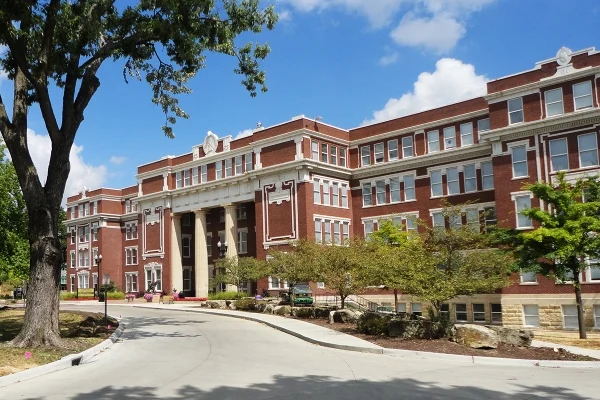
ESU’s outgoing president, Ken Hush, faced backlash in 2022 after laying off tenured faculty.
Ethan James Scherrer/Wikimedia Commons
Ken Hush, outgoing president of Emporia State University in Kansas, is donating roughly $1.4 million—equivalent to the last four years of his salary—to the university.
Since taking the helm in 2021, Hush oversaw a controversial workforce-management policy that included firing 23 tenured faculty members. The American Association of University Professors publicly censured ESU for that decision, and some of the laid-off faculty sued. Emporia officials, including Hush, defended the job cuts, saying they were needed to address a budget deficit and falling enrollment.
Enrollment plunged in the fallout from the cuts, but according to ESU’s statement this week, the university has now eliminated a $19 million budget deficit and grown enrollment 6 percent since fall 2024.
Hush’s donation is one of the largest one-time individual gifts in ESU’s history, according to an announcement the university posted on its website Wednesday. The nonendowed gift from Hush, who is set to retire next week, will be paid out over the next three years. The money will support scholarships, new student recruitment and university operations.
“This gift is in appreciation for the meaningful impact ESU has had on our community and on me, both as a student and in my role as president. It has been a great honor to serve my home state of Kansas, in my hometown of Emporia for the institution that has changed so many lives for the better,” Hush said in the announcement. “Emporia State is focused on [students] like never before. We cannot afford to go back to the old ways of higher education that focused more on the institution than those the institution is here to serve.”
Hush—an ESU alumnus and longtime former executive for Koch Inc.’s carbon and minerals division—became interim president in 2021 and permanent president in 2022. Hush in July announced plans to retire at the end of this year.
On Thursday, The Emporia Gazette reported that the Kansas Board of Regents selected Matthew Baker, who has served as vice president of student affairs at Northwest Missouri State University for the past 14 years, as ESU’s next president. Baker is slated to begin serving in early March.
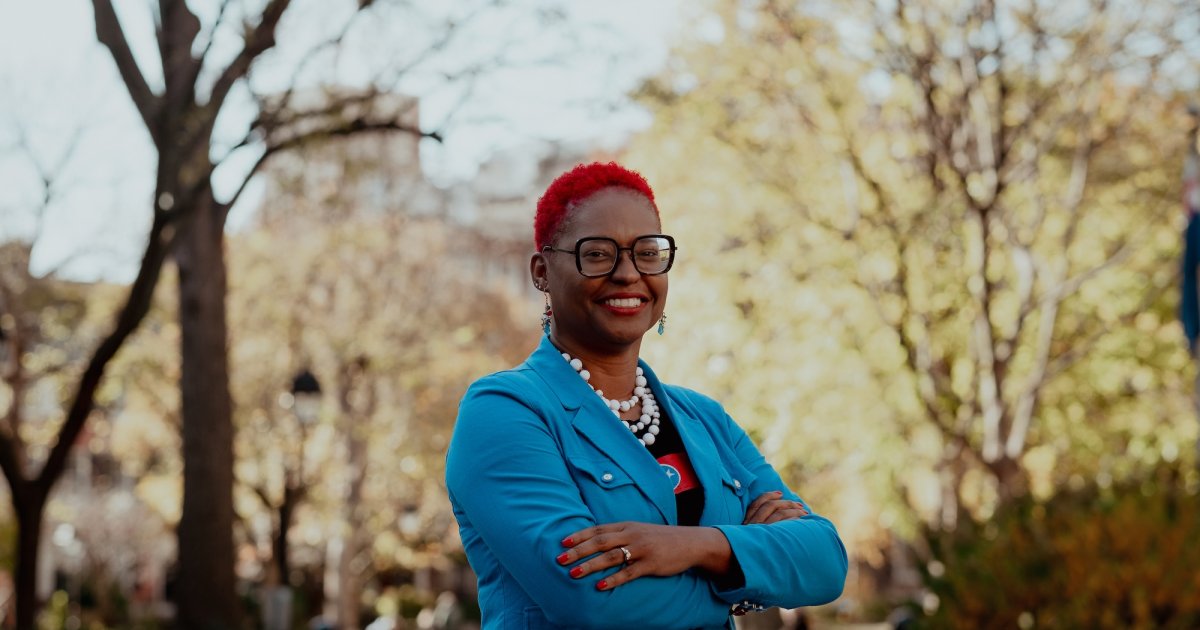
Monica Meeks is a combat veteran and lifelong public servant fired for criticizing Charlie Kirk from her personal Facebook shortly after his assassination.
Under the First Amendment, public employers can’t fire people simply because the government doesn’t approve of their off-duty speech.
FIRE is suing the Tennessee Commissioner of Commerce and Insurance on Monica’s behalf, seeking reinstatement and damages.
NASHVILLE, Dec. 10, 2025 — The Foundation for Individual Rights and Expression filed a federal lawsuit today on behalf of Monica Meeks, a Tennessee public employee unlawfully fired from her state government job solely for criticizing Charlie Kirk in a Facebook comment after his assassination.
“Our democracy suffers when public employees fear to voice what they are free to think,” said FIRE senior attorney Greg Greubel. “There are more than 23 million government employees across the country — and they can’t be fired simply because their boss or folks online don’t like the opinions they share off the clock.”
After serving 20 years in the U.S. Army, including a tour of duty in Iraq, Monica joined the Tennessee Department of Commerce and Insurance in 2016. Since joining the department, Monica has received stellar performance reviews and regular raises.
“I’ve never backed down from a fight in my life, and I don’t plan to start now,” said Monica. “I took an oath to defend the Constitution. Now, it’s time to stand up for it again.”
In her private life, Monica is politically engaged and even ran for the Tennessee House of Representatives in 2022 as an independent candidate. In her free time, she enjoys joking around and trading hot takes with her old Army “battle buddies” on Facebook. After the assassination of conservative activist Charlie Kirk, Monica responded to a friend’s post about Kirk with the remark, “The way you tap dance for White Supremacist should be studied!”
Monica’s post was never intended to go further than two friends amiably sparring over politics — as millions of Americans do every day. But the post escaped her personal circle, and she quickly became swept up in the wave of cancellation attempts that followed the Kirk assassination.
Only 15 or so X accounts called for Monica to be fired in response to an unrelated post by the Department on the afternoon of September 12. That includes comments marked as “probable spam,” and posts from anonymous accounts like “Bonerville Asskicker” and “NonGMOKaren.” But Tennessee Department of Commerce and Insurance Commissioner Carter Lawrence publicly announced her firing mere hours later, and sent a termination letter to Monica’s inbox. Lawrence’s letter mentioned no other performance issues whatsoever, nor any disruption to department operations, and made clear he was firing Monica solely for her lone “inflammatory and insulting comment” on Facebook.
“You may disagree with Monica’s take on Charlie Kirk. But letting a few angry individuals get a public employee fired for off-the-clock speech, even when it has no impact on the workplace, will inevitably boomerang back on people with views you do support,” said FIRE staff attorney Cary Davis. “When public employees are forced into silence for fear of offending someone on the internet, we all lose.”
Lawrence’s rush to fire Monica violated Supreme Court precedent, which established a three-prong test to determine when a government employee’s speech is constitutionally protected and cannot be punished by the state. First, the employee must speak “as a citizen” rather than as an employee. Second, the speech must involve “a matter of public concern.” Third, the employee’s interest in exercising their right to free expression must outweigh the state’s interest in ensuring effective government operations.
Monica’s post easily clears all three hurdles:
Monica clearly went to great lengths to establish that she was speaking as a private citizen. Her Facebook had a disclaimer that her views were hers and hers alone, and her profile didn’t even mention that she worked for the department.
Monica’s post obviously involved a matter of public concern. The fact that others might vehemently disagree with her view of Kirk doesn’t change the fact that it was a major news story with political reverberations across the country.
There is no evidence Monica’s post had any disruptive effect on the department or her work for it. Lawrence’s letter cited complaints about the post by members of the public, but there’s no evidence any coworkers complained, or that her opinions on Kirk would in any way impede her ability to investigate financial services fraud. It was hostility to Monica’s politics that drove the decision — not any legitimate government concern.
FIRE is asking the U.S. District Court for the Middle District of Tennessee to find that Lawrence retaliated against Monica for exercising her clearly established First Amendment rights, and to award her damages and reinstate her to her position. And because Lawrence clearly disregarded her constitutional rights, FIRE is also seeking punitive damages for Monica. Melody Fowler-Green of Yezbak Law Offices is serving as local counsel in the case.
The Foundation for Individual Rights and Expression (FIRE) is a nonpartisan, nonprofit organization dedicated to defending and sustaining the individual rights of all Americans to free speech and free thought — the most essential qualities of liberty. FIRE educates Americans about the importance of these inalienable rights, promotes a culture of respect for these rights, and provides the means to preserve them.
CONTACT:
Alex Griswold, Communications Campaign Manager, FIRE: 215-717-3473; [email protected]
Weber State University has censored multiple speakers, citing an anti-DEI state law.
Photo illustration by Justin Morrison/Inside Higher Ed | masa44/iStock/Getty Images | rawpixel
After multiple censorship controversies over the past two months, Weber State University has announced a “revised approach” to how it enforces a sweeping anti–diversity, equity and inclusion law that the Utah Legislature passed in 2024. But it remains unclear exactly how it will change its actions.
“With help from the Utah Commissioner of Higher Education, Weber State is currently reviewing our existing guidance, and where appropriate, will revise that guidance to be more nuanced in its understanding of where and how learning happens on our campuses,” interim president Leslie Durham wrote in a message to campus Friday. The Salt Lake Tribune reported earlier on the announcement.
The goal, Durham wrote, “is to uphold the letter and spirit of the law, but also to ensure we remain fiercely committed to free speech, academic freedom, and fostering an environment where everyone at WSU feels welcome to express their thoughts, engage different viewpoints, and learn from one another.” She said that “we are learning from early and well-intentioned efforts at working within this new framework.”
The university didn’t provide an interview or answer multiple written questions Tuesday. Richard Price, a political science professor, told Inside Higher Ed in an email, “As far as I know, faculty played no role in the creation of the existing approach and I doubt faculty will play a role in this process.”
The Weber State controversies illustrate how universities have differed in implementing the anti-DEI laws that many red states have passed, and in navigating the Trump administration’s various anti-DEI orders and guidance that impact the whole nation. Shortly after Trump retook the White House, the American Association of University Professors issued a statement saying that “under no circumstances should an institution go further than the law demands.” Since then, state and federal government attacks on diversity programs and restrictions on speech have continued and universities have struggled with how to respond.
Kristen Shahverdian, director of PEN America’s campus free speech program, has decried what she called “Weber State’s overreach.” But she told Inside Higher Ed Tuesday, “There’s a lot of confusion in how to interpret these bills that are vague and, in some cases, sloppily written.”
Weber State made national headlines in October for censoring a conference ironically titled, Redacted: Navigating the Complexities of Censorship. A few days before the conference was to start, an official at the public institution ordered a student presenter to remove all references to DEI from their slides.
Organizers ended up canceling the event after faculty pulled out in protest. The uncertified employee union held a teach-in instead, but it was also censored.
That wasn’t the end of Weber State’s speech restrictions. Late last month, Apache writer Darcie Little Badger announced on Bluesky she was withdrawing as keynote speaker at the university’s annual Native Symposium because the university sent her a list of 10 prohibited words and concepts, including “bias,” “oppression” and “racial privilege.”
“I will not humor this censorship,” Little Badger wrote. “It does a disservice to the stories I’m discussing & the audience, who deserve unfettered access to information & conversation.”
‘Prohibited Discriminatory Practices’
Little Badger said the move seemed “to be the university‘s extreme attempt to comply with HB 261,” the same 2024 anti-DEI law the institution cited to censor the censorship conference. House Bill 261 bans Utah’s public colleges and universities from engaging in “prohibited discriminatory practices,” which lawmakers defined in a long list.
That list includes affirmative action, consideration of “personal identity characteristics” in state financial aid decisions, anything “referred to or named” DEI and programs asserting that “meritocracy is inherently racist or sexist” or that an individual, by virtue of their “personal identity characteristics, bears responsibility for actions committed in the past by other individuals with the same personal identity characteristics.”
The catalog of what constitutes “prohibited discriminatory practices” echoes the laws banning “divisive concepts” passed by other red states, which appear to borrow language from an anti-DEI executive order Trump signed in his first term.
HB 261 explicitly says it doesn’t restrict academic research or “academic course teaching in the classroom.” The canceled censorship conference was sponsored by the university’s Student Access and Success division, and the Native Symposium was advertised on the university’s Student Success Center website, so neither might have been deemed “academic.”
Shahverdian, of PEN America, stressed the difficulty in interpreting such laws.
“How would a guest speaker be able to know if they’re engaging in any of these prohibited concepts?” she said, adding that it puts them in an “impossible position.”
But Shahverdian said it’s good that Weber State is, as she put it, “acknowledging that they have not been implementing the law correctly.” In a country where fear is driving university officials to overcomply and leading to canceled speaking engagements, she noted that Little Badger’s refusal to go along appears to have elicited change.
“In this moment, where we’re seeing so much censorship, it is a nugget of hope,” Shahverdian said.
Laurel Bongiorno, vice president for academic affairs and provost at Hartwick College in New York, has been named president of Hartwick, effective July 1, 2026.
David Cook, president of North Dakota State University, has been appointed president of Iowa State University, effective March 1, 2026.
David Dausey, provost of Duquesne University in Pittsburgh, will become president of the institution on July 1, 2026.
Terence Finley, vice president and chief operating officer at Harris-Stowe State University in St. Louis, has been selected president of Corning Community College, part of the State University of New York system, effective Jan. 2, 2026.
Jennifer Glowienka, co–interim president of Carroll College in Montana, has been named president of the college, effective July 1, 2026.
Alan LaFave, president of Valley City State University in North Dakota, has been appointed president of Northern State University in South Dakota, starting in January.
Carolyn Noll Sorg, vice president for enrollment and marketing at John Carroll University in Ohio, has been appointed president of the university, effective June 1, 2026.
Jamilyn Penn, vice president of student services at Highline College in Washington, has been named acting president of the institution, effective immediately.
John Schol, retired bishop of the United Methodists in Greater New Jersey, has been selected as president of Centenary University, effective Dec. 1.
Michael Spagna, interim president of California State Polytechnic University, Humboldt, has been appointed president of Sonoma State University, also part of the CSU system, effective Jan. 20, 2026.
Susan Stuebner, interim president of Simpson College in Iowa, has been named the university’s permanent president, effective immediately.
Gregory Tomso, who most recently served as vice president of academic engagement and student affairs for the University of West Florida, will become president of St. Cloud State University, part of the Minnesota State Colleges and Universities system, effective Jan. 5, 2026.
Mary Ann Villarreal, vice president for institutional excellence at the American Association of Colleges and Universities, has been appointed interim president of California State University, Dominguez Hills, effective Jan. 1, 2026.
David Whitlock, interim president of Southeastern Oklahoma State University, has been appointed permanent president of the institution, effective immediately.
This audio is auto-generated. Please let us know if you have feedback.
The end of fall semester can be a relatively quiet period on campus, as many students return home and colleges gear up for the second half of the academic year. But at least six colleges are facing big transitions after announcing leadership changes in November.
One public California college will get a new president more than a year after its last permanent leader abruptly resigned amid backlash from system leaders. And a small liberal arts college in Pennsylvania — thrust into the national spotlight earlier this year amid Republican lawmakers’ antisemitism hearings — will soon be on the hunt to replace its president after she announced her forthcoming retirement.
Below, we’re rounding up a selection of last month’s most significant college leadership changes.
President:Wade Rousse Institution:Louisiana State University System Coming or going? Coming
Wade Rousse will take over as president of the eight-campus Louisiana State University System, its board said in a Nov. 4 release. Rousse previously led McNeese State University, a fellow public Louisiana college, and took the reins at the LSU System as the state’s governor increasingly seeks to be involved in its operations.
But Rousse will not have all of the same duties as his predecessor.
The board also announced that James Dalton, previously executive vice president and provost at the University of Alabama, will become chancellor of LSU’s main campus, in Baton Rouge. The board had previously considered Dalton as a finalist for system president.
Rousse and Dalton began their respective positions on Nov. 17, according to local news reports.
LSU’s last permanent leader, William Tate IV, served as both president of the system and chancellor of its main campus.The board had combined the two positions in 2012, but Tate’s abrupt departurein June cameamid reports from the Louisiana Illuminator that the university was considering reseparating the roles.
The institution’s board did not confirm it had restructured the roles until it announced Rousse and Dalton’s appointments. According to the system, the split will allow the president “to focus on systemwide oversight and strategic initiatives” while the chancellor will work to make the flagship campus “a top 50 Research University” and eligible for the selective Association of American Universities.
President:David Cook Institution:Iowa State University Coming or going?Coming
The Iowa Board of Regents on Nov. 11 selected David Cook to lead Iowa State University, beginning March 2026. Cook, an alum of Iowa State,serves as president of North Dakota State University, a position he has held since 2022.
Under Cook, North Dakota State has restructured and made significant cuts, including by eliminating 80 employee positions and discontinuing or merging 29 academic programs.The university allocated the savings into 17 new programs, and the cuts reduced the public institution’s operating costs by $24 million, according to Cook’s curriculum vitae.
Per the Iowa board, Cook will receive $700,000 annually under a five-year contract.
Iowa State’s current president, Wendy Wintersteen, plans to retire in January after 46 years at the university.
President: Pat Pitney Institution: The University of Alaska system Coming or going? Going
University of Alaska President Pat Pitneyplans to retire in May, she announced Nov. 13.She took over as interim leader of the public three-university system in June 2020, following the abrupt departure of beleaguered former President Jim Johnsen.
Johnsen, who oversaw the system at a time when Alaska’s governor sought to decimate its public funding, enacted heavy budget cuts and underwent two votes of no-confidence from faculty.
Pitney became the system’s permanent leader in 2022. Under her, the public system’s enrollment grew for three consecutive years, following years of declines.
During a September board meeting, Pitney and the system’s head of federal relations shared how the University of Alaska has navigated the Trump administration’s vacillating higher education policies.
The federal government froze roughly $42 million in federal grants and canceled another $6.6 million, including for grants geared toward Alaska Native and Indigenous students. But system officials said that’s a relatively low portion of the University of Alaska’s nearly $1 billion federal grant portfolio.
President:Michael Spagna Institution: Sonoma State University Coming or going? Coming
On Nov. 19, the California State University system announced that Michael Spagna will take over as Sonoma State University’s president beginning Jan. 20.Spagna has held positions at institutions within the Cal State system for over three decades andcurrently serves as the interim president of California State Polytechnic University, Humboldt.
The news comes over a year after Cal State’s leadership ousted Mike Lee, Sonoma State’s last permanent president. Lee stepped down in May 2024, less than a week after the system put him on leave for “insubordination” for brokering a deal with pro-Palestinian student protesters on his campus.
Spagna will have to lead the university through a difficult financial situation.Sonoma State enacted widespread staffing and programming cuts at the beginning of this year amid a multimillion dollar budget deficit.
President: Wendy Raymond Institution: Haverford College Coming or going? Going
Haverford, a small liberal arts college in Pennsylvania, gained national attention in May when Republican lawmakers on the House’s education committee called Raymond to testify about how the university has responded to allegations of antisemitism on its campus. In August, the U.S. Department of Education opened an investigation into the college over claims it had mishandled reports of antisemitic harassment.
That month, Haverford was also named alongside 31 other colleges in a class-action lawsuit that alleged the institutions used early decision admissions to reduce competition and aid for students.
President: Kyle Wagner Institution: Northeastern Technical College Coming or going? Going
The South Carolina community collegehas faced intense public scrutiny since a December 2024 report from the State Inspector Generalflagged financial and oversight issues stemming from its dual enrollment program.
The program — which one state official described as predatory — automatically enrolled some high school students into courses, often without their knowledge. The audit also found that the program negatively affected students’ academic standing and their ability to access financial aid in the future.
Due to unreliable enrollment numbers, the college reported a nearly 18-fold increase in dual enrollment participation — a stat cited in one of Wagner’s performance evaluations, the report said. Since 2016, Wagner’s annual salary grew 43.9% to just over $201,000.
When the report first came out, Northeastern Technical’s board chair said that Wagner had the board’s steadfast supportamid calls for his resignation, according to The Post and Courier.
Northeastern Technical’s accreditor also issued a warning to the college around that time, saying the institution wasn’t in compliance with five of its standards, including having an adequate number of full-time faculty. Its next review is scheduled to take place this month.
The board last week did not publicly disclose the timeline for hiring Wagner’s replacement and has declined to share his resignation letter or details around his termination, Queen City News reported.
DHS said ICE arrested Sumith Gunasekera on Nov. 12.
Lawrey/iStock/Getty Images Plus
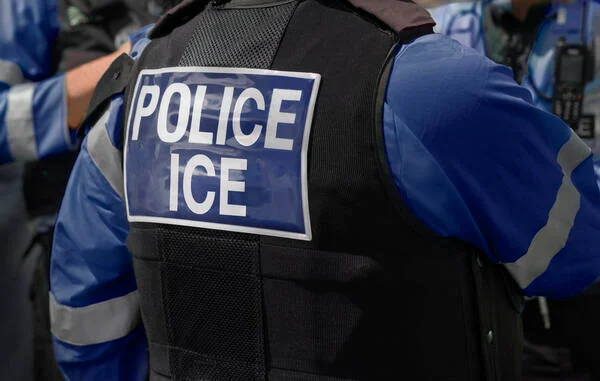
Immigration and Customs Enforcement has detained a Ferris State University professor, according to a Department of Homeland Security news release that calls him “a criminal illegal alien sex offender from Sri Lanka.”
ICE arrested Sumith Gunasekera in Detroit on Nov. 12, DHS announced in its Nov. 25 release. That’s the date Ferris State “became aware of accusations regarding” Gunasekera, university spokesperson David Murray said in an emailed statement. Murray didn’t answer further questions from Inside Higher Ed Monday, including whether the university performed a background check on Gunasekera before hiring him.
“He has been placed on administrative leave while the university gathers more information,” Murray wrote. “This is a personnel issue and it would be inappropriate for the university to further discuss the matter.”
The university’s website lists Gunasekera as director of its Data Analytics Consulting and Research Center. A Sumi Gunasekera is also listed as an assistant professor of marketing.
As of last week’s news release, DHS said Gunasekera “remains in ICE custody pending further immigration proceedings.” DHS spokespeople didn’t respond to Inside Higher Ed’s questions Monday about whether he’s still being held and where.
The DHS release says that, in 1998, “a criminal court in Brampton, Ontario convicted Gunasekera for utter threat to cause death or bodily harm and sexual interference and sentenced him to 1 month of incarceration and 1 year of probation.” Anita Sharma, group leader at the Ontario Court of Justice in Brampton, told Inside Higher Ed the case has been archived, so she couldn’t provide further details Monday.
DHS’s release says “the convictions in Canada” rendered Gunasekera “ineligible for legal status in the United States.” Tricia McLaughlin, a DHS spokesperson, said in the release that “it’s sickening that a sex offender was working as a professor on an American college campus and was given access to vulnerable students to potentially victimize them. Thanks to the brave ICE law enforcement officers, this sicko is behind bars and no longer able to prey on Americans.”
Inside Higher Ed was unable to reach Gunasekera for comment.
In this episode, the vice-chancellor of James Cook University Simon Biggs and HEDx’s Martin Betts interview Lisa Brodie, the dean of an innovative new independent college in the UK, ASU London.
Please login below to view content or subscribe now.
State is planning to oust 38 universities from a partnership, The Guardian reported.
Drew Angerer/AFP/Getty Images | Lance King, Mario Tama and Justin Sullivan/Getty Images | Liz Albro Photography/iStock/Getty Images
The State Department’s Diplomacy Lab program says it enables students to work on real policy issues, benefitting both their careers and American foreign policy through their research and perspectives. It’s meant to “broaden the State Department’s research base in response to a proliferation of complex global challenges,” according to the program website.
But now the Trump administration’s domestic policy fight against diversity, equity and inclusion could upend this partnership between the State Department and universities. The Guardianreported last week that the department is planning to suspend 38 institutions from the program, effective Jan. 1, because they had what the department dubbed a “clear DEI hiring policy.” It’s unclear how the department defines that phrase or how it determined these institutions have such policies.
On Tuesday, The Guardian—citing what it called an unfinalized “internal memo and spreadsheet”—published the list of institutions that State Department plans to kick out, keep in or add to the program. A State Department spokesperson didn’t confirm or deny the list to Inside Higher Ed or provide an interview, but sent an email reiterating the administration’s anti-DEI stance.
“The Trump Administration is very clear about its stance on DEI,” the unnamed spokesperson wrote. “The State Department is reviewing all programs to ensure that they are in line with the President’s agenda.”
The institutions to be ousted, per The Guardian’s list, range from selective institutions such as Northeastern, Stanford and Yale universities to relatively small institutions including Colorado College, Gettysburg College and Monmouth University. The 10 universities to be added include Gallaudet University, which specializes in educating deaf and hard-of-hearing students, Liberty University, a conservative Christian institution, and the St. Louis and Kansas City campuses of the University of Missouri system. In all, the list shows plans for 76 institutions.
The shakeup appears to be yet another consequence of the Trump administration’s now nearly year-long campaign to pressure universities to end alleged affirmative action programs or policies. The day after his inauguration, Trump signed an executive order mandating an end to “illegal DEI” and calling for restoring “merit-based opportunity.” But Trump’s order didn’t define DEI.
Through cutting off federal research funding and other blunt means, the administration has tried to push universities to end alleged DEI practices. A few have settled with the administration to restore funding; Columbia University agreed this summer to pay a $221 million fine and to not, among other things, “promote unlawful DEI goals” or “promote unlawful efforts to achieve race-based outcomes, quotas, diversity targets, or similar efforts.” Columbia is among the institutions that the State Department intends to keep in the program, according to The Guardian’s list.
Inside Higher Ed reached out Tuesday to the institutions listed to be ousted. Those who responded suggested the program didn’t provide much, or any, funding, and said they didn’t engage in any illegal hiring practices.
The University of Southern California said in a statement that it “appreciated travel funding provided by the Diplomacy Lab program to two USC students in 2017 and looks forward to future opportunities to collaborate.” The university said that was the last time it received funding, and said it “complies with all applicable federal nondiscrimination laws and does not engage in any unlawful DEI hiring practices.”
Oakland University political science department chair and Diplomacy Lab campus coordinator Peter F. Trumbore said through a spokesperson that he hasn’t received notice of a change in status as a partner institution. He also said his university received no funding from the State Department for the program, though “our students have had invaluable experiences conducting research on behalf of State, and working with State Department stakeholders in producing and presenting their work.”
Georgia Institute of Technology spokesperson Blair Meeks said his university also never received funding from the State Department for the program. He also said “Georgia Tech does not discriminate in any of its functions including admissions, educational, and employment programs. We have taken extensive actions over time to eliminate any programs, positions, or activities that could be perceived as DEI in nature.”
Meeks further wrote that the State Department “communicated that cuts or halts to the program were associated with the federal government shutdown” that ended earlier this month. Sarah Voigt, a spokesperson for St. Catherine University, said in an email that the State Department told her university back on Jan. 31 that it was pausing Diplomacy Lab activities, so the institution didn’t apply for research opportunities this semester. Then, last week, the State Department told the university that “‘due to the delays caused by the shutdown,’ they were again pausing Diplomacy Lab activities.”
“Our understanding is that the program was shut down due to a lack of government funding,” she wrote.
“The University had been participating as a Diplomacy Lab Partner Institution since early 2020, and we appreciated the opportunities to offer our students and faculty members very timely research topics through this program,” she added. “If the Department of State were to resume Diplomacy Lab activities, we would review what opportunities were available.”