A tenured Texas State University professor who was terminated earlier this month after allegedly inciting violence during a speech has sued the university, CBS Austin reported. In the lawsuit filed in district court, Thomas Alter, the former associate professor of history, claims that university leadership violated his free speech and due process rights and breached his employment contract.
At a Sept. 7 conference organized by Socialist Horizon, Alter said in part that “without organization, how can anyone expect to overthrow the most bloodthirsty, profit-driven mad organization in the history of the world—that of the U.S. government.” His speech was recorded and circulated by a right-wing YouTuber who had infiltrated the event. Alter was terminated three days later.
In a statement announcing his termination, Texas State president Kelly Damphousse said Alter’s “actions are incompatible with their responsibilities as a faculty member at Texas State University.” Alter told CBS Austin that he did not associate himself with Texas State during the conference.
“The reasons Provost Aswrath provided for Dr. Alter’s termination are false and give every appearance of politically-motivated discrimination,” the lawsuit states. “In truth, Dr. Alter was terminated because he espoused views that are politically unpopular in today’s politically-charged climate, in violation of his First Amendment right to free speech.”
Alter told CBS Austin that his dismissal “turned my world upside down and my family’s world upside down.”
“Anyone should be able to express their views no matter how unpopular they are without facing the repercussions that many people are seeing,” he added. (Alter had earned tenure just 10 days before he was removed, The Chronicle of Higher Education reported.)
Texas State did not respond to Inside Higher Ed’s request for comment, but a spokesperson told CBS Austin the university declined to comment on pending litigation.
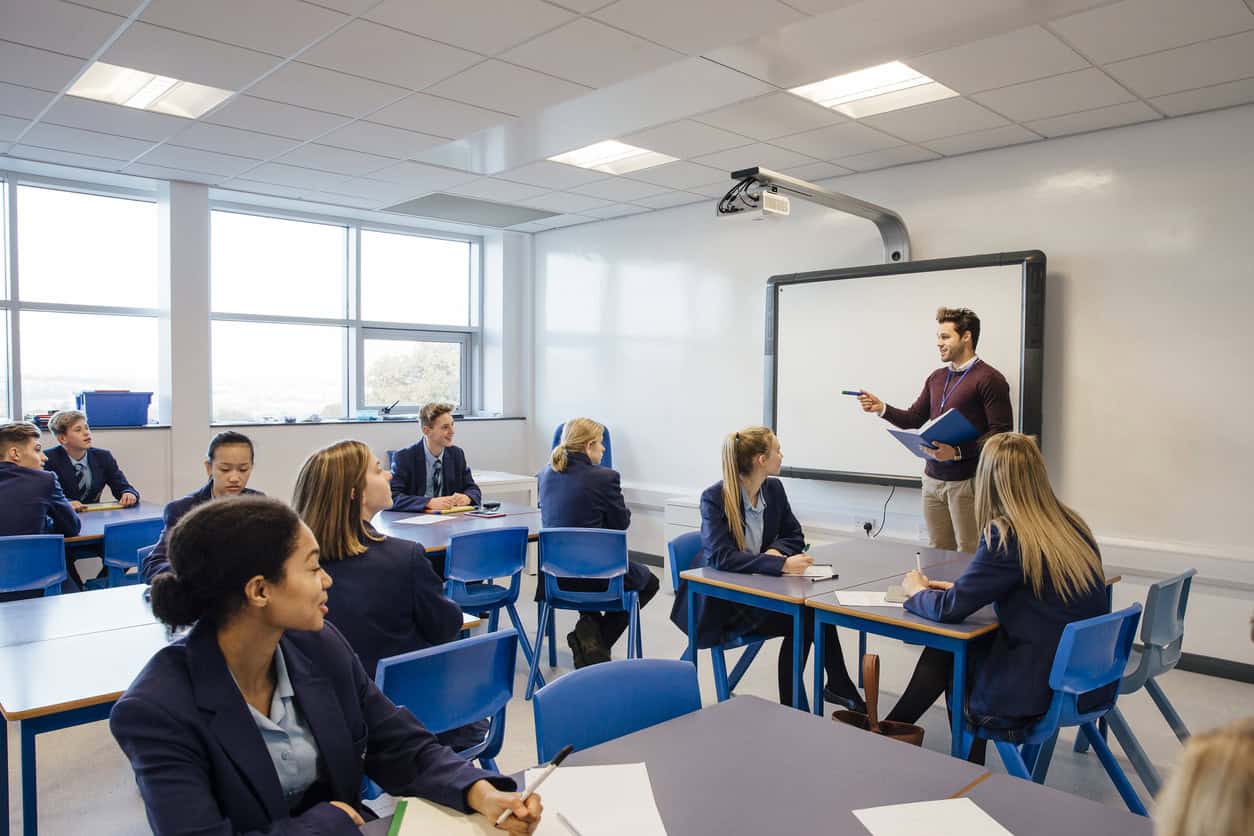
Classroom teachers are handed a curriculum they must use when teaching. That specific curriculum is designed to bring uniformity, equity, and accountability into classrooms. It is meant to ensure that every child has access to instruction that is aligned with state standards. The specific curriculum provides a roadmap for instruction, but anyone who has spent time in a classroom knows that no single curriculum can fully meet the needs of every student.
In other words, even the most carefully designed curriculum cannot anticipate the individual needs of every learner or the nuances of every classroom. This is why supplementing curriculum is a vital action that skilled educators engage in. Supplementing curriculum does not mean that teachers are not teaching the required curriculum. In fact, it means they are doing even more to ensure student success.
Students arrive with different strengths, challenges, and interests. Supplementing curriculum allows teachers to bridge inevitable gaps within their students. For example, a math unit may assume fluency with multiplying and dividing fractions, but some students may not recall that skill, while others are ready to compute with mixed numbers. With supplementary resources, a teacher can provide both targeted remediation and enrichment opportunities. Without supplementing the curriculum, one group may fall behind or the other may become disengaged.
Supplementing curriculum can help make learning relevant. Many curricula are written to be broad and standardized. Students are more likely to connect with lessons when they see themselves reflected in the content, so switching a novel based on the population of students can assist in mastering the standard at hand.
Inclusion is another critical reason to supplement. No classroom is made up of one single type of learner. Students with disabilities may need graphic organizers or audio versions of texts. English learners may benefit from bilingual presentations of material or visual aids. A curriculum may hit all the standards of a grade, but cannot anticipate the varying needs of students. When a teacher intentionally supplements the curriculum, every child has a pathway to success.
Lastly, supplementing empowers teachers. Teaching is not about delivering a script; it is a profession built on expertise and creativity. When teachers supplement the prescribed curriculum, they demonstrate professional judgment and enhance the mandated framework. This leads to a classroom where learning is accessible, engaging, and responsive.
A provided curriculum is the structure of a car, but supplementary resources are the wheels that let the students move. When done intentionally, supplementing curriculum enables every student to be reached. In the end, the most successful classrooms are not those that follow a book, but those where teachers skillfully use supplementary curriculum to benefit all learners. Supplementing curriculum does not mean that a teacher is not using the curriculum–it simply means they are doing more to benefit their students even more.
Dr. Yuvraj Verma, Bessemer City Middle School and William Howard Taft University
This audio is auto-generated. Please let us know if you have feedback.
Dive Brief:
Kean University is set to receive an additional $10 million to support its acquisition of New Jersey City University, as part of New Jersey’s fiscal 2026 budget.
Kean would have to return the money to the state if the merger is not completed as detailed in the two public universities’ May letter of intent. Kean and NJCU are expected to finalize their merger by June 2026, pending regulatory and accreditor approvals.
Further reshaping Kean finances, its board on Monday approved in-state tuition rates for all students beginning in 2026-27 — the first academic year the university is set to fully control NJCU post-merger.
Dive Insight:
Following years of financial challenges, NJCU found a lifeline in Kean after a state-appointed monitor ordered the university to find a financial partner.
The $10 million state allocation — a small fraction of the $3.1 billion New Jersey is set to spend on higher education in fiscal 2026 — will go toward “feasibility studies, planning and legal work tied to the merger” between NJCU and Kean. But it’s unlikely to cover the full cost of the process.
In 2020, a University System of Georgia regent estimated that just changing the name of an institution — updating everything from signage to stationery — cost over $3 million.
Under Kean and NJCU’s letter of intent, the former would assume the latter’s assets and liabilities and NJCU’s campus would be renamed Kean Jersey City.
As the two universities go through the merger process, Kean is also to receive state funding for over 1,100 NJCU jobs in the form of a loan, per the state’s budget. If the merger falls through, the funded positions will return to NJCU.
A 2019 working paper found that, on average, a merger between two nonprofit colleges raised tuition prices by students between 5% and 7%.
But Kean appears to be poised to buck that trend with its elimination of out-of-state tuition. Under the new plan, the university will drop out-of-state tuition for current and new undergraduate and graduate students.
“Kean’s outstanding academics, proximity to New York City and growing research programs make the University appealing to students outside of New Jersey,” Michael Salvatore, Kean’s executive vice president for academic and administrative operations, said in a Tuesday statement. “This will enable us to tap into expanded markets while bringing students into the state.”
In the 2025-26 academic year, full-time students from New Jersey paid $7,649.80 per semester in tuition and fees, while their out-of-state counterparts paid $12,008.58. In-state and out-of-state graduate students paid $1,019.54 and $1,206.64 per credit, respectively.
This audio is auto-generated. Please let us know if you have feedback.
Kent State University did not discriminate or retaliate when it decided to deny a transgender professor a previously offered course-load reallocation and a transfer to work on the main campus, the 6th U.S. Circuit Court of Appeals found Sept. 12, upholding a district court’s decision.
In 2021, the professor had reached out and been in talks with the dean of the College of Arts and Sciences about leading a forthcoming Center for the Study of Gender and Sexuality. The dean had also proposed reallocating some of the professor’s teaching load so they could work on developing a new gender studies major. Additionally, the professor had asked for a transfer to the main campus from the regional campus where they had been working.
When the reallocation offer was revoked and two committees voted against the transfer request, the professor filed a lawsuit alleging sex discrimination and retaliation in violation of Title VII of the Civil Rights Act of 1964, along with other charges.
The district and appeals courts, however, found that the professor had engaged in a “weeks-long, profanity-laden Twitter tirade” against their colleagues after learning a political science professor and head of the school where the center would be housed would be chairing committees overseeing the center and the gender studies major.
After witnessing several weeks of tweets calling the leadership transphobic, critiquing the “white cishet admin with zero content expertise,” referring to the field of political science as a “sentient trash heap,” and more, the College of Arts and Sciences dean revoked the offer to reallocate the professor’s teaching load so they could lead on developing the major, but still welcomed them to be on the committee.
The social media messages “violated university policy against attacking colleagues or their academic fields,” and thus were “reasonable grounds … for disciplining or reprimanding an employee,” the court said.
Additionally, the transfer committees discussed the professor’s “withdrawal from university service, negative interactions with other faculty members, and the department’s needs,” the 6th Circuit said. “No one discussed [the professor’s] gender identity.”
Demartravion “Trey” Reed was a 21-year-old student at the Mississippi institution.
Andrew Caballero-Reynolds/AFP/Getty Images
Delta State University has been rocked by the discovery of a Black student’s body hanging from a tree in the middle of campus on Monday.
Demartravion “Trey” Reed was a 21-year-old student at the Mississippi institution. Recalling a long, painful history of lynchings, his death has spurred an outpouring of grief and anger across the country.
The Bolivar County Coroner’s Office said on Monday that a preliminary examination of Reed’s body showed no evidence of foul play, including “any lacerations, contusions, compound fractures, broken bones or injuries consistent with an assault.”
But Reed’s family members are calling for their own investigation, including an independent autopsy, and have demanded access to video footage that might reveal more details of his death.
“From the beginning, the family has been seeking transparency in this investigation,” Vanessa J. Jones, an attorney representing the family, told Inside Higher Ed. “Especially after a tragic incident like this occurs, and you’re dealing with a state that has a past history which includes a painful history of racial violence … transparency is paramount.”
The Reed family’s distrust in the handling of the student’s death was deepened when officials allowed his mother to view her son’s body from the neck up only, Jones said.
Officers also shared conflicting details of Reed’s death when they first spoke to his family, Jones said. According to Jones, the Grenada County Sheriff’s Department went to Reed’s grandfather’s home on Monday and said Reed was found dead in his dorm room “from an apparent suicide.”
Prominent civil rights attorney Ben Crump has taken on the family’s case and said in a post on X that he will lead a team of civil rights leaders and organizers in “pursuing transparency for Trey’s family.”
“We cannot accept vague conclusions when so many questions remain,” he wrote. Crump described Reed as a “young man full of promise and warmth, deeply loved and respected by all who knew him.”
Lawmakers are also demanding more information.
“We’ll never have true justice for Trey, because that would mean he would still be with us—but there must be answers,” Massachusetts representative Ayanna Pressley wrote on X.
Mississippi representative Bennie G. Thompson called for a federal investigation into Reed’s death.
“It is always a tragedy when a young life is cut short,” Thompson said in a statement. “We must leave no stone unturned in the search for answers. While the details of this case are still emerging, we cannot ignore Mississippi’s painful history of lynching and racial violence against African Americans.”
Updates From the University
At a press conference Wednesday, Delta State University president Daniel J. Ennis said Reed’s loss was “devastating” and “the manner of how Trey was discovered has stirred many emotions in this community and many emotions around the state and the nation.”
Ennis reiterated the coroner’s early conclusions but said he recognized the psychological impact of Reed’s death. “This is not only about facts,” Ennis said. “It’s about emotions and it’s about feelings and the way this loss and how it was discovered affects people’s lives.”
Ennis, who is white, said he acknowledged his weakness in not being “adequate to speak to the imagery that this incident raises.”
Delta State serves roughly 2,800 students, about 40 percent of whom are Black. Ennis said the campus has been receiving threatening phone calls and messages since Reed’s death.
“I can say that my heartbreak is comprehensive, not just for Trey—although it is primarily for Trey—but for the fact that the rest of the world has an impression of Delta State that is so at odds with what I know to be this institution,” which is “the joy and the grace of people living and working together and respecting each other,” he said.
Mike Peeler, Delta State University chief of police, told the press that Reed’s body was transported to the Mississippi State Medical Examiner’s Office for a full autopsy on Wednesday morning. Authorities expect preliminary autopsy results within 24 to 48 hours. He said DSU Police, the Cleveland Police Department, the Mississippi Bureau of Investigation and the Bolivar County Sheriff’s Office planned to update the public on the findings after first meeting with Reed’s next of kin.
He told reporters law enforcement officials were reviewing relevant video, but he couldn’t offer any more details. Peeler also said he had no information about Reed’s family being told his death took place in his dorm room.
He emphasized during the press conference that “this is an isolated incident” and “there are currently no active threats to the campus,” which “remains a safe environment for students, faculty and staff.”
‘Heartbroken’ Students
Nonetheless, the grisly incident has frightened Black students on campus.
“Hearing that happened to another Black student, it really makes me feel unsafe,” a Delta State student, Stacie Hoskins, told WAPT16.
The nature of Reed’s death has had an emotional impact on Black students on other campuses as well; some treated it as a foregone conclusion that Reed was killed and issued statements of support to fellow students.
The Black Student Union at Illinois State University directed students to campus counseling resources, and its executive board said it was “heartbroken by the tragic loss of Trey Reed, whose life was cut short by a horrific act of violence.”
North Carolina A&T University’s NAACP chapter posted on Instagram that Reed “could have been any of us. Any Black student. Any campus.”
“Our education is under attack. Our sanity is under attack. Our very existence is under attack,” the chapter said. “We refuse to stay silent. Black lives matter. Black students matter. Always.”
Texas State University fired a professor Wednesday after he was accused of inciting violence during a speech at a socialist conference, The Texas Tribune reported.
In a video posted on X, associate professor of history Thomas Alter can be seen giving a speech over Zoom to attendees of the Revolutionary Socialism Conference. “Without organization, how can anyone expect to overthrow the most bloodthirsty, profit-driven mad organization in the history of the world—that of the U.S. government,” he said in the clip, which was circulated online by a YouTuber who infiltrated and recorded the event.
Texas State president Kelly Damphousse said in a statement Wednesday that the university reviewed the comments, which he said “amounted to serious professional and personal misconduct.”
“As a result, I have determined that his actions are incompatible with their responsibilities as a faculty member at Texas State University,” he added. “Effective immediately, his employment with Texas State University has been terminated.”
The video clip shared on social media was spliced and cut together. In the full version of his speech, which is posted on YouTube, Alter discusses the various tactics of different socialist groups.
“Another strain of anarchism gaining ground recently is that of insurrectionary anarchism,” Alter said in his speech. “Primarily coming out of those that were involved in the Cop City protest. These groups, individuals have grown rightfully frustrated with symbolic protests that do not disrupt the normal functioning of government and business. They call for more direct action and shutting down the military-industrial complex and preventing ICE from kidnapping members of their communities. Many insurrectionary anarchists are serving jail time, lost jobs and face expulsion from school. They have truly put their bodies on the line. While their actions are laudable, it should be asked, what purpose do they serve? As anarchists, these insurrectionists explicitly reject the formation of a revolutionary party capable of leading the working class to power. Without organization, how can anyone expect to overthrow the most bloodthirsty, profit-driven mad organization in the history of the world—that of the U.S. government.”
Alter didn’t respond to a request for comment from Inside Higher Ed.
He is the second Texas professor to be fired from their post this week. On Tuesday, Texas A&M officials fired Melissa McCoul, a senior lecturer, and removed two faculty members from their administrative roles after a student complained that the material McCoul taught in a summer course violated President Donald Trump’s executive orders.
Florida State University is home to over 50 fraternity and sorority chapters, with total Greek membership over 6,800—about 23 percent of the undergraduate population. Fraternity and Sorority Life (FSL) students are generally representative of the student population’s demographics, but they’re more likely to persist, graduate and land a job after graduation compared to their peers.
A new center on campus seeks to ensure that Greek organizations promote holistic student development, in part by partnering with student leaders and providing for-credit leadership classes.
What’s the need: Past grievances with FSL organizations on campus prompted the development of the center to prevent hazing and other harmful practices often associated with Greek life. In 2017, FSU banned all fraternities and sororities following the death of a fraternity pledge. The ban was lifted in 2018 with provisions.
“The challenge we had was to solve [misconduct] as almost a student success issue, and [we] try to focus on how do we help our students be way more successful, focusing in on their leadership and their wellness and holistic student experience,” said Freddy Juarez, FSU’s director of strategic initiatives and fraternity and sorority life.
Now, to maintain good standing, Greek organizations must meet a variety of standards, including that members fulfill mandatory volunteer hours and sustain minimum GPAs. The university also maintains a publicly available scorecard on campus chapters to provide transparency into FSL activities, including philanthropic efforts and past disciplinary charges.
The Center for Fraternity and Sorority Organizational Wellness launched in fall 2024 as an extension of these efforts, with the goal of identifying best practices in the field.
“What are those markers that we can identify early on so that we can intervene with the right intervention that will stop them from going down that path of not being a ‘well’ organization?” Juarez said. “We’re trying to figure out what are all these components and pieces as we start to bring on national research agendas.”
FSL students are also embedded throughout campus as tour guides, student government members and orientation leaders, so providing them with leadership training has far-reaching effects on the campus culture, Juarez said.
How it works: The center engages FSL organizations in a variety of ways. Juarez and Brittany Devies, director of the Center for Fraternity and Sorority Wellness, meet with chapter leaders regularly to discuss governance, risk management, recruitment and new member education, among other topics.
“We’re doing training and helping them navigate these complex issues, because these students are managing multimillion-dollar budgets and facilities that cost multimillion dollars. Our largest chapter is 320 members; that is a lot to manage,” Juarez said.
The center also houses a 12-credit leadership studies certificate exclusively for FSL members in the Anne Spencer Daves College of Education, Health and Human Sciences, which is taught by FSL staff members.
The courses focus on leadership contexts broadly but also provide developmental opportunities for students interested in being leaders in their Greek organization. Some of the courses also fulfill general elective and graduation requirements, aiding in degree completion.
Approximately 50 students are currently enrolled in the certificate program; next semester they hope to increase that number to 200, Devies said. “Our students are seeing the direct impacts of that on career readiness,” Devies said, referencing another goal of the center.
Staff also consult other institutions on the lessons they learned from revamping FSL requirements over the past few years, including the importance of data collection and how to partner with chapter leaders.
What’s next: FSU doesn’t have one definition of organizational wellness, Juarez said, but the university is conducting research on positive outcomes from FSL organizations to understand how they can aid in students’ career outcomes, graduation and persistence rates.
“We believe that our organizations could be vehicles that are instrumental in student success,” Juarez said. “We’re seeing that with early numbers if you compare our fraternity and sorority students to our non–fraternity or sorority students.”
Positive career outcomes for members have become a top priority at FSU, so establishing stronger partnerships with the campus career center is a growing focus. FSL added a new staff member specifically to liaise with career services.
FSL is also creating a six-week study abroad experience for students in the leadership certificate program based in Florence, Italy, to help them apply leadership principles beyond the campus environment, Devies said.
If your student success program has a unique feature or twist, we’d like to know about it. Click here to submit.
Universities have long been bastions of freedom, democracy, and truth. Today, they find themselves operating in a nation where these ideals are increasingly under siege—not by foreign adversaries, but by policies emanating from the highest levels of government.
The Department of War: A Symbolic Shift with Real Consequences
On September 5, 2025, President Donald Trump signed an executive order rebranding the U.S. Department of Defense as the “Department of War,” aiming to restore the title used prior to 1949. This move, while symbolic, reflects a broader ideological shift towards an aggressive, militaristic stance. Defense Secretary Pete Hegseth, appointed in January 2025, has been a vocal proponent of this change, asserting that the new name conveys a stronger message of readiness and resolve.
Critics argue that this rebranding prioritizes optics over substance, with concerns over potential high costs and effectiveness. Pentagon officials acknowledged the financial burden but have yet to release precise cost estimates.
Economic Instability and Global Alienation
Domestically, the administration’s economic policies have led to rising unemployment, inflation, and slowing job growth. A recent weak jobs report showing a gain of only 22,000 jobs prompted Democrats to criticize President Trump’s handling of the economy, linking these issues to his tariffs and other controversial actions.
Internationally, Trump’s policies have strained relationships with key allies. Countries like Japan, South Korea, and several European nations have expressed concerns over U.S. trade practices and foreign policy decisions, leading to a reevaluation of longstanding alliances.
Authoritarian Alliances and Human Rights Concerns
The administration’s foreign policy has also seen a shift towards aligning with authoritarian leaders. Leaked draft reports indicate plans to eliminate or downplay accounts of prisoner abuse, corruption, and LGBTQ+ discrimination in countries like El Salvador, Israel, and Russia, raising concerns about the U.S.’s commitment to human rights.
Immigration Policies and Humanitarian Impact
On the domestic front, the administration’s immigration policies have led to the deportation of hundreds of thousands of individuals, including those with Temporary Protected Status. Critics argue that these actions undermine the nation’s moral authority and have a devastating impact on affected families.
The Role of Higher Education
In this turbulent landscape, higher education institutions find themselves at a crossroads. Universities are traditionally places where freedom, democracy, and truth are upheld and taught. However, as the nation drifts away from these principles, universities are increasingly tasked with defending them.
Faculty and students are stepping into roles as defenders of civic values, ethical scholarship, and truth-telling. But without robust support from government and society, universities alone cannot sustain the principles of freedom and democracy that once underpinned the nation.
The current moment is a test: Can American higher education continue to serve as a bastion of truth and civic responsibility in an era where the country’s own policies increasingly contradict those ideals? Or will universities be compelled to adapt to a world where freedom, democracy, and truth are optional, not foundational?
Hi all. Today, HESA is releasing the eighth edition of The State of Postsecondary Education in Canada, co-authored by myself and HESA’s Jiwoo Jeon and Janet Balfour. Many thanks to our partners – Pearson, Studiosity, Duolingo, Capio, Element451 and Riipen – for supporting this year’s edition.
You probably don’t need to actually read this year’s edition to know that the state of postsecondary education in Canada is a bit perilous. And the reason for this, quite simply, is that public funding for higher education has been stagnant for well over a decade now.
At one level, of course, it is possible to look at public funding in Canada and proclaim that nothing is wrong. As Figure 1 shows, public spending on higher education has stayed relatively constant over the past fifteen years in inflation-adjusted dollars. Individual provinces may have seen swings up or down in their spending, but collectively the ten provinces have spent a collective $20 billion/year or so on higher education since about 2011-12 (excluding transfer payments from the federal government), and the federal government has spent about $10 billion/year.
Figure 1: Federal and Provincial Own-Source Expenditures in Respect of PSE Institutions, Canada, in $2023, 2007-08 to 2023-24, in Billions
So, at one level it is possible to shrug off the problem. But that requires eliminating a lot of context. Let’s see how Canadian funding looks when we put it into various types of contexts.
If we describe public funding in per-student terms, as in Figure 2, what you see is a mixed picture. Total public funding per full-time equivalent domestic student has dropped by about 6% since 2009, and for university students by about 15%. Complicating this figure is the fact that per-student funding for college students has risen somewhat, however, this is due not to extra funding but rather to a very significant drop in the number of domestic students enrolled in colleges. Whether this is due to a reduction of interest in college programs among Canadians, or a deliberate move away from Canadian to international students on the part of colleges is difficult to answer, but in either event, the rise in funding per college student is a function of fewer students rather than more funding.
Figure 2: Per-student Spending by Sector, Canada, in $2023, 2007-08 to 2023-24
If we describe public funding as a percentage of the country’s economy, the picture looks significantly worse. Prior to the recession of 2008-09, public funding on postsecondary education was about 1.3% of GDP, which was substantially above the level seen across other industrialized countries (about 1.0%, according to the OECD). Briefly, that number popped up during the Great Recession, partly because spending increased but also partly because GDP stagnated. Since then, however, spending has stayed constant while GDP has grown. The result is that public spending on postsecondary has fallen to the OECD average of 1% – and the financial advantage our system once held over competitor nations has largely disappeared.
Figure 3: Public Spending on Postsecondary Education as a Percentage of GDP, in $2023, 2007-08 to 2023-24
We can also look at these figures in per-inhabitant terms. There was a point in the late 00s where Canada had about 33 million inhabitants and public sources spent $30 billion per year on postsecondary education. Fifteen years and seven million new inhabitants later, we’re still spending $30 billion per year. That results in a 21% reduction in spending on universities and colleges per inhabitant from public sources, as shown in Figure 4. In Figure 5, we look at postsecondary spending as a percentage of government budgets. Again, we see a case of spending on postsecondary institutions falling consistently because overall government expenditure is rising quickly. In the past fifteen years, aggregate provincial spending on postsecondary has fallen as a percentage of total provincial expenditures from 5.4% to just 3.3%; for federal spending it has fallen from 1.6% to just 1%.
Figure 4: Public Spending on Post-Secondary Education Institutions Per Inhabitant, in $2023, 2007-08 to 2023-24
Figure 5: Public Spending on Postsecondary Education Institutions as a Percentage of Total Government Spending, Federal and Provincial Governments, in $2023, 2007-08 to 2023-24
In other words: we have been able – just — to keep our public investments in higher education level with inflation. But we have only been able to do so because our population is larger, and our economy has grown over the last fifteen years, and we can do so with less relative effort. Had we kept up funding on a domestic per-student level with where it was in the immediate aftermath of the Great Financial crisis, post-secondary education system would have an extra $2.1 billion. If we had kept funding on postsecondary education level with overall population growth we would have invested another $7.3 billion. If we’d had funding for postsecondary institutions level with GDP growth we would have invested another $13.6 billion. And if we had kept it level with the overall growth in program spending, we would have invested another $19.1 billion. So, depending on the measure chosen, we are anywhere from $2-20 billion short of where we would be had we kept our spending levels of the late 00s/early 10s.
But, you say, isn’t this true everywhere? And aren’t we at least better than the United States?
It is certainly true that Canada is in a pattern that would seem familiar both to residents of Australia and the United Kingdom. These three countries have all followed roughly the same path over the past decade and a half, combining stagnant public funding with slightly growing domestic numbers, paid for by an absolute free-for-all with respect to international students paying market tuition rates. All three countries looked like they had made a good deal at least for as long as the international student boom lasted.
But take a look at our biggest competitor, the United States. During the financial crisis of 2008-9, funding for postsecondary institutions tumbled by over 10%. But then, in just the eight years between 2012 and 2020, funding for higher education grew by a third – from about $150B (US) per year to over $200B/year. In fact, for all we hear about cuts to funding under Trump (not all of which may come true, as at the time of writing the Senate seems quite intent at least on reversing the billions of proposed cuts to the National Institutes of Health), even if all the proposed cuts were to come through, total US spending on higher education would be roughly 20% higher than it was in 2008-09, while Canada’s would be more or less unchanged. And of course, in the United States domestic enrolments are falling, meaning that in per- student terms, the gap is even more substantial.
Figure 6: Indexed Real Public Spending on Postsecondary Institutions, Canada vs. US, 2011-12 to 2023-24 (2011-12 = 100)
In sum: Canada is not alone in seeing significant falls in higher education spending, but few countries have seen declines in quite as an across-the-board fashion, for quite as long, as we have. Canada began the 2010s with one of the best-funded tertiary education systems in the world, but, quite simply, governments of every stripe at both the federal and provincial levels have been systematically squandering that advantage for the past 15 years. We had a genuine lead in something, an advantage over the rest of the world. But now it is gone.
So much for the past: what about the future? Well, it depends a bit on where you stand. The federal Liberals came back to power on a platform which was the least science-friendly since 1988. They promised money for postsecondary education, but most of it was either for apprenticeship grant programs which they themselves had deemed poor value for money just last year, or for programs to switch apprenticeship training from public colleges to union-led training centres – as crass a piece of cash-for-union endorsements as one can imagine. (The only saving grace? The losing Conservatives promised the unions even larger bribes). What they promised for science, for direct transfers to public universities and colleges, was a pittance in comparison.
Moreover, following the election, in the face of a set of tariff threats from the Trump Administration, the federal and provincial governments united in a program of “nation-building” which revolved entirely around the notion that national salvation was to be found in programs which “produced more goods” and “gets them to markets” (i.e. non-US markets, meaning ports) more quickly. The idea that the country might pivot to services, to a more knowledge-intensive economy in which university and college research efforts might be seen as useful, was apparently not even considered. Rather, the country rushed head-first into the familiar – but in the long-term disastrous – role being hewers of wood and drawers of water.
Now, hewing wood and drawing water has traditionally been Canada’s lot, and one could argue that historically have not fared so very badly by focusing on this core competence. But it is worth remembering the Biblical origin of this phrase, in the book of Joshua. A group of Canaanites known as the Gibeonites had not been entirely truthful when signing a treaty with the returning Israelites; claiming to be a nomadic people rather than a settled one (which would have led to them being exterminated). When the Israelites discovered the deception, many wanted the Gibeonites killed; instead, Joshua decided that they should hew wood and draw water for the Israelites instead. That is to say, they fell into bondage. The political analogies in today’s Trumpian world should be obvious.
To return to higher education: things look pretty bleak. Investment is falling. Governments are unwilling either to spend more on higher education, or to permit institutions to generate money on their own through tuition fees. Their idea of economic growth is, at best, out of the 1960s: sell more natural resources to foreigners. The idea of making our way in the world as a knowledge or science powerhouse, a spirit that infused policymaking at both the federal and provincial level in the early 2000s, has simply disappeared. Colleges might see some boosts in funding over the coming years for vocational programming, although it’s likely that they will need to scrap with private-sector unions for the money; the likelihood is that universities will see real decreases in funding. The fate of the promised increase in research spending in the 2024 budget seems especially at-risk.
The path to a better Canada does not lie in becoming better hewers of wood and drawers of water. It lies in developing new industries based on cutting-edge knowledge and science. Spending on postsecondary students, on its own, does not guarantee that these new industries will come into existence. But the absence of spending on postsecondary education certainly guarantees that they will not.
The country has a choice to make. And right now, we seem to be choosing poorly.
Ohio State University has advised resident advisers to restrict all dorm floor and common room decor—as well as welcome programming for incoming students—to “Ohio State spirit themes” to avoid offending or alienating students. That means motifs like “retro video games and SpongeBob” motifs, which one outraged former RA on Reddit said they decorated with, won’t be allowed.
The move comes partly in response to SB1, a higher ed law Ohio passed in March that prohibits DEI, requires institutions to “demonstrate intellectual diversity” and mandates institutional neutrality on “controversial” subjects such as climate change, electoral politics, foreign policy, immigration, marriage and abortion.
“SB1 was certainly a factor, but our goal is to create an open and welcoming environment for all students … including in our residence halls, as we build community throughout our spaces and programming,” Dave Isaacs, OSU communications and media relations manager, said in a statement shared with Inside Higher Ed. “And this was discussed with RAs during their orientation for the position.”
Move-in activities are also required to be Buckeye-themed, including “necklace making and mug decorating,” the statement said.
Students took to Reddit to pan the new decorating rules, with one commenter posting, “SB1 and university leadership has sucked the life out of literally everything.”
“There were no comments supporting Ohio State’s decision,” the student newspaper, The Lantern, noted. “However, one user called on students to protest the state and national government over these decisions, rather than Ohio State’s administration.”