Tag: State

  • Apprenticeships for high schoolers are touted as the next big thing. One state leads the way

    Apprenticeships for high schoolers are touted as the next big thing. One state leads the way

    This story is part of Hechinger’s ongoing coverage about rethinking high school. See our articles about a new diploma in Alabama and a “career education for all” model in Kentucky. 

    ELKHART, Ind. — Ever since Ty Zartman was little, people told him he had to go to college to be successful. “It was engraved on my brain,” he said. 

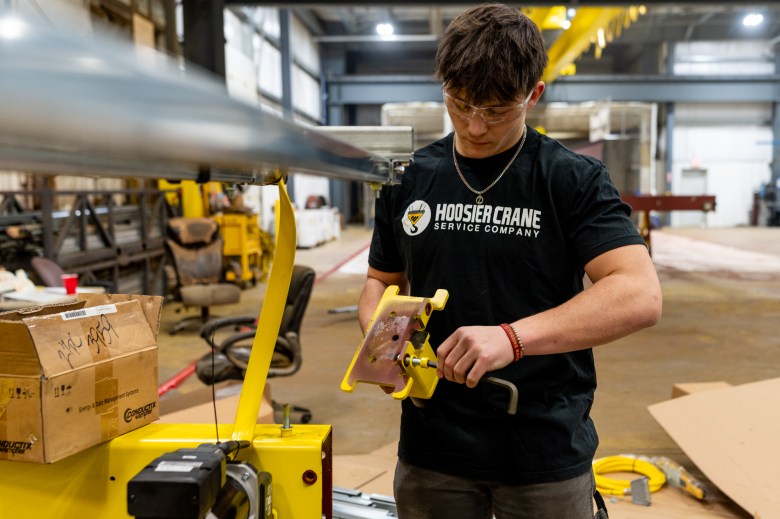
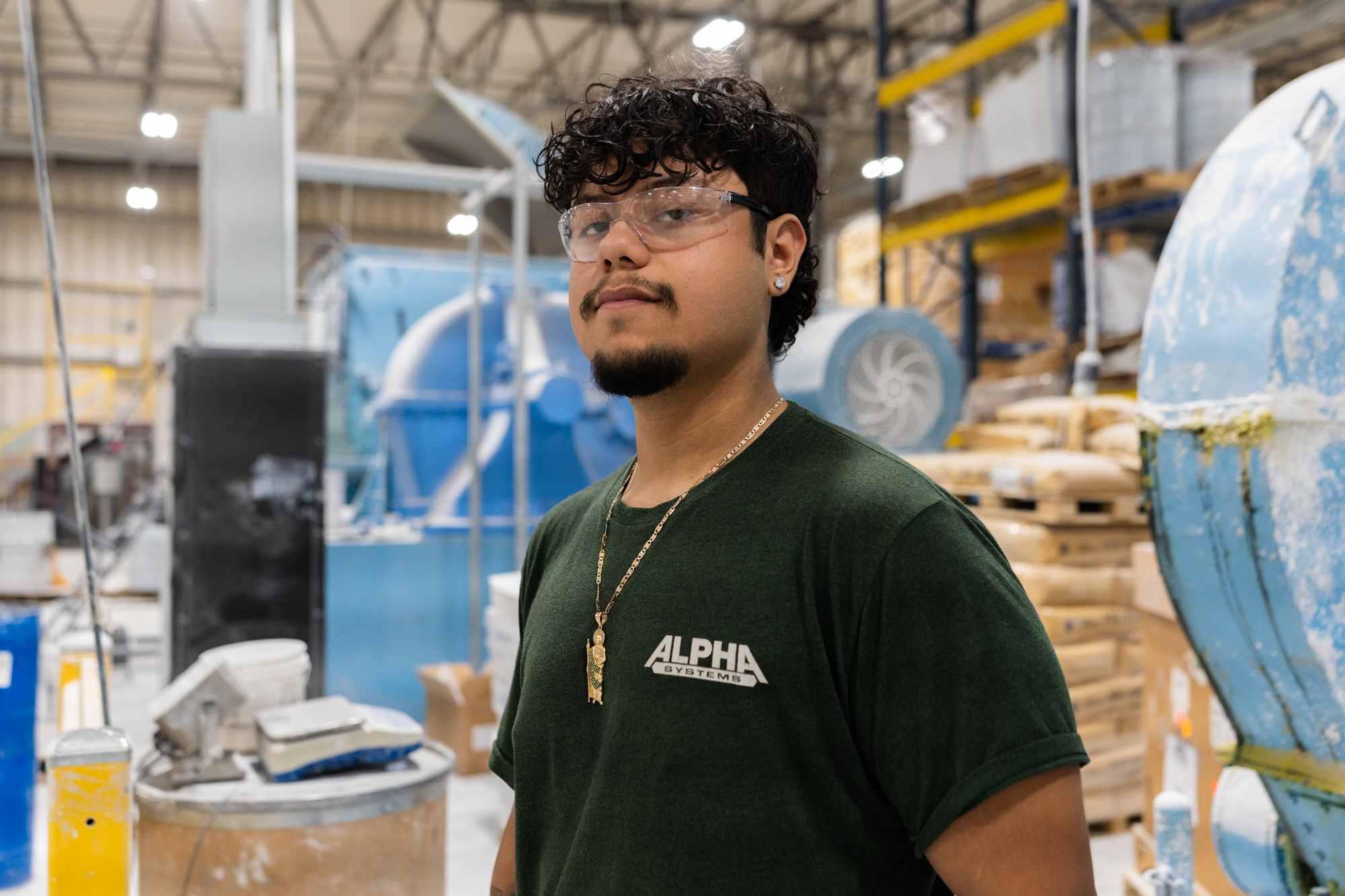
    But despite earning straight A’s, qualifying for the National Honor Society, being voted prom king and playing on the high school football and baseball teams, the teen never relished the idea of spending another four years in school. So in fall 2023 he signed up through his Elkhart, Indiana, high school for an apprenticeship at Hoosier Crane Service Company, eager to explore other paths. There, he was excited to meet coworkers who didn’t have a four-year degree but earned good money and were happy in their careers. 

    Through the youth apprenticeship, Ty started his day at the crane manufacturing and repair business at 6:30 a.m., working in customer service and taking safety and training courses while earning $13 an hour. Then, he spent the afternoon at his school, Jimtown High, in Advanced Placement English and U.S. government classes. 

    In June, the 18-year-old started full-time at Hoosier Crane as a field technician. 

    “College is important and I’m not dissing on that,” Ty said. “But it’s not necessarily something that you need.” 

    Elkhart County is at the forefront of a movement slowly spreading across Indiana and the nation to make apprenticeships a common offering in high school. 

    In 2019, as part of a plan to boost the region’s economic prospects, county leaders launched an effort to place high schoolers in apprenticeships that combine work-based training with classroom instruction. About 80 students from the county’s seven school districts participated this academic year, in fields such as health care, law, manufacturing, education and engineering. In April, as part of a broader push to revamp high school education and add more work-based learning, the state set a goal of 50,000 high school apprentices by 2034.  

    Tim Pletcher, the principal of Jimtown High, said students are often drawn first to the chance to spend less time in class. But his students quickly realize apprenticeships give them work-based learning credits and industry connections that help them after graduation. They also earn a paycheck. “It’s really causing us to have a paradigm shift in how we look at getting kids ready for the next step,” he said. 

    Related: Become a lifelong learner. Subscribe to our free weekly newsletter featuring the most important stories in education. 

    This “earn and learn” model is taking hold in part because of deepening disillusionment with four-year college, and the fact that well-paying jobs that don’t require bachelor’s degrees are going unfilled nationally. The past three presidential administrations invested in expanding apprenticeships, including those for high schoolers, and in April, President Donald Trump signed an executive order calling for 1 million new apprentices. In a recent poll, more than 80 percent of people said they supported expanding partnerships between schools and businesses to provide work-based learning experiences for students.

    Yet in the United States, the number of so-called youth apprenticeships for high schoolers is still “infinitesimally small,” said Vinz Koller, a vice president at nonprofit group Jobs for the Future. One estimate suggests they number about 20,000 nationally, while there are some 17 million high school students. By contrast, in Switzerland — which has been praised widely for its apprenticeship model, including by U.S. Education Secretary Linda McMahon — 70 percent of high schoolers participate. Indiana is among several states, including Colorado, South Carolina and Washington, that have embraced the model and sent delegations to Switzerland to learn more. 

    Elkhart, Indiana, known as the “RV capital of the world,” saw widespread unemployment during the Great Recession. That led community leaders to focus on apprenticeships as a way to diversify their economy. Credit: Camilla Forte/The Hechinger Report

    Experts including Ursula Renold, professor of education systems at the Swiss Federal Institute of Technology (ETH) Zurich, note that importing the model to the United States at a large scale won’t be simple. Most businesses aren’t accustomed to employing apprentices, parents can be resistant to their students trading four-year college aspirations for work, and public transportation to take students to apprenticeships is limited, especially in rural areas. Many high schoolers don’t have a driver’s license, access to a car or money for gas. School districts already face a shortage of bus drivers that makes transporting students to apprenticeships difficult or impossible.

    Still, Renold, who is known as the “grande dame of apprenticeships,” said Indiana’s commitment to apprenticeships at the highest levels of state government, as well as the funding the state has invested in work-based learning, at least $67 million, seem to be setting the state up for success, though it could take a decade to see results. 

    “If I had to make a bet,” said Renold, “I would say it’s Indiana who will lead the way.”

    Related: Apprenticeships are a trending alternative to college, but there’s a hitch

    Elkhart County’s experiment with apprenticeships has its roots in the Great Recession. Recreational vehicle manufacturing dominates the local economy, and demand for the vehicles plummeted, contributing to a regional unemployment rate at that time of nearly 20 percent. Soon after, community leaders began discussing how to better insulate themselves from future economic instability, eventually focusing on high school education as a way to diversify industries and keep up with automation, said Brian Wiebe, who in 2012 founded local nonprofit Horizon Education Alliance, or HEA, to help lead that work.

    Elkhart County, Indiana, was the first community in Indiana to encourage businesses to employ high school students as apprentices, where they can earn work-based learning credits and make industry connections that help them, even if they decide to go on to college. Credit: Camilla Forte/The Hechinger Report

    That year, Wiebe and two dozen local and state political, business, nonprofit and education leaders visited Switzerland and Germany to learn more about the apprenticeship model. “We realized in the U.S., there was only a Plan A, a path to college,” he recalled. “We were not supporting the rest of our young people because there was no Plan B.” 

    HEA partnered with Elkhart County school districts and businesses, as well as with CareerWise, a youth apprenticeship nonprofit that works nationally. They began rolling out apprenticeships in 2019, eventually settling on a goal of increasing participation by 20 percent each year. 

    In 2021, Katie Jenner, the new secretary of education for Indiana, learned about Elkhart’s apprenticeships as she was trying to revamp high school education in the state so it better prepared students for the workforce. Elkhart, as well as six other apprenticeship pilot sites funded by Indianapolis-based philanthropy the Richard M. Fairbanks Foundation, provided a proof of concept for the apprenticeship model, said Jenner. 

    In December, the state adopted a new diploma system that includes an emphasis on experiential and work-based learning, through apprenticeships, internships and summer jobs. 

    Related: Schools push career ed classes ‘for all,’ even kids heading to college

    On a weekday this winter, 17 sophomores at Elkhart’s Concord High School were sitting at computers, creating resumes they planned to use to apply for apprenticeships. The students were among some 50 sophomores at the high school who’d expressed interest in apprenticing and met the school’s attendance and minimum 2.5 GPA requirements, out of a class of roughly 400. They would receive coaching and participate in mock interviews before meeting with employers. 

    Becca Roberts, a former English teacher who now oversees the high school’s college and career programs, said apprenticeships help convince students of the importance of habits like punctuality, clear communication and regular attendance. “It’s not from a book,” she said. “They’re dealing with real life.”

    Becca Roberts, who oversees college and career programs at Concord High School in Indiana, helps students research different companies offering apprenticeships, including job descriptions, work schedules and commuting distances. Credit: Camilla Forte/The Hechinger Report

    One student, Ava Cripe, said she hoped for an apprenticeship of some sort in the health care field. She’d only been a pet sitter and was nervous at the thought of having a professional job. “You’re actually going out and working for someone else, like not for your parents or your grandma, so it’s a little scary,” she said. 

    CareerWise Elkhart has recently beefed up its support for students and businesses participating in apprenticeships. It employs a business partnership manager and customer success managers who help smooth over issues that arise in the workplace — an apprentice who isn’t taking initiative, for example, or an apprenticeship that isn’t sufficiently challenging. “Before, if an issue came up, a business would just fire a student or a student would leave,” said Sarah Koontz, director of CareerWise Elkhart County. “We’re now more proactive.” 

    In Elkhart and across the state, the embrace of work-based learning has worried some parents who fear it will limit, not expand, their children’s opportunities. In previous generations, career and technical programs (then known as vocational education) were often used to route low-income and Black and Hispanic students away from college and into relatively low-paying career paths. 

    Anitra Zartman, Ty’s mother, said she and her husband were initially worried when their son said he wanted to go straight to work. They both graduated from college, and her husband holds a master’s degree. “We were like, ‘Don’t waste your talent. You’re smart, go to college.’” But she says they came around after seeing how the work experience influenced him. “His maturity has definitely changed. I think it’s because he has a responsibility that he takes very seriously,” she said. “He doesn’t want to let people down.”

    Her eldest daughter, Senica Zartman, also apprenticed during her final two years of high school, as a teacher’s assistant. She is now in college studying education. “The apprenticeship solidified her choice,” Anitra Zartman said, and it helped her decide to work with elementary students. Anitra Zartman said she would encourage her two youngest children to participate in apprenticeships too. 

    Ty Zartman works from 6 a.m. to noon at his apprenticeship at Hoosier Crane Service Company before he goes to school for afternoon classes. Credit: Camilla Forte/The Hechinger Report

    Sarah Metzler, CEO of the nonprofit HEA, said apprenticeships differ from the vocational education of the past that tended only to prepare students for relatively low paid, entry-level jobs. With apprenticeships, she said, students must continually learn new skills and earn new licenses and industry certifications as part of the program.

    Litzy Henriquez Monchez, 17, apprentices in human resources at a company of 50 people, earning $13.50 an hour. “I deal with payroll, I onboard new employees, I do a lot of translating. Anything that has to do with any of the employees, I deal with,” she said. She’s also earning an industry-recognized certification for her knowledge of a human resources management system, and says the company has offered to pay for her college tuition if she continues in the position. 

    Koontz said most companies pay for their apprentices to attend Ivy Tech, a statewide community college system, if they continue to work there. One is even paying for their apprentice’s four-year degree, she said. 

    Related: ‘Golden ticket to job security’: Trade union partnerships hold promise for high school students

    Attracting employers has proven to be the biggest challenge to expanding youth apprenticeships — in Elkhart and beyond. In total, 20 companies worked with the Elkhart school districts last year, and 28 have signed on for this coming school year — only enough to employ about a third of interested students. 

    The obstacles, employers say, include the expense of apprentices’ salaries, training and other costs. 

    Metzler and others, though, point to studies showing benefits for employers, including cost savings over time and improved employee loyalty. And in Indiana, the Fairbanks foundation and other organizations are working on ways to reduce employer costs, including by developing a standard curriculum for apprenticeships in industries like health care and banking so individual companies don’t bear the costs alone. 

    Business leaders who do sign on say they are happy with the experience. Todd Cook, the CEO of Hoosier Crane Service Company, employs 10 high schoolers, including Ty Zartman, as engineering and industrial maintenance technician apprentices, approximately 10 percent of his staff. He said the pipeline created by the apprenticeship program has helped reduce recruiting costs.

    “We’re starting to build our own farm system of talent,” he said. Students initially earn $13 an hour, and finish their apprenticeship earning $18. If they continue with the company, he said, they can earn up to $50 an hour after about five years. And if they go on to become trainers or mentors, Cook said, “Honestly, there is no ceiling.”

    Related: A new kind of high school diploma trades chemistry for carpentry 

    Transportation has been a limiting factor too. There’s no public transit system, and students who can’t rely on their parents for rides are often out of luck. “We’d love to offer a bus to every kid, to every location, but we don’t have people to run those extra bus routes,” said Principal Pletcher.

    The state has tried to help by investing $10 million to help students pay for costs such as transportation, equipment and certifications. Each school that provides work-based learning opportunities also receives an additional $500 per student. 

    Indiana has a goal to employ 50,000 high school students as apprentices by 2034. State leaders in business, education, government and nonprofits are working closely with Swiss experts to adopt a youth apprenticeship program similar to the one in that country. Credit: Camilla Forte/The Hechinger Report

    Trump’s executive order called for the secretaries of education, labor and commerce to develop a plan by late August for adding 1 million new apprenticeships. The order does not set a date for reaching that milestone, and it applies to apprentices of all ages, not just high schoolers. Vinz Koller of Jobs for the Future said the goal is modest, and achievable; the number of youth apprenticeships has doubled just in the past few years, he said, and California alone has a goal of reaching 500,000 apprenticeships, across all ages, by 2029. 

    Still, the order did not include additional funding for apprenticeships, and the Trump administration’s proposed budget includes major cuts to workforce development training. In an email, a White House spokesperson said the administration had promoted apprenticeships through outreach programs but did not provide additional information including on whether that outreach had a focus on youth apprenticeships.     

    Back in Elkhart, Ty Zartman, the Hoosier Crane apprentice, has begun his technician job with the company after graduating in early June. He is earning $19 an hour. He is also taking a class at the local community college on electrical work and recently received a certificate of completion from the Department of Labor for completing 2,000 hours of his apprenticeship. 

    Anitra Zartman said she wishes he’d attended more school events like pep rallies, and sometimes worried he wasn’t “being a kid.” But Ty said his supervisor is “super flexible” and he was able to go to the winter formal and prom. “I think I still live a kid life,” he said. “I do a lot of fun things.” 

    Of his job, he said, “I love it so much.”

    Contact editor Caroline Preston at 212-870-8965, via Signal at CarolineP.83 or on email at [email protected].

    This story about high school apprenticeships was produced by The Hechinger Report, a nonprofit, independent news organization focused on inequality and innovation in education. Sign up for the Hechinger newsletter.


    The Hechinger Report provides in-depth, fact-based, unbiased reporting on education that is free to all readers. But that doesn’t mean it’s free to produce. Our work keeps educators and the public informed about pressing issues at schools and on campuses throughout the country. We tell the whole story, even when the details are inconvenient. Help us keep doing that.

    Join us today.

    Source link

  • Wayne State Launches Prison Education Program

    Wayne State Launches Prison Education Program

    Wayne State University

    With the reinstatement of Pell Grant eligibility for incarcerated individuals in 2023, more colleges have launched or restarted prison education programs. Wayne State University in Michigan will join their ranks this fall, offering a bachelor’s degree to incarcerated individuals for the first time.

    Twenty-five students will join the inaugural cohort in August, and the university is forging ahead with program plans despite looming Pell Grant cuts.

    What’s the need: Twenty-five percent of formerly incarcerated people have no high school diploma, and 20 percent have only a high school diploma, compared to the 91 percent of Americans who have attained at least that credential. “We know that today’s workforce, much of it requires a college education, so it’s almost a necessary criterion to earn a living wage in today’s society,” said Michelle Jacobs, a professor of sociology and Wayne State’s Prison Education Program lead.

    While many incarcerated individuals express an interest in postsecondary education, college often gets placed on the back burner after they leave prison as they focus on more pressing challenges, such as meeting basic needs and providing for themselves, Jacobs said. Higher education–in–prison programs help students get a head start on reclaiming their lives after they are released.

    The initiative also ties into Wayne State president Kimberly Andrews Espy’s Prosperity Agenda for the Detroit area, which includes supporting economic mobility for students, improving the health of urban neighborhoods and fostering innovation in the local economy.

    Individuals who participate in postsecondary education programs while in prison are 48 percent less likely to be reincarcerated than those who don’t, and they are more likely to get a job after their release. Research also shows that education-in-prison programs not only benefit the individual but also increase safety in prison settings and can improve families’ socioeconomic mobility.

    “One of our goals for the program is to empower families in low-income communities that have been disproportionately impacted [by mass incarceration],” Jacobs said.

    How it works: Wayne State’s Prison Education Program will enroll 25 incarcerated men at the Macomb Correctional Facility in Lenox, Mich., about 35 miles northeast of the university.

    To be considered, applicants have to be at least five years from their earliest release date, giving them time to finish the program, and they must complete an essay outlining why they want to participate.

    All courses will be delivered in person and the university will provide any school supplies or resources the students need for their coursework, including pens, paper and dictionaries. Students have to complete paper applications and FAFSA forms, so staff will assist with that process.

    Program participants will complete a degree in sociology, as well as a range of general education courses, similar to their on-campus peers. Students can also opt in to an entrepreneurship and innovation minor.

    Both programs are designed to support the unique experiences of incarcerated people, Jacobs said.

    “I’m extremely biased towards sociology, and I think that benefits everyone,” Jacobs said. “I think that incarcerated individuals can benefit so much, not only in terms of understanding the broader structures that have impacted their own realities, but also on that interactional level … I think that’ll be really helpful for them as they’re navigating their lives postrelease.”

    Faculty members from across the university will serve as instructors.

    Facing headwinds: Since beginning the project, Wayne State has encountered various challenges.

    The initial plan was to use donor funding to kick off the program, but officials had to pivot to relying on Pell dollars and money from the Michigan Department of Corrections to cover student tuition. Then, reorganization at the federal Department of Education and a lack of staff stalled approval of the program. Changes to the Pell Grant may further impede the program’s future.

    Despite the obstacles, Jacobs and her team are pushing on.

    “Once we started working on it, I couldn’t let it go,” Jacobs said. “I deeply believe in the transformative power of education, and I also deeply believe that there is an amazing among of talent and wit and love and humor and expertise already in carceral settings … I just made a decision that we will forge ahead regardless of what is happening at the federal level—while, of course, paying attention to it.”

    Wayne State staff received advice and support in establishing the program from the Michigan Consortium for Higher Education in Prison. “It’s very collaborative instead of competitive, which is unique for academic spaces, and I appreciate it so much,” Jacobs said.

    Next steps: Jacobs and her team are currently reviewing student applications to select the inaugural cohort, with plans to enroll another cohort in fall 2026.

    Before classes start this August, participating faculty and students will both complete an orientation. The faculty orientation will provide instructors with professional development that helps prepare them to teach inside a prison, supported by a student organization on campus focused on criminal justice reform.

    Students will be given college-readiness support, as well as access to academic and support resources similar to those offered on campus.

    If your student success program has a unique feature or twist, we’d like to know about it. Click here to submit.

    Source link

  • State Department Unveils Student and Exchange Visitor Visa Social Media Vetting Guidance – CUPA-HR

    State Department Unveils Student and Exchange Visitor Visa Social Media Vetting Guidance – CUPA-HR

    by CUPA-HR | June 24, 2025

    On June 18, the Department of State issued a cable to all U.S. diplomatic and consular posts formally expanding the screening and vetting process for applicants of F, M and J (FMJ) nonimmigrant visas. The State Department guidance resumes FMJ appointment scheduling after a previous announcement from the agency paused all student visa interviews as they prepared for the new social media screening and vetting guidance.

    Background

    At the end of May, the State Department announced that U.S. embassies and consular sections were pausing new student visa interviews as they awaited further guidance on new social media screening and vetting requirements. CUPA-HR joined the American Council on Education and other higher education associations on a letter to Secretary of State Marco Rubio requesting the agency quickly implement the new vetting measures to ensure new student visas could be efficiently processed before the 2025-2026 academic year. No further guidance was publicly announced between the announced pausing of student visa interviews and the cable sent out to all diplomatic and consular posts.

    New Screening and Vetting Guidance

    The cable directs consular sections to resume scheduling FMJ appointments after implementing the new vetting procedures. The guidance requires officers to conduct “a comprehensive and thorough vetting of all FMJ applicants, including online presence, to identify applicants who bear hostile attitudes toward our citizens, culture, government, institutions, or founding principles; who advocate for, aid, or support designated foreign terrorists and other threats to U.S. national security; or who perpetrate unlawful antisemitic harassment or violence.” The posts are directed to implement the new guidance within five business days.

    As explained in the cable, consular officers are directed to conduct intake and interviews in accordance with standard procedures, but once an FMJ applicant is otherwise eligible for the requested nonimmigrant status, officers must temporarily refuse the case under Section 221(g) of the Immigration and Nationality Act (INA). After refusing the case, officers must request the applicant set all social media accounts to “public,” after which the officer must examine “the applicant’s entire online presence — not just social media activity — using any appropriate search engines or other online resources.”

    The new vetting procedures could limit the consular officers’ ability to process student visa applications quickly and efficiently as the cable also mentions that consular sections should “consider the effect of this guidance on workload” when resuming the scheduling of FMJ appointments. Even with these concerns, the cable does request expedited appointments for certain FMJs, including J-1 physicians and F-1 students seeking to study at U.S. institutions where the international student body constitutes 15 percent or less of the total student population.

    While much of the advocacy from interested stakeholders on this issue revolves around students, individuals seeking J-1 visas to participate in cultural and educational exchange programs to conduct research or teach at institutions could be subject to an enhanced level of scrutiny. CUPA-HR will continue to monitor for updates related to the FMJ vetting processes.


    Source link

  • State Department Screening Visa Applicants’ Social Media

    State Department Screening Visa Applicants’ Social Media

    John McDonnell/Getty Images

    The U.S. State Department is rolling out sweeping new rules for vetting student visa applicants using their social media presence, according to Politico.

    The new process will include screening for “any indications of hostility towards the citizens, culture, government, institutions or founding principles of the United States,” according to an internal State Department cable. 

    Department officials will also look for posts that signal “advocacy for, aid or support for foreign terrorists and other threats to national security” and “support for antisemitic harassment or violence,” specifically citing support for Hamas—a charge commonly levied against student protesters advocating for Palestinian rights—as grounds for rejection. The cable also directs officials to cull applicants who “demonstrate a history of political activism.”

    The news comes a few weeks after Secretary of State Marco Rubio paused all student visa interviews in order to implement a new screening policy focusing on students’ online activity. The Associated Press reported that the department rescinded the pause, but applicants who don’t allow the government to review their social media accounts could be rejected.

    The cable is the Trump administration’s latest effort to curtail the flow of international students to the U.S., as tens of thousands of foreign students await approval of their visas after months of delays and with only weeks until the start of the fall semester. 

    State Department spokespeople did not respond to a list of questions from Inside Higher Ed in time for publication. 

    Source link

  • Counslr Launches in Texas to Increase Access to Mental Health Support for Staff and Students

    Counslr Launches in Texas to Increase Access to Mental Health Support for Staff and Students

    New York, NY –  Counslr, a leading B2B mental health and wellness platform, announced today that it has expanded its footprint into the State of Texas starting with a partnership with Colorado Independent School District (ISD) in Colorado City, TX. This partnership will empower students and staff to prioritize their mental health by enabling them to access unlimited live texting sessions with Counslr’s licensed and vetted mental health support professionals, who are available on-demand, 24/7/365 and also utilize the app’s robust and curated wellness resources. By increasing accessibility to Counslr’s round-the-clock support, Colorado ISD aims to empower those silent sufferers who previously did not or could not access care, whether due to cost, inconvenience, or stigma.

    Texas is facing a critical mental health care crisis, with over 95% of its counties officially designated as Mental Health Professional Shortage Areas. This alarming statistic underscores the severe lack of access to mental health services across the state, particularly in rural, border, and frontier communities. This resource scarcity underscores the urgent need for additional resources and innovative solutions to bridge this critical care gap for school communities.

    “We’re excited to partner with Counslr to bring innovative, accessible mental health resources to our school community,” said Alison Alvarez, Family and Community Engagement Coordinator, of Colorado ISD. “This partnership empowers our 6-12 grade students and staff with the support they need to thrive—both in and out of the classroom.”

    As factors such as academic pressures, social media influence, burnout and world events contribute to an increase in mental health challenges for young people, schools throughout the country are recognizing the growing need to offer more accessible, prevention-focused resources. A recent study found that digital mental health apps like Counslr can play an important role in expanding access to mental health support, especially for school communities. Most users turned to Counslr through on-demand sessions, showing just how valuable it is to have someone available in the moment when support is needed most. Interestingly, more than 80% of sessions happened between 7 PM and 5 AM, a time when traditional counseling services are usually unavailable. This suggests that Counslr helps fill a critical gap, offering students and school community members a reliable way to talk to licensed counselors around the clock. The app was also used for a wide range of concerns, highlighting its potential to meet diverse mental health needs through both immediate and scheduled support.

    “As we expand across the country, we’re proud to partner with new school communities to ensure that every student, regardless of location or background, has access to the mental health support they deserve,” said Josh Liss, Counslr CEO. Adding that, “With most of Counslr’s users being first-time care seekers, we’re excited to help reach those traditionally unreachable, who need help but do not or cannot access it, no matter where they are located.”

    ABOUT COUNSLR

    Counslr is a text-based mental health support application that provides unlimited access to robust wellness resources and live texting sessions with licensed professionals, 24/7/365. Users can access support on-demand within two minutes of opening the app, or by scheduled appointment. Through real-time texting, users enjoy one-on-one, private communication with a licensed counselor that can be conducted anytime, anywhere. Counslr was designed to help individuals deal with life’s day-to-day issues, empowering individuals to address concerns while they are “small” to help ensure that they stay “small”. Counslr partners with organizations of all shapes and sizes (companies, unions, nonprofits, universities/colleges, high schools, etc) so that these entities can provide Counslr’s services to their employees/members/students at no direct cost. For more information, please visit www.counslr.com.

    eSchool News Staff
    Latest posts by eSchool News Staff (see all)

    Source link

  • Why Teachers Can’t Afford to Wait on the Sidelines

    Why Teachers Can’t Afford to Wait on the Sidelines

    Tired of talking about AI? That’s too bad. The technology remains the most impactful force in education. The challenge becomes avoiding all the Claptrap. Thankfully, that’s where Denise Pope, Co-Founder of Challenge Success at the Stanford Graduate School of Education, comes in.

    I had the chance to explore the current AI state-of-play from her perspective. One striking disparity I haven’t heard talked about: While AI usage among students has skyrocketed—from 25% to 60% at the middle school level and 45% to 75% at the high school level over just two school years—only 32% of teachers report using AI for academic purposes.

    This gap has created what Denise describes as an educational “La La Land,” where students are experimenting with AI tools while many schools lack clear policies or guidance. The absence of structured approaches is breeding anxiety among both educators and students, who are left wondering when and how AI should appropriately be used in academic settings.

    Click through to hear how Denise believes this issue can be addressed:

    Kevin Hogan
    Latest posts by Kevin Hogan (see all)

    Source link

  • After Michigan State trustees told students to call professor a racist, his lawsuit is moving ahead

    After Michigan State trustees told students to call professor a racist, his lawsuit is moving ahead

    Professor Jack Lipton scored a victory for free speech last week after a federal court allowed his lawsuit to move forward against two Michigan State University trustees who he claims not only urged students to call him racist, but told them how to phrase it.

    In his lawsuit, Lipton alleged that two trustees, Rema Vassar and Dennis Denno, met with MSU students, encouraged them to file complaints against Lipton with MSU’s internal civil rights office, and asked students to condemn Lipton as racist in public statements, op-eds, and on social media. MSU hired the law firm Miller & Chevalier to conduct an independent investigation, producing a report you can read online. According to Lipton, it found that Vassar and Denno planned the attacks and even provided others with specific language to paint Lipton as racist, anti-Palestinian, and anti-Muslim.

    For example, in one recorded conversation, Denno told students, “The other thing you can do to help us is attack Jack Lipton, the Chair of the Faculty Senate . . . call him out, call him a racist.”

    What was Lipton’s “racist” crime?

    In October 2023, at a public Board of Trustees meeting that followed an open letter accusing then-BOT Chair Vassar of ethics violations, Lipton read a resolution on behalf of faculty calling for Vassar’s resignation. The meeting erupted in chaos, marked by jeers from Vassar’s supporters.

    The Constitution doesn’t cease to exist just because someone’s feelings got hurt at a trustee meeting.

    The next day, while making clear he was speaking in his personal capacity and not as a faculty representative, Lipton told a reporter that Vassar could have stopped the chaos of the meeting with “a single statement … yet she elected to let the mob rule the room.”

    That single word — mob — triggered what Lipton describes as a coordinated retaliation campaign by Vassar and Denno.

    Lipton apologized for using the word “mob,” as well as for any unintended racial undertones, but did not stop calling for accountability over Vassar’s alleged ethics violations — and he says Vassar and Denno’s harassment of him continued.

    In November 2023, the NAACP Michigan State Conference Youth & College Division released a statement accusing Lipton of “racial terrorism.” Also that month, the organization Diverse: Issues In Higher Education published an op-ed arguing that Lipton had used the word “mob” because he wanted to traumatize black and Palestinian students. At a BOT meeting that December, Denno read a statement accusing Lipton of “criminalizing students” and described his use of the word “mob” as “racism and violent language.”

    What’s more, even though the board eventually voted to censure both Vassar and Denno, as advised by investigators for a range of misconduct including their attacks on Lipton, Vassar didn’t stop there. At a meeting in September 2024, she mocked Lipton and questioned his right to speak on matters of civil discourse, which he cites as yet another effort to chill his speech.

    In language as dry as it was devastating, the court summarized the allegations that these trustees abused their power to carry out what amounts to a smear campaign. Lipton claims that Vassar and Denno “used their positions as BOT members to attack Lipton for the comment he made as a private citizen” and “used their BOT pulpit to funnel adverse action towards Lipton via proxies, leveraging their BOT membership to speak through students, supporters, and members of the public.”

    The court also noted that Lipton’s original “mob” comment was “speech regarding matters of public concern,” as it critiqued the behavior of a public official at a public meeting, and Lipton made the remark as a private citizen. The First Amendment protects faculty when they speak as private citizens on matters of public concern, such as raising state university ethics violations to the media, as Lipton did.

    UPDATE: Another federal appeals court backs academic free speech for public employees

    After FIRE secured a lawyer for a law professor at the University of Illinois Chicago, the school reached a resolution but later reneged on the deal. That’s when the professor sued.


    Read More

    While the court dismissed MSU and its Board of Trustees as defendants, Lipton is now free to pursue his claims against Vassar and Denno themselves — and they have not exactly covered themselves in glory. The university investigation that recommended their censure found that Vassar had taken courtside tickets and free flights while Denno had pressured consultants reviewing MSU’s response to the 2023 mass shooting on campus to tone down any criticism of the trustees. In fact, just this week, Gov. Gretchen Whitmer declined the MSU board’s official request to remove Vassar and Denno, though the governor’s counsel said this “by no means indicates a condoning of the conduct alleged in the referral.” Vassar and Denno may have retained their seats on the board, but they are hardly out of the woods. 

    Now, Lipton’s case moves to discovery, where we’ll get a closer look at how MSU’s top brass reacted when a faculty member stepped out of line by doing his civic duty, and potentially to trial. While this week’s court decision is far from a final ruling, it shows the court believes Lipton’s allegations deserve to be heard, and it’s a reminder that the Constitution doesn’t cease to exist just because someone’s feelings got hurt at a trustee meeting.

    Source link

  • How State Policies Can Support Dual Enrollment Students

    How State Policies Can Support Dual Enrollment Students

    Headline: How State Policies Can Support Dual Enrollment Students

    Title: Sharing the Cost: Insights From States Funding Dual Enrollment to Expand Access

    Authors: Krista Kaput, Sharmila Mann, and Carrie Hahnel

    Source: Bellwether

    Research demonstrates that participation in dual enrollment programs improves student outcomes, with the potential to increase graduation rates and college enrollment and further students’ postsecondary attainment. While these benefits reach all participating students, students face unequal access to dual enrollment programs, which serve white and high-income students at a higher rate than Black, Hispanic, Indigenous, and low-income students.

    To better understand the policies in place to support dual enrollment programs, a new report published by Bellwether examines dual enrollment programs and policies among four states, finding common themes related to both cost-sharing and access that states can replicate to further promote equity in dual enrollment participation.

    In analyzing the states and programs, the report notes seven themes related to increasing access to dual enrollment programs to serve as models for other states.

    Three of these themes involve funding policies:

    1. States allocate the full, per-pupil cost for dual enrollment students directly to participating school districts, ensuring that districts are not put at a financial disadvantage if students attend dual enrollment courses.
    2. Dual enrollment students are accounted for in community college full-time equivalent calculations, ensuring that community colleges are sufficiently funded for all students during the budget allocation process.
    3. States either fully or partially reimburse community colleges for the tuition costs associated with dual enrollment students, ensuring that costs are kept low for students while supporting the additional costs for community colleges.

    Four more themes concern policies unrelated to funding:

    1. There are specific, state-set goals for dual enrollment programs, which can involve a method for data collection, setting program performance expectations, and alignment with other state attainment initiatives, to ensure that students are receiving high-level programming.
    2. Community colleges and K-12 school districts are responsible for reporting dual enrollment program data to the state, allowing for policy adjustments supporting both strengths and opportunities for growth.
    3. States require the establishment of formal agreements between school districts and community colleges, ensuring that responsibilities for dual enrollment students are acknowledged and upheld among both parties.
    4. Dual enrollment coursework provides experience toward a credential of value or a need among the workforce, increasing the likelihood that credits earned through dual enrollment will support future postgraduation plans.

    Beyond the seven themes that support dual enrollment students found among the four states, the authors of the report go on to note further potential policy changes that states may make to better serve underrepresented populations in dual enrollment programs. To increase access and participation, states ought to establish sustainable funding that provides frequent investment in support of dual enrollment students. Students’ participation can also be supported by increasing the number of instructors among educational areas of high demand, establishing strong advising systems among school districts and community colleges, and allocating funding toward non-tuition costs that may hinder enrollment.

    To read more about specific dual enrollment programs, state policies, and how states can further increase access and participation among dual enrollment students, click here.

    —Julia Napier


    If you have any questions or comments about this blog post, please contact us.

    Source link

  • State Dept. to Expand Social Media Screening for Intl. Students

    State Dept. to Expand Social Media Screening for Intl. Students

    John McDonnell/Getty Images

    The Trump administration is planning to implement a policy that would require all student visa applicants to undergo social media vetting, according to a cable sent by Secretary of State Marco Rubio, Politico reported Tuesday. All new student visa interviews have been paused in preparation for the new policy.

    “The Department is conducting a review of existing operations and process for screening and vetting of student and exchange visitor (F, M, J) visa applicants, and based on that review, plans to issue guidance on expanded social media vetting for all such applicants,” the memo reads, according to a copy published in full on social media by independent journalist Marisa Kabas.

    The planned changes come amid the federal government’s ongoing attacks on student visa holders, which began in March with the detention of multiple students and recent graduates who had been involved in pro-Palestinian protests on their campuses. Shortly after, the administration terminated thousands of student visa holders’ records in the Student Exchange and Visitor Information System, the database the houses international students’ records, leading to a slew of legal actions from students who feared they wouldn’t be able to continue studying in the U.S.

    Most recently, the Trump administration announced last week that it would prohibit Harvard University from enrolling international students as punishment for allegedly failing to prevent antisemitism and harassment on campus during last year’s pro-Palestinian encampments. Though that action was quickly blocked by a judge, the move could be devastating for the Ivy League institution, where international students make up more than a quarter of the student body.

    The proposed policy would increase the amount of time, manpower and resources required to process visa applications, according to experts.

    Faye Kolly, an immigration attorney based in Texas, noted that it’s not unusual for immigration officials to review visa applicants’ social media profiles, which they are required to list on certain immigration forms. But the administration has begun specifically screening the social media accounts of some returning students with visas who had participated in pro-Palestinian campus protests, though Politico reported that State Department officials had found the guidance on how to complete those screenings vague.

    It is not clear how this expanded vetting process will unfold; Rubio included no details in the memo, which said further guidance would be disseminated in the coming days. Though the memo didn’t say as much, Kolly predicted that the extra screening will involve looking “at [applicants’] social media handles more closely for what I’m assuming is going to be speech that could be considered either anti-Israel or pro-Gaza.”

    International education advocates have sounded the alarm on the proposed policy, arguing that it limits prospective students’ right to free expression and illustrates the Trump administration’s devaluation and distrust of international students.

    Fanta Aw, the CEO of NAFSA, an association for international educators, told Politico, “The idea that the embassies have the time, the capacity and taxpayer dollars are being spent this way is very problematic. International students are not a threat to this country. If anything, they’re an incredible asset to this country.”

    Kolly told Inside Higher Ed that the move harks back to the SEVIS terminations in March and April. Both actions, she said, indicate the administration’s lack “of nuance … regarding international students. It’s [taking] a simplistic approach to a very complex issue. When you target international students en masse, it’s irresponsible.”

    Daryl Bish, the president of EnglishUSA, which represents all English language programs in the country, said the change will reverse recent progress on the visa approval process and have an “immediate impact” on enrollment in English language programs.

    “The extraordinary decision to pause visa interviews, under the guise of security and enhanced vetting, is a dangerous precedent that will have immediate short-term consequences,” Bish said. “Visa appointment wait times have, generally, improved since the pandemic. This means that many students apply for the visa close to their program start date. The pause in interviews, if protracted, will force these students to change their plans.”

    Elora Mukherjee, a law professor at Columbia University and the director of the law school’s Immigrants’ Rights Clinic, also criticized the government for pausing new student visa interviews in the interim—especially as the memo gave no indication of how long the pause might last.

    “The pause is destructive to our national interests and America’s reputation in the world, and its effects may be felt for years. It has thrown the lives of tens of thousands of prospective international students into turmoil and will cause chaos and disruption at colleges and universities across the country. International students have been preparing for months to join U.S. colleges and universities in the fall, and schools have been preparing to welcome them,” she wrote in an email to Inside Higher Ed.

    “It is unclear how long the ‘pause’ will be in place, what heightened scrutiny visa applicants will face once the pause is lifted, and the extent to which decisions about granting visas may be tainted by prejudices based on race, religion, and national origin.”

    Source link

  • Penn State Closure Plan Prompts Sharp Reactions

    Penn State Closure Plan Prompts Sharp Reactions

    As Pennsylvania State University’s Board of Trustees prepares to decide the fate of seven of its 19 Commonwealth Campuses where enrollment has collapsed over a decade, faculty, lawmakers and some board members are questioning the university’s commitment to the state and say administrators haven’t been transparent about their decision-making process.

    University administrators say the enrollment numbers alone don’t support keeping open the seven campuses slated to close. Several of those campuses have seen enrollment fall by more than 40 percent since fall 2014.

    Penn State’s Board of Trustees met last week in a private executive session but did not vote on the plan. They’re expected to do so Thursday.

    President Neeli Bendapudi has made the case for the closures, arguing such actions are necessary, as the university can no longer sustain all of its branch campuses financially amid severe enrollment declines. She proposed closing the Dubois, Fayette, Mont Alto, New Kensington, Shenango, Wilkes-Barre and York campuses. Those campuses enroll almost 3,200 students altogether, the largest of which is Penn State York with 703 students last fall. The smallest is Shenango, which enrolled 309 students in fall 2024.

    Now, as the proposal nears the finish line, its fate is up the air and Bendapudi is facing concerns about the process of reaching the seven names.

    A ‘Difficult But Necessary’ Plan

    University leadership began drawing up those plans in February after a difficult year for higher education across the Keystone State. Four universities in the state shut down (or ended degree programs, as in the case of the Pennsylvania Academy of the Fine Arts) in 2024. The closures were mostly brought on by enrollment challenges, though some were dogged by concerns about fiscal mismanagement.

    University administrators spent the last several months reviewing 12 campuses for possible closure before the list of seven leaked to media outlets last week.

    Officials in a 143-page document cast the plan as “difficult but necessary decisions to ensure its long-term sustainability, allowing for continued investment in student success and dynamic learning environments for years to come” amid plunging enrollment and broad demographic challenges.

    Officials argued that the seven campuses identified for closure “face overlapping challenges, including enrollment and financial decline, low housing occupancy, and significant maintenance backlog.” They added that “projected low enrollments pose challenges for creating the kind of robust on-campus student experience that is consistent with the Penn State brand” and would require significant investments, including $200 million for facilities alone.

    “I believe the recommendation balances our need to adapt to the changing needs of Pennsylvania with compassion for those these decisions affect, both within Penn State and across the commonwealth,” Bendapudi said in a statement when the plan was released.

    She added that there is a two-year timeline for closing campuses, so they wouldn’t shut down until the end of the spring 2027 semester.

    Now the plan heads to the 36-member Board of Trustees. However, some trustees have openly expressed their opposition to the proposal.

    Jay Paterno is one of several board members who have pushed back on the plan, writing an op-ed last month with four other trustees that argued Penn State should explore other options.

    In an interview with Inside Higher Ed, Paterno criticized the proposal as rushed.

    “We’ve been presented with two options. One is the status quo, which everybody knows is not viable and is kind of a straw man. The other option is to close all seven campuses,” he said.

    Given that the costs of operating those campuses comprise “less than half of 1 percent of our budget,” Paterno said the board should take more time to explore solutions. He argues that the university has not tried to leverage fundraising to support struggling Commonwealth Campuses and that the administration should slow the process down and reach out to potential donors.

    “We’d rather be a year late than a day early,” Paterno said.

    He also noted the decision to close campuses is not Penn State’s alone. The university is state-affiliated but not state-owned, which gives it a greater degree of autonomy than fully public institutions. But since the university receives some public funds, it must submit plans to close campuses to the Pennsylvania secretary of education, who must then approve the proposal.

    ‘A Betrayal’

    Faculty have concerns about job losses, what will become of rural student populations and an alleged lack of transparency in the closure process.

    One faculty member at Penn State Wilkes-Barre, speaking anonymously due to concerns about retribution, noted, “While most faculty saw this coming, it was heartbreaking to see it in writing.”

    They questioned Penn State’s support for its Commonwealth Campuses, arguing that “the decision to decrease funding” to those locations that serve in-state students sends a strong message about where Penn State places its priorities” while it invests heavily in its main campus. They also pointed to renovations at Beaver Stadium projected to cost $700 million.

    (That project is believed to be the most expensive renovation in the history of college athletics.)

    “The lack of shared governance, transparency, and respect for contributions of faculty to Penn State University makes it easy to see why unionization efforts among faculty are needed,” they wrote, highlighting ongoing efforts by the Penn State Faculty Alliance and SEIU 668 to unionize.

    Some state politicians have also panned the plan.

    State Senator Michele Brooks, a Republican who represents a district that includes the Shenango campus, told Inside Higher Ed in an emailed statement that she recently met with trustees, who conveyed to her and others “that they feel this has been a deeply flawed process.”

    She urged Penn State’s administration and governing board to re-evaluate the decision and to work “with communities on innovative ways to reinvest in these campuses and help them grow.”

    Republican state representative Charity Grimm Krupa, who serves a district that includes the Fayette campus slated for closure, accused Penn State of betraying its mission in a fiery statement.

    “Shutting down the Fayette campus isn’t about financial responsibility; it’s about walking away from the very students Penn State was created to serve,” Grimm Krupa said last week. “It’s a betrayal of the university’s land-grant mission and a slap in the face of rural communities. Abandoning this campus sends a clear message: if you’re not from a wealthy or urban area, Penn State doesn’t see you as worth the investment. That’s disgraceful, and I urge every trustee to vote no against these closures.”

    Source link