Tag: Student

  • The rubbish bin theory of the student experience

    The rubbish bin theory of the student experience

    Students have two kinds of problems.

    There are the big, systemic, institutional policy failures that make their lives miserable. These might be social ills of discrimination and prejudice rendered into the classroom experience. These might be reasonable adjustment policies that turn out to be entirely unreasonable. Or it might be the pecuniary architecture that collapses the student experience into unending part-time work and just about squeezing study in.

    In general students’ unions and universities are set up to address these kinds of challenges. There are committees, policies, liaison groups, central budgets, and a power and decision making architecture which faces these problems. This doesn’t mean they can always solve these issues, if they ever can be solved, but it does mean they are at least positioned to have a go at doing so.

    Power

    In the realm of the fundamentally bad and wrong a senior executive often can make things better. After all, they set institutional budgets, strategies, policies, contracts, and rules that impact every student. However, there is another kind of problem that impacts students where they just have less proximity to the issue.

    Imagine the student where things are basically ok. Life is tough, as it is for many students, but as far as they can tell they do not believe they are being treated unfairly, they seem to be broadly getting the big things they were promised when they turned up, and all available evidence suggests their lecturers are working within a set of policies that seem to be pretty fair. In other words, things aren’t too bad.

    However, as time goes on things don’t go badly wrong but they do go a little awry. The common room they went to before lectures doesn’t open until 09:30 in the winter. Their feedback has gone from arriving in six weeks to seven which adds a little bit more pressure on their exams. The library is suddenly much busier as the cold nights have set it. The buses are now much less frequent after a timetable change. The kit they need for their programmes is now more booked up as a new term has brought a new set of modules. And onward and onwards on the ever more bits of bad experience ephemera that clog up students’ lives.

    This is the rubbish bin theory of the student experience. Nobody is doing anything terribly wrong, in fact many people will be doing the right thing in some context and doing the best with the time they have, but the little bit of bad experience builds up and up until the whole student experience stinks. Some of these bits of rubbish are bigger than others, some might even amount to breaches of OfS’s ongoing conditions, but nobody is doing anything which is intentionally malicious.

    The rubbish bin theory of the student experience posits that everyone within a students’ ecosystem can make perfectly reasonable decisions within their own domains, turning down the heating to save on budgets, reconfiguring communal meeting space for staff offices, and changing opening hours of the reception desks might make sense in the context of the university more generally and even for some students some of the time. It is that the university is too big, too bureaucratic, and does not always operate on a small enough level to always take the rubbish out.

    The rubbish bin

    The problem with the smelly rubbish bin is that it’s often only noticed when it’s full. For example, the classic students’ union response is to bring together lots of information from course reps, school reps, committees, and other sources, to then feedback for subsequent years about a different bin, different ways to take out the rubbish, new bin liners (you get it I have tortured the metaphor now). The challenge is that even if you really push down the rubbish in one place it will only pop out in another (ok I am really done this time).

    This is because the issues are often too small-scale to warrant institutional intervention, which the union is well set up to advocate for, and often too local, emerging in programmes or departments, to be wholly made visible to the union or to be wholly made to work with university policy. The bin is able to get more and more full because everyone just flings their bit of rubbish in and it’s not anybody’s job to take it out from time to time (ok, sorry).

    The university incentive is to deal with the regulatory challenges in front of them. And while these are ongoing conditions the information the university can rely on, publish, and collate, is often a retrospective indicator. To take only two examples. NSS reporting encourages universities to deal with the issues of students no longer at the insitution. Graduate Outcomes measure student performance at a point in time in an ever changing labour market.

    This isn’t to say students’ unions don’t do lots of things for individuals, it’s not to say that universities only care about the big issues, that isn’t true, it’s a question of how these two institutions keep an eye on both the structural problems and the emerging challenges.

    Public administration

    There are three interesting public administration and organising theories that might help conceptualise this challenge. Henry Mintzberg, one of the most important public administration theorists of the 20th century, imagines organisation strategy like a potter at a wheel. The raw ingredients exist (staff, committees, students’ unions, money, representatives, and so on), but the shape of the pot only comes into focus when hands are applied to it. This is strategy by doing says that strategic intent only becomes apparent through patterns in retrospect.

    This would mean that students’ unions would have much looser resource allocations and move across departments, programmes, central university structures, representative groups, and ways of working, where the challenges and insight led them. It would mean that universities find the means to have more hands at the wheel. Giving school, departmental, and faculty committees more power, allocating budgets for taking out the rubbish bin, and challenging central structures so they spend more time focussing on emerging problems, not the retrospective ones encouraged by the regulatory reporting cycle.

    Community organising, which is a direction of travel across students’ unions, is slightly different to Mintzberg’s theory of emergent strategy. As imagined by the likes of Saul Alinsky community organising assumes that communities have the solutions but not the positional power to address issues. Emergent strategy places a greater emphasis on cross-organisational actions that can both exist within and between sites of local organising. They are both about allowing ideas to emerge with greater flexibility; it is that ideas of emergent strategy places greater emphasis on the initiation of those ideas and the provision of the materials to affect change within an organisational context. This would hold that rather than having a committee of people to take the rubbish bin out let students do it themselves through helping them organise and giving them budgets and responsibilities.

    The other important theorists here are Denhardt and Denhardt and their idea of New Public Service which sets out organisations to serve rather than steer their stakeholders. In this model universities and students’ unions would spend much less time trying to fix the problems of their students but instead provide the spaces through which students could learn from each other, provide resources through which students could advocate for themselves, and provide insights that would allow students to more effectively make the case for change to the people in power. In this model the emphasis would be on how universities and students’ unions open up bureaucratic spaces to allow a greater plurality of student voices to come forward.

    These are just three models amongst many but they raise the question of the best means of keeping an eye on the accumulation of student issues that lead to generally bad experiences. It comes down to a set of trade-offs which could be brought into sharper relief. The extent to which the universities, students’ unions, and their partners, ultimately develop policy and ways of working to support people to solve their own problems and they extent to which they are better served putting the organisational bureaucracy behind these bigger issues.

    The rubbish bin theory although a metaphor brings into focus the literal problem of how universities value maintenance. The accumulation of student issues are partially addressed by the ongoing commitment to keeping stuff open, working, reliable, and functioning. In general, reward often follows doing a good new thing rather than keeping the good old thing working. The issue of the student experience is intrinsically tied to the recognition and reward of those who take the rubbish out.


    Source link

  • How Community Colleges Can Simplify the Student Enrollment Process

    How Community Colleges Can Simplify the Student Enrollment Process

    Key Takeaways:

    • Community colleges play a vital role in addressing enrollment barriers, offering tailored support to first-generation and working students.
    • Proactive strategies, such as early communication, community outreach, and wraparound services like food assistance and mental health support, help students navigate challenges and stay engaged.
    • Leveraging technology like CRM systems and AI tools simplifies the student enrollment process and enhances conversion rates.
    • Measuring success through metrics such as conversion rates, re-enrollment, and first-semester engagement lets colleges refine their strategies and better support student persistence and retention.

    The enrollment journey at community colleges can be far from straightforward, as many students face barriers beyond academics—from concerns over affordability to balancing family and work responsibilities and navigating financial aid. For example, nearly 75% of public two-year college students work while enrolled, including 46% working full time, and two-thirds of people enrolled in community colleges are first-generation students, who often do not receive the guidance and support that other students might receive from within their support systems.

    Community colleges are uniquely positioned to open doors for these students who might otherwise never step foot into higher education. By breaking down enrollment barriers, fostering early communication, and utilizing technology, community colleges can create an enrollment experience that meets students where they are. In turn, they can build pathways that lead to success, one student at a time.

    Identifying Enrollment Barriers

    For students new to the world of higher education, the student enrollment process can feel daunting. While community colleges are open-access institutions, this does not always translate to an easy path. Many students come from communities where attending college is not the norm, and some face resistance from family members or struggle with time constraints due to family responsibilities. Financial aid is also a common sticking point. Some students worry about taking on debt, while others have families unwilling to fill out the FAFSA due to privacy concerns, which adds to the complexity of obtaining financial assistance.

    Community colleges that proactively identify these barriers can uncover solutions tailored to each student’s situation. For instance, understanding the unique financial, familial, or community pressures facing students can inform how colleges offer support. Identifying opportunities to become more transparent, such as having standardized institutional aid packages that allow students to see how much aid they would receive, exemplifies this shift toward recognizing and removing institutional barriers. By locating obstacles early, colleges can guide students more effectively throughout the enrollment process, keeping them on track and engaged.

    Strategies for Eliminating Barriers in the Student Enrollment Process

    Addressing these challenges often requires creative solutions that reach beyond academic support. A critical strategy lies in educating students—and, when possible, their communities—on the value of a college education. Many students find themselves questioning the worth of a degree, particularly in communities where traditional college education may be seen as unnecessary. To address this, some colleges have begun integrating community outreach programs that outline the tangible benefits of a college education, from career advancement to personal growth. Tracking college enrollment trends also offers insight into where additional guidance might be needed, ensuring that community colleges can adapt and refine their programs.

    Community colleges can better aid students by offering wraparound services, such as food assistance, mental health counseling, transportation services, and financial literacy courses. Food insecurity, for example, is a widespread problem affecting 23% of community college students. Liaison’s IMPACT Grant, which champions initiatives such as on-campus food pantries, is an excellent example of how colleges can tackle this barrier head-on. By promoting awareness of available resources, colleges make sure students know where to find the support they need, allowing them to focus on their studies rather than their next meal or car troubles.

    Free community college programs, now offered in 36 states, also alleviate the financial strain of pursuing a credential by removing student debt as a barrier to entry. As more colleges promote these programs, the cost of higher education becomes less intimidating, particularly for first-generation and low-income students who might otherwise forgo college due to cost concerns.

    The Critical Role of Early Communication

    Community colleges often enter the higher education conversation with prospective students later than four-year institutions, missing critical opportunities to provide guidance. While some universities engage students as early as their freshman year of high school, community colleges might not start outreach until a student’s senior year. This timing can make a significant difference: earlier communication lets students weigh all their options without feeling pressured by high tuition at traditional four-year colleges. It also opens up time to explore scholarships, grants, and other options.

    Reaching students sooner can reduce enrollment anxiety, allowing them to explore programs that align with their financial needs and career goals. By actively promoting programs and resources through social media, local events, and high school partnerships, community colleges can position themselves as accessible, affordable, and valuable options for higher education.

    Leveraging Technology to Support Enrollment Journeys

    Innovative technology, such as CRM systems and AI-driven tools, plays a transformative role in simplifying the enrollment process. Liaison’s TargetX and Outcomes CRMs, for example, provide tailored platforms for managing student engagement and application processing. With tools for omnichannel marketing, application management, and progress tracking, these platforms allow students to communicate with advisors and gain clear guidance throughout the admissions process. As a result, institutions are able to improve conversion rates and enroll more best-fit students.

    AI-powered chatbots, now integrated into these CRMs, also assist students in navigating questions and concerns in real-time. This technology offers immediate, practical support that keeps students on track toward enrollment and reduces logistical barriers.

    Measuring Enrollment Success

    To understand the impact of their enrollment strategies, community colleges must look at specific metrics that reflect student progress and satisfaction. Identifying conversion rates at each enrollment stage offers insight into where students might drop off and allows administrators to refine support systems accordingly. Once students are on campus, tracking their first-semester engagement—particularly through the crucial first four weeks—can highlight early challenges and help colleges design interventions to boost retention as well as persistence after the first year.

    Examining re-enrollment rates from semester to semester is another key indicator of success. Demonstrating steady improvements in these areas reflects well on the effectiveness of a school’s holistic support and technology. Such data can also indicate how effectively institutions are offsetting the rate of community college enrollment decline, a pressing issue for those seeking to sustain their missions.

    Community colleges serve as the best opportunity to access higher education for many students. By removing enrollment barriers, actively communicating early and often, and leveraging technology to simplify the admissions process, community colleges can create pathways that lead students to fulfilling educational journeys. The more colleges embrace these strategies, the more efficient and successful the enrollment journey becomes for all students, leading to an increasingly inclusive and accessible higher education landscape.

    Liaison is committed to helping community colleges streamline admissions and improve student outcomes. Contact us today to learn more about our products and services.


    Source link

  • Student Housing: A Question of Density

    Student Housing: A Question of Density

    (Or, why students get the halls they want but can’t afford rather than the ones they don’t and can.)

    David Tymms is a strategic advisor at QX Global. He previously held roles at London School of Economics as Director of Residential Services and at iQ Student Accommodation as Commercial Director.

    Student Numbers

    The number of full-time university students has grown rapidly in recent years according to the Higher Education Statistics Agency (HESA), rising by nearly a quarter in the last half decade to 2.36 million in 2022/23. Figures have risen most for students who are typically the main drivers of purpose-built student accommodation (PBSA) demand. ​Since 2014/15, the number of full-time international students has risen 81%. As a result, core demand – first-year UK undergraduates, international undergraduates and all postgraduates – now accounts for 61% of the UK’s full-time student population, adding additional pressure on the sector to deliver purpose-built housing.​

    Unmet core demand (‘000s)

    Source: JLL; HESA

    Changing wealth profiles

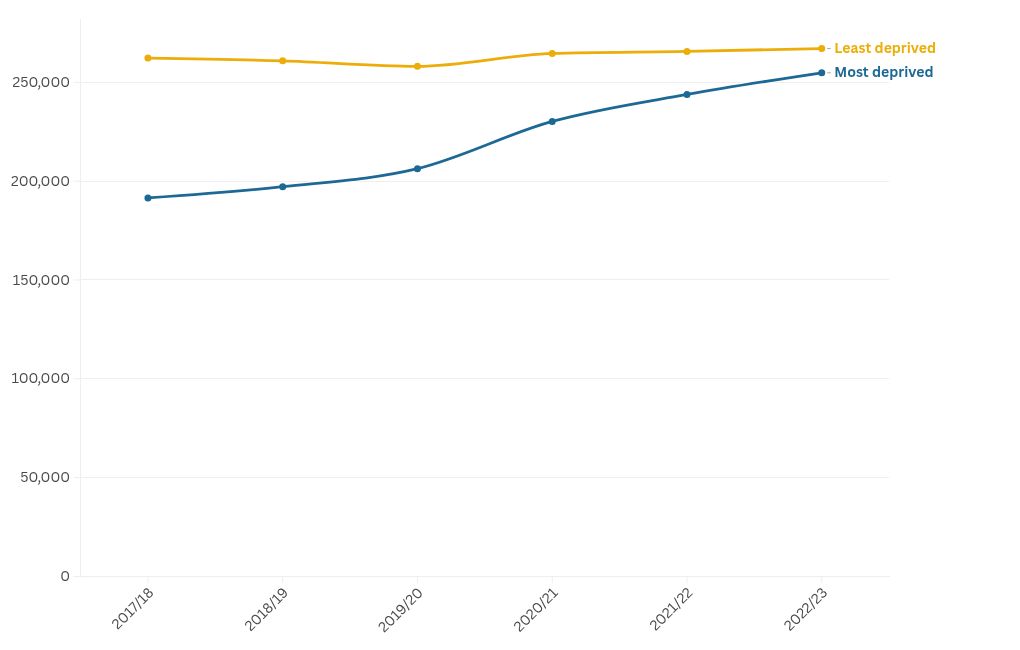
    In recent years, there has been a significant increase in participation rates from lower-income households as widening participation strategies begin to bear fruit and tuition fees continue to fall in real terms (the recent inflation uplift notwithstanding). ​Despite considerable noise about access to HE in the UK, data shows the two lowest quintiles of household wealth have seen the highest rates of growth in student numbers over the last five years, with the figure from the most deprived quintile rising an impressive 29% between 2018/19 and 2022/23. In that same period, the number from the least deprived quintile grew by just 2.4%. International patterns are also changing as growth from China slows and lower-income students from the Indian sub-continent and elsewhere come to the fore.

    Full-time domestic students by household wealth, England

    chart visualization

    Source: JLL; HESA

    The Decline in Applications

    Nevertheless, new hurdles seem set to slow several years of unabated growth, particularly for international students. Visa restrictions introduced in January 2023 bar most from bringing their families to the UK while Nigeria, recently the third largest international student cohort in the UK, faces a currency crisis that may continue to impact applications in years to come.​ Sponsored study visa applications from January to October 2024 (350,700) were 16% lower than for the same period in 2023. With the Universities and Colleges Admissions Service (UCAS) also reporting a small fall in undergraduate applications, the various data sets point to a tough period ahead for UK HE.

    New Build PBSA Viability

    PBSA, in common with other real estate sectors, has been heavily squeezed by rising construction, raw material, financing and regulatory costs, including the new Building Safety Act. Today, delivery in all but the highest value markets (min. £200pw+) remains, at best, challenging and in most cases unviable, thereby excluding many university towns and cities.

    University of Bath PBSA Study

    So what does this changing student demography and tightening development viability mean for PBSA, where falling levels of new scheme openings have resulted in a record core demand level of 61%?

    Jones Lang Lasalle (JLL) worked with a group of business students at the University of Bath to better understand the PBSA priorities of those studying in the UK. ​

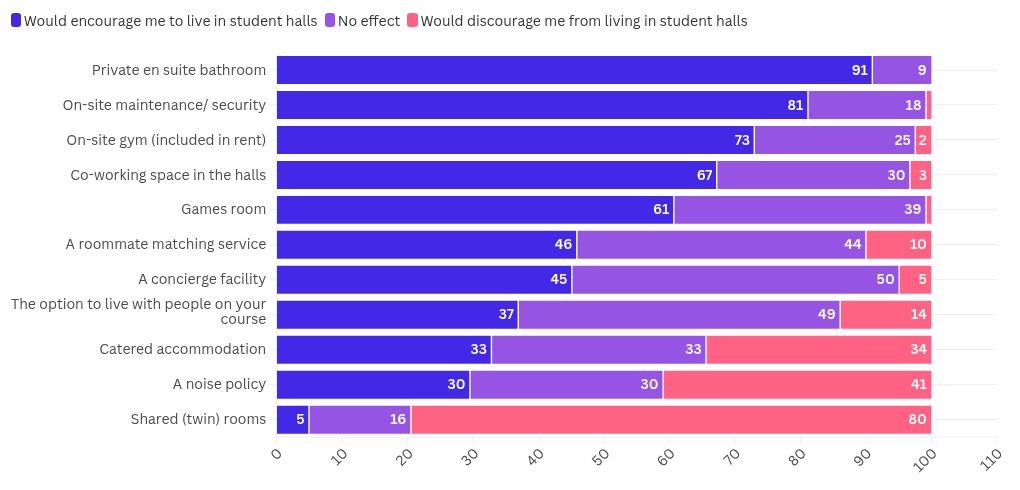
    How would the following affect your decision in choosing student halls?

    chart visualization

    Source: JLL; University of Bath

    The research demonstrates that students still prioritise a single occupancy room with en suite bathroom. Twin rooms scored very poorly and only one third of students actively favoured catered accommodation. The results also confirm that students prefer ‘cluster flat’ accommodation types over studios and smaller apartments (4-6 sharers) over large. However, only 29% are prepared to pay more than £200pw.

    University Partnerships – The Opportunities and Challenges

    So how does the sector square the circle of delivering more viable – and thus affordable – room types given the clear evidence of students’ perceived priorities? ​Twins, non en suites, larger cluster flats and catered accommodation all provide potentially many more beds per land parcel. The Bath survey and other research, including by Student Crowd, is clear that these remain unpopular with students so we should be unsurprised developers and operators of ‘direct let beds’ generally build to these perceived priorities.

    Historically, one approach to increase PBSA density, and thus viability, has been university partnerships. This route sees occupancy either partially or completely de-risked for the accommodation provider. However, developing university partnerships can be challenging given the financial constraints in HE, the balance sheet treatment of such agreements and currently volatile student numbers. The Office for Students (OfS) recently forecast that 72% of institutions could have a deficit in 2025/26. Nevertheless, recent examples such as Unite Group’s deal with University of Newcastle and Urbanest’s with UCL, amongst others, show these challenges can be overcome, although examples are rarer for post-92 institutions. As Martin Blakey concluded in his recent HEPI Blog – Student Accommodation after 2024 and the Need for Strategic Realignment – ‘growth in student numbers no longer necessarily equates with the need for additional PBSA student bed spaces as has been the case over the last 20 years: future needs are changing and future accommodation provision cannot, for a whole variety of reasons, be more of the same’.

    Conclusions​

    The ‘direct let’ operators of PBSA, who dominate the UK market, face a challenging period ahead as they wrestle with development viability in all but a handful of markets and where their standing assets in some locations are becoming overpriced.  If the PBSA sector does not evolve, it risks forcing the fast-growing, lower income, domestic student population into different rental sectors (or to commute) and potentially damaging access to UK universities from emerging middle-income countries.

    This blog could not have been produced without the kind assistance of Marcus Dixon and Karl Tomusk at JLL.

    To download the full report please click here.

    Source link

  • Report on Grad Student Preferences

    Report on Grad Student Preferences

    According To the New UPCEA and Collegis Report, 71% of Prospective Graduate Students Prefer Fully Online Programs

    Findings highlight the need for strategic outreach to address master’s degree enrollment challenges in a competitive market

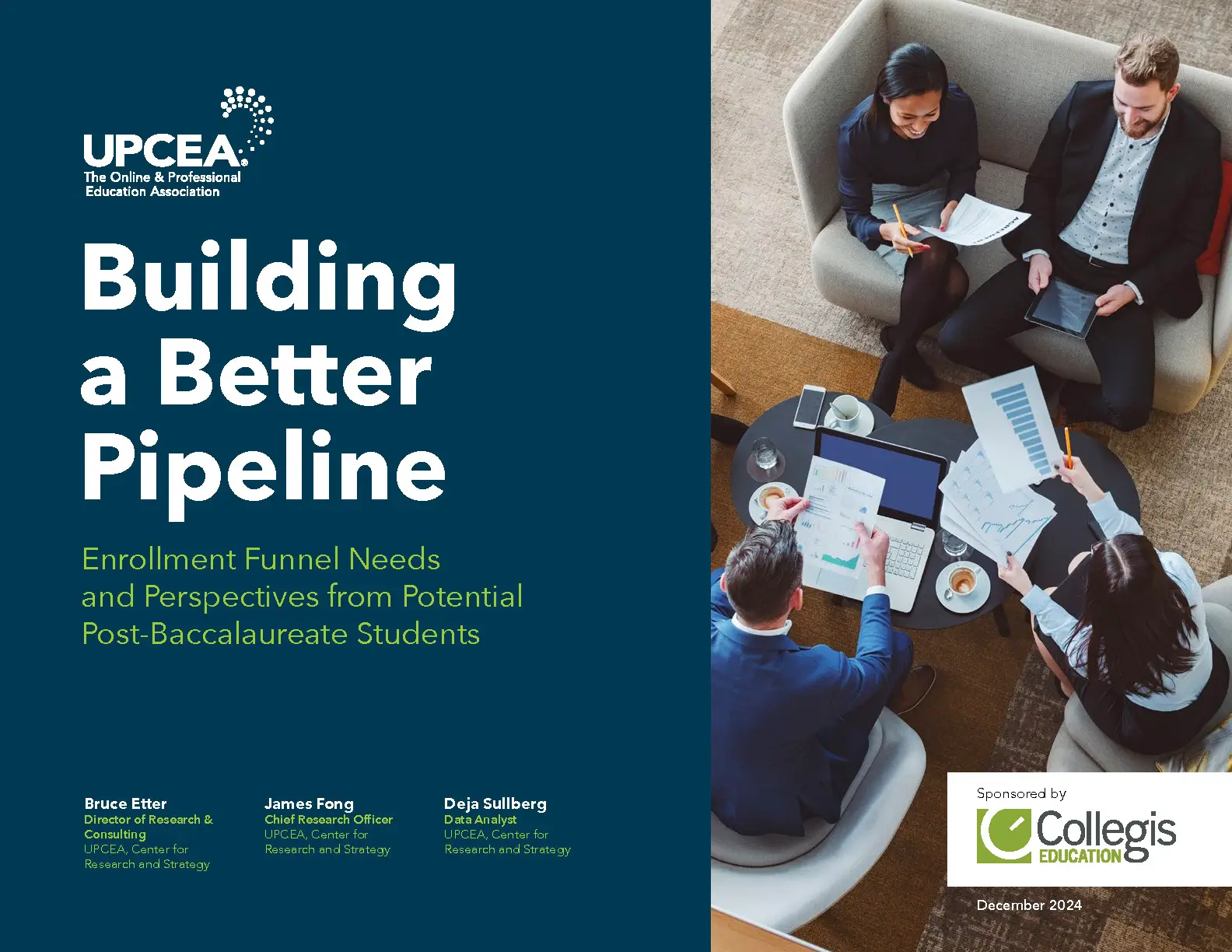
    [Washington and Illinois] – December 16, 2024 – A new report released today by UPCEA, the online and professional education association, and Collegis Education, a higher education solutions tech-enabler, highlights the growing interest in online master’s degree programs that provide flexibility, transparency and streamlined communication in graduate programs. Based on a survey of over 1,000 prospective graduate students, Building a Better Pipeline: Enrollment Funnel Needs and Perspectives from Potential Post-Baccalaureate Students reveals key insights for higher education institutions aiming to improve graduate recruitment strategies.

    “We are entering a period where every enrollment matters. Enrollment growth for graduate programs has been stagnant for the past 15 years, despite the number of baccalaureate degree holders growing. Future success requires colleges and universities to better align offerings with student preferences and communicating on their terms,” said Jim Fong, Chief Research Officer at UPCEA. “Listening to prospective students’ interests and addressing their needs provides a stronger roadmap for institutions to succeed in what will be a hyper-competitive landscape.”

    Key findings from the report include:

    • Delivery Preferences: Fully online programs are the most preferred format, with 71% of respondents showing strong interest, followed by hybrid formats (53%).
    • Program Priorities: A specific program of study is the top consideration (54%), followed by institutional reputation (28%) and delivery method (18%).
    • Communication Preferences: Email remains the preferred contact method for 47% of respondents during the inquiry process, with most willing to share basic details such as their name and email address.
    • Engagement Challenges: Sixty-two percent of respondents said difficulty finding basic program information on an institution’s website would cause them to disengage. At the same time, financial concerns dominated the latter stages of the application process.

    The report highlights a growing demand for master’s degree programs, which 65% of respondents identified as their top interest. It also points to an urgent need for institutions to address gaps in their outreach strategies to meet these demands effectively.

    “As higher education faces tightening budgets, strategic investments in program delivery and candidate outreach have never been more important. These findings emphasize the need for a fully transparent graduate search experience – from program research to application – to engage and inform students so they can see the value and affordability from the start,” said Tracy Chapman, Chief Academic Officer of Collegis Education. ”Institutions that leverage data, technology, and talent can strengthen relationships with prospective students to build communication and trust.”

    With graduate enrollment projected to grow by just 1.4% over the next five years, institutions must innovate to stay competitive. The report provides data-driven insights to help universities design more effective outreach and recruitment strategies, particularly in light of the 32% increase in master’s program offerings since 2017, which has led to a 15% decrease in average program size.

    Actionable Insights for Institutions

    With graduate enrollment projected to grow by just 1.4% over the next five years, institutions must innovate to stay competitive.The survey revealed that requiring too much personal information in online request-for-information (RFI) forms often leads to student disengagement. Institutions should streamline these forms and prioritize providing clear, accessible program details—such as tuition, course requirements, and job outcomes—on their websites. UPCEA’s analyses show that many institutions lack this essential information, which can deter potential applicants early in the inquiry process.

    In light of the 32% increase in master’s program offerings since 2017, which has led to a 15% decrease in average program size, this report provides vital data-driven insights to help universities design more effective outreach and recruitment strategies.

    Methodology

    Conducted in August, the survey was completed by 1,005 qualified participants. Qualified respondents were between the ages of 18 and 64, held at least a bachelor’s degree, were not currently enrolled in a post-baccalaureate program, and were at least somewhat interested in pursuing further education. Nearly a quarter (24 percent) of respondents were 55 to 64 years old, 18 percent were aged 46 to 54, and 14 percent were 23 to 26 years old, showing deep interest in fully online graduate programs regardless of age.

    For more information on the survey findings, download the report at https://collegiseducation.com/insights/student-experience/research-report-graduate-student-perspectives/

    # # #

    About UPCEA:

    UPCEA is the online and professional education association. Our members continuously reinvent higher education, positively impacting millions of lives. We proudly lead and support them through cutting-edge research, professional development, networking and mentorship, conferences and seminars, and stakeholder advocacy. Our collaborative, entrepreneurial community brings together decision-makers and influencers in education, industry, research, and policy interested in improving educational access and outcomes. Learn more at upcea.edu.

    About Collegis Education:

    As a mission-oriented, tech-enabled services provider, Collegis Education partners with higher education institutions to help align operations to drive transformative impact across the entire student lifecycle. With over 25 years as an industry pioneer, Collegis has proven how to leverage data, technology, and talent to optimize institutions’ business processes that enhance the student experience. With the strategic expertise that rivals the leading consultancies, a full suite of proven service lines, including marketing, enrollment, retention, IT, and its world-class Connected Core® data platform, Collegis helps its partners enable impact and drive revenue, growth, and innovation. Learn more at CollegisEducation.com.

    Media Contacts:

    UPCEA
    Molly Nelson
    VP of Communications
    [email protected]

    Collegis Education
    Alyssa Miller
    [email protected]
    973-615-1292

    Source link

  • The Power of Tailored Advising in Supporting Student Success

    The Power of Tailored Advising in Supporting Student Success

    This post was co-written with Natalie McVay.

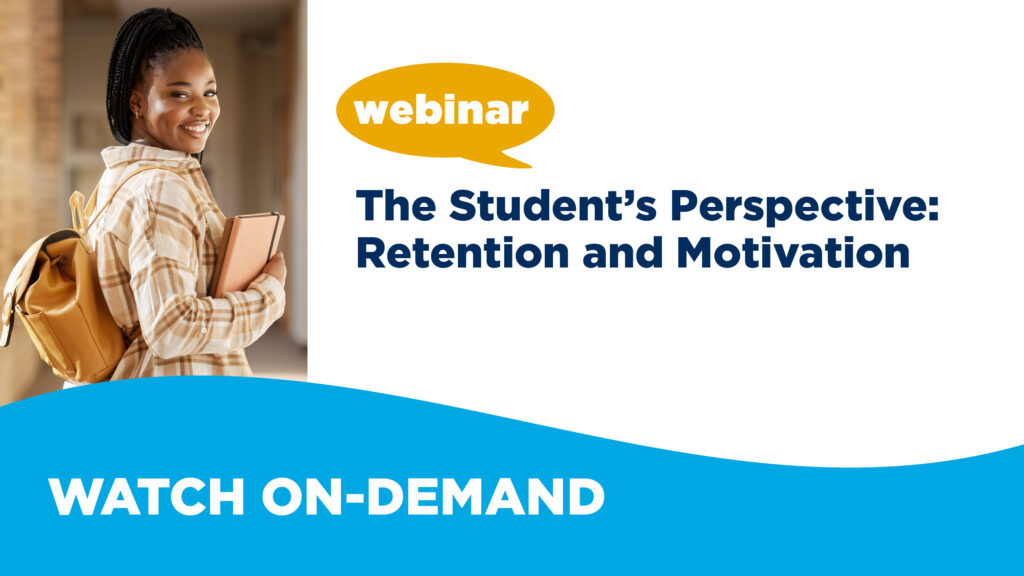
    As a college graduate, RNL’s Natalie McVay has direct experience and helpful insights on the impact of advising on student success outcomes. After attending two separate institutions with differing levels of advising support, Natalie identified specific elements of “transactional” advising that nurtured her success, guiding her on her path to degree completion. For more information on Natalie’s perspective—including advising methods that impacted her ability to retain at her first institution, resulting in her decision to transfer—see RNL’s on-demand webinar The Student’s Perspective: Retention and Motivation.

    A proactive approach to student success

    In an era where student engagement and retention are top priorities, institutions are seeking innovative ways to support students at risk of leaving. Tailored transactional advising is a proactive approach to advising, relevant for all advising philosophies. This approach identifies students in need and provides opportunities to intervene with targeted resources to improve their experience. This strategy not only demonstrates the institution’s commitment to student success but also provides a clear return on investment (ROI) for the student.

    Identifying students’ needs and intervening with resources

    Using analytics and data-driven insights, institutions can identify students who are at risk of leaving due to various factors such as low academic performance, lack of engagement, or other challenges. By intervening early, advisors can offer support, connecting students with resources that match their specific needs.

    However, it’s not about overwhelming students with a laundry list of available resources. Instead, advisors must show students how the institution is committed to their success, highlighting the specific benefits and value of the resources being offered within an appropriate timeframe. And they need to provide the specific resources that each student is looking for.

    Identifying students’ needs and offering support to address those needs at key points in their academic journeys can be the critical influence needed to retain at-risk populations and to ultimately improve student success outcomes.

    One way to gather relevant data about students is through RNL’s Retention Management System (RMS) which measures non-cognitive motivational indicators that pinpoint each student’s (and cohort’s) strengths, risk factors, and receptivity for support at three pivotal transitions in their academic journey. (Learn more about the RMS.)

    The power of written proof

    When students are struggling, they may feel disconnected from their institution. One way to engage them is by incorporating communications that reflect students’ specific concerns along with relevant campus resources to address those concerns. Tailored, timely and data-informed communications can be a key source of guidance in helping students successfully meet their goals. This approach acknowledges students’ individual concerns and shows that the institution is invested in their well-being.

    The impact of words in transactional advising

    In a transactional advising scenario, words have the power to make a significant difference. A well-crafted email or in-person message can convey empathy, understanding, and a genuine interest in your student’s success. The tone and language used can either make or break the student’s perception of the institution’s commitment to their success.

    Let’s consider two email examples in response to a student who is struggling with study habits and sense of belonging, and who is also receptive to career guidance:

    Option 1: A basic transactional approach

    “Have you taken advantage of these student resources?

    • Study groups
    • Peer group chat
    • Meet with an alumni

    We want to ensure you have the support you need to succeed.”

    Option 2: A more personal and supportive transactional approach

    “Natalie, my goal is to connect you to the right resources here on campus!

    If the study group doesn’t feel like the right fit, make sure to check out the peer group chat. I know there are other students like you waiting to take the first step. I also have a contact list of alumni who would love to connect with you about various career paths they chose after completing their degree here at [institution].

    I’m in your corner!”

    The second option not only acknowledges Natalie’s struggles but also employs empathy and a genuine interest in her well-being while offering options to address her specific concerns. By using words that convey a sense of support and connection, advisors can build trust and help students feel more invested in their own success.

    Utilizing mail merge and word play

    Institutional data, such as student success initiatives and predictive analytics, can be used to populate emails like these. Mail merge capabilities can help advisors send personalized messages to students, making them feel seen and valued. Word play, such as using phrases like “I’m in your corner,” can make a significant impact, creating a sense of connection and community.

    By leveraging tailored transactional advising, institutions can demonstrate their commitment to student success and provide a more personal and supportive experience for students. By using data-driven insights and targeted resources, advisors can make a meaningful difference in a student’s life, helping them stay enrolled and achieve their goals.

    According to Natalie, tailored transactional advising influenced her desire to consistently re-enroll and, ultimately, graduate as an adult student from the institution that helped deliver her 2nd student experience: “My commitment to them was higher because I felt their commitment to me.”

    Watch the webinar

    To learn more about this approach, listen to the on-demand webinar on the topic

    You can also connect with RNL professionals to learn how the Retention Management System can work at your institution, providing you with data you need to make personal connections with students to keep them enrolled. 

    Source link

  • Graduate Student Pipeline | Collegis Education

    Graduate Student Pipeline | Collegis Education

    Despite an increasingly competitive market, many colleges and universities still view graduate enrollment strategies as a key growth lever for their institutions. To win in the graduate enrollment space, you first need a deeper understanding of prospective graduate students’ preferences and behaviors.

    This infographic, “What Potential Graduate Students Expect in the Enrollment Funnel,” compiles some of the key data and insights from our recent collaboration with UPCEA that surveyed graduate students to uncover their needs and expectations, focusing on program preferences, delivery methods, and expectations during the inquiry and application processes.

    This infographic is only the tip of the iceberg. Learn more about how to tailor your graduate student recruitment strategies and position your programs for success and growth in our recent report, “Building a Better Pipeline: Enrollment Funnel Needs and Perspectives from Potential Post-Baccalaureate Students.”

    Source link

  • NM Vistas: What’s New in State Student Achievement Data?

    NM Vistas: What’s New in State Student Achievement Data?

    By Mo Charnot
    For NMEducation.com

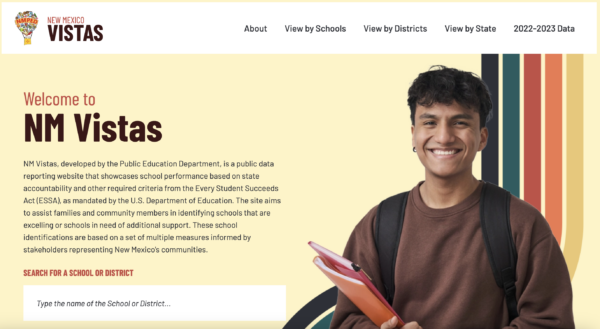
    The New Mexico Public Education Department has updated its student achievement data reporting website — NM Vistas — with a renovated layout and school performance data from the 2023-2024 academic year, with expectations for additional information to be released in January 2025. 

    NM Vistas is crucial to informing New Mexicans about school performance and progress at the school, district and state levels through yearly report cards. The site displays student reading, math and science proficiency rates taken from state assessments, as required by the federal Every Student Succeeds Act. Districts and schools receive scores between 0 and 100 based on performance, and schools also receive designations indicating the level of support the school requires to improve.

    Other information on the site includes graduation rates, attendance and student achievement growth. Data also shows rates among specific student demographics, including race, gender, disability, economic indicators and more. 

    PED Deputy Secretary of Teaching, Learning and Innovation, Amanda DeBell told NM Education in an interview that this year’s recreation of the NM Vistas site came from a desire to go beyond the state’s requirements for school performance data.

    “We knew that New Mexico VISTAs had a ton of potential to be a tool that our communities could use,” DeBell said. 

    One new data point added to NM Vistas this year is early literacy rates, which measures the percentage of students in grades K-2 who are reading proficiently at their grade level. Currently, federal law only requires proficiency rates for grades 3-8 to be published, and New Mexico also publishes 11th grade SAT scores. In the 2023-2024 school year, 34.6% of students grades K-2 were proficient in reading, the data says.

    DeBell said several advisory groups encouraged the PED to report early literacy data through NM Vistas.

    “We were missing some key data-telling opportunities by not publishing the early literacy [rates] on our website, so we made a real effort to get those early literacy teachers the kudos that they deserve by demonstrating the scores,” DeBell said.

    The PED also added data on individual schools through badges indicating specific programs and resources the school offers. For example, Ace Leadership High School in Albuquerque has two badges: one for being a community school offering wraparound services to students and families, and another for qualifying for the career and technical education-focused Innovation Zone program.

    “What we are really trying to do is provide a sort of one-stop shopping for families and community members to highlight all of the work that schools are doing,” DeBell said.

    The updated NM Vistas website has removed a few things as well, most notably the entire 2021-2022 NM Vistas data set. DeBell said this was because the PED changed the way it measured student growth data, which resulted in the 2021-2022 school year’s data being incomparable to the most recent two years. 

    “You could not say that the schools in 2021-2022 were doing the same as 2022-2023 or 2023-2024, because the mechanism for calculating their scores was different,” DeBell said.

    However, this does leave NM Vistas with less data overall, only allowing viewers to compare scores from the latest data set to last year’s. 

    In January 2025, several new indicators are expected to be uploaded to the site, including:

    • Student performance levels: Reports the percentage of students who are novices, nearing proficiency, proficient and advanced in reading, math and science at each school, rather than only separating between proficient and not proficient.
    • Results for The Nation’s Report Card (also known as NAEP): Compares student proficiencies between US states.
    • Educator qualifications: DeBell said this would include information on individual schools’ numbers of newer teachers, substitute teachers covering vacancies and more.
    • College enrollment rates: only to be statewide numbers indicating the percentage of New Mexico students attending college after graduating, but DeBell said she later hopes the PED can narrow down by each K-12 school.
    • Per-pupil spending: How much money each school, district and the state spends per-student on average. 
    • School climate: Links the viewer to results of school climate surveys asking students, parents and teachers how they feel about their school experience.
    • Alternate assessment participation: Percentage of students who take a different assessment in place of the NM-MSSA or SAT.

    “We want VISTAs to be super, super responsive, and we want families to be able to use this and get good information,” DeBell said. “We will continue to evolve this until it’s at its 100th iteration, if it takes that much.”

    This year, the PED released statewide assessment results for the 2023-2024 school year to NM Vistas on Nov. 15. Results show 39% of New Mexico students are proficient in reading, 23% are proficient in math and 38% are proficient in science. Compared to last year’s scores, reading proficiency increased by 1%, math proficiency decreased by 1% and science proficiency increased by 4%.

    Source link

  • Graduate Student Insights and Perspectives

    Graduate Student Insights and Perspectives

    Report Title: Building a Better Pipeline: Enrollment Funnel Needs and Perspectives from Potential Post Baccalaureate Students

    Author: Collegis Education + UPCEA

    Published: December 2024

    Key points addressed

    In this ebook, you’ll learn more about prospective graduate students’ needs and expectations as they move through the enrollment funnel, including:

    • The level of degree desired, as well as the preferred learning format
    • Factors that cause disengagement during the inquiry and application processes
    • Prospective students’ communication preferences and application expectations
    • How institutions can tailor recruitment strategies accordingly

    Overview

    While higher education institutions face tightening budgets, demographic cliffs, and other market headwinds, many schools see graduate enrollment growth as a critical strategy despite the increasingly competitive landscape. Strategic investments in outreach have never been more vital.

    With more and more programs sharing similarities in their structure than differences, one way schools can win is by delivering frictionless and exceptional student experiences, using prospective graduate students’ preferences, behaviors, and other insights to personalize engagements and outreach.

    By understanding these preferences, institutions can better tailor their recruitment strategies and allocate resources more effectively in an increasingly competitive landscape.

    Source link

  • HEDx Podcast: Student empathy is critical for success – Episode 148

    HEDx Podcast: Student empathy is critical for success – Episode 148

    Founder and chief executive of degree management ed-tech Stellic Sabih Bin Wasi used his own student experience of interacting with university systems to improve the student experience.

    His platform, adopted by 70 universities, is designed to bring together academic planning, advising and scheduling so his peers can better “work out the complexity of higher education.”

    Do you have an idea for a story?
    Email [email protected]


    Source link

  • National Student Ombudsman legislation passed, leader announced

    National Student Ombudsman legislation passed, leader announced

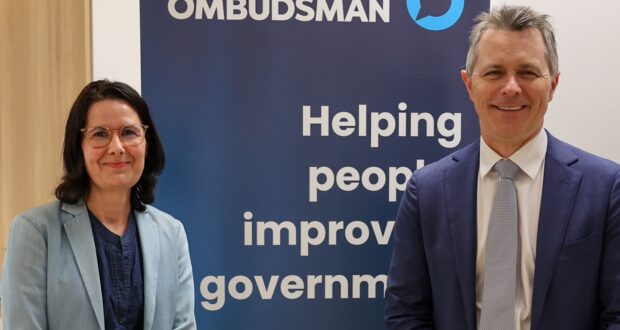
    The new independent National Student Ombudsman will be led by Sarah Bendall (L), pictured with Jason Clare, in an image posted to social media on November 29, 2024. Picture: Facebook

    A highly experienced lawyer has been appointed to lead the anticipated university watchdog and complaints function, after the legislation passed in the last sitting week of parliament.

    Please login below to view content or subscribe now.

    Membership Login

    Source link