Tag: Universities

  • ASEAN universities unite to enhance global competitiveness

    ASEAN universities unite to enhance global competitiveness

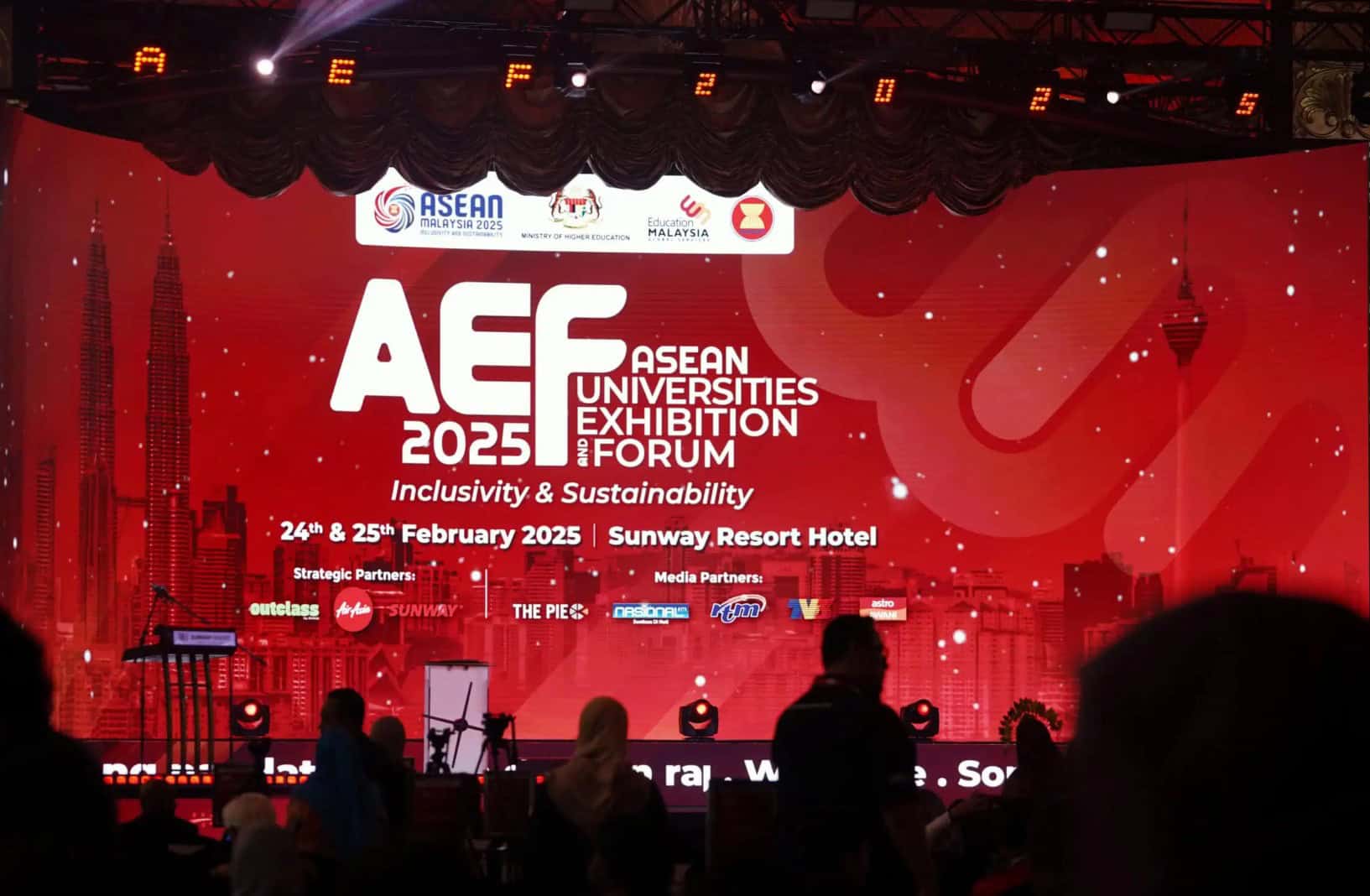
    The ASEAN Universities Exhibition and Forum 2025 (AEF2025), held in Kuala Lumpur, brought together regional stakeholders to enhance higher education collaboration and foster meaningful partnerships.

    Attendees were addressed by Novie Tajuddin, CEO of Education Malaysia Global Services (EMGS), who reinforced Asia’s position as a rising contender set to challenge the traditional ‘big four’ study destinations.

    With over 90 exhibitors in attendance – including from universities from Malaysia, Brunei Darussalam, Cambodia, Indonesia, Laos, Myanmar, The Philippines, Singapore, Thailand, Vietnam and Timor-Leste – Tajuddin stressed the importance of working together to ensure Asian institutions thrive on the world stage.

    In January 2025, Malaysia took over the rotating ASEAN chairmanship. Dr Zambry Abdul Kadir, Malaysia’s minister of higher education, said the country’s role is clear – “to serve as a bridge between ASEAN universities, governments, and industries, ensuring that education remains at the core of regional progress”.

    Speaking at the event, Zambry, a former international student himself, outlined his vision for Malaysia and the wider region, emphasising the importance of digital transformation and the integration of AI as the higher education landscape evolves.

    His vision prioritises continuous upskilling, a sustainable and inclusive education system, and stronger industry-academic collaboration to equip graduates for the evolving global landscape.

    “Over the past decades, ASEAN universities have gained global recognition. Institutions in Singapore, Malaysia, Thailand, and Indonesia are now ranked among the best, with others making significant strides in catching up,” he said.

    “Malaysia, Singapore, and Thailand are establishing themselves as higher education hubs, attracting students from across the region and beyond. ASEAN universities are producing world-class research in science, technology, business, and the humanities, offering localised solutions to global challenges.”

    We must work together to ensure that ASEAN universities remain competitive amidst the rise of global education giants
    Dr Zambry Abdul Kadir, Malaysia’s minister of higher education

    “While this progress is commendable, we must work together to ensure that ASEAN universities remain competitive amidst the rise of global education giants,” the minister warned.

    The minister extended his “deepest gratitude” to organisers EMGS and the Ministry of Higher Education Malaysia (MoHE), for their “unwavering commitment” in making AEF2025 event a reality.

    The event also saw the soft launch of the ASEAN Global Exchange for Mobility & Scholarship (ASEAN GEMS), a comprehensive platform designed to provide ASEAN students with access to scholarships and higher education opportunities.

    Zambry announced that for 2025, 300 scholarships have been secured, amounting to approximately USD 4 million, in what he describes as a “significant step in expanding educational access”.

    “We invite other ASEAN universities to contribute to this noble initiative,” he told delegates.

    The forum also marked the launch of the ASEAN Student Mobility Program, in collaboration with Universiti Utara Malaysia (UUM) and 13 esteemed Malaysian universities. The hybrid event gathered students and industry leaders across ASEAN to carry out activities designed to foster innovation, leadership, and collaboration, while addressing regional challenges and advance the Sustainable Development Goals.

    Student mobility was a key theme in addresses from both leaders, with Zambry highlighting the role of intra-regional mobility.

    “Countries like Malaysia, Thailand, and Indonesia are increasingly becoming preferred destinations for students from neighbouring nations, enriching the academic landscape and fostering a stronger sense of ASEAN solidarity,” he said, pledging to advocate for policies that facilitate seamless student movement, establish mutual recognition of academic credits across ASEAN institutions, and enhance government support for mobility programs.

    Zambry acknowledged another key aspect of ASEAN’s higher education future – transnational education (TNE).

    “The establishment of branch campuses of foreign universities in Malaysia, Singapore, and Vietnam has provided world-class education while retaining talent within ASEAN,” he told delegates.

    “Dual-degree programs, joint research collaborations, and online education partnerships offer students access to global knowledge while remaining in their home countries. By strengthening transnational education, we ensure that our students receive a globally competitive education while staying rooted in ASEAN’s rich cultural and economic landscape.”

    Elsewhere, throughout the forum, over 10 collaborations were signed between universities across ASEAN, while roundtable discussions fostered meaningful dialogue and led to the drafting of resolutions.

    Source link

  • Why Boycott? Maya Wind on the Case Against Israeli Universities

    Why Boycott? Maya Wind on the Case Against Israeli Universities

    Over the past few years, calls for the boycott of Israeli universities have grown louder. This discourse generally entwines two different sets of arguments. The first is an argument about the effectiveness or validity of academic boycotts.  The second, because it’s Israel, is about whether Israeli universities are being unfairly targeted due to anti-Semitism. Curiously, what Israeli universities themselves might have specifically done to deserve is often relegated to an afterthought.

    My guest today is Maya Wind. She is an Israeli citizen, and a postdoctoral scholar at the University of California Riverside. She is also the author of Towers of Ivory and Steel, How Israeli Universities Deny Palestinian Freedom, published last year by Verso press. Her book is a direct answer to that last question.  The charge sheet that she brings against Israeli universities is a long one. And it should give people pause before thinking that Israeli universities are unproblematic.

    Some of you are not going to like this interview. I suspect some will not enjoy the platform given to these opinions. But given the tenor of the times, I very much think it is worth a listen. I think there are two points in particular that are worth thinking about. The first is whether the boycott is about the universities themselves, or about Israel in general. The second is the standard for boycott. Wind makes it clear that she doesn’t see an absolute standard here other than that some oppressed group requests. So, for her, the relative level of complicity of Israeli universities in the dispossession of Palestinians and, say, that of Chinese universities in the repression of Uyghurs is irrelevant because the key factor is that one group asked for the boycott and the other didn’t. It’s about consistent allyship rather than relative guilt.  That wasn’t something I had understood beforehand, and I’m guessing it might be new for many of you as well. But maybe it’s best if I let my guest explain things on her own. Over to Maya.


    The World of Higher Education Podcast
    Episode 3.22 | Why Boycott? Maya Wind on the Case Against Israeli Universities 

    Transcript

    Alex Usher (AU): Maya, your book lays out the case for sanctions against Israeli universities and for boycotting them. But before we get to that, I want to ask about something you don’t really cover in the book: What’s the evidence that boycotts or academic sanctions are an effective strategy for forcing political change?

    Maya Wind (MW): That’s a really crucial question. First, for listeners who may not be as familiar with the context, the movement for boycott, divestment, and sanctions (BDS) was first called for by Palestinian civil society organizations in 2005—so, 20 years ago now. The BDS movement, including the call for an academic boycott of Israeli universities, was heavily inspired by the movement against apartheid in South Africa. In that case, the isolation of many apartheid institutions, including universities, played a key role in bringing an end to the apartheid system.

    Of course, as academics and students, we are all students of history. If we take seriously the idea that Israel is a settler state and that Israelis are colonizers, then history tells us that colonizers have never initiated the process of decolonization on their own. In every case of settler colonialism, external pressure has been necessary to compel colonizers to participate in that process. The BDS movement is specifically seeking to create that external pressure by building a grassroots international movement to hold the Israeli state—and its universities—accountable.

    PACBI, the Palestinian Campaign for the Academic and Cultural Boycott of Israel, actually predates the broader BDS call by a year. It was formed in 2004 and, even then—21 years ago now—identified Israeli universities as pillars of the system of racial rule and apartheid. As academics, particularly those in the West, we have an obligation to respond to this call by severing our ties to Israeli universities. Otherwise, we remain directly complicit.

    AU: Your charge sheet, if I can put it that way, against Israeli institutions is really threefold. The first major charge—using your words from the epilogue—is that they need to stop denying that their campuses stand on expropriated Palestinian lands and cease to serve as engines of Judaization, colonization, and Palestinian dispossession. What exactly do Israeli institutions do in this regard, and why does it matter so much?

    MW: Right. Here, I’m following not only Palestinian civil society and Palestinian scholars but also Indigenous scholars around the world—particularly in settler states—who have long examined the role of the settler university. These scholars have highlighted how universities have often functioned as pillars of ongoing Indigenous dispossession, built on stolen lands that were cleared through genocide. This is part of a broader, global movement, and there is extensive critical scholarship on this issue in other settler states as well.

    In the context of the Israeli settler state, “Judaization” is actually the official terminology used by the Israeli government. It refers to a process seen in many settler states: the twin projects of continual removal and ethnic cleansing of Palestinians, the transfer of Palestinian land ownership to Jewish Israelis, and the ongoing expansion of Israeli frontiers—redistributing the Jewish population across what was historic Palestine.

    If we trace the history of Israeli universities, this pattern becomes clear. It starts with Hebrew University, the first university of the Zionist movement, and continues with all the universities established by the Israeli state since then. For example, the University of Haifa is in the Galilee, the region with the highest Palestinian population. Ben-Gurion University is in the Negev, an arid southern region where Jewish Israelis were historically less likely to settle. The most recent university to be accredited, Ariel University, is located in the illegal settlement of Ariel, deep in the occupied West Bank.

    For over a century, Israeli universities have been physically designed, built, and strategically located to support the state’s project of Palestinian dispossession, particularly in regions of strategic concern to the Israeli government. Any reckoning with Israeli universities—or settler universities more broadly—must begin with the question of land itself. This is one of the central issues I explore in the book.

    AU: Before I go into the other elements of the charge sheet, you’ve used the term “settler” and “settler colonialism” a couple of times. What distinction, if any, do you draw between the need to boycott Israeli universities, as you argue, and the historical case that could be made for boycotting institutions in Canada or the United States? Why sanction one and not the other?

    MW: That’s a really important question. The first and primary answer is that the Indigenous population most directly impacted by the violence of these settler universities—in this case, Palestinians—have explicitly called for a boycott. A boycott is not a value; it is a tactic. Indigenous movements around the world have used different tactics to advance decolonization, and these tactics change over time and depend on the specific context.

    In this case, more than 20 years ago, the overwhelming majority of Palestinian civil society came together to advance their liberation struggle and issued a call for boycott. They outlined a theory of change, arguing that Western governments—particularly those heavily invested in the Israeli settler state—not only provide arms but also offer diplomatic and legal immunity that allows Israel to continue committing war crimes, including, most recently, the crime of genocide. Given this, they have made it clear that those of us in the international community have an obligation to rise up and pressure our own governments to sever ties and isolate the Israeli regime until the process of decolonization begins and the system of apartheid is dismantled.

    This is a grassroots movement, and we do not need to wait for our governments to act.

    AU: That’s a useful clarification. The second area where you’re most critical is the cooperation between universities on one hand and the military, Shin Bet, and other security services on the other. You write about how the connection between university research and the military in Israel is somewhat different from how it operates in the United States or other countries, partly because research institutes in Israel cooperate so directly with the security sector. What does this military cooperation look like in practice? And is it just about research, or is there also an academic programming element?

    MW: Right. This is a very important question because the collaboration between Israeli universities, the security state, and the military industry is incredibly deep and comprehensive. We see this in several ways.

    First, Israeli universities function as military bases by designing and operating specialized, degree-granting programs tailored for security state personnel, including the Israeli Security Agency (Shin Bet), Israeli police forces, and soldiers. These are the same forces that have engaged in decades of daily violations of Palestinian rights and international law. This is well documented, and these academic programs actively train soldiers and security personnel to refine their operations.

    One example is Hebrew University, where the Department of Islamic and Middle East Studies trains soldiers in the Intelligence Corps, providing them with linguistic and regional expertise to improve their surveillance of the Palestinian population. This training directly contributes to the creation of target banks for airstrikes in Gaza, as we have seen over the past 16 months. That is just one of many examples.

    Another form of cooperation is research and institutional collaborations. The Institute for Criminology at Hebrew University and the Dayan Center at Tel Aviv University work closely with military and security state experts to produce scholarship that advances security operations. Their research informs policy recommendations for the Israeli security establishment.

    A third example is the close ties between universities and military industries. It is not widely known that major arms manufacturers like Rafael Advanced Defense Systems, Israel Aerospace Industries, and Elbit Systems—the largest suppliers to the Israeli military and major global exporters of weapons—were actually founded on Israeli university campuses. These companies develop and refine their technologies by testing them in occupied Palestinian territories, violating international and human rights law daily. They then market these products globally as “battle-proven.” To this day, Israeli universities serve as critical laboratories for these industries.

    In all of these ways, it is impossible to understand the Israeli security state and military-industrial complex without examining the role of the Israeli university system.

    AU: The third charge you discuss is that Israeli universities are not academically neutral—that they do not provide all staff and students with equal opportunities to be protected from outside influence or to thrive academically. We often hear that Israeli universities do not discriminate, but you have a different perspective.

    MW: Yes. One of the things that really struck me while researching and writing this book was the extensive scholarly work that already exists on this issue. I conducted an ethnography of Israeli universities, spending significant time across Israel’s eight major public universities. I spoke with and accompanied Palestinian student organizers, and I interviewed both Palestinian and Jewish Israeli faculty and staff.

    What stood out to me—both in my fieldwork and in my background research—was just how much has already been written about this. There is a rich body of scholarship, not only in Hebrew and Arabic but also in English, often published in leading peer-reviewed journals in Europe and North America. Palestinian scholars, both in Palestinian and Israeli universities, have extensively documented the constraints on knowledge production, the marginalization of Palestinian critical epistemology, and the challenges of producing anti-colonial scholarship within the confines of the Zionist university system. They have also written in detail about the systematic discrimination Palestinian students face and their experiences within these institutions.

    Yet, despite this extensive scholarship, I find that it is largely unread in Western academic communities. This raises important questions about why we, in the West, have failed to engage with this work and why we have instead accepted the narratives presented by Jewish Israeli university administrators and scholars, who often portray Israeli universities as beacons of democracy. In reality, this has never been the case, and Palestinians have been documenting and writing about these inequalities for a very long time. I cite much of this work in my book, and I also corroborated it through my own interviews.

    What I found was not only that Israeli universities are embedded within and implicated in a broader system of apartheid, but also that Palestinian student organizing and political activism on campuses are violently suppressed. This suppression has intensified over the past 16 months, as Palestinian scholars and students speak out against the genocide and mobilize for Palestinian liberation on Israeli campuses.

    Advertisement: Student success, at scale, with a proven ROI of 4.4 times return for universities and colleges. Studiosity’s AI-for-Learning is designed specifically for post-secondary students to develop real skills, critical thinking, agency, belonging, and retention; to empower educators with reporting and insight into learning progress; and to build human connection – made possible with Studiosity’s strictly help-not-answers formative feedback and integrated Humans in the Loop design. In partnership with post-secondary institutions in Canada and around the world, Studiosity is for future-ready graduates and future-ready institutions. With over 200 post-secondary partners and more than 2 million student users, Studiosity is grounded in an academically-driven evidence base, leading the way to increasing life chances for students everywhere. Learn more about the world’s leading, ethical, AI student support at studiosity.com.

    AU: Maya, you’ve discussed issues at several institutions across Israel. You’ve specifically singled out Ariel University for its role in normalizing the occupation and Hebrew University for its failure to protect academic freedom. Are there any institutions that stand out to you as having a better record than others? Is there one that you might say should not be subject to a boycott?

    MW: The call for an academic boycott was laid out by Palestinian civil society and Palestinian scholars. Just last year, in 2023, this call was reiterated by not only the Union of Palestinian Faculty and Employees but also by every single Palestinian student union at every Palestinian university. They reaffirmed their call for us to enact the academic boycott.

    This is a call coming from Palestinian civil society, and as it is worded, it applies to all complicit Israeli universities. In the course of my research, I found that every single Israeli university is deeply implicated in the structures of occupation and apartheid. Not one is exempt.

    At this time, the call remains for a boycott of all Israeli universities, and I hope my book helps to substantiate why that is necessary.

    AU: It sounds to me like the Palestinian call is really about Israel as a whole, rather than specifically about Israeli universities, right? And I have to say, when I read the chapter on the relationship between universities and the military, I thought to myselfI can’t imagine a university in any country—let alone one as highly militarized as Israel—saying no to providing academic training for military officers.

    Universities are instrumental to the state, right? So when we talk about disapproving of university policies, aren’t we really talking about disapproving of Israeli state priorities? Is there any way an individual Israeli institution could change this if it wanted to?

    MW: I think that’s a really critical question. We have to understand—and take seriously—that settler states, systems of violence, and even genocide do not reproduce themselves automatically. These are systems of violence that are upheld by a vast network of institutions, including many in civil society. It is not just the military, not just the security state, and not just military industries. A whole host of public institutions—what we often think of as civil society institutions—lend themselves to this violence of elimination. This case is no different.

    But what we also have to recognize is that it is not just the institutions—it is the people within them who sustain and reproduce these structures. There is the active labor of thousands of Israelis, across hundreds of institutions, including universities, who are making this violence possible.

    What I want to emphasize here is that Israeli academics have tried very hard to have it both ways. The call for an academic boycott has been underway for more than two decades, and one of the main arguments used by Israeli university administrators and academics who oppose it is that they cannot possibly be held accountable for the crimes of the Israeli state—if such crimes even exist, as is still debated within Israeli universities. They claim that it is unjust to hold them responsible for what the state is doing.

    But at the same time, when they are confronted—particularly over the last year—by thousands of students, faculty, and staff participating in the boycott, pointing out that they are directly complicit in apartheid and now genocide, these same university administrators and Israeli academics respond in exactly the opposite way. They say precisely what you just said: Of course, we are embedded in the state. Many of our students are soldiers. Why wouldn’t we cooperate with the state we are a part of?

    They often go even further, offering justifications for genocide and apartheid. So they cannot have it both ways. Either they defend themselves by claiming they are not at all accountable and cannot be implicated in what the state is doing, or they admit that they are, in fact, part of the state—at which point they must also take responsibility for their role in sustaining its system of oppression.

    AU: One argument that emerged in Canada over the last few months—particularly around the end of the encampment at the University of Windsor, if I’m not mistaken—was that the university agreed to boycott Israeli universities as part of a resolution. In response, some argued—I can’t remember if it was Michael Geist or Anthony Housefather in the House of Commons—that if you boycott Israeli institutions but not universities in other countries guilty of similar actions, then that is antisemitic.

    For instance, many of the same criticisms you make about Israeli universities—such as failing to uphold free debate and cooperating with the military—could likely be made about Chinese universities in relation to the government’s policies in Xinjiang or Tibet. What do you make of that argument? Should we also be boycotting Chinese universities? And if not, why not?

    MW: Boycotts—whether organized by unions or any other group—are always made in response to a call. It is not up to us to unilaterally decide to boycott a university system. That decision belongs to the communities directly impacted by the violence of that university system. When such a call is made, it is then up to the international community to assess whether the institutions in question are, in fact, complicit—and to decide whether to participate in the boycott.

    To my knowledge, there has been no such call from other Indigenous communities in similar contexts. There could be, and if there were, I think many of us would absolutely consider participating. But this argument is ultimately a distraction—one that is often pushed by Israel and its Zionist supporters to divert attention from the central issue at hand. The reality is that Palestinians have called for a boycott. Now, it is up to us to assess whether that call is justified and whether we will comply

    AU: You wrote this book prior to October 7, 2023. What has changed since then, both in terms of how Israeli universities behave and in terms of the boycott movement?

    MW: Over the past 16 months, we have seen a devastating acceleration of a project that has spanned over a hundred years. Genocide is structural to the Israeli state, just as it is to settler states elsewhere. For two decades, Palestinian civil society has been telling us that various institutions in Israeli society have long served as part of the infrastructure laying the groundwork for the genocide we have witnessed unfold over the last 16 months—part of the Israeli state’s long-term project to ethnically cleanse Palestine of the Palestinian people.

    My book, which I submitted to the press shortly before this latest acceleration of the genocide began, details many of the ways in which universities are implicated. But it should come as no surprise that this is a structural problem. Israeli universities have continuously worked in service of the state, uninterrupted and ongoing, from before the state’s founding to the present moment—including this phase of the genocide.

    Over the last 16 months, Israeli universities have continued to develop weapons and technologies used against Palestinians in Gaza and the occupied West Bank. They have continued training soldiers and producing Hasbara—Israeli state propaganda—to shield Israel from international criticism. In fact, Israeli universities have actively intervened to prevent academic boycotts from being implemented on Western campuses, smearing student, faculty, and staff organizers, and in some cases, calling for them to be forcibly dispersed. They have also played a direct role in producing legal scholarship to aid the Israeli state in resisting the genocide case brought by South Africa at the International Court of Justice.

    Beyond this, universities have provided tangible benefits to soldiers, offering course credit, scholarships, and special privileges for those returning from Gaza. In countless ways, Israeli universities remain embedded in the infrastructure of violence that sustains the Israeli state, even as that state now stands on trial in the highest courts in the world for genocide.

    If you’re asking what has changed, I think the biggest shift is that more people have now come to recognize what Palestinians have been calling for over the past 20 years: the urgency of intervention. There is an increasing recognition that international civil society must take action and stand with the Palestinian people in their struggle for liberation—and participate in the broader project of decolonization. That is a significant development in the global movement for Palestinian liberation, and we will continue to build on it.

    There is no going back.

    AU: Maya, thanks so much for joining us today.

    MW: Thank you.

    AU: And that just leaves me to thank our excellent producers, Tiffany MacLennan and Sam Pufek, as well as you—our viewers, listeners, and readers—for tuning in. If you have any questions, comments, or concerns, please don’t hesitate to contact us at [email protected]. Folks, please subscribe to our YouTube channel so you never miss an episode of The World of Higher Education.

    Join us again next week when I’ll be joined by Hilligje van’t Land. She’s the Secretary General of the International Association of Universities, located in Paris, and she’ll be talking about the joys of running the world’s oldest transnational university organization. Bye for now.

    *This podcast transcript was generated using an AI transcription service with limited editing. Please forgive any errors made through this service. Please note, the views and opinions expressed in each episode are those of the individual contributors, and do not necessarily reflect those of the podcast host and team, or our sponsors.

    This episode is sponsored by Studiosity. Student success, at scale – with an evidence-based ROI of 4.4x return for universities and colleges. Because Studiosity is AI for Learning — not corrections – to develop critical thinking, agency, and retention — empowering educators with learning insight. For future-ready graduates — and for future-ready institutions. Learn more at studiosity.com.

    Source link

  • Will Trump’s “anti-wokeism” change DEI in Australian universities?

    Will Trump’s “anti-wokeism” change DEI in Australian universities?

    United States President Donald Trump’s first six weeks of his second term has been defined by 76 executive orders, the disestablishment of the national education department and establishment of the Department of Government Efficiency (DOGE).

    One of the most controversial executive orders, which is a written directive signed by a president that orders immediate governmental action, was titled “Ending Radical And Wasteful Government DEI Programs And Preferencing,” signed on President Trump’s first day back in office on January 20, 2025.

    He directed all federal DEI staff be placed on paid leave and, eventually, laid off. He has also signed another Executive Order, titled “Ending Illegal Discrimination and Restoring Merit-Based Opportunity.”

    DEI stands for diversity, equity and inclusion, and refers to programs and committees that help people from underrepresented backgrounds (women, Indigenous, Black, for instance) get into, and stay in, jobs or courses those people wouldn’t traditionally participate in. It is largely similar to the strategy of the Australian Universities Accord.

    President Trump has also cut funding to schools and universities that do not cancel DEI programs. He labelled the programs “radical,” “wasteful” and said they demonstrate “immense public waste and shameful discrimination.”

    The full effects of these Executive Orders and DEI changes are yet to be seen because decisions regarding DEI will ultimately be made by the court.

    However, private companies in the US have walked away from internal DEI programs, including Meta (which has worked closely with Trump as of late), Google (which provides some services to the US government), Pepsi, Disney and multiple prominent banks.

    There has been no significant walk away from DEI in Australian private companies, and many universities continue to discuss how to bolster and “future-proof” internal DEI programs.

    Australia’s ambassador to the US from 2020 to 2023, Arthur Sinodinos, told the Universities Australia Solutions Summit last week that institutions are best off making decisions “based off their objectives,” but should enact genuine change, not just tick diversity boxes.

    Arthur Sinodinos said DEI should be about achieving true diversity rather than ticking boxes. Picture: Sam Ruttyn

    “My view on DEI is that [universities should] start from a posture that they want to make the best use of all the talent and resources available to them,” he said.

    “If you’re also interested in trying to expand the reach of higher education to groups that might otherwise be disadvantaged, you have to find ways to do that, but in a way that also addresses the genuine issue.

    “I think access to higher education is still important for a country like Australia, which has to make – given its population – the best use of the resources it’s got.

    “The argument that you can just leave it to the market, the meritocracy will still be there [is wrong]. Frankly, in the market, some people start with a head start with with inbuilt advantages.”

    President Trump’s former White House chief of staff Mick Mulvaney, who was also on the panel at the UA summit, said he thinks DEI programs in the US have gone “too far to one side.”

    Former Trump White House chief of staff Mick Mulvaney said he thinks DEI has gone “too far” in the US. Picture: UA

    “One of the reasons you’re seeing the pushback against it in my country is that it went too far to one side. I don’t know where it is in this country, but at some point it may go too far, and the pushback will come.”

    He also explained why this Trump term is already more action-packed than his first was at this time: the President expected to win in November, 2024, but not in 2016.

    “Not only did [Trump] expect to win, [his team has] been working for four years on what they would do when they won,” he said.

    “What are we gonna do the first day? The first week, the first month, the first 100 days? Which is why we’re seeing all these executive orders. It’s actually four years worth of planning coming forward.”

    Mr Mulvaney said he thinks DEI could survive if its reasoning for existing is communicated in a tailored way.

    He said Trump’s administration is receptive to initiatives that improve efficiency, productivity and merit.

    “You could have a program that is good on on the climate, [for example,] but that’s not your selling pitch. That doesn’t register with the person you’re talking to,” he explained.

    Related stories: “Unis are not Centrelink offices”: Coalition’s pitch to university leaders | Q&A: Bill Shorten talks VC pay cuts and politics in HE | Report card: Accord recommendations 12 months on

    “You have to learn how to speak the language of the person you’re talking to. Don’t change what you’re doing, perhaps just simply change how you explain it.”

    UA chief executive Luke Sheehy was asked after his National Press Club address last Wednesday whether he thinks an “anti-woke” sentiment will affect how universities function.

    Luke Sheehy’s membership body discussed the impact of “Trump 2.0” at last week’s conference. Picture: UA

    “Obviously there’s a major disruption that’s happened in America with Trump 2.0 … One of the things we’ve learned is, once articulated in a certain way, positive sentiment skyrockets for universities,” he responded.

    “If you offer a simple proposition: we have 4,000 fewer teachers than we need today ,and universities are the only way to get those skilled workers into the workforce to support young people; we need 132,000 more nurses, etc.

    “Then remove yourself from what happens on the front pages of newspapers and what occupies political pundits, and think about what the real Australian people need and want from the university sector.

    “My hope is that the more we talk about the important role of universities and our core mission in education and research, the more Australians, irrespective of whether or not they went to university or not, they see the value for us as part of our future.”

    The university sector’s declining “social license” has been a major topic of discussion of late for university leaders.

    There is a growing sentiment that universities, and the knowledge economy, needs to “show” society why they’re worth the funding and enrolments.

    “We always have more work to do. In an era where there is declining trust in institutions, I think it’s really important that universities invest in themselves in terms of how they engage with their communities,” Mr Sheehy continued.

    Source link

  • How universities can fix health workforce shortages

    How universities can fix health workforce shortages

    A panel of experts discuss the health workforce crisis at the UA Solutions Summit 2025. Picture: UA

    Three Australian healthcare experts last week told universities how to solve the biggest challenges and possible solutions to a number of issues.

    Please login below to view content or subscribe now.

    Membership Login

    Source link

  • Universities that expand access have graduates who take longer to repay their loans

    Universities that expand access have graduates who take longer to repay their loans

    I’ll admit that the Neil O’Brien-powered analysis of graduate repayments in The Times recently annoyed me a little.

    There’s nothing worse than somebody attempting to answer a fascinating question with inappropriate data (and if you want to read how bad it is I did a quick piece at the time). But it occurred to me that there is a way to address the issue of whether graduate repayments of student loans do see meaningful differences by provider, and think about what may be causing this phenomenon.

    What I present here is the kind of thing that you could probably refine a little if you were, say, shadow education minister and had access to some numerate researchers to support you. I want to be clear up top is that, with public data and a cavalier use of averages and medians, this can only be described as indicative and should be used appropriately and with care (yes, this means you Neil).

    My findings

    There is a difference in full time undergraduate loan repayment rates over the first five years after graduation by provider in England when you look at the cohort that graduated in 2016-17 (the most recent cohort for which public data over five years is available).

    This has a notable and visible relationship with the proportion of former students in that cohort from POLAR4 quintile 1 (from areas in the lowest 20 per cent of areas).

    Though it is not possible to draw a direct conclusion, it appears that subject of study and gender will also have an impact on repayments.

    There is also a relationship between the average amount borrowed per student and the proportion of the cohort at a provider from POLAR4 Q1.

    The combination of higher average borrowing and lower average earnings makes remaining loan balances (before interest) after five years look worse in providers with a higher proportion of students from disadvantaged backgrounds..

    On the face of it, these are not new findings. We know that pre-application background has an impact on post-graduation success – it is a phenomenon that has been documented numerous times, and the main basis for complaints about the use of progression data as a proxy for the quality of education available at a provider. Likewise, we know that salary differences by gender and by industry (which has a close but not direct link to subject of study).

    Methodology

    The Longitudinal Educational Outcomes dataset currently offers a choice of three cohorts where median salaries are available one, three, and five years after graduation. I’ve chosen to look at the most recent available cohort, which graduated in 2016-17.

    Thinking about the five years between graduation and the last available data point, I’ve assumed that median salaries for year 2 are the same as year 1, and that salaries for year 4 are the same as year 3. I can then take 9 per cent of earnings above the relevant threshold as the average repayment – taking two year ones, two year threes, and a year five gives me an average total repayment over five years.

    The relevant threshold is whatever the Department for Education says was the repayment threshold for Plan 1 (all these loans would have been linked to to Plan 1 repayments) for the year in question.

    How much do students borrow? There is a variation by provider – here we turn to the Student Loans Company 2016 cycle release of Support for Students in Higher Education (England). This provides details of all the full time undergraduate fee and maintenance loans provided to students that year by provider – we can divide the total value of loans by the total number of students to get the average loan amount per student. There’s two problems with this – I want to look at a single cohort, and this gives me an average for all students at the provider that year. In the interests of speed I’ve just multiplied this average by three (for a three year full time undergraduate course) and assumed the year of study differentials net out somehow. It’s not ideal, but there’s not really another straightforward way of doing it.

    We’ve not plotted all of the available data – the focus is on English providers, specifically English higher education institutions (filtering out smaller providers where averages are less reliably). And we don’t show the University of Plymouth (yet), there is a problem with the SLC data somewhere.

    Data

    This first visualisation gives you a choice of X and Y axis as follows:

    • POLAR % – the proportion of students in the cohort from POLAR4 Q1
    • Three year borrowing – the average total borrowing per student, assuming a three year course
    • Repayment 5YAG – the average total amount repaid, five years after graduation
    • Balance 5YAG – the average amount borrowed minus the average total repayments over five years

    You can highlight providers of interest using the highlighter box – the size of the blobs represents the size of the cohort.

    [Full screen]

    Of course, we don’t get data on student borrowing by provider and subject – but we can still calculate repayments on that basis. Here’s a look at average repayments over five years by CAH2 subject (box on the top right to choose) – I’ve plotted against the proportion of the cohort from POLAR4 Q1 because that curve is impressively persistent.

    [Full screen]

    For all of the reasons – and short cuts! – above I want to emphasise again that this is indicative data – there are loads of assumptions here. I’m comfortable with this analysis being used to talk about general trends, but you should not use this for any form of regulation or parliamentary question.

    The question it prompts, for me, is whether it is fair to assume that providers with a bigger proportion of non-traditional students will be less effective at teaching. Graduate outcome measures may offer some clues, but there are a lot of caveats to any analysis that relies solely on that aspect.

    Source link

  • Open universities: between radical promise and market reality

    Open universities: between radical promise and market reality

    by Ourania Filippakou

    Open universities have long symbolised a radical departure from the exclusivity of conventional universities. Conceived as institutions of access, intellectual emancipation, and social transformation, they promised to disrupt rigid academic hierarchies and democratise knowledge. Yet, as higher education is increasingly reshaped by market logics, can open universities still claim to be engines of social progress, or have they become institutions that now reproduce the very inequalities they sought to dismantle?

    This question is not merely academic; it is profoundly political. Across the globe, democratic institutions are under siege, and the erosion of democracy is no longer an abstraction – it is unfolding in real time (cf EIU, 2024; Jones, 2025). The rise of far-right ideologies, resurgent racism, intensified attacks on women’s and LGBTQ+ rights, and the erosion of protections for migrants and marginalised communities all point to a crisis of democracy that cannot be separated from the crisis of education (Giroux, 2025). As Giroux (1984) argues, education is never neutral; it can operate as both a potential site for fostering critical consciousness and resistance and a mechanism for reproducing systems of social control and domination. Similarly, Butler (2005) reminds us that the very categories of who counts as human, who is deemed grievable, and whose knowledge is legitimised are deeply political struggles.

    Open universities, once heralded as radical interventions in knowledge production, now find themselves entangled in these struggles. Increasingly, they are forced to reconcile their egalitarian aspirations with the ruthless pressures of neoliberalism and market-driven reforms. The challenge they face is no less than existential: to what extent can they uphold their role as spaces of intellectual and social transformation, or will they become further absorbed into the logics of commodification and control?

    My article (Filippakou, 2025) in Policy Reviews in Higher Education, ‘Two ideologies of openness: a comparative analysis of the Open Universities in the UK and Greece’, foregrounds a crucial but often overlooked dimension: the ideological battles that have shaped open universities over time. The UK Open University (OU) and the Hellenic Open University (HOU) exemplify two distinct yet converging trajectories. The UK OU, founded in the 1960s as part of a broader post-war commitment to social mobility, was a political project – an experiment in making university education available to those long excluded from elite institutions. The HOU, by contrast, emerged in the late 1990s within the European Union’s push for a knowledge economy, where lifelong learning was increasingly framed primarily in terms of workforce development. While both institutions embraced ‘openness’ as a defining principle, the meaning of that openness has shifted – from an egalitarian vision of education as a public good to a model struggling to reconcile social inclusion with neoliberal imperatives.

    A key insight of this analysis is that open universities do not merely widen participation; they reflect deeper contestations over the purpose of higher education itself. The UK OU’s early success inspired similar models worldwide, but today, relentless marketisation – rising tuition fees, budget cuts, and the growing encroachment of corporate interests – threatens to erode its founding ethos.

    Meanwhile, the HOU was shaped by a European policy landscape that framed openness not merely as intellectual emancipation but as economic necessity. Both cases illustrate the paradox of open universities: they continue to expand access, yet their structural constraints increasingly align them with the logic of precarity, credentialism, and market-driven efficiency.

    This struggle over education is central to the survival of democracy. Arendt (1961, 2005) warned that democracy is not self-sustaining; it depends on an informed citizenry capable of judgment, debate, and resistance. Higher education, in this sense, is not simply about skills or employability – it is about cultivating the capacity to think critically, to challenge authority, and to hold power to account (Giroux, 2019). Open universities were once at the forefront of this democratic mission. But as universities in general, and open universities in particular, become increasingly instrumentalised – shaped by political forces intent on suppressing dissent, commodifying learning, and hollowing out universities’ transformative potential – their role in sustaining democratic publics is under threat.

    The real question, then, is not simply whether open universities remain ‘open’ but how they define and enact this openness. To what extent do they serve as institutions of intellectual and civic transformation, or have they primarily been reduced to flexible degree factories, catering to market demands under the guise of accessibility? By comparing the UK and Greek experiences, this article aims to challenge readers to rethink the ideological stakes of openness in higher education today. The implications extend far beyond open universities themselves. The broader appeal of this analysis lies in its relevance to anyone interested in universities as sites of social change. Open universities are not just alternatives to conventional universities – they represent larger struggles over knowledge, democracy, and economic power. The creeping normalisation of authoritarian politics, the suppression of academic freedom, and the assault on marginalised voices in public discourse demand that we reclaim higher education as a site of resistance.

    Can open universities reclaim their radical promise? If higher education is to resist the encroachment of neoliberalism and reactionary politics, we must actively defend institutions that prioritise intellectual freedom, civic literacy, and higher education for the public good. The future of open universities – and higher education itself – depends not only on institutional policies but on whether scholars, educators, and students collectively resist these forces. The battle for openness is not just about access; it is about the kind of society we choose to build – for ourselves and the generations to come.

    Ourania Filippakou is a Professor of Education at Brunel University of London. Her research interrogates the politics of higher education, examining universities as contested spaces where power, inequality, and resistance intersect. Rooted in critical traditions, she explores how higher education can foster social justice, equity, and transformative change.

    Author: SRHE News Blog

    An international learned society, concerned with supporting research and researchers into Higher Education

    Source link

  • EXCLUSIVE: Ombudsman on what universities can do better now to support students

    EXCLUSIVE: Ombudsman on what universities can do better now to support students

    UTS chancellor Catherine Livingstone told universities they need to rely less on public funding. Picture: UA

    The National Student Ombudsman (NSO) First Assistant Ombudsman Sarah Bendall has revealed details of the 220-or-so student complaints she has received in the first three weeks of operation.

    Please login below to view content or subscribe now.

    Membership Login

    Source link

  • The blurred lines of higher education in South Korea: when colleges look like universities

    The blurred lines of higher education in South Korea: when colleges look like universities

    Edward Choi and Young Jae Kim

    South Korea has become an attractive destination for international students, boasting a strong higher education system with internationally recognised universities. A complication, however, is emerging with some foreign students enrolling in what they believe are universities, only to later discover that they are attending junior colleges, Korea’s flagship vocational institutions.

    This phenomenon may be linked to changes in institutional marketing (identity branding) and key organizational characteristics at junior colleges and universities alike. Many colleges have removed words like “technical” or “vocational” from their names and are now called universities in both Korean and English. They have also expanded their degree offerings to include bachelor’s and, in some cases, even graduate programs.

    The blurring of identities (and institutional traits) and the implications thereof are a focus of our study, Confusion in the Marketplace: A Study of Institutional Isomorphism and Organisational Identity in South Korea (Choi and Kim, 2024). Through a national, statistical overview and the content analysis of select institutional websites, we examined the dimensions along which South Korean colleges and universities are organizationally isomorphic, a concept that describes how organizations begin to resemble each other as a result of external pressures (see DiMaggio and Powell, 1983). Importantly, we discuss in our article the market implications for this type of institutional convergence.

    Key changes or dimensions of likeness

    Nearly all colleges (95%) have rebranded themselves with the term “university” in their Korean names, and 61% have done so in English. Colleges now offer bachelor’s-equivalent degrees, with 92% providing such programs, and some even offering graduate degrees (11%). Both colleges and universities emphasise similar disciplines, including Business Administration, Family & Social Welfare, and Mechanical Engineering, reflecting shared market demands.

    Institutional websites suggest colleges and universities adopt similar marketing strategies, emphasising employment outcomes and industry-academic collaboration. Less selective universities resemble colleges in focusing on job-market relevance in research and academic programming. Both institution types operate in local, national, and international spheres with internationalisation efforts at both types.

    There are key differences to note. Some universities, particularly elite ones, highlight intellectual growth and social development as a societal role in vision and other identity statements. Research at especially elite universities is both applied and humanities-focused, while this is not true in the case of colleges and lower-tier universities. Furthermore, internationalisation at universities is mostly about citizenship and cultural development while the same is less cultural but utilitarian at colleges (eg career development through international field placements).

    Why are junior colleges becoming more like universities?

    We discuss several key reasons behind the organisational sameness among Korea’s colleges and universities. One key factor is South Korea’s shrinking student population. With birth rates at record lows, the number of high school graduates has plummeted, creating a crisis for universities and junior colleges alike (Lee, 2024) and forcing these institutions to compete directly for a shrinking pool of students. The offering of baccalaureate degrees and graduate programming, among other organizational changes, may serve as primary examples of survival strategies amid the changing demographics. The same may be said of universities where there is a strong vocational dimension in academic offerings, much like what we see at colleges.

    Government policies (both historical and contemporaneous) have also played a major role in the Korean case of institutional isomorphism. Such policy directions have pushed both universities and junior colleges to align their offerings with workforce demands (Ministry of Education, 2023d, 2024a). In 2008 the government approved bachelor’s-equivalent degrees for junior colleges, allowing them to offer advanced major courses. In 2022, junior colleges were even permitted to introduce graduate programs, further blurring the distinction between these institutions and universities.

    Additionally, South Korea’s push for internationalisation amid globalisation has encouraged universities and junior colleges alike to aggressively market themselves to international students. The country has set ambitious national goals for attracting students from abroad (ICEF, 2023); as a result, both institutional types are using similar branding strategies. Words like “world-class,” “global,” and “innovative” appear frequently on websites, even in the case of junior colleges like Kyung-in Women’s University, an institution with virtually negligible global recognition or research excellence.

    The risks of blurred identities

    A key concern with blurred identities and institutional characteristics (including social roles) is that they can create confusion for international students who are increasingly looking to Korea as an attractive education destination. For students seeking a traditional university experience, this can lead to disappointment and even financial and academic setbacks, not to mention reputational damages to Korea and its higher education system.

    There is also the issue of mission creep, where junior colleges in their efforts to emulate universities, risk losing sight of their normative societal function. Junior colleges have historically complemented universities in increasing access to education and providing job training for students who might not otherwise pursue higher education (see Brint and Karabel, 1989; Dougherty, 1994; Lee, 1992). This mission is at stake. The accretion and expansion of new and existing programs and services, respectively, require invariably additional resources, which might drive up educational costs. Many prospective students may not be able to afford these fee hikes.

    What to make of institutional isomorphism?

    At the end of the day, students want a quality education and meaningful career opportunities. It is important for them to clearly understand what they are signing up for – given how important higher education is to shaping their career trajectories. Policy discussions at the national level must now consider the global character of Korea’s junior colleges, whose cosmetic and organisational changes can impact international mobility patterns. Clearer differentiation from a policy perspective is needed in this regard.

    We must not ignore the positive implications of institutional isomorphism, whose market advantages have not been fully explored by scholars. We argue that institutional isomorphism – particularly where college and university programs converge – can be strategically utilised as a policy lever to address market challenges. Rather than viewing institutional homogenization as inherently problematic, policymakers could use it to correct market inefficiencies like supply and demand challenges. The shortage of nurses in Korea (see Lee, 2023), for example, is likely being addressed through the joint efforts of colleges and universities in training and producing nurses with similar qualifications.

    Unchecked isomorphism, however, has its challenges, as pointed out earlier (ie confusion in the international student marketplace). We are also concerned about a skills mismatch where colleges and universities are pumping out graduates with homogenised skillsets. This type of sub-optimisation can result in high youth unemployment rates and students working in careers unrelated to their academic majors, which are already concerns in Korea (see Sungmin and Lee, 2023).

    To conclude, our study notes that institutional isomorphism is a global phenomenon, with similar trends observed in countries such as China, the US, and Australia (see Bae, Grimm, and Kim, 2023; Bük, Atakan-Duman, and Paşamehmetoğlu, 2017; Hartley and Morphew, 2008; Saichaie and Morphew, 2014; Taylor and Morphew, 2010). Further research is needed to assess whether isomorphism in higher education lends to competitive market advantages beyond Korea.

    Edward Choi is an Assistant Professor at Underwood International College, Yonsei University. His research interests centre on a range of topics: Korean higher education, traditional Korean education, the internationalisation of higher education, and the global phenomenon of family-owned universities. 

    Young Jae Kim was a student at Underwood International College, Yonsei University.

    Author: SRHE News Blog

    An international learned society, concerned with supporting research and researchers into Higher Education

    Source link

  • Florida equivalent of DOGE to audit state universities

    Florida equivalent of DOGE to audit state universities

    Florida governor Ron DeSantis is launching a state initiative to cut spending and optimize efficiency modeled after the Elon Musk’s federal Department of Government Efficiency, which has cut billions in contracts at federal agencies, The Orlando Sentinel reported.

    Over the course of a year, Florida’s version of DOGE intends to sunset dozens of state boards and commissions, cut hundreds of jobs, and probe university finances and managerial practices.

    “This is the DOGE-ing of our state university system, and I think it’s going to be good for taxpayers, and it’s ultimately going to be good for students as well,” DeSantis said Monday.

    He added that the state would leverage artificial intelligence to help with the initiative.

    The Republican governor also indicated that the state-level initiative would target what he referred to as “ideological study stuff” in an effort to “make sure that these universities are really serving the classical mission of what a university should be, and that’s not to impose ideology. It’s really to teach students how to think and to prepare them to be citizens of our republic.”

    The move comes as the state has already targeted curriculum in recent months, stripping hundreds of courses from the general education offerings of state universities earlier this year. Many of the classes touched on topics such as race, gender, sexuality, and non-Christian religions.

    Florida has also hired multiple GOP officials—some sitting, others who previously served—to lead state universities, including several who have no higher education management experience.

    In a response to DeSantis, who pressed for the need to eliminate inefficiencies, the Florida Democratic Party noted that Republicans have controlled state politics for nearly 30 years and questioned the outgoing governor’s motivations in launching the state equivalent of DOGE.

    Source link