Tag: Universities

  • ‘Betraying an entire generation of students’? What do Trump University and Matt Goodwin’s excoriating new book tell us about universities today?

    ‘Betraying an entire generation of students’? What do Trump University and Matt Goodwin’s excoriating new book tell us about universities today?

    Browsing in a good bookshop sure beats scouring the internet for things to read. And when I was recently in my local independent bookshop (the Book House in Thame since you ask), I stumbled across a new biography of Donald Trump focusing on his pre-politics business career. Seeing that the book, Lucky Loser: How Donald Trump squandered his father’s fortune and created the illusion of success by Russ Buettner and Susanne Craig, included a section on Trump University, I snapped it up.

    Every leader’s weaknesses are clear before they rise to power if you look in the right places. We knew Gordon Brown’s seriousness could merge into tantrums long before the revelations about throwing phones at staff came to light, and we knew Boris Johnson’s joie de vivre hampered an eye for detail long before he caught the ball ‘from the back of the scrum’ and entered Number 10. If Nigel Farage ever makes it to the top job, as ever more people seem to be predicting, no one will be able to claim his destructive approach to politics was previously hidden.

    Similarly, this new biography of Trump written by two New York Times journalists proves the US President’s weaknesses were evident beneath the bluster throughout his long business career in hotels, casinos and golf courses. If the authors are right, Trump has long been prone to taking big risks on a hunch, to acting litigiously and to seeking credit for things that aren’t his doing. The title suggests he was a Lucky Loser, though perhaps that is just an uncharitable way of saying he was a big winner against the odds.

    As a businessman, the book shows how Trump began lucky, with ‘the equivalent of half a billion dollars from his father’, and ended lucky, with ‘another half billion as a reality television star’. These allowed him to take on huge debts, aided by paying as little tax as possible and reclaiming what tax he had paid whenever he could (as during Obama’s Great Recession recovery programme).

    Trump’s dollars from the TV show ‘The Apprentice’ came not so much from appearance fees as from his right to half the profits from any sponsorship deals and from lending his name to all sorts of businesses attracted by his TV success, from health supplements to early video phones. These enabled him to keep afloat. But there were many lows to Trump’s business career and a number of his big projects declared bankruptcy in the 1990s and 2000s, leading the two authors to conclude, ‘He would have been better off betting on the stock market than on himself.’

    If there’s one person responsible for Trump’s rise to the top, it is Mark Burnett, a British Falklands veteran who is now the United States Special Envoy to the UK. Burnett invented the TV programme ‘Survivor’ before creating an urban equivalent in The Apprentice (and later also creating ‘The Voice’). And if there’s one thing responsible for Trump’s rise it seems to be vanilla-and-mint Crest toothpaste as Proctor & Gamble were the first mass consumer company to do serious sponsorship of The Apprentice. They paid $1.1 million to get the contestants to come up with a new toothpaste, thereby drawing attention to the actual new vanilla-and-mint product sitting on shop shelves.

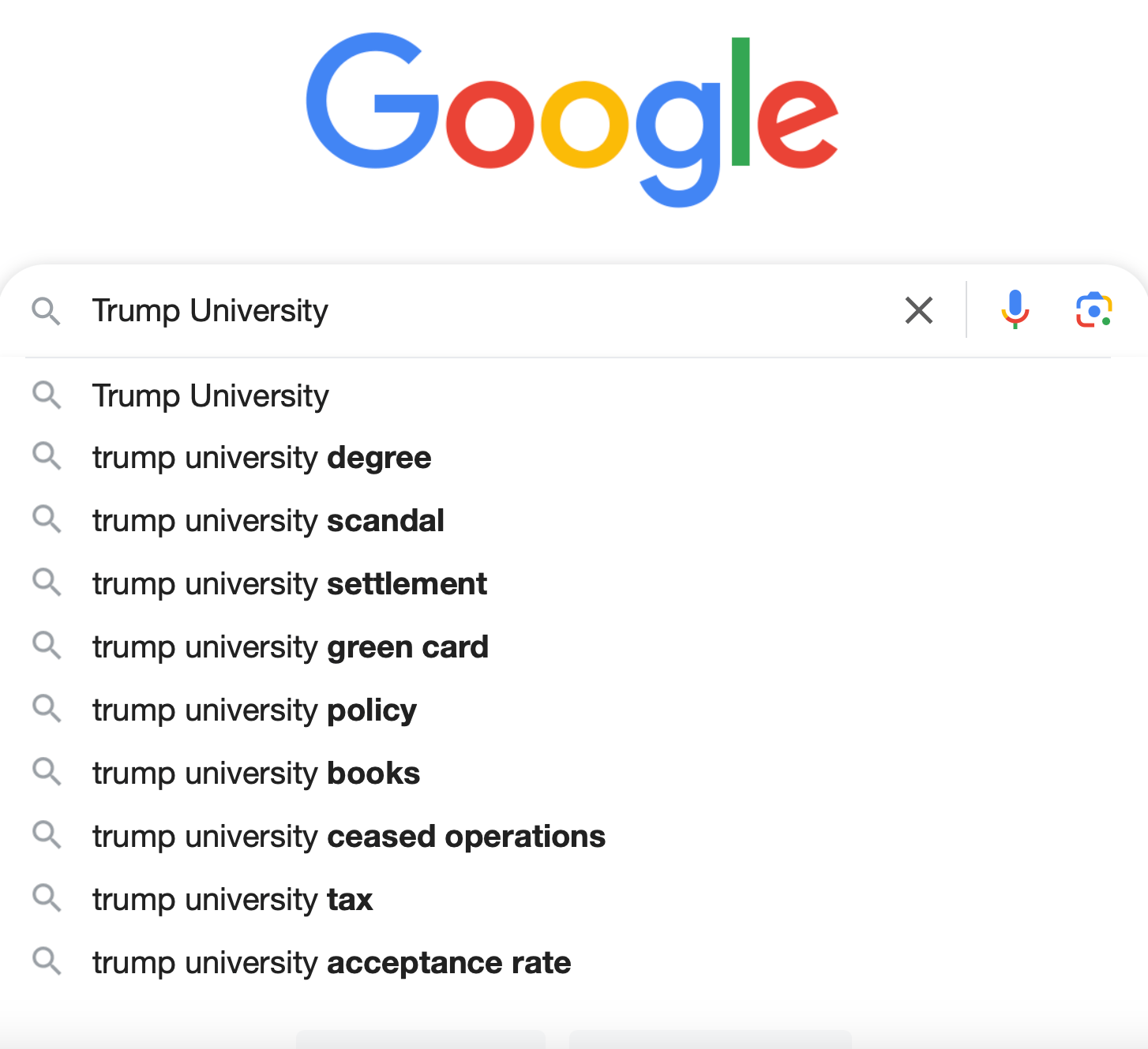
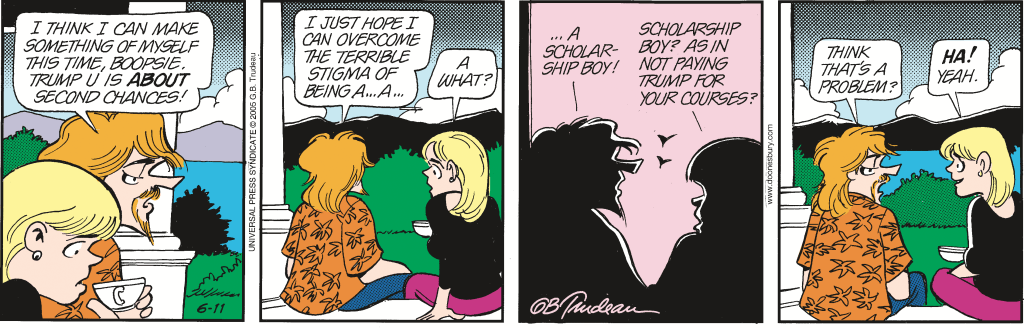
    Ostensibly, this all has little to do with higher education. But Trump University (also known as Trump U) is one of the most notable of all the current US President’s past projects and one of the ventures undertaken just before he stood for the Presidency for the first time. Trump not only lent his name to the project, he also invested millions of dollars in return for 93% of the business –like Victor Kiam, he liked it so much he bought the company. But the authors of this book conclude the whole thing was a disaster from start to finish.

    Beginning as a way to sell recorded lectures to small and medium-sized businesses, Trump University quickly moved into get-rich-quick in-person seminars. The Trump Elite Gold programme had a fee of $34,995 (about the same as the entire cost of a three-year degree in England or Wales). Prospective learners were told, ‘There are three groups of people … People who make things happen; people who wait for things to happen; and people who wonder, “What happened?”’ If you wanted to be in the first group, you were encouraged to open your wallet or else borrow the necessary fee.

    One failed applicant for The Apprentice, Stephen Gilpin, found himself tapped up to work for Trump U but later wrote an exposé that claimed, ‘the focus for Trump University was purely on separating suckers from their money.’ At the time, Trump said he hand-picked the instructors, but he did no such thing. The whole venture ended up in three major lawsuits, which were settled just as Trump became President for the first time.

    In the end, the story of Trump University confirms a truism: it is vital to protect the use of the term ‘University’ and to police it actively and in real time. The book serves as a reminder that – as Jo Johnson has argued persuasively on the HEPI blog – pausing new awards for University Title means the Office for Students is giving less attention to this area than it should.

    It is ironic that the global leader of right-wing populism should not only have sought to establish his own ‘University’ but that, having done so, it should embody in such exaggerated form all the negatives that populists tend to ascribe to traditional universities: poor value for money; an unoriginal curriculum taught by ill-trained staff; and insufficient personal attention to students. However, if a new book being published today attacking UK and US universities, Bad Education: Why our universities are broken and how we can fix them by Matt Goodwin, is any guide to populism more generally, then the failure of Trump U has not deterred the attacks on places that actually do have the legal right to call themselves a ‘University’.

    Goodwin starts with a chapter called ‘Why I decided to speak out’ though it could just have easily been called ‘The grass is always greener’ or ‘Looking back with rose-tinted spectacles’. The book’s core argument is that:

    the rapid expansion of the university bureaucracy, the sharp shift to the left among university academics and the politicization of the wider system of higher education have left universities in a perilous state.

    As a result, Goodwin argues, ‘our universities are not just letting down but betraying an entire generation of students.’

    He notes that, as the number of EDI (Equality, Diversity, and Inclusion) champions has gone up, some types of diversity, such as diversity in academic thought, have gone down. But Goodwin is a political scientist rather than a historian and the problems he identifies are not as new as he makes out. Far-left students used to disrupt Enoch Powell, Keith Joseph and Leon Brittan when they spoke on campus; now they try and block Helen Joyce, Kathleen Stock and Jo Phoenix. The issue of whether such individuals should be allowed to speak even if some people on campus will be ‘offended’ are the same. The recourse to legislation in response is the same too: the rows of the 1980s led to the Education (No. 2) Act (1986) and the rows of today led to the Higher Education (Freedom of Speech) Act (2023).

    Notably, Goodwin’s views seem to have changed even more over time than the institutions he criticises. Two decades ago, Goodwin was a progressive studying for a PhD under Professor Roger Eatwell, an expert in fascism and populism at the University of Bath, after which he moved to Manchester and Nottingham, where he worked with political scientists like Rob Ford and Philip Cowley, and thereafter to Kent. These days, Goodwin has not only given up his professorship but is found speaking at Reform UK meetings while accepting a job as a GB News presenter.

    And while Goodwin says his book has been 20 years in the making, it reads like it was 20 weeks in the writing. That is not meant to be rude for the piece is pacey, personal and polemical – and all the more readable for that. But while it is based in part on others’ research – including pieces of HEPI output – it generally draws from just one well: the place inhabited by Eric Kaufman, Jonathan Haidt and Niall Ferguson. The dust jacket includes endorsements from Douglas Murray, Claire Fox and Nigel Biggar among others.

    Goodwin’s pamphleteer-style of writing ensures his text has little in common with the meticulous research on recent university history by Mike Shattock or Roger Brown and Helen Carasso or Steve Jones (who will be writing his own review of the book for HEPI in due course). Nonetheless, whisper it quietly but – whether you like his general approach or not, whether you like his new acquaintances or not and whether you like his writing style or not – Matt Goodwin may have something of a point.

    Universities do not always welcome or reflect the full diversity of viewpoints in the way that perhaps they should, given their business is generating and imparting knowledge. It has been said many times before by others, so it is far from original, yet that doesn’t make it false. Goodwin quotes the US economist Thomas Sowell: ‘when you hear university academics talk about diversity, ask them how many conservatives are in their sociology department.’ It seems a fair question.

    But grappling with that is not easy. The best answer, Goodwin argues, is a muscular response. Rather than leaving it to the sector to resolve its own issues, he wants to see hard-nosed interventions from policymakers and regulators:

    only government action and new legislation, or pressure from outside universities, can change the incentive structures on campus. This means adopting a proactive rather than a passive strategy, making it clear that the individual freedom of scholars and students is, ultimately, more important than the freedom or autonomy of the university.

    At the very end, Goodwin even argues someone should ensure ‘all universities be regularly audited for academic freedom and free speech violations’, with fines for any that transgress. Yet that begs more questions than it answers: we don’t know who would do the audit or what the rules for it would be.

    So there is a paradox at the heart of Goodwin’s critique. He ascribes the problems he sees to flaws in the ‘system’ whereby the number of university administrators, institutions’ central bureaucracy and the pay of vice-chancellors have all increased rapidly. But such changes have often reflected:

    1. external influences, such as the increase in the regulation of education (in response to scandals of the Trump U variety);
    2. the need to have flattering statistics (such as to present to the Treasury in the battle for public resources); and
    3. recognition that the old ways of working are not going to root out inappropriate behaviours (for example, sexual harassment).

    Perhaps making universities more accountable to regulators and policymakers will make them bastions of free speech in the way Goodwin hopes, but might it not just clog up the lives of academics even more?

    Reprinted with permission of ANDREWS MCMEEL SYNDICATION. All rights reserved.

    Source link

  • What is the antidote to ‘wage theft’ in universities? – Opinion

    What is the antidote to ‘wage theft’ in universities? – Opinion

    Australia’s universities are some of the most prestigious and highly-ranked in the OECD. Yet the sector is arguably in crisis.

    It narrowly escaped a potentially devastating hit to the $47.8 billion in annual revenue generated by international education, with proposed international students caps only just scuppered in parliament’s last sitting fortnight of the year. 

    But it is again being rocked by headlines around “wage theft” and millions of dollars wasted on consulting fees by some of our biggest universities.

    A damning report by the National Tertiary Education Union has labelled this a “crisis of governance” constituting “reckless spending’’ by “the overpaid executive class”.

    Ouch.

    Yet Australia’s education system is strong by global standards, ranking third globally, and is home to several prestigious universities that consistently rank among the best in the world. 

    It is unlikely that a sector built on advancing human potential has solely reached this point by maliciously setting out to hurt its own backbone – its faculty.

    Rather, systemic problems often indicate structural sectoral flaws, and ineffective means to address them. And Australia’s university system is not immune by any means.

    A legacy issue of systemic complexity

    We cannot know with certainty if there are indeed some bad actors in this story. Possibly.

    But what is undeniably evident are the range of sectoral factors contributing to the sector’s longstanding history of poor record-keeping, including the challenges posed by its complex workforce structure.

    Payroll compliance in universities is highly complex due to the combination of intricate awards, unique enterprise agreements, and a history of poor record-keeping. 

    For instance, universities rely heavily on casual staff, working under often-opaque arrangements. Compensable tasks such as marking essays or tutorial attendance are governed by intricate rules or piece-rate agreements, complicating the tracking of hours and payment. 

    These layers of complexity create incomplete and inaccurate timesheet data, making it nearly impossible for a human to verify when employees worked and whether they were paid correctly.  

    And so the resulting payroll errors aren’t just mistakes – they represent a systemic failing with devastating consequences all round. 

    Underpaid employees face reduced morale, a loss of trust in their employers, and financial stress that often disproportionately affects the most vulnerable. Menwhile, the underpaying universities risk potentially enormous fines and suffer from deep reputational damage, as has been demonstrated recently.

    Worse still, is the fact that attempts at resolving these issues are also failing, because they represent nothing more than curative and labour-intensive bandaid “solutions”.

    For instance, many universities, after spending millions on consultants to recalculate and backpay impacted employees, have now shifted to hiring large internal teams to manage ongoing compliance efforts. 

    These teams are tasked with monitoring timesheet accuracy, tracking errors, and managing ongoing remediation efforts, seemingly indefinitely, as if fixing this problem should somehow just be “business as usual”.

    Yet treatments should never be “business as usual”, because this is to accept that the problem will never be resolved. 

    Instead, systemic problems like this one require systemic solutions that assume eliminating the problem is indeed possible. 

    Fixing the system, not the symptoms

    For this to occur, Australia’s tertiary education sector must urgently stop outdated and cumbersome legacy practices and instead embrace preventative long-term solutions that rebuild trust, and support fair and accurate pay for all employees.

    In practice, this would involve the adoption of advanced compliance tools and technologies that enable payroll teams to efficiently and accurately monitor payroll end-to-end. This allows teams to rapidly identify errors before, not after, a pay run, and drastically reduce the need for constant manual interventions.

    Introducing independent oversight by risk and compliance teams will also help to reduce the risk of a “marking your own homework” approach by human resources and payroll teams, bringing a fresh perspective to compliance checks.

    Regular training to keep payroll and compliance teams up to date on changes in legislation, award conditions, and enterprise agreements are also a must in industries like education where payroll practices are complex and dynamic.

    And, finally, all of these processes should be consistent across all schools and faculties to avoid disparities and confusion, and reduce errors caused by varying practices.

    Any university with the courage to break from centuries of backwards-looking remediation practices and instead embrace a forward-looking, technology-based approach would not only demonstrate bold and refreshing leadership. 

    It would also help to create enormous goodwill for a sector in desperate need of positive news and, critically, potentially save millions in the process.

    Fred van er Tang is chief executive of payroll compliance technology company PaidRight.

    Source link

  • Innovative Research Universities’ pre-budget wishlist

    Innovative Research Universities’ pre-budget wishlist


    Innovative Research Universities (IRU) has asked the federal government to invest in four key areas in the next budget, due March 25.

    Please login below to view content or subscribe now.

    Membership Login

    Source link

  • Should universities cash in on cryptocurrency donations?

    Should universities cash in on cryptocurrency donations?

    In 2023, Korean video game company WeMade pledged to donate the equivalent of one billion Korean won ($695,988) in Wemix tokens—a cryptocurrency linked to the blockchain platform of the same name—to Seoul National University.

    What seemed like a moment for celebration quickly descended into controversy, with the university eventually ceasing to accept cryptocurrency donations altogether.

    So, what happened? Shortly after the donation was made, WeMade reportedly liquidated a large share of its coins, causing a significant currency devaluation and meaning SNU’s donation was no longer worth so much—a problem given that the funds had been earmarked for a specific project.

    That wasn’t the only barrier. Under South Korean financial regulations, the university was also unable to open a corporate account for virtual asset exchange. With calls to change the law unanswered, the university was left holding a volatile currency it was unable to convert to cash.

    Now Korean regulators are reportedly considering allowing the country’s universities to convert cryptocurrency for the first time—potentially opening a significant new fundraising stream for the country’s financially ailing sector.

    Elsewhere, universities are already cashing in on the crypto craze, most notably in the U.S. In 2021, the University of Pennsylvania received $5 million in Bitcoin from an unnamed donor. A year later, Vitalik Buterin, co-founder of Ethereum, a leading blockchain, donated the equivalent of $9.4 million in USDC coin to the University of Maryland to fund public health research in the wake of the pandemic.

    The Giving Block, a U.S.-based platform that facilitates cryptocurrency donations to nonprofit organizations, said that the higher education sector has been one of its “biggest growth areas” over the past two years, with Washington State University and Northeastern University among the company’s clients.

    “There are several things driving this, like the booming crypto market and broader mainstream adoption, but the biggest driver for schools is simply following the money,” said Pat Duffy, its co-founder.

    With analysts suggesting popular currencies like Bitcoin will continue to grow in value this year, spurred on by newly inaugurated Donald Trump’s crypto-friendly rhetoric, universities could be set to benefit—if they are prepared to manage the risks that come with the volatile landscape.

    “For donors in the U.S., the biggest driver is the tax incentive,” said Duffy. “You can skip capital gains taxes on appreciated assets and still get a deduction for the full market value.

    “The donor pays no taxes on their appreciated crypto, and neither does the school. Donors across the country are eliminating tens of millions of dollars in tax liability by choosing to give with crypto, and giving larger gifts … as a result.”

    For universities, accepting cryptocurrency may also allow them to target their fundraising at a younger, tech-savvy market. “They can attract more people if they accept crypto payments,” said Nir Kshetri, professor of management at the University of North Carolina at Greensboro.

    It’s not just donations where universities are capitalizing. Some, like Bentley University, have begun accepting tuition fees in cryptocurrency, with significant implications for international students.

    In Nigeria, for example, converting the naira to the U.S. dollar to make fee payments can be a complicated process. For some, paying in decentralized cryptocurrency is simpler and faster, according to Kshetri.

    However, a key risk for universities is the unpredictability of cryptocurrency markets, with fears compounded by the volatility of Bitcoin in recent years. While the market is recovering, crashes such as the one experienced in 2022 have left a lasting impact and made some universities wary.

    “Right now it’s at a peak, but who’s to say we won’t see a return to what we saw two years ago when the bottom fell out?” cautioned Bill Stanczykiewicz, director of the Fund Raising School at Indiana University Indianapolis’s Lilly Family School of Philanthropy.

    According to Stanczykiewicz, best practice is to avoid holding on to cryptocurrency, even if it is predicted to increase in value. “What we say to fundraisers is if you get crypto, turn it into your national currency as quickly as you can,” he said, or use a platform like the Giving Block, which does this for you.

    However, this approach isn’t universal. In Paraguay, Universidad Americana is less risk-averse than some, evaluating the market before converting any cryptocurrency payments.

    Universities considering going down this avenue also need to consider the ethical aspects, said Stanczykiewicz, and whether such donations adhere to their institution’s values.

    Specifically, the environmental impact of currencies like Bitcoin is a concern for some. However, Kshetri argued, the coin has already been mined prior to the donation—that is, the damage has already been done. “Just to transfer that Bitcoin from you to me consumes very little … electricity,” he said.

    Whatever your ethical view, those interviewed for this article agreed on this: Cryptocurrency is here to stay and, for universities, it’s simply a question of how quickly they embrace it.

    “Historically, it was regulatory uncertainty that made universities nervous about crypto acceptance and investing,” said Duffy. Today, he continued, in the U.S., “regulatory clarity and the political support we see on both sides of the aisle have cleared up those concerns.”

    With countries like South Korea set to provide a regulatory green light, too, it may not be long before institutions around the globe follow in the footsteps of their U.S. counterparts.

    Source link

  • UK universities and the war in Gaza

    UK universities and the war in Gaza

    2024 was a difficult year for UK higher education, particularly in the international arena.

    Universities from all parts of the sector struggled to meet their overseas student recruitment targets in an increasingly competitive global market. Some international research collaborations – once encouraged by governments and funding councils – came under tighter scrutiny.

    And many campuses were rocked by protests over the conflict in the Middle East. I have touched on the last of these issues in a previous Wonkhe article – but it is worth revisiting in the light of ongoing tensions.

    Campus protests

    There are wars underway in diverse parts of the world – last year saw serious loss of life in Ukraine, Sudan, Myanmar and Yemen, to name only a few. However, nowhere attracts the attention of staff and students like the invasion of the Gaza Strip which followed the 7 October attack on Israel and the abduction of hundreds of civilian hostages.

    Some argue that this is unfair or, at least, disproportionate – why has Israel faced so much criticism when other regimes have committed atrocities against civilian populations with no demonstrations on British campuses? While that is undeniable, it is also true that the Palestinian people in Gaza are enduring a horrendous situation; despite the recent ceasefire, tens of thousands of innocent lives have been lost and hundreds of thousands are still denied access to basic essentials. The anguish and concern expressed by staff and students in response to their plight are surely justified.

    During 2024, that concern manifested itself in encampments across 30 or so universities. There were numerous marches, often organised in combination with civic gatherings. The public events tended to focus on demands that the government condemn the Israeli military action and use its influence to stop the war.

    On campus, the centre of attention was slightly different, with pressure on university administrations not only to provide financial support for Palestinian scholars but also to disinvest in companies which supplied arms to Israel. This drew on a longer running campaign which argued that any investment in the arms trade is fundamentally immoral. The incoming Labour government’s withdrawal of some export licences has not changed the situation – the issue has become a rallying point for those who feel powerless to alleviate the suffering of innocent people in the war zone.

    Formulating a response

    The protests have put university managers under considerable pressure. Initially, administrators were reluctant to say anything, being anxious to avoid alienating different groups or to make individuals who had an affiliation with Israel feel under attack. UK senior managers were also aware of the deep divisions on some American campuses – several heads of institutions resigned after making infelicitous statements while navigating between radical student opinion and aggrieved benefactors.

    Even so, quite quickly senior managers in British universities began to share ideas and formulate a common position. This generally involved voicing support for academic freedom and freedom of expression while calling on protestors to respect the position of others. There were nuances – some institutions banned flags or outlawed certain contentious slogans; several announced that they would not talk to activists until camps were disbanded. In the face of prolonged disruption, a few resorted to legal interventions to remove tented villages.

    For the most part, though, UK universities engaged with all shades of opinion, facilitated peaceful protest and sought to foster rather than stifle debate. The monthly colloquies at meetings organised by Universities UK were supplemented by occasional reflective discussions at events elsewhere.

    Like others, the University of Glasgow’s senior management and university court (the governing body) considered the ethical position as well as the politics of the situation. We communicated regularly with the wider community, reached out to activists and met with faith groups, student representatives, civic leaders and national bodies.

    A key concern was to ensure that students (especially, in this instance, Jewish and Muslim students and staff) always felt welcome and safe on campus. We were one of the first institutions to call for the release of the hostages and a humanitarian ceasefire. The university issued regular reminders about good conduct but did not rush to take disciplinary action against individuals. When students occupied a building, senior managers met with the leaders; we permitted a peaceful demonstration outside the door of the governing body meeting. In response to Students’ Representative Council (SRC) and trade union demands, we undertook a widespread consultation on disinvestment in the arms trade.

    Despite vociferous calls from students and trade unions, Glasgow’s Court voted two-to-one against disinvestment; following a thoughtful discussion, a majority agreed with senior managers that it was morally right for the UK to have a defence sector and that this should be distinguished both from the conflict in the Middle East and from the question of which countries the UK sold arms to. In essence, the Court’s position was unchanged from 2020, when officers were instructed to write to government ministers calling for tighter restrictions on sales to countries which breached international law, or which had poor human rights records.

    Towards reconstruction

    The decision on disinvestment does not constitute the sum of our response to the situation in the Middle East. Alongside this, we have sought to build on Glasgow’s status as a University of Sanctuary through practical action in support of those suffering in Gaza and other conflict zones.

    A key aspect of this was the conference we organised in December, in conjunction with Professor Sultan Barakat of Hamad Bin Khalifa University, on the post-war reconstruction of higher education in Gaza.  With most university campuses in the area reduced to rubble, reconstruction might seem like a momentous task, but the event attracted nearly 200 registrations. It drew strong support from UK universities and significant engagement from colleagues based in the Middle East.

    The conference delegates heard directly from victims of the conflict. They learned of its disastrous impact and considered academic analyses of aid interventions (often meagre and inadequate) as well as efforts to support students and academics to continue their studies. The attendees engaged in the difficult task of identifying how UK higher education can best support universities in the region to rebuild.

    Key messages included the undying hunger of Palestinians in Gaza for higher education, their determination to create a better future and the belief that, with international support, all obstacles to reconstruction can be overcome. Scotland’s former First Minister Humza Yousaf (who gave a moving address in the main Glasgow synagogue following the 7 October attack on Israel) told the conference: “this is not about taking sides – it’s about being pro-humanity.”

    The conversation will not cease – we intend to reconvene in Qatar and online in the spring, and to strengthen links with colleagues in key agencies, such as the Council for At-Risk Academics (CARA), who attended the conference. We will continue to draw support from a coalition of interests, including the UCU, whose local representatives actively supported the event.

    In the coming semester, we anticipate further protest and vigorous debate at Glasgow over the correct response to the war in Gaza and its aftermath.  The situation there remains desperate and the prospects for a lasting peace – for Palestinians, Israelis and Lebanese alike – are still very uncertain. But the events of the past few days should give us hope, and we in the higher education sector should do everything we can to advance the cause of peace and reconstruction. By identifying solutions to age-old problems, sharing our resources and giving practical assistance to colleagues in need, we can help make hope a reality.

    The author is writing in a personal capacity.

    Source link

  • Rethinking the Financial Challenge of English Universities

    Rethinking the Financial Challenge of English Universities

    By Adam Habib, Vice-Chancellor at SOAS University of London, and Lord Dr. Michael Hastings of Scarisbrick CBE, Chair of the Board of Trustees at SOAS.

    The business model of English higher education is broken. We are not sure that this simple fact is sufficiently understood by all stakeholders in higher education. Do not mistake us: we all recognise the serious financial crises that most English universities are confronting. But this is not the same as understanding its causal features and what to do about it. The latest financial report from the Office for Students (OfS), released in mid-November, suggests 72% of English universities will be in deficit by the end of the academic year if they continue as is. It does not suggest much about how to address it. In fact, it does not even ask why the other 28% of universities are not in deficit. Is this because of their historical endowments or their specific student profile, or are they doing something the others are not?

    But the OfS is not the only stakeholder reluctant to ask the hard questions: how we got here and what to do about it. This malady afflicts almost all other stakeholders. Let’s begin with the basics. Almost three decades ago, the British government committed to massifying education and ensuring that at least 50% of their school-leaving population had the privilege of going to university. The challenge was how to pay for it. They introduced fees, first as a small proportion of the actual cost in 2006, and then to cover the entire cost in 2012 (at least for Business degrees, Humanities and the Social Sciences). The popular backlash this generated, especially since almost all universities rushed to implement the maximum permitted fee, led the politicians to subsequently avoid increasing fees in line with inflation. The net effect was that within a few years, the actual cost of university education outstripped the fees.

    The solution followed by most universities was to increase international fees and their intakes of foreign students. To attract more of these students, universities borrowed heavily, built shiny new facilities, expanded their pastoral services and grew their student numbers. This was assisted in part by the removal of student number caps on home students. Costs increased, and to cover these, more income was required, which led to even higher international fees and more foreign students.

    All higher education stakeholders were complicit in this. The Government initially supported this solution because it obviated the need for more government subsidies and enabled foreign currency earnings. Vice-chancellors and higher education executives deluded themselves in thinking that the international postgraduate masters students came to the UK universities because of their institutions’ research reputations, even though survey after survey demonstrated that these students were increasingly attracted by the prospect of employment prospects and the post-study visa. Unions, both academic and professional service ones, acquiesced given that these international fees enabled higher salaries and subsidised greater research time for academics. There was even broader public support as it contained the fees for domestic students.

    Until of course, a new breed of ethnically oriented right-wing politicians mobilised on the chauvinistic instinct of there being too many foreigners in Britain. This first manifested in Brexit, then China and subsequently all foreigner-bashing, and finally visa restrictions on dependents. The net effect was a dramatic fall in applications and enrolment of international students, with the ensuing financial crisis of universities in the UK. A positive spin-off of this state of affairs is that almost all stakeholders now recognise the flimsy fiscal foundation of universities. The negative feature is that it still has not generated an honest reflection and behaviour on the part of all stakeholders or a sufficiently deep deliberation on the business model of higher education in the UK and what to do about it.

    Take, for instance, the stance of government. The Secretary of State for Education announced in the House of Commons on 4 November 2024 the first university fee increase for undergraduate students in eight years. Yet the Chancellor had increased the Employer National insurance a few days before from 13.8 to 15 percent. The net effect is a further loss of £59 million for universities in the UK from the 2025/26 academic year.

    Neither is the debate in universities more imaginative on what to do about the financial crisis and the business model of higher education. University vice-chancellors and Universities UK have recognised the need to revert to greater public funding for higher education, although there is a broad recognition that this is an unlikely solution in the near future given the fiscal crisis of the state. They have suggested through individual vice-chancellor advocacies that universities would require the financial equivalence of £12,000 fees, but again, almost all recognise the political challenge of achieving this during a cost-of-living crisis. The reluctant fallback back? A retreat to international student fees by retracting or reforming the visa restrictions, thereby allowing for further increases in income from foreign students.

    But this is just not a feasible solution for the long term. Higher education in the UK has priced itself out for ordinary international students looking solely for a higher education qualification. The only rationales for postgraduate master’s students accessing UK universities, given their high-cost structure, are either post-study employment or the learning of a specific qualification not available in alternative higher education settings. The former is increasingly becoming politically unfeasible, and the latter is not a sufficiently large market to financially sustain British universities.

    This is in addition to the moral and commercial challenges of this business model. As we have suggested elsewhere, there should be serious objections to this model, which is effectively directed towards sucking out resources from countries far more impoverished than the UK, to essentially cross-subsidise domestic citizens. Moreover, it accelerates the brain drain, weakening institutional capacities and human capabilities in the majoritarian world at precisely the moment when such societies require an enhancement of capabilities to address the local manifestations of transnational challenges like climate change, pandemics, food insecurity and war.

    Where to go from here, then? First, there is an urgent need for an honest conversation led by government without any smoke and mirrors on the fiscal latitude available to it and the consequences thereof for the financing of higher education. Second, there is a need for a thorough reflection on what has fiscally worked, and what has not in the recent past on the management and executive stewardship of universities in the UK. Third, there is a need for an honest discussion in universities on the fiscal viability of excessively small classes and unduly low staff-student ratios, 40% research time for all teaching and research contracts, and the importance of institutional differentiation in mandates and how these should speak to the former two elements. Finally, we need to think through the limits of cross-subsidising from international student fees and what new opportunities are opening up globally for fulfilling our institutional mandates.

    One opportunity, that has not been sufficiently explored by British universities, is how to assist in the education and training of hundreds of millions of young people in the majoritarian world. This is an urgent necessity not only for the economic development of these societies but also for enabling societies across the world to manage the transnational challenges of our time, without which we may not survive as a human species. Obviously, this will not be possible on the existing cost structures or business models of higher education. But partnering with universities in the Global South, involving the joint development of curricula, co-teaching and co-assessment, could bring down cost structures of higher education. This could then feed into more reasonable fees being charged, thereby opening up new higher education markets for British universities. Cost structures could also be reconsidered in relation to scale. The more students there are within a program, limited to pedagogical requirements, the more cost per student is reduced, and the more competitive fees can become. New technologies involving online teaching and global classrooms, many of which were pioneered for our own students during the Covid-19 Pandemic, can make this equitable transnational teaching even more feasible.

    Some forms of transnational teaching are already underway in UK universities. But these often take the form of online learning, overseas campuses and franchise models of higher education, all of which are only directed at obviating the financial challenges of British universities. While we would be reluctant to take rigid positions against these models – they may indeed be relevant in certain contextual circumstances – we do hold that the equitable partnership model identified above holds the pedagogical benefit of enabling learning that is both globally grounded and locally relevant. It also does not pit the financial security of British universities against that of universities of the majoritarian world. Essentially, these equitable teaching partnerships can pioneer one element of a new business model that enhances collaboration and mutual benefit for universities in the UK and the majoritarian world.

    Such a model of higher education could also become part of the soft power arsenal of the UK. Increasingly, government has broached the idea of a global Britain. This would be a Britain recognised as a collaborative partner of other nations, enabling them to achieve their national objectives, while enabling itself to be economically competitive and socially responsive to both its own citizens and its international obligations. An equitable orientation to its higher education system would assist this strategic national agenda.

    We are by no means suggesting that equitable transnational learning should replace all other forms of teaching in UK higher education. This would be unrealistic and, frankly, would violate the responsibility of British universities to be nationally responsive. Instead, we recommend that in the pursuit of a financially sustainable higher education system, a diverse set of income strategies – subsidy, domestic fees, international fees, ODL, executive education and equitable transnational educational partnerships – is required. This final strategy not only opens up a new higher education student market at a different price point but also enables us to square our imperative to be financially sustainable with our commitment to be socially and globally responsive.

    The strategic challenge of managing higher education institutions in the contemporary era is the management of tensions between competing imperatives. It also requires thinking outside the box, innovating and finding new markets, and servicing these at new price points, while continuing to meet the social obligations implicit in the mandate of universities. This is what we believe is sometimes missing from the deliberations on making British universities financially sustainable. The debate can only be enriched and the recommendations made more robust if we are prepared to think beyond what we are comfortable with.

    Source link

  • Make Universities Great Again – HEPI

    Make Universities Great Again – HEPI

    ***Join HEPI and Jisc at 2pm next Monday, 27 January for a webinar on ‘Competition or collaboration’ in the higher education sector: you can register here.***

    On the day that Donald Trump is inaugurated as US President for the second time, with JD Vance as his Vice-President, HEPI Director of Partnerships Lucy Haire reviews Vance’s Hillbilly Elegy – and asks what it can teach us about his attitudes to universities.

    It is not a new publication, but it has taken on new significance. JD Vance’s Hillbilly Elegy: A Memoir of a Family and Culture in Crisis was published in 2016, well before anyone had an inkling that the author would be the US Vice-President nine years later. I read this autobiography of Vance’s youth to try to better understand one of the most powerful men in the world. 

    Five things that saved JD Vance

    The basic story of the first thirty or so years of Vance’s life reflects a challenging upbringing in Middletown, Ohio, a community in economic decline. Born to a mother struggling with addiction, Vance grew up amid instability, surrounded by school dropouts, joblessness and crime.

    Vance attributes his escape from a stricken trajectory to five main themes.

    First, his steadfast grandparents,  especially ‘Mamaw’ who eventually raised him.

    Second, the US Marines, which instilled discipline.

    Third, his girlfriend and future wife, Usha, who refined his social skills.

    Fourth, his own grit and drive.

    Fifth, universities, of which JD Vance attended two. 

    He says of Ohio State University:

    Ohio State’s main campus in Columbus is about a hundred miles from Middletown… Columbus felt like an urban paradise. It was (and remains) one of the fastest-growing cities in the country, powered in large part by the bustling university that was now my home. OSU grads were starting businesses, historic buildings were being converted into new restaurants and bars, and even the worst neighbourhoods seemed to be undergoing revitalization.

    This passage could be taken straight from the pages of a US equivalent of UPP Foundation’s excellent Kerslake Collection on the economic and social benefits that universities have on their local communities. It chimes entirely with the sentiment in the UK’s Secretary of State for Education, Bridgit Phillipson’s recent letter to UK universities

    Vance explains how the majority of his education was paid for by the G.I. Bill, a US law that provides a range of benefits for veterans. Yet he still had to take on three jobs to pay for his living costs, a scenario which we know has become increasingly common in the UK. HEPI’s seminal report, the Student Minimum Income Standard, produced with the support of Technology1 in spring 2024, showed that student maintenance loans now fall well below what students actually need to live on. Students therefore have to look elsewhere for support. HEPI and AdvanceHE’s long-running annual Student Academic Experience Survey showed that for the first time in 2024, the majority of students in the UK now take on paid work to make ends meet.   

    Vance and his grandmother’s navigation of the financial aid forms highlighted their unfamiliarity with university bureaucratic processes, a case-study in inclusive admissions.

    I had puzzled through those financial aid forms with Mamaw … arguing about whether to list her as Mom or as my ‘parent/guardian’. We had worried that unless I somehow obtained and submitted the financial information of Bob Hamel (my legal father), I’d be guilty of fraud. The whole experience had made both of us painfully aware of how unfamiliar we were with the outside world.

    Furthermore, Vance discusses that, as a US Marine veteran, he was a mature student at Ohio State, so a few years older than most classmates. Some irritated him with their lack of real-world experience; one disparaged soldiers deployed to Iraq, where Vance had served. Vance decided that he wanted to accelerate his studies and arranged to fast-track his course so that he could graduate in just under two years. 

    This serves as a reminder about the challenges of ensuring that university classes are inclusive and accommodate diverse students. It also touches on the concept of fast-track degrees which remain quite rare in the UK. 

    Vance’s declared thinking about which law school to choose after Ohio provides still more food for thought for widening participation professionals. He didn’t consider Yale, Stanford or Harvard at first, the ‘mythical top three’, assuming he didn’t stand a chance of acceptance. But he changed his mind when he heard about a new law graduate hailing not from the ‘top three’ forced to wait tables for lack of other opportunities.

    Vance still would not try for Stanford as it required him to obtain a personal sign-off from the Dean at Ohio State which he dared not request. He got into Yale where he clearly acquired imposter syndrome and conflicting identities: was he an Ivy League student or Hillbilly kid? He was unnerved by the sense of entitlement among his mainly upper-middle-class peers, by some snobbery among the academics and by the extensive networks his fellow students could tap into when it mattered.

    He is nevertheless very appreciative of the whole experience, revelling in the stellar roster of famous visiting speakers, imposing architecture and the chance to edit the Yale Law Journal. He held his own academically, was taken under the wing of Professor Amy Chua and fell in love with one upper-middle-class student, Usha, his future wife. There are pages of his Yalie reflections on educational, economic and cultural upward mobility which foretell his move into politics.     

    I did not expect to find so many insights into the structure, funding and culture of the higher education system in this book. Some reviewers of Hillbilly Elegy say that it is not a completely true nor fair account of JD Vance’s experiences, that it over-emphasises the role of personal grit and determination in facilitating upward mobility, and that much of it is at odds with sentiments that Vance has expressed more recently. Nevertheless, if Vance is encouraging us to value higher education, recognize its crucial role for individuals and communities and to strive to get its systems and culture right for those with challenging backgrounds, then that is all to the good. Deep down, Vance knows that universities will help to Make America Great Again.

    For more information about the US university system, take a look at this recent HEPI report supported by the Richmond American University London.

    Source link

  • UK universities can support Gaza’s immediate education needs

    UK universities can support Gaza’s immediate education needs

    Since the conflict began in 2023, I have interviewed numerous higher education students and academics, both in Gaza and those displaced elsewhere.

    Their stories are profoundly inspiring and speak to the resilience and determination of a community that refuses to let adversity extinguish its aspirations. For students in Gaza, education is far more than a pathway to personal advancement – it is a fragile lifeline, a stabilising force in the midst of chaos, and a source of hope for the future.

    For academics, their passion for teaching and inspiring the next generation endures, even as universities lie in ruins and teaching becomes a voluntary effort.

    Education cannot wait

    In a region devastated by conflict, young Palestinians – particularly those pursuing critical fields such as medicine, pharmacy, and engineering – demonstrate extraordinary resilience as they strive to continue their education under unimaginable circumstances. For these students, education is not merely a personal milestone; it is a transformative force for the public good, equipping them with the skills needed to rebuild their society and economy. UK universities are uniquely positioned to play a pivotal role in addressing these challenges. Having recently supported Ukrainian students and academics during a time of crisis, they have developed valuable experience and insights into providing meaningful and structured support. The need to act now is pressing, as education cannot wait.

    The immediate priority is access to online resources – lecture recordings, virtual labs, digital textbooks, and open-access courses – that can sustain continuity in education for Gaza’s students, particularly those in fields like medicine and pharmacy. For instance, final-year medical students in Gaza have been unable to graduate due to the ongoing conflict, creating an urgent need for virtual alternatives to traditional clinical training. Palestinian academics have stressed the importance of accessible online lecture materials and virtual labs to ensure these students can complete their education and serve their communities where they are desperately needed.

    For UK universities, supporting these students is not just an act of compassion but a reinforcement of the broader mission of education: to empower, rebuild, and promote peace and stability. Given the logistical and security challenges that make physical attendance in schools and universities nearly impossible, the solution must be digital. UK universities could, for example, create licenses to share lecture materials such as recordings, slides, and lab simulations with students in Gaza.

    Virtual mentorship, remote internships

    Virtual mentorship programmes could also be established, enabling UK healthcare professionals to guide Palestinian medical students through remote internships and online training modules, equipping them with vital knowledge and practical skills. Collaborating with technology partners to provide devices, software, and secure internet access could further bridge the digital divide, ensuring that students can continue their education even amidst displacement.

    This approach could extend to pharmacy and engineering students, who face similar challenges. Pharmacy students could benefit from virtual labs and training programmes, while engineering students could access workshops on sustainable design, structural engineering, and public works – fields critical to Gaza’s rebuilding efforts. These initiatives would not only address immediate educational needs but also help create a pipeline of skilled professionals prepared to contribute to their communities’ recovery.

    Beyond individual training, research partnerships between UK universities and Palestinian institutions could provide both short- and long-term educational support. Establishing an interdisciplinary Centre for Palestine Studies within UK universities, for instance, would create a platform for collaborative research on pressing issues such as public health, environmental sustainability, and renewable energy. These partnerships could amplify Palestinian academics’ voices through joint publications, international conferences, and shared funding opportunities, while providing mentorship and resources that are otherwise inaccessible in Gaza.

    Our educators could also support the economic recovery in Gaza, which requires more than just rebuilding physical infrastructure; it necessitates cultivating an entrepreneurial spirit. UK universities with strong business and social entrepreneurship programmes could offer virtual training, mentorship, and incubator partnerships for Gaza’s students. Skills workshops on sustainable finance, small business management, and social entrepreneurship could empower young Palestinians to rebuild their economy, fostering resilience and independence.

    Beyond education

    However, significant challenges remain, including the reconstruction of homes, schools, and infrastructure. For now, support can only reach those students with access to the internet and devices, such as laptops. In the long term, UK universities should partner with charities, NGOs, and funding bodies such as the Wellcome Trust and the Royal Society to help rebuild Gaza’s educational and healthcare infrastructures. Dialogue with Palestinian colleagues is essential to developing a strategic framework for digitisation and reconstruction that is both practical and impactful.

    Imagine British universities collaborating with Palestinian institutions to create start-up incubators focused on renewable energy, healthcare technology, or sustainable agriculture. These ventures could foster economic independence, create jobs, and lay the foundation for a stronger and more resilient Gaza. Students in Gaza don’t just want access to education – they want the tools to contribute actively to their communities, creating a sustainable future for themselves and their families.

    UK universities now stand at a critical juncture. By extending support to students and academics in conflict zones, they have the opportunity to reaffirm the transformative power of education. Young Palestinians, who continue their studies amidst tremendous adversity, exemplify education’s potential to not only uplift individuals but to rebuild communities.

    The UK’s academic community has long championed education as a force for peace, progress, and the public good. By sharing resources, expertise, and a commitment to equity, UK universities can help rebuild Gaza—not just in physical terms, but in spirit, knowledge, and skill.

    This is a moment for UK universities to step up – for Gaza’s students, for the future of Gaza, and for the enduring promise of education as a beacon of hope and resilience.

    Source link

  • The courts are slowly clarifying universities’ duty of care

    The courts are slowly clarifying universities’ duty of care

    Imagine you’re a student, a member of staff, a parent or even an MP trying to work out what type, level or nature of “duty of care” is owed by a university to students.

    The other day Janet Daby, whose day job is Minister for Children, Families and Wellbeing but who also moonlights as a kind of spokesperson for HE given that Jacqui Smith is in the Lords, was asked about duty of care.

    Her answer was as follows:

    The department’s position is that a duty of care in HE may arise in certain circumstances. Such circumstances would be a matter for the courts to decide, based on the specific facts and context of the case being considered, and will be dependent on the application by a court of accepted common law principles.

    That’s unhelpful enough – but the courts don’t seem to be very clear either. Of relevance down this rabbit hole, there’s a fairly lurid bit of press coverage doing the rounds on a case involving a law student at Cambridge who has sued the university for its refusal to award him a PhD.

    The Mail, with its usual insinuative air quotes, runs the headline as follows:

    Cambridge law student sues university after he failed his PhD, claiming it held up his career as a barrister because he was “less able” to write a thesis.

    The case itself is interesting because of the way in which the judge in a recent appeal has differentiated between different bits of law that are supposed to protect students.

    And in a context of disabled students routinely reporting problems with the way in which reasonable adjustments are delivered, there could be significant implications, depending on what happens next, for practice in the future.

    Background

    Jacob Meagher is a disabled PhD student at Cambridge who alleges that he was not provided with an adequate supervisor or advisor, and was denied certain scholarships – acts which he claims were acts of victimisation.

    He previously brought a claim against the university on those issues in 2017, and reached a settlement in 2019 which involved him restarting his PhD. But he alleges he was subjected to a number of detriments after the settlement – crucially, that in connection with his PhD examination, the university was aware of the adjustments he needed to avoid a disadvantage because of his disability, but failed to provide them.

    That’s partly because they had been recommended by the university’s Accessibility and Disability Resource Centre (ADRC) in a plan, but not implemented in the department, which is the sort of scenario that Disabled Students UK’s research suggests is common.

    That, Meagher claims, led to a suicide attempt and hospital admissions – things he claims the university was made aware of but refused to help or support him. Then following complaints, the university recognised the issues with the initial viva and is working to ensure a fair process for his re-examination.

    But even though the university agreed to let the student re-defend his thesis and implement reasonable adjustments, he took the university to court for several reasons:

    • The case includes additional claims beyond the failure to implement reasonable adjustments during the initial viva. He alleges various breaches of the Equality Act 2010, including victimisation and discrimination, stemming from incidents throughout his PhD program. These include claims of inadequate supervision, vetoing of scholarships, and mishandling of complaints.
    • Meagher is seeking compensation for damages already incurred. He claims that the university’s actions have caused him financial losses, including missed opportunities for a tenancy as a barrister due to the delay in completing his PhD. He is also seeking general damages for the distress and harm to his mental health caused by the university’s alleged actions.
    • He is seeking a legal declaration that the university unlawfully discriminated against him, validating his claims and potentially influencing future practice at the university. He is also seeking to clarify legal issues concerning the university’s obligations ahead of that agreed re-examination.

    The university or individuals?

    When he initially brought his claim in August 2023, he included six individuals as defendants in the case – all senior employees of the university that held specific leadership roles within the departments and committees relevant to his complaints.

    He argued that in addition to the liability of their employer under section 109, section 110 of the Equality Act 2010 allows individuals to be held personally liable for acts of discrimination committed in the course of their employment.

    Meagher’s argument was that these individuals, by virtue of their positions, were responsible for the university’s decisions and actions that he alleged were discriminatory and caused him harm. So he sought a declaration from the court that these individuals had discriminated against him, in addition to the declaration sought against the university.

    The university’s legal team argued that including these individuals as defendants provided no tangible benefit to Meagher as the university had acknowledged its liability for discriminatory acts committed by its employees, and that the claims against them were duplicative and unnecessarily increased the cost and complexity of the legal proceedings.

    The County Court Judge hearing the initial applications in the case agreed with the university’s arguments and struck out the claims against the individuals, citing the “Jameel principle” that allows the courts to strike out claims that are technically valid but considered an abuse of process due to the disproportionate costs and burden they impose on the defendants compared to the potential benefit to the claimant.

    And on appeal, a High Court judge has now agreed – hence the headlines. But it’s where the High Court has disagreed with the County Court where things get interesting.

    Breach of contract?

    In the County Court, Meagher argued that the university’s failure to implement adjustments recommended by the ADRC for his viva constituted not just breaches of the Equality Act 2010, but also breaches of contract and tort – and once you’re in that space the legal principles of foreseeability of harm, and the duty of care in providing services with reasonable skill and care, kick in.

    On the duty to avoid foreseeable harm, the principle basically means that individuals and organisations have a legal responsibility to take reasonable steps to prevent harm that is reasonably foreseeable as a consequence of their actions or omissions. If the Court determines that the harm Meagher experienced (e.g. psychological distress, academic setbacks) was a foreseeable consequence of the university’s failure to implement the adjustments, that would strengthen his claim for breach of contract and tort.

    Then there’s the duty of care in carrying out a service with reasonable skill and care issue. That’s enshrined in section 49 of the Consumer Rights Act 2015, and also applies under common law principles of negligence – and requires service providers, in this case, the university, to exercise reasonable skill and care in the provision of their services to consumers, in this instance, Meagher as a student.

    The question in this case is whether the university, by failing to implement the adjustments recommended by its own ADRC, breached this duty of care by not conducting his PhD viva with the requisite skill and care, considering his disability. Meagher argues that the university’s failure to implement the ADRC’s recommendations, which he says were specific to his needs and aimed at ensuring a fair and accessible assessment process, constitutes a breach of this duty.

    And at the heart of all that is the question of competence standards and how they intersect with reasonable adjustments for disabled students under the Equality Act 2010.

    Competence standards

    Competence standards are essentially the academic benchmarks used to assess whether a student has attained the necessary knowledge, skills, and abilities for a particular qualification. You’ll recall from the Natasha Abrahart case that there was disagreement about whether presenting in-person to a lecture theatre was itself a required competence, or merely a way of assessing competence that could be (reasonably) adjusted.

    The Equality Act doesn’t require universities to adjust competence standards to accommodate disabled students – but it does require universities to make reasonable adjustments to the assessment processes used to evaluate a student’s competence.

    This distinction is crucial in Meagher’s case because he argues that the university’s failure to implement certain adjustments, specifically those recommended by the ADRC, resulted in him being disadvantaged in demonstrating his competence during his viva.

    He argues that requiring him to take the viva in a standard format, without the recommended adjustments, placed him at a substantial disadvantage due to his disabilities, and that they were necessary to enable him to fairly demonstrate his understanding of the subject matter and meet the PhD competence standard.

    Meagher proposed that his PhD assessment be based on an analysis of his published academic papers, a method already used for university staff, rather than a traditional thesis. He requested a legally-qualified editor to proofread his thesis for aesthetic and presentation standards, along with significant restructuring or adjustments to the viva process. His proposed adjustments included written feedback from examiners on areas needing improvement, followed by revisions and reassessment, as well as receiving written questions and a detailed agenda seven days prior to the viva to reduce anxiety.

    To further support his needs, Meagher requested oral questions be linked to specific thesis sections in active voice, pauses and breaks after oral questions for cognitive processing, and the ability to write down questions for clarity. He also sought the option to clarify ambiguous questions with examiner explanations and breaks of at least ten minutes every hour to manage fatigue and maintain focus during the viva.

    The Student Support Document (SSD) created by the ADRC included much of that – but Meagher says that the university failed to provide it to the examiners before the viva, leaving them unaware of his disabilities and the necessary adjustments – only providing a list of adjustments. He also alleges that adjustments to the viva format were not made – the examiners, he says, failed to avoid unnotified topics, clearly signpost questions, and accommodate the thesis format.

    He was then granted an interim injunction against the university in July 2024 preventing it from taking any action over his PhD course or examination without consent from both parties pending the conclusion of the legal proceedings.

    Two big issues

    In other words, there are two things going on. On the one hand, in the discrimination arguments the student wants clarity over the reasonable adjustments/competence standards issue before that re-examination issue goes ahead.

    Depending on what happens next, there could be significant implications across the sector as it continues to try to wrangle reasonable adjustments to assessment and the differences between competence standards in a subject that shouldn’t change, and mere methods for assessing them that could.

    On the other hand, the potential compensation would be higher if Meagher was able to make the contract/tort arguments for a breach of contract and the implied duty to act with reasonable skill and care. Crucial there is whether, once it was agreed, the plan from the ADRC became part of the contract with the student – where if so we’re into avoiding foreseeable harm and so on. And that matters because it looks like it could create a form of duty of care.

    On that issue, in the County Court Meagher argued that the failure to implement adjustments for his viva constituted breaches of contract and tort – but the judge reasoned that that was an attempt to improperly import the statutory duty to make reasonable adjustments under the Equality Act 2010 into contractual and duties of care.

    But on appeal in the High Court, the contract and tort claims have been reinstated – the judge found that the County Court judge had got it wrong on “you’re trying to use two bits of law on one issue,” and argued that once it had agreed them, the university had separate contractual and tortious duties to implement the recommendations, irrespective of whether those recommendations aligned with the reasonable adjustments duty under the Equality Act.

    And so that’s where things now get very interesting – because of who the pressure goes on now in any tug of war between professional services and academics that disabled students often find themselves in.

    Where will the pressure fall?

    It is possible that the pressure goes onto academic departments. If universities face potential legal liability for breaches of contract or tort when they fail to implement their reasonable adjustment plans, that could strengthen the hand of frustrated disabled students, and strengthen the authority of disability services departments within universities to ensure that their recommendations are given due weight and followed through.

    It could also mean better training for academic staff on disability law, or clearer procedures for communicating and implementing reasonable adjustments so academic departments are aware of their obligations.

    But it’s also possible that the risk of legal action causes universities to pressure their professional disability staff to be more cautious in creating and publishing reasonable adjustment plans that they could later be held to account over. They may put in steps like ensuring relevant academics agree first, slowing down already slow processes. There may also be a chilling effect on adjustments that beleaguered staff know will be hard to get academic staff to agree to.

    And of course there’s more to run here – in the eventual potential outcome of the case – on what is and isn’t a reasonable adjustment to a PhD viva as a method of assessment.

    What is clear is that the chances of an individual student having the money, time or smarts to take a case as far as Meagher has so far are slim. It also remains the case that disabled students’ rights in areas like this are desperately unclear, that the legal frameworks surrounding them interact in potentially unhelpful ways, and their access to support is heavily restricted once at the end of their course.

    Someone, somewhere – perhaps OfS’ Disability in Higher Education Advisory Panel – needs to grip these issues properly. And next time Janet Daby is forced to issue an answer like “well it’s for the courts to decide”, perhaps she could remind herself and her boss in the other place that she’s a lawmaker.

    Source link