Tag: Visible

  • Making creative practice research visible

    Making creative practice research visible

    I still remember walking into my first Association of Media Practice Educators conference, sometime around the turn of the millennium.

    I was a very junior academic, wide-eyed and slightly overwhelmed. Until that point, I’d assumed research lived only in books and journals.

    My degree had trained me to write about creative work, not to make it.

    That event was a revelation. Here were filmmakers, designers, artists, and teachers talking about the doing as research – not as illustration or reflection, but as knowledge in its own right. There was a sense of solidarity, even mischief, in the air. We were building something together: a new language for what universities could call research.

    When AMPE eventually merged with MeCCSA – the Media, Communication and Cultural Studies Association – some of us worried that the fragile culture of practice would be swallowed by traditional academic habits. I remember standing in a crowded coffee queue at that first joint conference, wondering aloud whether practice would survive.

    It did. But it’s taken twenty-five years to get here.

    From justification to circulation

    In the early days, the fight was about legitimacy. We were learning to write short contextual statements that translated installations, performances, and films into assessable outputs. The real gatekeeper was always the Research Excellence Framework. Creative practice researchers learned to speak REF – to evidence, contextualise, and theorise the mess of creative making.

    Now that argument is largely won. REF 2021 explicitly recognised practice research. Most universities have templates, repositories, and internal mentors to support it. There are still a few sceptics muttering about rigour, but they’re the exception, not the rule.

    If creative practice makes knowledge, the challenge today is not justification. It’s circulation.

    Creative practice is inherently cross-disciplinary. It doesn’t sit neatly in the subject silos that shape our academic infrastructure. Each university has built its own version of a practice research framework – its own forms, repositories, and metadata – but the systems don’t talk to one another. Knowledge that begins in the studio too often ends up locked inside an institutional database, invisible to the rest of the world.

    A decade of blueprints

    Over the past few years, a string of national projects has tried to fix that.

    PRAG-UK, funded by Research England in 2021, mapped the field and called for a national repository, metadata standards, and a permanent advisory body. It was an ambitious vision that recognised practice research as mature and ready to stand alongside other forms of knowledge production.

    Next came Practice Research Voices and SPARKLE in 2023 – both AHRC-funded, both community-driven. PR Voices, led by the University of Westminster, tested a prototype repository built on the Cayuse platform. It introduced the idea of the practice research portfolio – a living collection that links artefacts, documentation, and narrative. SPARKLE, based at Leeds with the British Library and EDINA, developed a technical roadmap for a national infrastructure, outlining how such a system might actually work.

    And now we have ENACT – the Practice Research Data Service, funded through UKRI’s Digital Research Infrastructure programme and again led by Westminster. ENACT’s job is to turn all those reports into something real: a national, interoperable, open data service that makes creative research findable, accessible, and reusable. For the first time, practice research is being treated as part of the UK’s research infrastructure, not a quirky sideshow to it.

    A glimpse of community

    In June 2025, Manchester Metropolitan University hosted The Future of Practice Research. For once, everyone was in the same room – the PRAG-UK authors, the SPARKLE developers, the ENACT team, funders, librarians, and plenty of curious researchers. We swapped notes, compared schemas, and argued cheerfully about persistent identifiers.

    It felt significant – a moment of coherence after years of fragmentation. For a day, it felt like we might actually build a network that could connect all these efforts.

    A few weeks later, I found myself giving a talk for Loughborough University’s Capturing Creativity webinar series. Preparing for that presentation meant gathering up a decade of my own work on creative practice research – the workshops I’ve designed, the projects I’ve evaluated, the writing I’ve done to help colleagues articulate their practice as research. In pulling all that together, I realised how cyclical this story is.

    Back at that first AMPE conference, we were building a community from scratch. Today, we’re trying to build one again – only this time across digital platforms, data standards, and research infrastructure.

    The policy challenge

    If you work in research management, this is your problem too. Practice research now sits comfortably inside the REF, but not inside the systems that sustain the rest of academia. We have no shared metadata standards, no persistent identifiers for creative outputs, and no national repository.

    Every university has built its own mini-ecosystem. None of them connect.

    The sector needs collective leadership – from UKRI, the AHRC, Jisc, and Universities UK – to treat creative practice research as shared infrastructure. That means long-term funding, coordination across institutions, and skills investment for researchers, librarians, and digital curators.

    Without that, we’ll keep reinventing the same wheel in different corners of the country.

    Coming full circle

    Pulling together that presentation for Capturing Creativity reminded me how far we’ve come – and how much remains undone. We no longer need to justify creative practice as research. But we still need to build the systems, the culture, and the networks that let it circulate.

    Because practice research isn’t just another output type. It’s the imagination of the academy made visible.

    And if the academy can’t imagine an infrastructure worthy of its own imagination, then we really haven’t learned much from the last twenty-five years.
    Source link

  • What Happens When We Start Making the Work Visible – Teaching in Higher Ed

    What Happens When We Start Making the Work Visible – Teaching in Higher Ed

    This post is one of many, related to my participation in  Harold Jarche’s Personal Knowledge Mastery workshop.

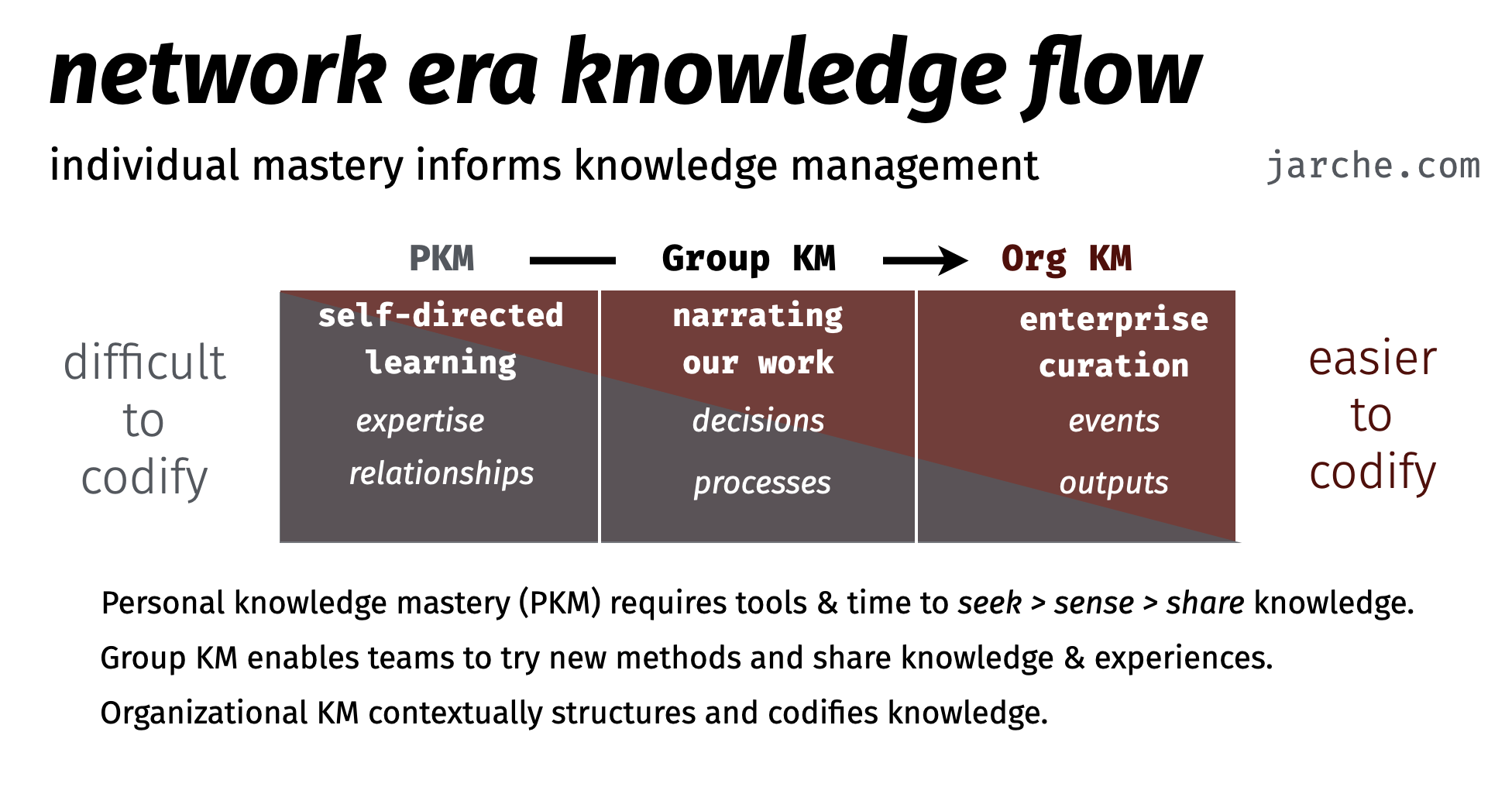
    Jarche informs us that when we narrate our work, we don’t experience knowledge transfer, but what we do get is greater understanding. Our individual, self-directed learning is difficult to codify, he explains, and is more focused on relationships and expertise. When we narrate our work, focusing on decisions and processes, we make that work more visible to others. This means we can experiment and share knowledge, learning together in real time. The results of this thinking together results in enterprise curation, where we can more easily codify knowledge and experience the results of our earlier efforts.

    network era knowledge flow individual mastery informs knowledge management Personal knowledge mastery (PKM) requires tools and time to seek, sense, and share knowledge

    The value of social bookmarks are hard to see, at first. However, over time, especially when combined with the use of feed aggregators and readers, we eventually get to witness the power of PKM as a discipline. I’ve been using Raindrop.io bookmarks for years, now, and enjoy having shareable bookmarks (which I can surface, when a situation encourages that practice), yet most of my collections are private. One that is now public is my growing collection of AI articles, in both an RSS feed and just a browsable page.

    I do find myself cringing a bit as I save items there, knowing that I certainly don’t endorse each link I save and the topic of AI is so controversial and polarizing. I’ve got everything up there from the world as we know it is crumbling to its core to fun hacks to use AI to build you a rocket ship to the moon (or load your dishwasher) or some such thing.

    Jarche states that our emphasis when we narrate our work should be on making our thinking accessible, but to avoid disrupting people with what we choose to share. He writes:

    The key is to narrate your work so it is shareable, but to use discernment in sharing with others. Also, to be good at narrating your work, you have to practice.

    One practice Jarche mentions under his tips and links section is to keep a journal. While I’ve not been good at this practice since my teenage years long ago, I did find many of these 6 Ways Keeping a Journal Can Help Your Career compelling. In Episode 425 of Teaching in Higher Ed, I share Viji Sathy’s and Kelly Hogan’s suggestion to keep a “Starfish” folder. There are variations of the beloved story of the starfish, including this Tale of the Starfish page from the Starfish Foundation with a powerful video describing the power in making a difference for a single starfish, even if we can’t rescue them all.

    I have kept up with digital encouragement folders for years now, both on my email accounts, as well as in my file directories (across my personal and professional domains). While not a journal, exactly, these stories and words can bring me encouragement during difficult times.

    I’ve been paying for the Day One Journal App for years now, though entirely languish in my practice of journaling. I would switch over to Obsidian, which has the benefit of future proofing any notes I take using Obsidian, since they are just text files sitting wherever I want them to be (as in if the app went away, the text files are still there and readable).

    However, Day One brings together all the TV and movies that I’ve watched, all my social media posts and images, and all the videos I’ve favorited on YouTube. I use Sequel to track what I want to watch, which then optionally integrates with the free Trakt service, which allows for an IFTTT rule to add an entry to Day One each time I mark something as watched in Sequel. In case you’re wondering about how I accomplish this, I found these two automations on IFTTT and never had to change a thing.

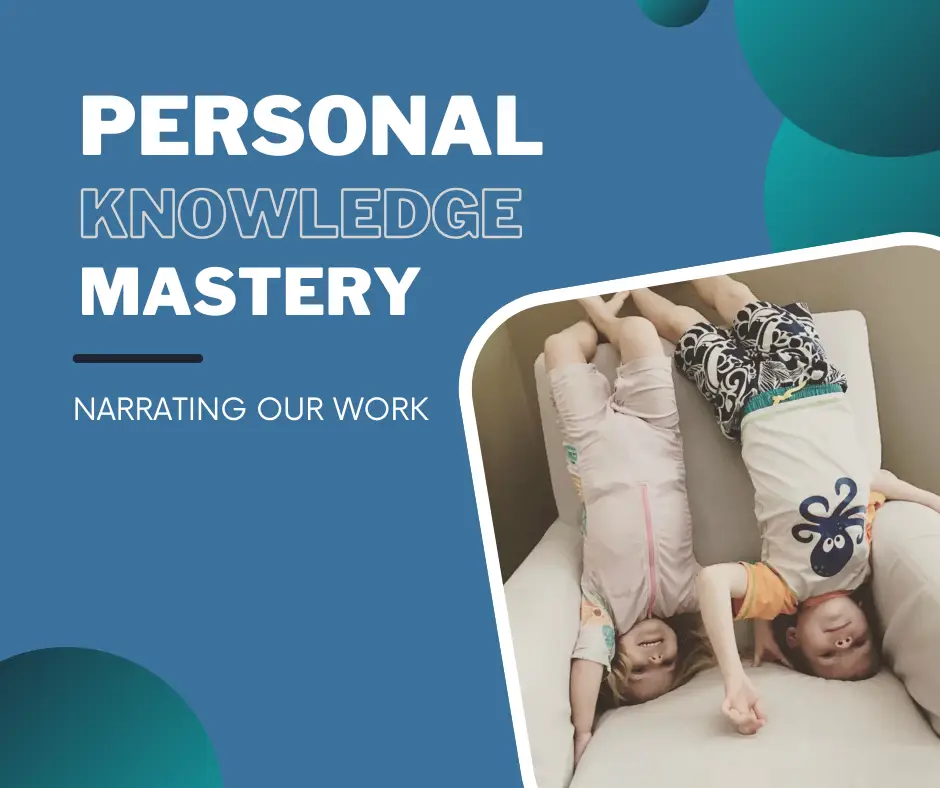
    Perhaps someday I’ll go down a rabbit trail of trying to figure out a longer-term, non-subscription based model for collecting all those memories across all those different services and not locking myself into DayOne. For now, I’m enjoying revisiting this glimpse of these two upside down kind of people from 2017….

    Two kids stand on their heads, upside down in a cushioned swivel chair

    …and then having this song from Jack Johnson start playing on the soundtrack of my mind for what I’m sure will last at least a few hours.

    Source link

  • Be a Visible Expert with Dr Lily Rosewater of Pitch Science

    Be a Visible Expert with Dr Lily Rosewater of Pitch Science

    Dr Lily Rosewater designs websites, brand assets, and has a service for social media on demand at her company, Pitch Science. I knew she’d be a great expert to share with you. She joins me live from Australia to talk about what it means to be a visible expert for scientists and researchers.

    Lily is an expert for scientist websites, social media, and branding through her company, Pitch Science. What about you? What would it mean to be more visible as an expert yourself? We talk about how many academics are known in their communities, but hidden online. Are you one of the HiddenExperts™? Whether it’s been intentional for you or not, you may want people to find you and your research online. Lily can help you too.

    This interview will be also be shared on Spotify soon.

    Dr Lily Rosewater is a science communicator, neuroscientist, and founder of Pitch Science. Armed with experience in both scientific research and digital marketing, Lily helps life science organisations and individual scientists share their brilliant ideas with the public to produce meaningful change.

    Lily Rosewater, PhD

    At Pitch Science, she turns science into stories through her purposeful, strategic, and human-centred online science content. Lily’s branding and website design services transform HiddenExperts™️ into VisibleExperts, so that scientists and science brands are ready to guide online conversations and get their work seen by those who matter. She is also empowering scientists to do science communication themselves and extend their reach beyond traditional academic channels with science communication training sessions and her Pitch Lab community. Because the more research expertise is shared online, the more it benefits everyone.

    Source link

  • Service Portfolios Make Service Visible (opinion)

    Service Portfolios Make Service Visible (opinion)

    Another academic year is fast approaching, and with it another promotion and tenure cycle in which faculty members will prepare dossiers for promotion. Some, but not all, universities have detailed instructions on what and what not to include in the dossier. At many research institutions, the service section consists of a list of committees on which the faculty member has served with little information about the nature of their participation. Having managed promotion and tenure at multiple institutions, I know that faculty members are often told to check the service boxes and move on.

    Yet, the pandemic and its aftermath threw into high relief what most faculty members already knew: Faculty service is a mission-critical portion of workloads and highly undervalued by our institutions. We also know that mission-critical workload is unevenly allocated to and carried out by some faculty members while others either refuse to participate, focus their service outside the institution for the profession or participate as free riders while others pull their load. This leads to conversations about “service slacking” and “service shaming.” Articles abound with useful suggestions on how to address the uneven distribution of service, including advice on how to say no. And the Faculty Workload Equity project, part of an NSF ADVANCE award to the University of Maryland, provides important tools to better understand the contours of differential workloads and ways to create transparency around them.

    This conversation is not new; Joya Misra and colleagues suggested in 2011 that changing the culture around service is essential in order to find ways to distribute the workload more evenly and to develop reward mechanisms for doing critical service in mission-central areas like curricular reform or student outcomes assessment. More than 10 years later, this conversation seems to have stalled. Properly recognizing the value of service would be a good way to restart it.

    Articulating the Value of Service

    Let me start with a story. About 15 years ago, I co-chaired my institution’s reaccreditation bid with the North Central Association of Colleges and Schools. We were tasked, among other things, with collecting information about how our faculty engaged in outreach to our community. Our campus survey about community engagement came back with pitifully little data. We realized that we needed to excavate the information. After visits to lots of faculty meetings, we had an amazingly rich list of ways our faculty were engaging with schools, nonprofits and local governments in our area. To my question about why these activities didn’t appear in any university document, faculty members universally replied that they didn’t think anyone cared.

    As Cullen C. Merrit recently argued, service and engagement activities are ways that the academy provides value to society at large. I agree. Yet we cannot value or demonstrate the impact of what we don’t document.

    To that end, colleges can launch a service portfolio that faculty can submit as part of promotion and performance-review processes. The service portfolio documents the range of service activities for each faculty member, as well as success metrics that demonstrate their impact on students, other faculty and the institutional mission. Identifying impact is a first step in increasing the value our institutions place on service activities and establishing fairer systems of allocation and rewards.

    The Service Portfolio

    Before you stop reading because no one wants to do more service work, a service portfolio can help bring attention to the value of work by demonstrating the impacts and outcomes. Indeed, some universities and colleges already have faculty members provide such information about service; others make suggestions about how to craft a promotion and tenure service and engagement dossier.

    As with a teaching portfolio, a service portfolio is a structured assemblage of contributions to mission-critical activities around student and faculty success (e.g., mentoring, curriculum development, professional development) and engagement with local and regional communities (e.g., support for K–12 education, support for local governmental and nongovernmental agencies).

    Service portfolio guidelines could begin by listing elements of the stated mission or the strategic planning goals at the department, college/school and institution levels. In consultation with department chairs or deans, faculty members would then select those elements to which they contribute through their service activities. In addition to describing their contributions, faculty could describe outcomes and impacts either in terms of future goals or what can already be measured.

    For example, a faculty member might want to prioritize curriculum development or faculty mentoring. In that case, we might expect them to serve locally or institutionally in those areas, to engage in professional development opportunities, or to develop community engagement activities related to their specializations. A focus on value requires that the service portfolio identify the impacts or expected outcomes of each activity. For example, participation in a curriculum revision might result in higher learning outcomes or lower DFW rates. Faculty mentoring can result in improved teaching outcomes, enhanced research productivity and an improved work environment.

    There are numerous advantages of a service portfolio over the current way of counting the number of committees on which we serve. First, faculty members can gain agency in the way that they shape and narrate their own contributions to the institutional mission through service. Agency is a motivating factor that might encourage yet more engagement. Faculty members will have a harder time free riding on a committee when they must articulate their contributions and when those contributions are then reviewed by departmental peers. Equity-minded faculty members and chairs/heads will be better able to track individual contributions and ensure that service is equitably allocated. And chairs and departmental colleagues who are impressed with a particular faculty member’s service contributions will be better positioned to suggest that recognition or reward for those contributions may be in order.

    To be sure, putting together a service portfolio will require extra time, something that faculty members do not have lots of. But the relatively small time commitment can result in significant benefits to faculty and to the institution. Intentional and agentic shaping of service and engagement workloads can ensure that mission-critical work is accomplished in a visible way and can be assessed for impact. Perhaps most importantly, a service portfolio gives information and tools to our colleagues to amplify impactful and valuable activities.

    Beth Mitchneck is professor emerita in the School of Geography, Development and Environment at the University of Arizona.

    Source link

  • A Deep Dive into MindTap for Anatomy and Physiology: Now With Visible Body

    A Deep Dive into MindTap for Anatomy and Physiology: Now With Visible Body

    Reading Time: 3 minutes

    Students taking Anatomy and Physiology have many challenging and complex topics to navigate through. Some of the common areas where they may struggle include concept visualization, term memorization and learning how to apply their critical thinking skills within a real-world clinical setting.

    Let’s explore MindTap for Elizabeth Co’s “A&P” and examine its suite of interactive features that improve engagement and comprehension, including Visible Body activities, author concept videos, clinical activities and personalized features.

    Visible Body activities help students exercise factual and spatial knowledge

    With Visible Body embedded into the MindTap Learning Path, students can access accurate visual representations, anatomically correct 3D models and immersive activities. Students can manipulate these 3D models and exercise their factual and spatial knowledge while reinforcing the concepts they’ve learned in Co’s “A&P.” Students can also check their understanding of these concepts by taking quizzes. With multiple Visible Body activities available in every chapter of the title, students can take advantage of a whole semester’s worth of 3D learning.

    Visible Body activity in MindTap Learning Path

    Author-driven content at students’ fingertips

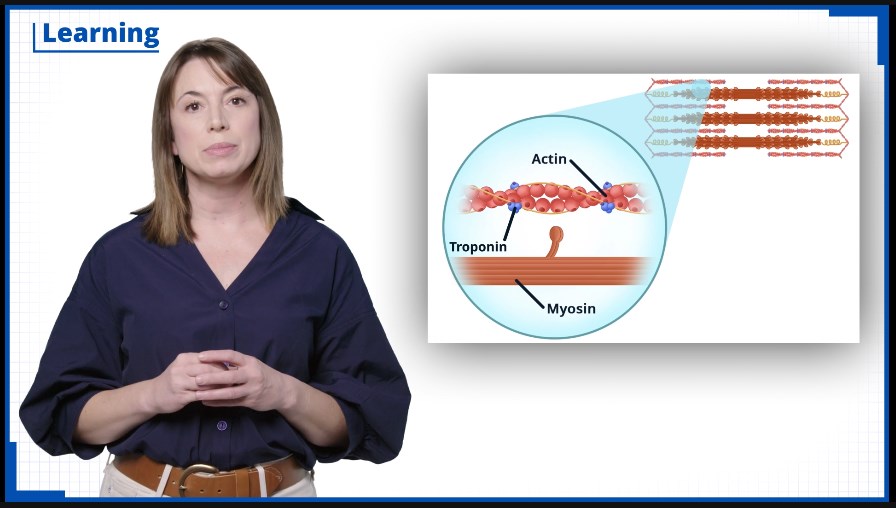
     “A&P” author Liz Co has always been passionate about supporting student learning and study skills. She currently serves on the HAPS (Human Anatomy & Physiology Society) learning objectives panel, is Committee Chair on Inclusive Pedagogy and Principal Investigator of Assessing Student Engagement and Efficacy of Remote Learning. Her wide-reaching experience has influenced new concept videos in each chapter, found under Learn Its in the MindTap Learning Path. Liz walks through what students have deemed to be the toughest topics in A&P, and breaks down those concepts using her pedagogical knowledge.

    Author Elizabeth Co stands next to an A&P graphic image.
    New concept videos with Dr. Elizabeth Co, author of “A&P.”

    Clinical activities get students career-ready

    Many students taking an A&P course are on the nursing/medical profession career track. With various opportunities to practice their critical thinking skills in MindTap for Co’s “A&P,” students can prepare for their future careers working in a clinical setting. Students can enhance those skills through Case Studies, activities which engage them with clinical scenarios and challenge them to achieve a higher-level of understanding with auto-graded assessments.

    Study features reinforce key concepts/terms and personalize the learning experience

    With over 8,000 anatomical terms to cover in the span of two semesters, A&P students need personalized solutions to help hone memorization skills and develop a better understanding of key concepts and terms. Students can improve these valuable skills with:

    • The Student Assistant, leveraging GenAI and exclusive Cengage content, delivers a personalized learning experience to students, available 24/7.


    • Mastery Training (powered by Cerego) uses cognitive science principles to help students learn key terms faster and more effectively. These activities help students make connections between terms and concepts, providing guidance until students have a full grasp of what they’ve learned.


    • Adaptive Test Prep helps students review and understand concepts and skills in the course. Students take a quiz and receive a customized set of study materials.

    Interested in exploring MindTap with Visible Body for your Anatomy and Physiology course?

    The post A Deep Dive into MindTap for Anatomy and Physiology: Now With Visible Body appeared first on The Cengage Blog.

    Source link

  • Invisible labour: visible activism | SRHE Blog

    Invisible labour: visible activism | SRHE Blog

    by Sarah Montano, Inci Toral and Sarah Percy

    Behind many academic success stories lies an untold narrative of invisible labour – a hidden force driving progress but often overlooked or undervalued. From providing emotional support to sitting on committees, the silent effort sustains institutions yet leaves many working tirelessly in the background on non-promotable tasks. Only when invisible labour is met with visible activism, can change begin.

    As a group of academics over the years we became conscious of a phenomenon that affected not only ourselves but many of our colleagues. We particularly noticed that women* were increasingly being asked to take on emotional labour and tasks that, when it came to promotions were classified as “Non-Promotable Tasks” yet were essential to institutional practices. We concluded that this form of emotional labour was a form of wife work, work that is essential to the running of the home (aka Higher Education Institutions (HEIs)) yet often undervalued and the person carries the mental load. We use the term wife work due to the pejorative nature of wife work in the media and the value placed on such work in wider society. Using a feminist collaborative autoethnographic approach we explored invisible and emotional labour among female academics. Therefore, at the 2024 SRHE conference we delivered our paper on ‘Invisible Labour: Visible Activism’ and argued that it is only such activism that will help to end the inequities in HEIs.

    *we acknowledge that invisible and emotional labour can affect any academic of any gender, particularly those on education/ teaching focussed contracts.

    Shining a light on invisible labour

    Despite the increase in women’s participation in the workforce and in academia, there is still a significant gender pay gap and to compound the issue, this gap widened in 2021 and 2022 in 20/33 OECD countries. As noted by Stephenson (2023), in HE only 28% of professors are female despite women making up 43% of the academic workforce leading to a pay gap of 11.9%. We acknowledge that the reason for such pay gaps and gender biases are complex and multi-factorial (Westoby 2021), thus we focus specifically on the issue of the “gender unequal distribution” of academic labour (Järvinen and Mik-Mayer 2024:1).

    There is much discussion on the mental load outside the workplace; therefore, our focus is on the unpaid or unrewarded workload inside the workplace. As universities have new developed pathways to promotion (e.g. education or impact), citizenship has become less important, yet it is critical work that still needs to be done. However, the result of shifting paths to tenure/promotion means that women are carrying out “Non-Promotable Tasks” (Babcock et al, 2022: 15), which are institutionally important yet will not help career success.

    Wife work defined

    Wife work tasks include: writing references for students; mentoring; assisting students with emotional problems or recruitment; careers advice; taking on someone’s admin work whilst they gain awards; and committee work, effectively comprising what is known as service work. Importantly, a significant component of wife work is emotional labour. Emotional labour involves managing emotions and interactions in the academic setting without formal recognition or workload compensation. These emotional labour tasks may include student emotional support, listening, supporting colleagues, helping people or just always being nice. Such wife work occurs due to societal and institutional expectations that prompt women to take on such wife work, yet this labour whilst maintaining the organisation’s reputation and can lead to emotional dissonance and burnout (Grandey, 2013).

    Making the invisible visible

    Drawing on institutional theory​, feminist theory and theory of gendered organizations we explore how universities, embedded in social norms and values, perpetuate traditional gender roles and expectations. Our research specifically focuses on the “Non-Promotable Tasks,” which are essential for institutional functioning but do not contribute to career success and are undervalued and unrecognised. We highlight patterns about gender distinctions that lead to advantages or exploitations of academics and how these create differing identities and expectations within academia.​

    How we uncovered the invisible

    Our research has two stages. In the first stage, we used a feminist collaborative autoethnographic approach to explore invisible and emotional labour among female academics (Rutter et al, 2021)​. This method allowed for an in-depth examination of personal and shared experiences within our academic community (Akehurst and Scott, 2021)​. As the research subjects, we are comprised of female academics from the same department across international campuses, reflecting on our experiences with non-promotable tasks, emotional dissonance, mental load, and burnout (Grandey, 2013; Lapadat, 2017; Babcock et al, 2022)​. We go beyond individual experiences to co-construct the meaning of invisible and emotional labour collectively​.

    Findings that shape our understanding of invisible labour

    We identified the following categories of “wife-work”:​

    • Mentoring support (outside normal expectations or workload) ​
    • Administrative and Logistical Tasks/ Roles​
    • Recruitment and Outreach ​
    • Committee Work
    • Supporting Career Development
    • Academic and Professional Development​
    • Volunteering and Institutional Presence​
    • Helping people​
    • Taking on someone else’s role while they work on “important stuff”​
    • Listening​
    • Being kind ​

    Using the institutional framework, in which the institutional norms shape the undervaluation of service work (Palthe, 2014), we argue that the regulative, normative, and cognitive-cultural elements of institutional theory contribute to the gendered division of labour.  Through the application of these key dimensions, our findings can be categorised under three dimensions:

    1. Institutional Dimension, underpinned by the explicit rules, laws, and regulations that constrain and guide behaviour such as academic quality assurance and behavioural expectations within HEIs.

    2. Social Dimension, encompassing implicit values, norms, and expectations that define acceptable behaviour within a society or organization such as social expectations around punctuality, dress codes, and academic etiquettes in HEIs.

    3. Individual Dimension, which involves implicit but shared beliefs and mental models shaping how individuals perceive and interpret their environments. These are often taken for granted and operate at a subconscious level.

    Using this framework our findings are categorised accordingly to these elements outlined in Figure 1 below.  

    Figure 1:  Invisible Labour: Visible Activism Findings. Source: Developed by the authors

    It’s time for change

    We recognise that the critical issue is, as Domingo et al (2022) highlighted, the significance of recognising and valuing women’s work within institutions, and stress that the real issue lies within organisational practices rather than women themselves. Addressing emotional labour is vital for a supportive and equitable work environment. The burden of responsibility is deeply embedded into the societal norms and often acts as a catalyser for such responses by female academics (Andersen et al, 2022). ​As organisations shift their focus towards formal progress procedures that undervalue volunteerism and emotional labour (Albia and Cheng, 2023), there is a pressing need for activism to ensure equitable recognition and valuation of women’s contributions within academia.

    A path forward – from silence to solidarity

    Invisible labour has long been an unseen and unrecognised necessity in academia, but we argue that it need not, and should not be this way. Acknowledging and recognising the existence and value of invisible and emotional labour will ensure these ‘non-promotable’ tasks become more visible.  Therefore, there is a pressing need for activism to ensure equitable recognition and valuation of women’s contributions within academia. We emphasise the necessity of addressing these systemic issues to foster a more inclusive and supportive academic environment for all individuals involved. Change starts with awareness, so we hope this is a step in the right direction.

    Professor Sarah Montano is a Professor of Retail Marketing at Birmingham Business School. She was awarded a National Teaching Fellowship in 2023. Her research interests are primarily authentic assessments, digital education and retail as a place of community. She is an engaging and skilled communicator and regularly appears in the media on the subject of retail industry change.

    Dr Inci Toral is an Associate Professor at the University of Birmingham, Business School and she is the Business Education Research and Scholarship (BERS) Convenor at Birmingham Business School. Her work revolves around digital marketing, retailing, creativity and innovation in retail education and authentic assessments. 

    Dr Sarah Percy is an Assistant Professor in Marketing at Birmingham Business School, University of Birmingham, with a special interest in authentic assessments.

    Author: SRHE News Blog

    An international learned society, concerned with supporting research and researchers into Higher Education

    Source link

  • Welcome Visible Body to Cengage

    Welcome Visible Body to Cengage

    Reading Time: 2 minutes

    At Cengage, creating quality learning experiences is a priority. Our goal is to put the learner at the center of these experiences to help them prepare for the future, especially in much-needed fields like health care, biology and life sciences.

    And so, to enhance learner engagement and deepen students’ understanding of key science concepts, we’re excited to welcome Visible Body to Cengage and our science offerings.

    Introducing Visible Body

    Visible Body is a leading provider of interactive apps and software used by over a million students, educators and health care/biomedical professionals around the world. Visible Body provides highly detailed 3D visuals, micro-lessons and game-like interactivity to make studying anatomy and biology easier and more engaging.


    Cengage and Visible Body deepen science learning

    By teaming up, we can provide expanded science offerings to more learners and educators — boosting engagement, improving problem-solving skills and strengthening students’ grasp of key science concepts.

    Visible Body adds to the variety of ways we can support learning. For science courses like anatomy and physiology and biology, it is vital that students gain a deep understanding of the human body and are given a hands-on way to engage with the concepts and processes.

    With accurate visual representations, anatomically correct 3D models and immersive activities, learners can master the concepts quickly, while gaining access to real-world scientific experiences and practicing essential skills for the workforce. AR and mixed reality bring learning to life, enabling students to engage with scenarios typically limited to lab environments. This approach empowers institutions, especially those strained for resources, to deliver high-quality, engaging education without labs.

    What’s in the future for science teaching and learning?

    Visible Body will be available with Dr. Liz Co’s “Anatomy & Physiology” later this spring with plans to add it to even more Cengage higher ed and K-12 science resources soon.


    Interested in learning about Liz Co’s “Anatomy & Physiology” — along with the addition of Visible Body? Fill out the form to find out more.

    Source link