
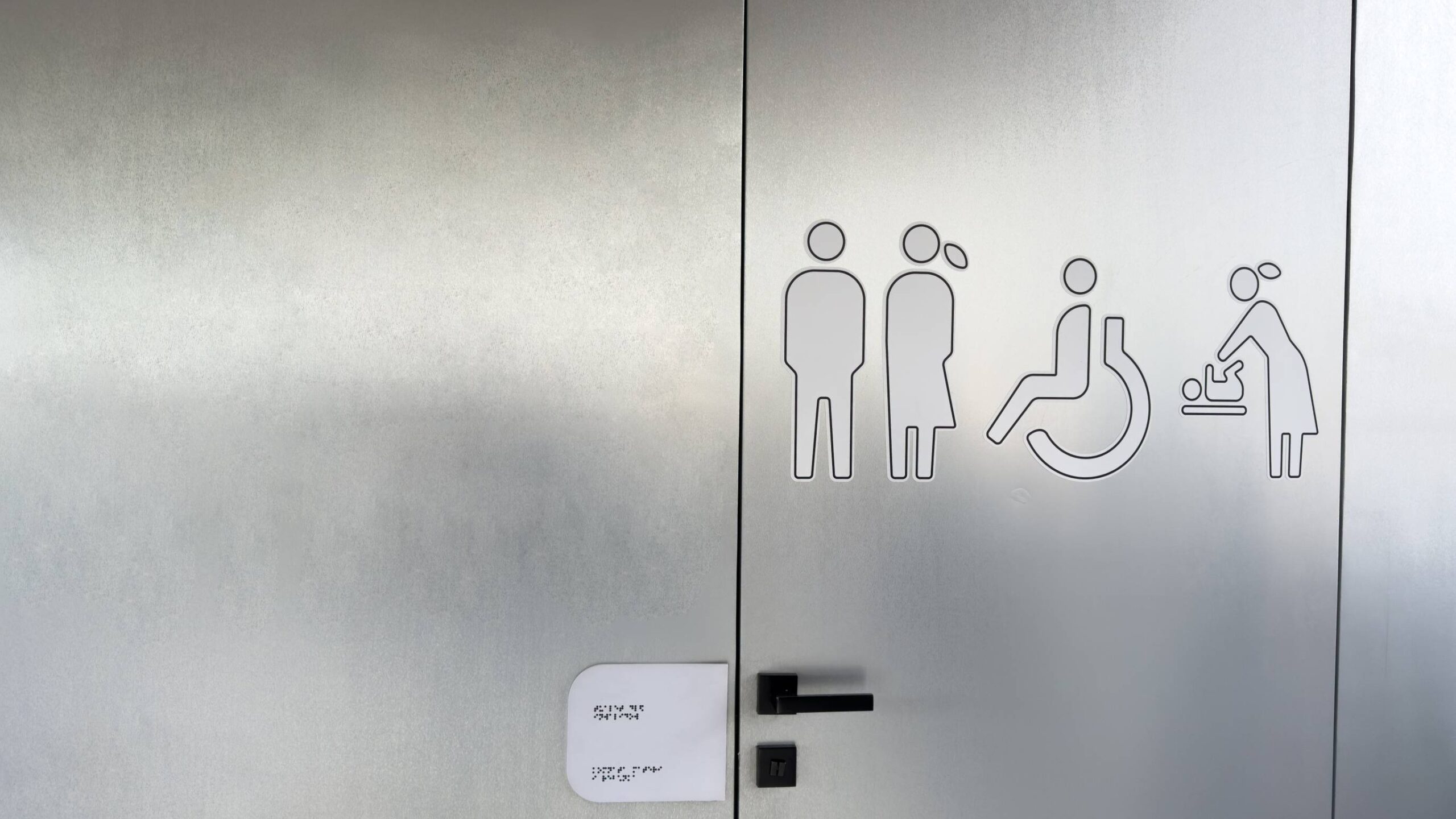
Back in May last year, I suggested that universities might usefully consult on how they’d handle single-sex provision in light of the Supreme Court’s ruling in For Women Scotland on the meaning of “woman” in the Equality Act 2010.
The sector’s dominant posture at the time was a collective “we’re waiting for the guidance” – and we still are.
The EHRC’s statutory Code of Practice for services, public functions and associations – the document that is supposed to translate the Supreme Court’s ruling into practical direction for employers and service providers – remains on the Minister for Women and Equalities’ desk, where it has been since September 2025.
What has arrived is a High Court ruling on the EHRC’s interim update – the stopgap document it published in April 2025, revised opaquely in June, and then removed from its website in October in what it described as an attempt to “encourage” the Minister to approve the Code.
The interim update set out what the Commission thought the ruling meant for single-sex facilities – primarily toilets, changing rooms and washing facilities – in both workplaces and public-facing services.
Its core propositions were that single-sex facilities must be genuinely single-sex by biological sex, that admitting trans women to women’s facilities would mean they were no longer single-sex and would have to be open to all men, and that where possible mixed-sex facilities should be provided alongside single-sex ones.
Three anonymous trans claimants – each of whom had been told by their employers, within weeks of the guidance being published, to stop using the toilets matching their lived gender – challenged the guidance as unlawful.
The judge (Mr Justice Swift) found the interim guidance was a lawful and broadly accurate statement of the law and rejected all three grounds of challenge from the individual claimants.
But within that headline, the detail matters – not least because the legal principles extend well beyond toilets to every women-only service, group, role and activity that a university or SU might provide, from women’s officer positions and self-defence classes to counselling services, support groups and sports teams.
Workplace facilities – form versus substance
The most emphatic part of the judgment concerns the 1992 Workplace Regulations.
The claimants had argued that those regulations only require employers to provide separate rooms with signs saying “men” and “women” – not to actually restrict who uses them.
The judge rejected that firmly, saying the argument “places form over substance” and ignores the “obvious purpose” of the regulations – “the provision of private space for each sex for reasons of conventional decency”.
He confirmed that “man” and “woman” in the regulations mean biological man and biological woman, and that:
an employer would not comply with the obligation under regulation 20 … if he permitted the room for women to be used by some men and vice versa
On the “policing” concern – that employers would need to station someone at the toilet door – the judge was dismissive. An employer who “in good faith adopted and applied a policy” that female toilets were for biological women and male ones for biological men:
…would do what is required. The employees concerned would know what was expected of them.
The idea that compliance requires monitoring each person each day, he said, reveals:
…a ‘logic’ so strict that it is divorced from reality.
He also explicitly declined to follow the Edinburgh Employment Tribunal’s reasoning in Kelly v Leonardo, which had described a biological sex interpretation as “unworkable”.
For universities, many of whose toilet blocks serve staff and students simultaneously – making them both workplace facilities under the 1992 Regulations and services under Part 3 of the Equality Act – the dual status is the practical complicator.
A facility that has to comply with the workplace regs as an employer obligation may also need to work as student-facing provision where the legal framework and expectations may differ.
But it’s not just the workplace regs
The more triumphalist commentary from Sex Matters et al already risks missing something important at paragraph 42, where the judge is clear – even where an employer provides single-sex facilities as required by the workplace regulations:
…the consequence will not be that a transsexual person is required to use the lavatory that corresponds to biological sex.
Why? Schedule 22 of the Equality Act provides a defence for employers complying with the workplace regulations – but only against sex discrimination and pregnancy/maternity claims. It doesn’t cover gender reassignment discrimination.
So a university can’t just point to the workplace regs as a complete answer to a trans employee’s claim. It must also ensure its provision is not discriminatory on grounds of gender reassignment – which in practice means providing additional gender-neutral or individual-use facilities.
The judge endorsed EHRC’s position that expecting trans people simply to use the facility matching their biological sex, with no alternative, would not be proportionate and would amount to gender reassignment discrimination.
That principle – proportionality, and the obligation to think about what happens to the people you’re excluding – extends beyond toilets. If a university restricts a women’s staff network, a women’s mentoring programme, a women-only counselling service, or a women’s rep role to biological women and makes no alternative provision for trans staff or students, the same proportionality test under paragraph 28 of Schedule 3 is likely to kick in.
The service provision nuance
Meanwhile, the point that GLP is leading on in its public response is also more nuanced than the messaging suggests.
The EHRC’s interim guidance said flatly that if trans women are permitted to use a single-sex female facility, all biological males must be permitted to use it. The logic is that you can’t exclude some men while admitting others without discriminating on grounds of sex. The same logic would apply to any single-sex service – a women’s support group, a women’s changing room, a women-only event.
The judge didn’t fully endorse this. He said whether a man excluded from a “trans-inclusive” women’s service would succeed in a direct sex discrimination claim depends on the facts – specifically, whether the different treatment is also less favourable treatment.
He drew on Smith v Safeway, where different hair-length rules for men and women were held to be different but not less favourable treatment, and said there would be “scope for a strong argument” that a trans-inclusive policy could similarly involve different but not less favourable treatment – at least where the provision is otherwise broadly equivalent.
But he also said the EHRC’s more cautious position “rests on factual premises that are permissible” and that the court “should hesitate before concluding that the guidance as issued was unlawful”.
In other words, the EHRC wasn’t wrong – but the position is more fact-dependent than the interim guidance suggested. GLP’s case update claims the ruling means “service providers may lawfully allow trans women to use women’s facilities without being forced to open them to cis men” and that the draft Code of Practice will need rewriting.
That’s a reasonable but optimistic reading – and it depends on the exact wording of the draft Code, which of course hasn’t been published.
The death of the shifting comparator
This bit matters for how universities and SUs might structure women’s representation. In Croft v Royal Mail (2003), one Court of Appeal judge had suggested that at some point during transition, the appropriate legal comparator should shift – so that eventually a trans woman would be compared with other women, and excluding her from women’s provision would need to be justified on that basis.
The judge said this reasoning “cannot survive the reasoning in For Women Scotland”. There is no stage of transition at which the law treats a trans woman as equivalent to a biological woman for Equality Act purposes.
For anyone with women’s officer roles, women’s societies, Athena Swan structures, or women’s networks that were premised – even implicitly – on the idea that trans women who had progressed sufficiently in transition should be treated as women under the EA, that premise is gone.
The “gossip” point
The three claimants raised concerns that being forced to use gender-neutral facilities would out them as trans. The judge acknowledged these were “sincerely held” but said:
..it ought rarely, if ever, be the case that a person using a unisex lavatory rather than an available single-sex one will ever be a matter of comment by others…
He went on to argue that workplace gossip is something everyone can expect to bear “from time to time”.
GLP has been vocal in response – it argues that the judgment reveals judges who:
…assume they understand the reality of what it is to be trans in a transphobic world.
The outing risk extends well beyond toilets. If a trans woman who has been attending a women’s staff network or accessing a women’s counselling service in a university for years is suddenly excluded, the visibility of that change is far greater – and the consequences in a small department or research group potentially more acute – than someone switching which toilet they use.
Whether courts will take the same view of outing risk in those contexts is unclear, and the appeal is likely to test this point.
The floor, the ceiling, and common sense
Another passage universities might pay close attention to comes at paragraphs 25-27. The judge notes that neither the Equality Act nor the workplace regulations provide:
…a comprehensive code on when or in what form lavatories or other facilities must be provided or who may or must use them.
But both provide:
…a floor for provision of facilities. But neither provides a ceiling.
He describes as “fanciful” the idea that these laws “seek to regulate every possibility that can arise, day-to-day,” and observes that talk of a “right” to use a particular lavatory is, if intended as a legal right, “a bizarre turn of phrase.”
Then:
Those who provide facilities whether to the public or to their employees should comply with the law but also be guided by common sense and benevolence rather than allow themselves to be blinkered by unyielding ideologies.
It’s a caution against rigid approaches from either direction, in a case both sides have framed as existential – and a description of what universities have largely muddled along with, given the absence of statutory guidance has made it so hard to do with confidence.
What happens now
Everything still hinges on the Code of Practice. Under sections 14-15 of the Equality Act 2006, the EHRC can only issue it with the Secretary of State’s approval, and it must then be laid before Parliament.
The Good Law Project (GLP) argues the judgment forces a rewrite. Sex Matters wants it laid “without further delay.” The Minister for Women and Equalities – who, notably, intervened in this case without backing the EHRC’s position on service provision, and whose submissions the judge found “not easy to follow” – could approve it, send it back, or sit on it. We don’t know the draft’s exact wording, and we don’t know what the Minister will do.
GLP has announced it will appeal, with a focus on workplace provisions and the outing risk, and has indicated willingness to go to Luxembourg or Strasbourg. That could extend the timeline considerably. The Kelly v Leonardo ET decision may also be appealed, though the judge’s emphatic rejection of its reasoning makes that a harder road.
Meanwhile, the judge described the EHRC’s own process – revising the interim update without flagging changes, then taking it down to pressure the Minister – as “very unsatisfactory”.
The sector has now been navigating these issues for nearly a year without statutory guidance. Universities and their SUs that have been waiting for the guidance before making decisions on facilities, services, groups, roles and events are running out of road – and may need to make those decisions based on their own reading of the legal framework, in the knowledge that the position may yet shift.
Neither the ruling, nor the Code when it arrives, will tell any individual university what to do about its specific toilet block, its women’s officer role, its changing rooms, its counselling services, or its sports provision. The obligation to make those decisions proportionately, thoughtfully, and with what the judge called “common sense and benevolence” still falls on the sector.