There is a squeaky old merry-go-round in my neighborhood that my own children play on from time to time. Years of kids riding on it have loosened its joints so it spins more freely and quickly. The last time they played on the merry-go-round, my children learned the important lesson that the closer to the center they sit the more stable and in control they feel.
While being a school leader has always felt like being on a spinning piece of playground equipment, leading since the inauguration of President Donald Trump has made me feel as if I moved from the center to the edges in this merry-go-round metaphor. Immigration raids and attacks on civil liberties have made the work feel blindingly fast.
The school I serve has a large population of immigrant students. Teens who just weeks ago felt like our school was a safe and secure place now carry a new level of concern into our classrooms and hallways. My school has seen a significant drop in attendance since January with parents and guardians citing the desire to keep their children home instead of sending them to school and putting them in harm’s way as ICE raids happen across the city.
Our staff feels the impact of the rhetoric and policy shifts out of Washington as well. They fear for the physical and emotional safety of our students when they leave the school.
For my part, I wonder if my decisions that prioritize equity and inclusion will make me the target of criticism–or worse, an investigation. This year, we have had ongoing professional development opportunities to teach staff how they can better support our queer students and employees. Each time we engage in these discussions, I find myself worrying about the repercussions.
But I am determined that the programs and people in place to support and protect our most vulnerable students will not go away. Rather, they will be reinforced. My role as a school leader is to create an environment so safe and accepting that students and staff never feel like they must look over their shoulder while they are at school. We want them to breathe easily knowing that, at least during the school day, they can be seen, safe, and successful.
To be sure, this job has always been a juggle, which includes instructional leadership, behavioral support, budgeting, staffing, and–in my case–fighting the stigma of historically being identified as a low-performing school by the Colorado Department of Education. But the changes out of Washington have taken things to the next level. As I navigate it all, I do my best to be energetic, optimistic, and reliable. Each day is an exercise in finding joy in my interactions with students and staff.
I find joy in seeing students cheer on their peers at basketball games. I find joy in watching a teacher sit with a student until they grasp a challenging concept. I find joy when I see staff members step in to teach a class for a colleague who is sick or just needs a break. I find joy and hope in my daily interactions with students and staff; they are the core of my work and are the bravest people I have worked with in my career.
When I push my children on the merry-go-round, I tell them to get to the center because the spinning seems to slow down and the noise decreases. This is the same advice I would give to school leaders right now. Get right to the center of your work by being with students and staff as much as possible. Even at the center, the spinning does not stop. The raids, political attacks, and fear tactics do not decrease, but the challenge of facing them becomes a little more manageable. While every force out there may be pushing leaders away from the center of their work, prioritizing that values-based work reminds us exactly why we do what we do.
Chalkbeat is a nonprofit news site covering educational change in public schools.
Dr. Chris DeRemer is the principal of Manual High School in Denver. He has been teaching and leading schools in the Denver metro area for the past 15 years. When he is not working in or thinking about schools, he can be found running or playing outside with his wife and three kids.
Latest posts by eSchool Media Contributors (see all)
In 2025, the landscape of higher education is dominated by contradictions, crises, and the relentless churn of what might be called “collegemania.” Underneath the polished veneer of university marketing—the glossy brochures, viral TikToks, and celebrity endorsements—lurks a network of systemic pressures that students, faculty, and society at large must navigate. The hashtags trending below the masthead of Higher Education Without Illusions capture the full spectrum of these pressures: #accountability, #adjunct, #AI, #AImeltdown, #algo, #alienation, #anomie, #anxiety, #austerity, #BDR, #bot, #boycott, #BRICS, #climate, #collegemania, #collegemeltdown, #crypto, #divest, #doomloop, #edugrift, #enshittification, #FAFSA, #greed, #incel, #jobless, #kleptocracy, #medugrift, #moralcapital, #nokings, #nonviolence, #PSLF, #QOL, #rehumanization, #resistance, #robocollege, #robostudent, #roboworker, #solidarity, #strikedebt, #surveillance, #temperance, #TPUSA, #transparency, #Trump, #veritas.
Taken together, these words map the terrain of higher education as it exists today: a fragile ecosystem strained by debt, automation, political polarization, and climate urgency. Students are increasingly treated as commodities (#robostudent, #strikedebt), faculty are underpaid and precarious (#adjunct, #medugrift), and universities themselves are subjected to the whims of markets and algorithms (#algo, #AImeltdown, #robocollege).
Financial pressures are unrelenting. The FAFSA system, once intended as a bridge to opportunity, now functions as a tool of surveillance and debt management (#FAFSA, #BDR). Public service loan forgiveness (#PSLF) continues to be delayed or denied, leaving graduates to navigate the twin anxieties of indebtedness and joblessness (#jobless, #doomloop). Meanwhile, austerity measures squeeze institutional budgets, often at the expense of research, mental health support, and academic freedom (#austerity, #anomie, #anxiety).
Automation and artificial intelligence are now central to the higher education ecosystem. AI grading tools, predictive enrollment algorithms, and administrative bots promise efficiency but often produce alienation and ethical dilemmas (#AI, #AImeltdown, #roboworker, #bot). In this context, “robocollege” is not a metaphor but a lived reality for many students navigating hyper-digitized classrooms where human mentorship is increasingly rare.
Political and cultural currents further complicate the picture. From the influence of conservative campus organizations (#TPUSA, #Trump) to global shifts in power (#BRICS), universities are battlegrounds for ideological and material stakes. Moral capital—the credibility and legitimacy of an institution—is increasingly intertwined with corporate sponsorships, divestment movements, and climate commitments (#moralcapital, #divest, #climate). At the same time, greed and kleptocracy (#greed, #kleptocracy) permeate administration and policy decisions, eroding trust in higher education’s social mission.
Yet amid this bleakness, there are threads of resistance and rehumanization. Student debt strikes, faculty solidarity networks, and advocacy for transparency (#strikedebt, #solidarity, #transparency, #rehumanization) reveal a persistent desire to reclaim the university as a space of collective flourishing rather than pure financial extraction. Nonviolence (#nonviolence), temperance (#temperance), and boycotts (#boycott) reflect strategic, principled responses to systemic crises, even as anxiety and alienation persist.
Ultimately, higher education without illusions demands that we confront both the structural and human dimensions of its crises. Universities are not just engines of credentialing and profit—they are social institutions embedded in broader networks of power, ideology, and technology. A recognition of #veritas and #QOL (quality of life) alongside the demands of #collegemania and #enshittification is essential for any hope of reform.
The hashtags are more than social media markers—they are diagnostics. They chart a system in flux, exposing the frictions between automation and humanity, austerity and access, greed and moral responsibility. They call on all of us—students, educators, policymakers, and citizens—to act with accountability, solidarity, and courage.
Higher education without illusions is not pessimism; it is clarity. Only by naming the pressures and contradictions can we begin to imagine institutions that serve human flourishing rather than perpetuate cycles of debt, alienation, and social inequality.
Sources & Further Reading:
An American Sickness, Elisabeth Rosenthal
Medical Apartheid, Harriet Washington
Body and Soul, Alondra Nelson
HEI coverage of student debt, adjunct labor, and AI in higher education
In this replay episode of the Education Exchange, Robert Enlow, the President and CEO of EdChoice, joins Paul E. Peterson to discuss the tax credit scholarship provision that was part of budget reconciliation bill, which was passed by Congress and signed into law on July 4, 2025.
In late September, news broke that Denmark – a growing educational destination – was taking steps to make it harder for international applicants to study at Danish universities. The policy would impose stricter academic entry requirements, restrictions on spouses, national reviews of forged documents, and shorter post-study work permits for third-country students in response to rising concerns over fears education is being used as a back door into the Danish labour market. This was The PIE News’s most-read story of the year, showing rising interest in Denmark as a study destination.
After years of increasingly restrictive polices affecting the international education sector, many stakeholders welcomed a new Labour government, led by Prime Minister Keir Starmer, that seemed to be rolling out the welcome mat for international students. Education secretary Bridget Phillipson released a video message addressing students thinking of choosing the UK as their study destination, reassuring them that the country is “a wonderful and safe place to study”.
Under the immigration white paper, a road map outlining the UK’s plans to control immigration, the Starmer government laid out plans to introduce a tax on international student fees. An announcement in the Autumn budget released more details; a £925-per-international-student flat fee for institutions in England with more than 220 overseas students. While it’s widely understood that the controversial policy was designed to help the higher education sector prove the value of international education – with the cash raised from the levy set to go towards domestic maintenance grants – critics have aired concerns that overseas students could be put off from studying in the UK if the levy is passed on in higher fees.
In another major development for the UK sector in 2025, the international white paper introduced plans to shorten the Graduate Route – originally set at two years – to just 18 months. The condensed post-graduate work stream will come into effect in January 2027.
The Netherlands has long been a popular destination for international students – offering value for money and many programs taught in English. But the international education sector in the country is facing its fair share of headwinds, including right-wing politicians’ attempts to curb overseas enrolments. But research shows that capping international students at just five of the Netherlands’ universities could cause countrywide losses of up to €5bn – an eye-watering number that should leave policymakers thinking twice.
Another major European study destination, Germany has been steadily rising in popularity over the past few years. But while students are flocking to the country, local communities can expect benefits in return. Research from the German Academic Exchange Service (DAAD) shows that international students in Germany contribute eight times more to public budgets than the amount the government spends on them.
A rising ELT hub, Malta is also attracting its fair share of international students in higher education due to its friendly locals, proximity to mainland Europe, balmy climate and attractive post-graduate opportunities. This is showing up in the growing number of higher education international enrolments, with this number shooting up by more than a quarter in just one year between 2022/23 and 2023/24, according to data from the country’s National Statistics Office.
With the US – traditionally the most sought-after study destination in the world – facing significant challenges with Donald Trump back in the White House, other countries are seeing an influx of students looking for alternative places to study. Some, like France, are actively positioning themselves as an attractive alternative. The country has also introduced a new fellowship for American students, launched in anticipation of the 250th anniversary of the American Declaration of Independence.
Ireland is fast becoming a regional hub for international education, as the largest English-speaking country still in the EU following Brexit. International students are flocking to the country in their droves, leading the the inaugural PIE Live Ireland being held in Dublin this October – at which Ireland’s higher education minister gave a video address welcoming international students.
There are many types of teams you can find in a work setting depending on the type of industry you work in, the size of your business or the company’s preferences on teams in general. If you’re currently in a management position or are interested in becoming one, consider learning more about the different types of teams you can be a part of or manage. In this article, we discuss what a management team is and provide eight types of management teams you can find in the workplace.
What is a management team?
A management team is a group of individuals who work together in a company and collaborate to achieve a common goal. The supervisor of the team usually creates a list of tasks for each member to work on to complete the team’s objective. Although not every member of the team may have the same tasks to complete, the team’s overall goal is usually the same. Some management teams work within one department, while employers create other teams to function between departments. In addition, some have more than one supervisor and others work autonomously without one.
8 types of management teams
Here is a list of eight types of management teams you may see in the workplace:
1. Functional
A functional team, also known as an operational team, is the most common type found in an office setting. Generally, an office has multiple functional teams with a supervisor responsible for the people on their team. Accounting, marketing and human resources are all examples of functional teams you can find in an office. Members in this type of team may have different responsibilities, but all perform the same function of the department, such as finance or sales.
2. Cross-functional
Cross-functional teams, or inter-working teams, comprise individuals from different departments. These teams come together with the help of a supervisor to complete specific tasks that require knowledge in each of their fields of expertise. Cross-functional teams are useful when they’re completing a project that involves varying departments for it to be successful. Team members need to remember that each of them is there because of their experience and particular strengths, so it can be beneficial to collaborate and use each of their abilities to produce the best outcome for the team’s intended purpose.
3. Virtual
With more individuals working from home, virtual teams have become increasingly popular. They comprise individuals working from different locations who use video chats and collaborative tools to work toward a common goal. Some virtual teams include people who work from home, while other members of the group are still in the office but meet with the rest of the team virtually. Virtual teams can be functional or cross-functional depending on the purpose of the team.
It can be helpful to meet with your virtual team weekly to ensure everyone is in agreement about what tasks they’re working on and possible upcoming deadlines. In addition, it’s helpful for teams who work from a place other than the office to be involved in the company culture when possible so they feel a sense of connection with other employees despite not being in the physical location with their coworkers.
4. Self-managed
A self-managed team is a group of employees that take responsibility for their work through peer collaboration without the help of a manager. They may have different daily objectives, but their individual tasks align to form a shared goal. Many small businesses or startup companies begin with this team model. People in a self-managed team benefit from being able to take full ownership of their work and are generally very self-motivated.
5. Matrix
A matrix team occurs when a team has more than one supervisor. This type of team is more popularly used in businesses that share employees across different functions of the organization. It can be useful when creating a new project because the project manager can choose employees who perform different functions in the organization and bring them together on their team to work toward the common goal of completing the project. The employee then has two supervisors—the direct supervisor of their department and the project manager they’re working for on the project.
6. Contract
Contract teams are temporary teams that employers bring in on contract for the completion of a project. Members of a contract team are usually highly skilled in their field and come in to complete one aspect of an upcoming project. Once they’ve completed their portion, their contract ends and their work is no longer required.
7. Taskforce
A task force team is a group of employees used for investigating or solving a specific challenge in the workplace. Supervisors usually form this team when a specific event has occurred so that they can discuss options to improve the issue. The objective of the task force is to offer solutions and to create preventative measures for potential challenges. Types of issues that a task force may handle include bullying, improving employee training or increasing customer sales. Once they’ve found a solution, the team disbands until they’re needed again.
8. Executive management
An executive management team is the highest level of management within an organization. It comprises executives in a company who help the president and CEO make important decisions for the company’s benefit. The individuals in this team discuss ways to improve the financial security of their company as well as work toward ways to develop it internally. They set actionable steps for achieving the company’s goals and motivate those around them, such as supervisors and other employees.
Tips to produce a successful team
Consider using some of these tips to help create an effective and successful team:
Set team goals. Try to set timelines and goals with your team that can help everyone keep track of their progress individually and as a unit. It can help them hold themselves and one another accountable in order to complete the goals successfully.
Foster a creative environment. Provide your team with the freedom to come up with new ideas in an atmosphere that appreciates their input and feedback. Promoting a creative environment can help team members come up with innovative ideas and provide them with the security they need to take risks.
Provide opportunities to visualize ideas. Many people understand concepts more easily when there’s a visual aid to help them picture the idea more completely. When introducing a new project, consider using graphs or presentations and allowing them the same opportunity if they’re in the position to share.
Find a common form of communication. To promote effective collaboration, consider choosing one method of online communication that your entire team can use such as the same online messaging service. It’s easier to communicate using technology when everyone is on the same platform.
Establish strong leadership. One method of establishing strong leadership is by building loyal and trusting relationships with your team members. Try to be involved in their day-to-day activities and make yourself available to them if they have questions or need guidance on a task.
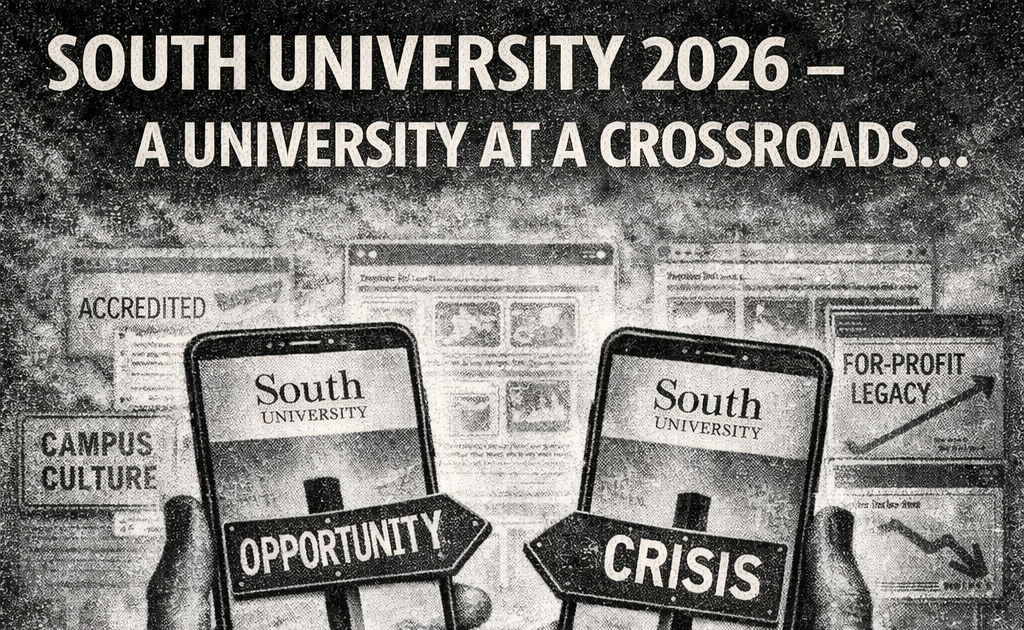
Founded in 1899, South University has long presented itself as a student-centered institution, offering a broad array of undergraduate and graduate programs across multiple campuses and online. As 2026 dawns, the university finds itself at a crossroads. Recent milestones — including renewed accreditation, professional program successes, and new leadership — coexist with financial pressure, a complicated for-profit legacy, and troubling reports from former employees about the institution’s culture and practices.
In December 2024, SU’s regional accreditor, the Southern Association of Colleges and Schools Commission on Colleges (SACSCOC), removed the university from Warning status and granted a 10-year reaffirmation of its institutional accreditation, contingent upon monitoring. At the programmatic level, the Doctor of Pharmacy program was re-accredited through June 2028 by the Accreditation Council for Pharmacy Education (ACPE), and the Physician Assistant program at the West Palm Beach campus earned a 10-year Accreditation-Continued status from ARC-PA. These developments underscore the university’s ability to deliver programs meeting professional and regional standards.
On October 31, 2025, Benjamin J. DeGweck was named CEO and Chancellor, bringing more than two decades of experience in higher-education leadership, legal affairs, and organizational strategy. His appointment reflects an effort to navigate complex challenges with stronger governance and renewed strategic focus.
Despite these signs of institutional competence, South University enters 2026 under significant financial stress. A $35.4 million balloon payment on a pandemic-era loan from the Federal Reserve’s Main Street Lending Program looms, while Heightened Cash Monitoring (HCM) by the Department of Education means federal student aid is subject to additional scrutiny. These pressures compound the university’s already fraught history. Previously a for-profit institution, SU faced lawsuits and a class-action settlement tied to misconduct allegations and was included among schools eligible for student loan cancellation after findings of fraud. Even after its 2023 transition to independent nonprofit status, the legacy of those practices continues to affect public trust.
Employee accounts provide an additional lens on the university’s culture and priorities. Reviews on Glassdoor, particularly from admissions and sales staff, describe a workplace dominated by a “con-like mentality” in training and sales tactics, in which management appears focused on producing just enough passing grades to remain financially viable rather than ensuring student success. One reviewer wrote that the university “takes advantage of the poor leveraging they have in life — whether it be financial or criminal records — and charges twice the amount of other schools,” describing the institution as “just above a scam.” Others recounted high-pressure enrollment quotas, constant emphasis on revenue, and a workplace culture that prioritizes organizational survival over transparency or ethical student support. These accounts suggest that revenue imperatives and regulatory pressures may sometimes overshadow educational quality.
Looking ahead, 2026 could be a pivotal year. The university has the opportunity to stabilize under DeGweck’s leadership, strengthen student outcomes, and leverage accredited professional programs to meet workforce demand. At the same time, financial pressures may force programmatic consolidation or strategic restructuring, and employee critiques alongside HCM oversight could amplify reputational risk. For students, recent accreditations provide cautious optimism, but due diligence regarding program outcomes, job placement rates, and federal aid eligibility remains essential. For policymakers and advocates focused on equity and accountability, the combination of financial strain, regulatory oversight, and internal criticism underscores the continuing need for scrutiny of formerly for-profit institutions.
South University in 2026 is neither fully secure nor entirely at risk. Its trajectory will depend on leadership, governance, and the ability to reconcile its financial and operational pressures with its educational mission. How the university navigates this moment may determine whether it becomes a revitalized opportunity for students or another cautionary tale in the landscape of American higher education.
Sources
South University. South University Achieves 10-Year Reaffirmation of Accreditation by SACSCOC. inside.southuniversity.edu
Higher Education Inquirer. South University’s Accreditor Takes Institution Off Warning, Requires Monitoring Report. December 2024. highereducationinquirer.org
South University. Doctor of Pharmacy Program is Accredited Through June 2028. southuniversity.edu
PR Newswire. South University West Palm Beach Physician Assistant Program Achieves 10-Year Accreditation-Continued Status from ARC-PA. prnewswire.com
South University. Benjamin J. DeGweck Named New CEO and Chancellor. October 31, 2025. southuniversity.edu
Higher Education Inquirer. South University Faces $35.4 Million Balloon Payment on Pandemic-Era Loan. November 2025. highereducationinquirer.org
For many professionals, especially physicians, dentists and business owners, higher income opens the door to hobbies that were once out of reach — things like flying lessons, backcountry skiing, scuba diving, or rock climbing.
These hobbies are exciting, but they also change how insurers assess your risk. And in insurance, added risk often shows up as higher premiums, exclusions, or even an inability to qualify for certain coverage.
This isn’t meant to discourage anyone from pursuing what they enjoy. The goal is to understand how these activities are viewed by life and disability insurance underwriters so you can make the best decisions long before you file an application.
Why insurers care about hobbies
Insurers are looking for patterns that increase the likelihood of a claim. For high-income professionals, the combination of disposable income and adventurous hobbies is common in underwriting files. Activities like:
Scuba diving
Skydiving
Bungee jumping
Rock climbing or bouldering
Backcountry skiing
Flying as a private pilot
These can all trigger additional scrutiny. In some cases, they lead to exclusions similar to what you might find with a pre-existing condition. In others, they result in a higher premium or a denial altogether.
In my experience, private piloting is the most common trigger for outright denials, especially with life insurance. Even training for a pilot’s license can affect your application.
Get the best price on own occupation disability insurance
SLP Insurance will find you the best price even if it’s not with us. Fill out the form below to get discounts of up to 30%.
Get the best price on own occupation disability insurance
SLP Insurance will find you the best price even if it’s not with us. Fill out the form below to get discounts of up to 30%.
Hobbies most likely to affect coverage
Insurers treat each activity differently, but several consistently show up in underwriting decisions for life and disability insurance.
Private pilot licenses
This is one of the biggest red flags in underwriting. Some carriers may decline the application entirely. Others might offer coverage but exclude aviation-related deaths.
Importantly, applications ask whether you are currently flying, planning to take lessons, or expect to start within the next two years. Even if you intend to apply now and start flying later, the carrier expects full disclosure. If an aviation-related death occurs and the application wasn’t accurate, they may not pay the claim.
Rock climbing and bouldering
For disability insurance, a rock-climbing exclusion is extremely common if you are actively participating in this hobby. And for good reason — injuries to the wrist or hand can immediately affect the ability of a surgeon, dentist, or operator to perform their job.
Backcountry skiing
Backcountry skiing is typically covered under life insurance only if you pay an added premium. In one case I saw, that added cost essentially doubled the client’s annual premium.
Is it worth paying for the coverage? For a healthy 30-year-old buying a 20-year term policy, the most likely non-illness causes of death are accidents, in this case, most likely from an avalanche. If backcountry skiing is part of your lifestyle, you generally want it included.
Scuba diving
Scuba is more nuanced. Traditional open-water recreational diving is often acceptable, especially if the frequency is low and you stay within standard depth limits.
Where problems arise:
Very frequent diving
Deep or technical dives
Cave diving
Diving without recognized certifications
Some carriers require a PADI certification before they’ll include scuba without an exclusion. Others vary widely in their approach, which is why insurer selection matters.
How much details matter: frequency, depth, training
When insurers ask about hobbies, they’re looking for specifics:
How often do you do it?
What level of training do you have?
How extreme is the activity? (Depth, altitude, terrain, etc.)
Do you plan to increase frequency in the next few years?
Someone who scuba dives twice a year on vacation is treated very differently from someone diving every weekend. The same applies to climbers who occasionally top-rope indoors versus those who regularly do multi-pitch climbs outdoors.
What exclusions and added premiums look like
Life insurance tends to handle these risks with extra premiums. Disability insurance usually applies exclusions instead.
Examples:
Life insurance: “This policy will not pay a death benefit if the insured dies while backcountry skiing unless an additional premium is paid.”
Disability insurance: “This policy will not cover disabilities resulting from rock climbing or bouldering.”
In certain high-risk cases, the company may simply decline to offer coverage at all.
Can exclusions be removed later?
In most cases, no. Once a dangerous hobby exclusion is added, it stays on the policy. Even if you stop the activity, insurers assume you may return to it.
And practically speaking, if you’re no longer doing the hobby, the exclusion doesn’t affect you anyway — there’s no remaining risk for them to insure.
What to do if you participate in these hobbies
Be fully honest on the application
This part is non-negotiable. If you misrepresent your activity and a claim arises within the incontestability period (typically the first two years), the carrier can deny the claim. In cases of outright fraud, they may deny payment even after that period.
The worst-case scenario is simple:
You pay for a policy for years, and when you need it most, it doesn’t pay out.
Be upfront with your broker
Different insurers treat the same hobby very differently. Scuba diving is a prime example. Some carriers exclude it almost automatically, while others include it with no added cost.
An independent broker can pre-check hobby guidelines across multiple carriers and guide you toward the one most favorable to your situation.
Remember: What you do after the policy is issued is your business
If you’re honest on the application and decide to take up scuba diving or piloting six years later, the policy generally still covers you. Insurers care about your activities and plans at the time of underwriting, they can’t stop you from doing something years down the road.
What if you can’t get coverage?
If you’re declined by standard carriers due to an extreme hobby, specialized insurers like Lloyd’s of London can sometimes provide coverage. It’s a niche solution, and the premiums are significantly higher, but for unique situations, it may be the only option.
How to approach insurance when you have risky hobbies
High-risk hobbies don’t automatically disqualify you from life or disability insurance, but they do change how insurers evaluate you. The best strategy is always the same:
Be honest with your broker.
Be accurate on the application.
Understand the exclusions and decide whether additional premiums are worth it.
When buying life and disability insurance, the goal is simple: coverage that’s comprehensive, reliable, and aligned with the way you actually live.
Compare disability insurance quotes and save
SLP Insurance will find you the best price on own occupation coverage, even if it’s not with us. Fill out the form below for a quote with up to 30% discounts.
The 2025-2026 school year brought a wave of powerful AI-enhanced tools to Google Workspace for Education. These aren”t just shiny new features—they’re practical classroom tools designed to save you time, personalize learning, and unlock student creativity. Best of all? Most are free for educators and students. Now that 2026 is upon us, I am excited to share with you some of my favorite new features that can be used in your classroom with your students. If you are already using these, I’d love to hear from you and learn how you are exploring AI and Google Workspace in your classrooms.
Let’s walk through the standout Google features you should try with your students this year.
Google Gemini for Education: Your AI Teaching Assistant
Google Gemini isn’t just another chatbot. It’s an AI assistant built directly into the Google apps you already use—Docs, Slides, Sheets, Gmail, and Classroom. No more copying and pasting between tabs.
Why it matters: Gemini 2.5 Pro incorporates LearnLM, making it the world’s leading model for learning. It’s purpose-built for education with enterprise-grade data protection. Your data isn’t reviewed or used to train AI models.
Try this on Monday: Ask Gemini to “Create a lesson plan on photosynthesis aligned to NGSS standards” or “Generate a 25-question multiple choice practice exam from this syllabus.”
Key Features for K-12 Classrooms:
Deep Research — Students can research complex topics and receive synthesized reports with sources and citations in minutes. Instead of spending hours searching, they get a comprehensive report they can then explore further.
Gemini Canvas — Create quizzes, practice tests, study guides, and visual timelines in one interactive space. Go from blank slate to dynamic preview in minutes. Students can build interactive prototypes and code snippets without knowing how to code.
Gemini Live — Students can talk through complex concepts, get real-time help, and even share their screen or camera for personalized feedback on problem sets.
What Are Google Gems?
Think of a Gem as a specialized AI assistant you create for a specific purpose. Instead of writing the same prompt over and over in Gemini, you build a Gem once with custom instructions, and it becomes your go-to expert for that task.
The difference: Regular Gemini is a generalist. A Gem is a specialist.
For example, instead of typing “Create a Jeopardy game about the water cycle for 5th grade” every time you need a review game, you create a “Jeopardy Game” Gem that already knows your grade level, subject area, and preferred format. Then you just give it the topic.
Creating Custom Gems: Build Your Own AI Experts
Once you’re comfortable with Gemini, Google Gems let you create custom AI assistants tailored to your classroom needs.
How it works: Give Gemini instructions, examples, and resources so it behaves exactly how you need it to. Upload unit plans, pacing guides, rubrics, or anchor texts so your Gem can reference them when creating content.
Teacher-facing Gems:
Lesson Plan Generator — Aligned to your specific standards and teaching style
Parent Communicator — Drafts emails that match your tone and school policies
Emergency Sub Plan — Creates ready-to-go activities when you’re out sick
Standards Unpacker — Breaks down complex standards into teachable chunks
Student-facing Gems: Create a Gem and share it with your class through Google Classroom. Students interact with your custom AI expert independently.
AI Tutor — Provides step-by-step help without giving away answers
Writing Coach — Gives feedback on essays and helps students revise
Study Partner — Creates practice questions from their notes
Career Explorer — Helps students research potential career paths
EduGems: Pre-Made Gems by Eric Curts
Don’t want to build Gems from scratch? Eric Curts (Control Alt Achieve) created EduGems—a growing library of ready-to-use Gems organized by category.
Professional Tasks (11 Gems) — Newsletters, recommendation letters, PD plans
Pro tip: Start with EduGems to see how effective Gems work, then customize them for your specific needs. You can also submit your own Gems to be added to the collection.
Teachers and students work with overwhelming amounts of information. NotebookLM becomes an instant expert on whatever documents you upload.
What makes it special: It grounds all responses in the specific documents you provide—no hallucinations, no random internet sources.
Features you’ll use:
Audio Overviews — Turn lecture recordings, textbook chapters, or research papers into podcast-style audio summaries. Students can study anywhere—on the bus, at practice, during their commute.
Document synthesis — Upload PDFs, articles, unit plans, and curriculum resources. Ask questions and get answers pulled directly from your materials. Create summaries, study guides, and student-friendly resources instantly.
Student independence — Help students understand complex texts without constant teacher intervention. They can ask clarifying questions and get explanations grounded in their assigned readings.
Google Vids: Create Professional Video Content in Minutes
Student attention spans are shrinking, and teachers need tools to deliver content that sticks. Google Vids is Google’s answer: an AI-powered video creation tool that lives right in your Google Workspace.
What Makes Google Vids Different?
Think Google Slides turned 90 degrees—instead of slides arranged vertically, you work with scenes arranged horizontally. If you can use Google Slides, you can use Google Vids. But here’s the game-changer: it’s powered by Gemini AI.
The “Help me create” feature: Type what you want to create (“Make a 3-minute tutorial on the water cycle for 5th grade”), and Google Vids generates a complete first draft in under 60 seconds—script, visuals, timing, transitions, and all. You customize from there instead of starting from scratch.
Key Features Teachers Love:
AI-Powered Creation — Describe your video in a sentence, and Gemini builds the first draft for you. Add your own screenshots, adjust the timing, choose AI voice or record your own.
Convert Slides to Videos — Already have a Google Slides presentation? Import it into Vids and transform it into an engaging video with music, transitions, and narration in minutes.
Stock Media Library — Access thousands of royalty-free videos, images, music tracks, sound effects, GIFs, and stickers without leaving the platform.
Professional Templates — Start with beautifully designed templates for tutorials, announcements, student projects, and more.
Real-Time Collaboration — Work together on video projects just like you would in Google Docs. Perfect for group projects or co-planning with colleagues.
Seamless Google Classroom Integration — Assign videos as templates so each student gets their own copy. Review student work directly in Classroom and see their progress in real-time.
For Teachers: Scale Your Impact
Create professional development videos, flipped classroom content, and instructional materials in 20-30 minutes instead of 2-3 hours.
Practical use cases:
Tool tutorials — Record once, share forever. Every new teacher gets instant access to training.
Flipped lessons — Create micro-lectures students watch at home, freeing up class time for hands-on work.
Lab procedures — Record safety demos and complex procedures students can review anytime.
Personalized feedback — Send quick video messages instead of lengthy written comments.
Professional development — Build a library of PD resources teachers can access on-demand.
For Students: Voice, Choice, and Creativity
Google Vids gives students an accessible way to demonstrate understanding without needing advanced tech skills.
Student projects:
Video essays — Students explain their thinking, cite sources, and present arguments visually.
Book reports — Create “movie trailers” for novels or informational texts.
Science demonstrations — Record experiments with narration explaining the process.
Digital portfolios — Showcase learning growth throughout the year.
Public service announcements — Combine research with persuasive communication skills.
Scaffolding tip: Start simple. Have students brainstorm in Google Keep, create a 3-slide presentation in Slides, import those slides into Vids, replace slides with video B-roll, add music and transitions. This progression teaches cross-tool workflows while building video literacy skills.
Getting Started is Simple
Access Google Vids at vids.google.com or vids.new. No software to download, no complicated setup.
Three ways to start:
Record — Easiest for screencasts and quick tutorials on Chromebooks
Use templates — Start with professional designs for various purposes
“Help me create” — Describe what you want and let AI build the first draft
Videos save automatically to Google Drive. Share through Classroom, Drive links, or export as MP4 files.
Why It Matters for K-12
Google Vids democratizes video creation. Students and teachers without technical expertise or expensive software can now create professional-looking content. This levels the playing field and opens doors for creativity that were previously closed.
Want the complete guide? Check out these in-depth resources:
Try Deep Research on a topic you’re teaching next week
This month:
Create your first custom Gem for a unit you teach frequently
Have students upload their notes to NotebookLM and create an Audio Overview
Record one instructional video in Google Vids
This semester:
Share the college student offer with your seniors
Build a library of custom Gems for different units
Let students create their own Gems as study partners
Assign a Google Vids project—have students create a 2-minute video explaining a concept, book report trailer, or science demonstration
One Important Reminder
With all these powerful AI tools at our fingertips, don’t forget that the most meaningful learning still happens through conversation, hands-on exploration, and human connection. Technology should enhance—not replace—the relationships and dialogue that make your classroom special.
Use these tools to reclaim your time and energy so you can focus on what matters most: your students.
Frequently Asked Questions
Do I need to pay for Google Gemini to use these features?
No. Google Gemini is free for all Google Workspace for Education users. The paid Gemini Advanced plan offers additional features like longer conversations and priority access, but the free version is powerful enough for most classroom needs. Students can also get Gemini Advanced free for one year with a valid .edu email address.
Can students use Google Gemini and these AI tools?
Yes, but with age restrictions. Students 13+ can use Gemini with their school Google accounts if their district has enabled it. Students 18+ can access Gemini Advanced for free with a .edu email. Google Vids, NotebookLM, and Gems are also available to students through Workspace for Education accounts, though your district controls access.
How do I know if my school district has enabled these AI features?
Try visiting gemini.google.com or vids.google.com with your school Google account. If you can access them, your district has enabled the features. If not, contact your technology administrator or instructional technology coordinator to request access. Many districts are still evaluating AI policies, so your inquiry might help move that conversation forward.
Will Google Gemini replace me as a teacher?
No. These AI tools are designed to handle repetitive tasks—planning, formatting, creating first drafts—so you can focus on what only you can do: building relationships, facilitating discussions, and responding to individual student needs. Think of Gemini as a teaching assistant, not a replacement.
How do I prevent students from using AI to cheat?
Shift your assignments from “what can be Googled” to “what requires thinking.” Focus on process over product: have students show their work, explain their reasoning, and revise based on feedback. Use AI-generated content as a starting point for discussion rather than an end product. Teach students to use AI as a research and brainstorming tool, not a shortcut to avoid learning.
Are these tools accessible for students with disabilities?
Yes. Google Workspace tools are designed with accessibility in mind. Gemini can help create differentiated materials and accommodations. NotebookLM’s Audio Overviews provide auditory learning options. Google Vids supports captions and screen readers. However, always test tools with your specific students’ needs in mind and provide alternatives when necessary.
How much time does it really take to learn these tools?
You can start using Gemini productively in under 10 minutes. Google Vids takes about 30 minutes to create your first video. Custom Gems require 15-20 minutes to set up initially, but then save hours over time. NotebookLM has virtually no learning curve—just upload documents and start asking questions. Start with one tool, get comfortable, then expand.
What if the AI generates incorrect information?
AI tools can make mistakes (called “hallucinations”). Always review AI-generated content before using it with students. When using NotebookLM, the tool cites specific sources, making it easier to verify information. Teach students to fact-check AI responses and use multiple sources. Treat AI outputs as drafts that need human review, not final products.
Can I use these tools if my district blocks certain websites?
Google Workspace AI features are integrated into your existing Google account and typically aren’t blocked if you can access Google Docs, Slides, and Drive. However, some districts may specifically disable AI features. If you encounter access issues, request that your technology team enable “Gemini for Google Workspace” and “Additional Google Services” in your admin console.
How do these tools handle student data and privacy?
Google Workspace for Education accounts have strong privacy protections. Student data is not used to train AI models, and conversations are not shared with third parties. However, review your district’s AI acceptable use policy and teach students not to share personal information in AI prompts. For sensitive topics, consider using teacher accounts rather than student accounts.
Ready to try one of these features? Pick just one from this list and test it this week. Reply and let me know which one you chose and how it went.
Jeff Bradbury, your digital learning coach 🎸
Don’t Miss the Next EdTech Breakthrough
Google isn’t done innovating, and neither are dozens of other EdTech companies building tools specifically for K-12 educators. New features drop every month—some game-changers, some duds.
I test them all so you don’t have to.
Join 20,000+ educators who get my weekly newsletter with:
✅ Early access to tutorials on new classroom tech
✅ Honest reviews (I’ll tell you when something isn’t worth your time)
✅ Ready-to-steal lesson ideas and project templates
✅ Time-saving workflows that actually work in real classrooms
No fluff. No vendor pitches. Just practical strategies from a teacher who’s actually using these tools with students.
Get weekly EdTech tips, tool tutorials, and podcast highlights delivered to your inbox. Plus, receive a free chapter from my book Impact Standards when you join.
Like this:
LikeLoading…
Discover more from TeacherCast Educational Network | Developing Standards-Based Instructional Technology Integration
Subscribe to get the latest posts sent to your email.
Bari Weiss has built a powerful public identity as a defender of free speech against institutional conformity. From elite universities to legacy newsrooms, she presents herself as a principled dissenter confronting ideological capture. Yet her expanding influence across higher education and corporate media suggests something deeper than individual controversy. It reveals how elite institutions are increasingly repackaging control, consolidation, and risk management as rebellion.
Weiss’s involvement in the University of Austin and her editorial authority at CBS News illustrate how the language of free inquiry has been absorbed into a broader project of institutional realignment rather than democratization.
The University of Austin was launched in 2021 as a highly publicized response to what its founders described as illiberal conditions in American higher education. Weiss, as a co-founder and public face of the project, helped frame UATX as a refuge for intellectual risk-taking and heterodox thought. Yet the institution was not built from the margins of academia. It emerged through the backing of wealthy donors, venture capitalists, tech executives, and high-profile media figures who already occupy powerful positions within American public life.
UATX’s critique of higher education centers almost entirely on cultural politics, presenting universities as hostile to dissent while leaving largely untouched the material structures that govern academic freedom. The casualization of academic labor, the erosion of tenure, donor influence over research agendas, student debt as a disciplinary force, and retaliation against labor organizers and whistleblowers rarely figure into the narrative. In this way, UATX offers not a systemic challenge to elite education but an exit strategy for those with the resources to opt out of public accountability.
The same logic appears in Weiss’s role within legacy media. In late 2025, CBS News pulled a completed investigative segment from 60 Minutes examining the Trump administration’s deportation of Venezuelan migrants to a notoriously brutal prison in El Salvador. The segment had reportedly passed legal and editorial review. The decision to shelve it, attributed to a demand for additional on-the-record administration comment, sparked internal outrage. Veteran journalists described the move as political interference rather than standard editorial caution, with some staff reportedly threatening to resign.
The episode carried a deep irony. One of the most prominent self-described defenders of free speech now presided over the suppression of investigative journalism within one of the country’s most storied news programs. Whether temporary or permanent, the delay signaled a shift in institutional priorities, where political sensitivity and corporate risk appeared to outweigh journalistic autonomy.
This controversy unfolded amid broader upheaval at CBS News. Longtime anchors departed the CBS Evening News in emotional farewells as management reshuffled talent and redefined the network’s public posture. Inside the newsroom, morale reportedly declined as staff faced uncertainty about editorial direction, layoffs, and ideological repositioning. Weiss reportedly questioned journalists about public perceptions of bias, reinforcing a top-down effort to rebrand the organization rather than engage in collective editorial deliberation.
These developments cannot be separated from the corporate transformation of CBS’s parent company. Paramount Global has undergone a sweeping restructuring shaped by its merger with Skydance Media, led by David Ellison, the son of Oracle founder Larry Ellison. Under this new ownership structure, CBS News has been encouraged to restore “balance” and credibility, language that often accompanies efforts to reduce investigative risk and align journalism more closely with corporate and political interests.
At the same time, Paramount’s deal-making has intersected with elite political networks. Jared Kushner’s private equity firm was involved in related media acquisition efforts before withdrawing, highlighting the increasingly blurred lines between media ownership, political influence, and capital consolidation. In this environment, editorial independence is not abolished outright but carefully managed, constrained by the priorities of ownership and the sensitivities of power.
What connects UATX and CBS News under Weiss’s influence is not ideology so much as structure. In both cases, authority flows upward while dissent is curated. Free inquiry is framed as a moral value but detached from democratic governance, labor protections, or accountability to those most vulnerable to institutional retaliation. Meanwhile, individuals and groups who experience genuine silencing in academia and media—adjunct faculty, student activists, labor organizers, whistleblowers, and critics of militarism or donor power—remain largely absent from this version of the free speech debate.
This pattern is familiar within higher education. When institutions face crises of legitimacy, elites rarely pursue democratization. Instead, they create alternatives that preserve control under new branding: private institutes, donor-led centers, honors colleges, and parallel universities. Legacy media has followed a similar path, repackaging dissent while narrowing the scope of accountability.
Bari Weiss is not an anomaly within this landscape. She is emblematic of it. Her influence reflects how “free speech” has become an aesthetic rather than a structural commitment, invoked loudly while practiced selectively.
The danger is not that Weiss holds strong opinions. It is that her framework for free speech travels so easily across institutions precisely because it leaves their economic and power relations intact. The University of Austin does not confront the forces hollowing out higher education. CBS News, under corporate consolidation, risks muting the investigative journalism that once defined it. In both cases, freedom becomes a branding strategy rather than a democratic practice.
For those concerned with truly independent journalism and genuinely democratic education, the lesson is clear. Speech is never just about speech. It is about ownership, power, and who bears the consequences when truth becomes inconvenient.
In December 2025, Cornell University announced a $55 million gift from alumnus Stephen B. Ashley to endow the newly named Ashley School of Global Development and the Environment. The university presented the donation as a transformative investment in sustainability, global development, and interdisciplinary research. Yet behind the headlines of generosity lies a pattern that has come to define elite higher education: the use of philanthropy to launder reputations and sanitize wealth accumulated through systems that produce widespread harm.
Ashley’s career exemplifies this dynamic. As a longtime real estate investor and head of The Ashley Companies, he amassed significant wealth. His tenure on the board of Fannie Mae, including as chairman in the mid-2000s, coincided with periods of accounting irregularities, risky mortgage practices, and systemic failures in governance. Fannie Mae’s collapse during the 2008 financial crisis devastated millions of Americans, particularly low-income and minority households, yet board members and executives largely escaped personal consequences. Ashley’s wealth, in part derived from this environment, is now being funneled into a university named for him — transforming historical responsibility into a narrative of generosity.
The pattern extends beyond domestic finance. Ashley also serves on the Founders Council of the Middle East Investment Initiative (MEII), a nonprofit focused on private-sector development in the Middle East. While MEII frames itself as a promoter of economic growth and development, critics argue that such organizations operate within a global financial ecosystem that prioritizes investor stability and elite networks over democratic accountability or local economic agency. Participation in these initiatives may be legal, even philanthropic, but they reinforce Ashley’s image as a global benefactor without confronting the broader systemic power he wields.
Cornell, like many elite institutions, accepts such gifts with minimal scrutiny, emphasizing the moral and intellectual good the donation enables while obscuring the histories of harm that made the wealth possible. Naming a school dedicated to equity, sustainability, and global development after a figure linked to financial crisis and speculative practices exemplifies the reputational laundering function universities serve for wealthy donors. The institution converts fortunes built in high-stakes, opaque, or socially harmful arenas into lasting prestige, moral capital, and scholarly legitimacy — all while reinforcing its own image as an engine of public good.
This is not a question of legality. Ashley’s wealth is largely untarnished in the courts. It is a question of accountability, ethics, and institutional values. By turning wealth into permanent naming rights, universities like Cornell signal that elite power can be absolved through philanthropy, creating a structural dynamic where generosity replaces responsibility, and reputation is more durable than accountability.
For students, faculty, and the public interested in environmental justice, social equity, and global development, the contradiction is stark. The same systems that generate inequality now fund the study and critique of inequality itself. Elite institutions benefit materially and symbolically from the work of those who profited from structural harm, even as the original consequences fade from public memory. Until universities confront this tension, higher education will continue to function as a reputational laundromat for elite wealth, transforming past systemic damage into present prestige.
Sources
Cornell University, “Historic Gift Endows New CALS School,” Cornell News
Cornell Sun, coverage of the Ashley School announcement
Federal Housing Finance Agency, Special Examination Reports on Fannie Mae (2005–2008)
Financial Crisis Inquiry Commission materials on Fannie Mae governance
Reuters, coverage of post-crisis shareholder litigation involving Fannie Mae board leadership
Middle East Investment Initiative, Board and Founders Council listings










.png)
