This audio is auto-generated. Please let us know if you have feedback.
Dive Brief:
University of Nebraska-Lincoln’schancellor on Monday unveiled a final budget recommendation that would cut four academic programsat the university, two fewer than he originally proposed in September.
However, Chancellor Rodney Bennett’s new plan would eliminate two programs that a university committee voted to recommend keeping.His proposal also comes amid concerns raised by faculty over program evaluation metrics and the budget reduction process.
The program cuts would trim $6.7 million from UNL’s budget, mainly through doing away with roughly four dozen full-time equivalent jobs. Bennett’s proposal also calls for merging four academic departments into two new schools and reducing budgets at four UNL colleges.
Dive Insight:
Ultimately, Bennett proposed axing UNL’s departments of Earth and atmospheric sciences; educational administration; statistics; and textiles, merchandising and fashion design — all as part of an effort to save $27.5 million annually to address a structural deficit.
He spared two programs that he recommended cutting earlier: landscape architecture, and community and regional planning. The University of Nebraska System’s regents plan to consider Bennett’s final recommendations at their December meeting.
Bennett’s initial proposal — and how he arrived at his recommended cuts — drew opposition from affected faculty and other stakeholders.
Based onhearings and nearly 3,000 filed comments,UNL’s Academic Planning Committee — made up of faculty, staff, administrators and students — voted in October to oppose closing four of the programs in Bennett’s original plan.
Two of those programs — statistics, and Earth and atmospheric sciences — are nonetheless on the chopping block in Bennett’s final plan.
The committee didn’t oppose Bennett’s plans to cut the educational administration and textiles programs,or to merge UNL’s departments of entomology and plant pathology into one interdisciplinary school and the departments of agricultural economics and agricultural leadership, education and communication into another.
However, the committee called on Bennett and UNL leaders to extend the timeline for making existential decisions about any of the programs.
“We strongly recommend to the Chancellor, the President, and the Board of Regents that the approval of any budget cuts be delayed allowing time for units to identify creative alternative solutions that reduce or prevent the need for these cuts,” the committee said in an Oct. 24 memo. But Bennett and UNL leaders appear undeterred and are sticking with their original timelines.
The committee also pointed to concerns raised by UNL stakeholders about the metrics and data that officials used to decide on programs.
Faculty members have said that the data was incomplete and sometimes incorrect and that the administration wasn’t transparent with them about how programs were being statistically evaluated. They also contended that the programs’ full value to the university and state weren’t taken into account.
UNL officials reviewed the programs “in accordance with performance metrics that align with UNL standards and external accountability frameworks,” Bennett said in a public message Monday. “The metrics were also shaped through extensive consultation in the spring with academic deans, college leadership teams, department executive officers and the APC.”
Still, some faculty continued to slam the metrics for a lack of transparency.
“What are these new performance expectations, and where do we find them?” Sarah Zuckerman, an educational administration professor at UNL and head of its American Association of University Professors chapter, said in a Tuesday blog post titled “No Real Metrics, Only Vibes.” UNL’s AAUP chapter has actively opposed the cuts.
Zuckerman added, “This feels like not only have administrators changed the rules of the game while it is still being played, but they didn’t bother to tell us.”
UNL’s faculty senate plans to consider a no confidence vote for Bennett on Nov. 18 over his handling of the budget cuts.
Iowa City, Iowa and Dallas, Texas (November 12, 2025) – ACT, a leader in college and career readiness assessment, and Texas Instruments Education Technology (TI), a division of the global semiconductor company, today announced a comprehensive partnership aimed at empowering students to achieve their best performance on the ACT mathematics test.
This initiative brings together two education leaders to provide innovative resources and tools that maximize student potential. The partnership will start by providing:
A new dedicated online resource center featuring co-branded instructional videos demonstrating optimal use of TI calculators during the ACT mathematics test.
Additional study materials featuring TI calculators to help students build upon and apply their mathematical knowledge while maximizing their time on the ACT test.
“This partnership represents our commitment to providing students with the tools and resources they need to demonstrate their mathematical knowledge effectively,” said Andrew Taylor, Senior Vice President of Educational Solutions and International, ACT, “By working with Texas Instruments, we’re ensuring students have access to familiar, powerful technology tools during this important assessment.”
“Texas Instruments is proud to partner with ACT to support student success,” said Laura Chambers, President at Texas Instruments Education Technology. “Our calculator technology, combined with targeted instructional resources, will help students showcase their true mathematical abilities during the ACT test.”
ACT is transforming college and career readiness pathways so that everyone can discover and fulfill their potential. Grounded in more than 65 years of research, ACT’s learning resources, assessments, research, and work-ready credentials are trusted by students, job seekers, educators, schools, government agencies, and employers in the U.S. and around the world to help people achieve their education and career goals at every stage of life. Visit us at https://www.act.org/.
About Texas Instruments
Texas Instruments Education Technology (TI) — the gold standard for excellence in math — provides exam-approved graphing calculators and interactive STEM technology. TI calculators and accessories drive student understanding and engagement without adding to online distractions. We are committed to empowering teachers, inspiring students and supporting real learning in classrooms everywhere. For more information, visit education.ti.com.
Texas Instruments Incorporated (Nasdaq: TXN) is a global semiconductor company that designs, manufactures and sells analog and embedded processing chips for markets such as industrial, automotive, personal electronics, enterprise systems and communications equipment. At our core, we have a passion to create a better world by making electronics more affordable through semiconductors. This passion is alive today as each generation of innovation builds upon the last to make our technology more reliable, more affordable and lower power, making it possible for semiconductors to go into electronics everywhere. Learn more at TI.com.
eSchool Media staff cover education technology in all its aspects–from legislation and litigation, to best practices, to lessons learned and new products. First published in March of 1998 as a monthly print and digital newspaper, eSchool Media provides the news and information necessary to help K-20 decision-makers successfully use technology and innovation to transform schools and colleges and achieve their educational goals.
Over the past year, many Texas politicians and university leaders have pursued hamfisted and unconstitutional higher education reforms that too often violate the expressive rights of students and faculty.
We recently explained how some government officials misread the law and used online outrage to chill controversial speech and punish a Texas A&M professor for protected expression. Other recent highlights from Texas include a campus speech law prohibiting expressive activities after 10:00 p.m. and a systemwide ban on drag shows at Texas A&M schools. In both cases, FIRE filed suit and won preliminaryvictories ensuring students can continue exercising their expressive rights.
Recently, FIRE learned that Texas State University is taking its own stab at institutional reform. It is conducting a “curricular review” built around a guide titled “Value Neutral Instruction and the Curriculum,” which encourages faculty to frame their teaching around inquiry and intellectual exploration, rather than beginning from predetermined conclusions.
This is a sound pedagogical goal. Professors should present competing arguments and perspectives to students, teach them to evaluate the evidence and think critically, and arrive at their own conclusions. And the guidance does much more than most to protect the core of academic freedom and stay within constitutional bounds. However, like many other efforts at curricular reform, it nevertheless risks chilling protected expression and infringing upon academic freedom. The Devil, as they say, is in the details.
The good
Much of the guidance is framed as best practices, not mandatory policy. That matters because academic freedom requires giving faculty broad latitude to direct classroom discussion and design syllabi as they see fit. The guidance also focuses more on teaching style than class content, which limits the scope of the risks discussed below.
It also promises that faculty may “share their own scholarly perspective when relevant,” and that academic freedom includes the right to “pursue truth without political constraints” and reach “controversial scholarly conclusions.” Those provisions are essential because faculty at public colleges have the First Amendment right to teach pedagogically relevant material. And unlike many reform efforts that offer vague nods to academic freedom, this language specifies what faculty can actually do — pursue truth, reach controversial conclusions, and share their views in class.
Regarding course content, the guidance makes clear that faculty may “cover any topic, including obvious moral wrongs,” and when it comes to “contested questions . . . neutral instruction does not avoid these topics” (more on that later). This is a far cry from the many bills we’ve opposed that identify certain “divisive concepts” and restrict the freedom to discuss them in class. Here again, constitutional considerations demand nothing less. The Supreme Court has explained that the First Amendment “does not tolerate laws that cast a pall of orthodoxy over the classroom.”
VICTORY: Federal court halts Texas’ ‘no First Amendment after dark’ campus speech ban
A federal judge issued a preliminary injunction blocking the University of Texas from enforcing a law that bans virtually all free speech on public university campuses after dark
The guidance also protects the right of students to come to their own conclusions, stating that they should not be graded on viewpoint-based criteria, such as “whether [they] agree with [a] particular ideology.” Along the same lines, the guidance warns against class learning objectives that assume students will leave with particular viewpoints, highlighting some examples that it claims are “frequently flagged”:
“Students will value diversity”
“Students will demonstrate commitment to social justice”
“Students will recognize their privilege”
“Students will develop empathy for marginalized groups”
“Students will embrace antiracist identity”
If this type of learning objective is common, as the guidance claims, that’s a real problem for students’ freedom to come to their own well-reasoned conclusions. Such learning outcomes stray from education and veer into indoctrination.
The guidance instead suggests that students should leave any class with the ability to:
Remember: Retrieve relevant knowledge.
Understand: Construct meaning from material.
Apply: Use procedures in given situations.
Analyze: Break material into parts and determine relationships.
Evaluate: Make judgments based on criteria.
Create: Put elements together to form coherent whole.
In sum: Students should learn the material, understand the material, and be able to apply the material to reach their own well-reasoned conclusions. These are high-level learning objectives, and setting them is well within the purview of university decision-makers.
The risks
While the language highlighted above may be unobjectionable, or even desirable on its face, it’s important to remember the context in which it comes: a review of the entire curriculum. This review might fairly aim to target courses with ideologically prescriptive learning outcomes, but it could also be a leverage point for strictly applying the guidelines and targeting disfavored ideas. We have warned schools that curricular reviews targeting certain ideas can violate the First Amendment by creating a chilling effect.
And right off the bat, the guidance dips its toe in these waters by advising faculty to avoid using particular words or phrases in course titles and descriptions. For example, the guidance cautions against using the following words in course titles: “Dismantling, Decolonizing, Interrogating, Challenging, Centering, Combating, Liberation, Resistance, Activism, Justice-Oriented, Transformative, Anti-[Group], and Pro-[Political Position].”
Although public university leaders may give some direction to educational style and goals, the guidance’s focus on particular words suggests a level of pedagogical micromanagement that will chill expression and undermine faculty autonomy.
If this process results in Texas State censoring professors or banning ideas from the classroom, we urge faculty to reach out to FIRE.
And its core framing language — “value-neutral instruction” — is itself fraught. Texas State positions this principle as a defining feature of its curriculum going forward, but public university faculty members have a First Amendment right to share their non-neutral views on relevant material. Though despite this framing concern, the guidance explicitly protects that right.
The guidance also says professors should consider whether a class reading list “represent[s] intellectual pluralism.” But as ever with this type of direction, the question is: how much pluralism is enough?
The key with these provisions will be how they’re applied, particularly within the context of the curricular review. Are they merely best practices that serve as high-level pedagogical guidance from the university? Or are they policies that will be strictly enforced to target disfavored ideas and micromanage classroom discussion?
Similarly, although the guidance tells faculty that they should not “avoid [controversial] topics,” it adds that “neutral instruction . . . approaches them differently.” Suggested best practices include avoiding straw-man arguments, focusing on the logical structures of different arguments, modeling intellectual humility, and prioritizing process over outcome. In general, this is legitimate pedagogical guidance. But again, professors must retain wide latitude to apply them in different ways that fit particular classroom environments and pedagogical imperatives. And these standards must never serve as a pretext to punish professors for expressing or defending controversial but relevant ideas.
In this fraught moment for higher education, we must remember that not every attempt at institutional reform is created equal. Some are good-faith attempts to redirect educational approaches and goals. Others attempt to police ideas and micromanage discussion. In Texas State’s case, there’s both reason for caution and room for optimism. We’ll soon see whether university leaders are serious about academic freedom when the rubber meets the road.
If this process results in Texas State censoring professors or banning ideas from the classroom, we urge faculty to reach out to FIRE. Faculty can submit a case online or reach out to us via our 24-hour Faculty Legal Defense Fund hotline at 254-500-FLDF (3533).
The next wave of prospective students is already taking shape: Generation Alpha, born between 2010 and 2024. They’re poised to become the most digitally fluent, diverse, and tech-immersed generation in history, raised on smartphones, voice assistants, and AI from day one. By 2028, the first Gen Alpha freshmen will be setting foot on college campuses, bringing entirely new expectations for how learning happens and how schools communicate their value.
Here’s the thing: education marketers can’t afford to wait. Gen Alpha’s habits and motivations differ sharply from Millennials or even Gen Z. In this article, we’ll unpack who Gen Alpha is, what drives their choices, and why institutions must start adapting their recruitment strategies now.
Drawing on Higher Education Marketing (HEM)’s latest research and webinar insights, we’ll introduce our recommended “PAC” framework, Platform, Algorithm, Culture, a model designed to help schools reach Gen Alpha effectively. We’ll also explore strategies like dual-audience messaging (targeting both students and their Millennial parents), along with content tactics centered on authenticity, user-generated content (UGC), answer-first communication, and AI-ready web experiences.
These ideas will be grounded in real-world examples, from universities using Roblox campus tours to schools experimenting with Snapchat AR lenses, and illustrated through HEM client success stories across K–12, language, and higher education sectors.
By the end, you’ll have a clear roadmap to engage both Gen Alpha and their parents through an integrated approach that connects CRM lead nurturing, SEO, social media, and multilingual content into a cohesive next-gen recruitment strategy.
Let’s dig into what makes Generation Alpha unique and how your institution can get ready now.
Who Is Generation Alpha?
Generation Alpha refers to children born between 2010 and 2024. They are the first cohort raised entirely in the 21st century, often called the first true digital natives.
From iPads in the crib to AI assistants in the living room, Gen Alpha has never known life without touchscreens or high-speed internet. Many learned to navigate apps and streaming platforms before they could read, making technology an effortless part of everyday life.
Early experiences with remote and hybrid learning have also shaped them. Even in primary school, they joined online video classes, used learning apps, and explored online games, giving them a comfort with digital learning that feels natural.
Raised largely by Millennial parents, Gen Alpha is globally minded and culturally diverse. They are aware of issues like climate change and social justice, value inclusivity, and seek purpose in education.
Their aspirations are high, and so are their expectations. They and their parents will assess the return on investment of higher education carefully. College decisions will be shared within the family, meaning recruitment messages must appeal to both the student and the parent.
Gen Alpha’s Behavior, Media Use, and Decision Drivers
To connect with Generation Alpha, institutions need to meet them on their terms. Let’s look at how they interact with media, information, and the factors shaping their decisions.
Authenticity Over Polish
Gen Alpha can spot inauthenticity a mile away. Surrounded by social media from birth, they value honesty over gloss. Highly produced marketing materials feel distant to them; real voices earn trust. Peer content matters more than official content, and a student’s testimonial filmed on a phone will often outperform a polished promo video. Schools that feature current students or young alumni as micro-influencers tend to resonate most. A student-led TikTok dorm tour, for instance, can do more to inspire confidence than a scripted campus video.
Short-Form Video and Shared Screens
Raised on YouTube and TikTok, Gen Alpha consumes information in quick bursts. They use short-form videos to learn, discover, and be entertained. Yet, they also share viewing time with family, watching longer videos together on smart TVs. This dual habit creates an opportunity for schools to publish family-friendly content on YouTube while using TikTok or Instagram Reels for short, high-impact storytelling.
Social Means Conversational and Interactive
Gen Alpha doesn’t just scroll; they participate. They use Snapchat for authentic chats and AR filters for creative expression. Gaming worlds such as Roblox and Minecraft double as social spaces where they collaborate and build together. This generation expects to engage, not just observe. Recruitment content should invite participation through polls, challenges, or interactive Q&As rather than simply broadcasting messages.
Digital-Native, but Still Campus-Curious Although they are digital natives, Gen Alpha still craves real-world experiences. Campus visits remain important, but they expect them to be hands-on and immersive. They want to test a lab, attend a mini class, or pilot a drone. For them, visiting campus feels like trying on an experience to see if it fits. Schools should design events that blend physical and virtual engagement to appeal to this tactile curiosity.
Instant Answers and Micro-Decisions This generation grew up with instant search and voice assistants. They want quick, direct answers, not lengthy explanations. They prefer content structured as questions and answers, such as “What scholarships does this college offer?” followed by a concise response. This approach supports both their research style and the shift toward AI-driven search engines that prioritize clear, digestible information.
Values-Driven and Proof-Oriented Gen Alpha deeply cares about social impact. Issues such as sustainability, inclusion, and mental health influence their decisions. However, they don’t take claims at face value. They expect evidence through authentic stories, real programs, and visible results. Institutions that demonstrate genuine action, rather than marketing slogans, will earn their trust.
Bottom line: Gen Alpha lives online but thinks critically. They move fast, multitask across screens, consult their parents, and expect authenticity at every turn. To earn their attention and trust, institutions must create marketing that is honest, interactive, and evidence-based.
Why Institutions Must Start Preparing Now
Why should institutions start preparing now? It might seem like there’s still time before Generation Alpha reaches college. The oldest are only about 15 or 16 today, but the time to prepare is now.
The Oldest Are Already in High School
Those born in 2010 are entering the college research phase alongside their Millennial parents. By 2028, they’ll be enrolling in universities. For K–12 private schools, Gen Alpha isn’t the future; they’re your current students. Enrollment strategies, open houses, and outreach events already need to align with their digital-first expectations.
Strategy Shifts Take Time
Building authentic social channels, redesigning content ecosystems, and integrating CRM workflows can’t happen overnight. Starting now means time to test and refine. Schools experimenting with TikTok, YouTube Shorts, or AI-powered content today will lead the field when Gen Alpha applications surge.
Gen Z Is the Bridge
Current college students have already pushed institutions to modernize through video storytelling and social media. Those adaptations laid the groundwork. Now, Gen Alpha’s shorter attention spans and AI fluency require schools to go further. If you’ve successfully reached Gen Z, you’re ahead. If not, there’s catching up to do.
Early Adopters Will Stand Out
Institutions that embrace next-gen tactics, from interactive chat tools to UGC-driven campaigns and dynamic FAQ hubs, will gain a visible edge. These schools appear more innovative and student-centered to both teens and parents.
Parent Expectations Are Rising Too
Millennial parents expect quick, personalized communication. Text alerts, Instagram Live Q&As, and ROI-focused content all resonate. Preparing now allows you to fine-tune messaging for both audiences: students and parents.
In short, every admissions cycle will include more Gen Alpha students. The strategies that worked for Millennials and Gen Z must evolve now, and Higher Education Marketing (HEM) is ready to help institutions future-proof recruitment.
HEM’s Next-Gen Recruitment Strategies: The PAC Framework and Beyond
At Higher Education Marketing (HEM), our research into Generation Alpha’s habits has led to the development of the PAC Framework, short for Platform, Algorithm, Culture. This model helps institutions design content and campaigns that genuinely connect with Gen Alpha and get noticed in today’s media environment. Around PAC, we integrate complementary tactics such as dual-audience messaging, authenticity systems, answer-first content, immersive campus experiences, and AI search optimization.
1. Platform: Go Where Gen Alpha Is
It sounds simple, yet many institutions still miss this step. “Platform” means existing where Gen Alpha spends their time, on platforms like TikTok, YouTube, Snapchat, or even Roblox. Don’t just create accounts; learn how each ecosystem works. What’s trending? What humor or language feels native? Explore these platforms like a student would. Then decide how your institution should engage, through creator collaborations, banner placements, or sponsored events. The key is to meet students where they are, not where you’re comfortable.
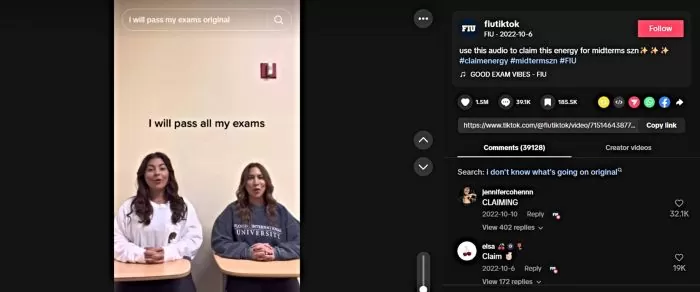
Example: Florida International University (USA): FIU has adopted TikTok to connect with Gen Alpha, where they spend their time. FIU’s social team went viral by leveraging a trending audio challenge on TikTok aimed at students hoping to excel on their midterms. The result was a TikTok that garnered over 10 million views and 1.46 million engagements, demonstrating how being present on Gen Alpha’s favorite platforms can massively boost reach.
Algorithms decide who sees your content. Success depends on understanding how each platform’s system rewards engagement. On TikTok, videos with high watch time and early comments rise quickly. On Google, structured Q&A pages and strong metadata perform best. Research shows attention spans among younger audiences now average two to three seconds. Lead with a hook, such as a bold question, emotion, or relatable visual. Keep captions tight and content shareable. Treat the algorithm like a person you need to impress fast.
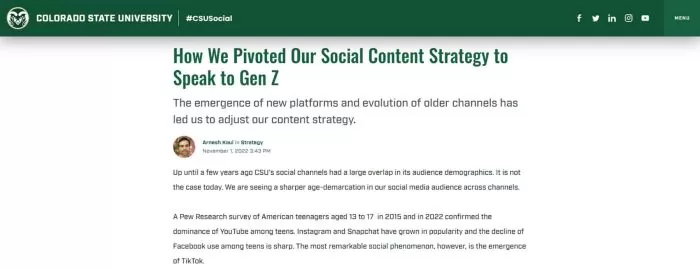
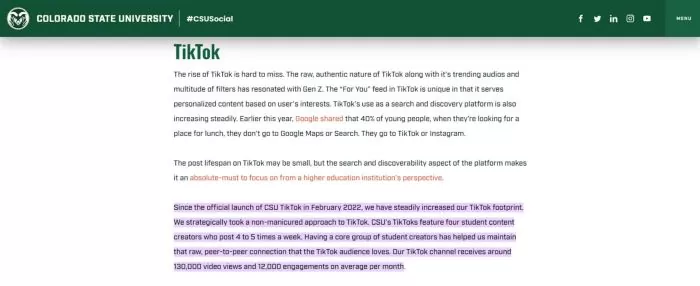
Example: Colorado State University (USA): CSU has strategically designed content to please each platform’s algorithm and grab attention within seconds. Seeing the rise of TikTok’s algorithm-driven “For You” feed, CSU shifted heavily to short-form vertical video and front-loaded content with hooks. The social team launched an official TikTok in 2022 with a “non-manicured” approach: four student creators post 4–5 raw, authentic videos per week. This consistency and emphasis on trending audios and quick, relatable hooks led to about 130,000 video views and 12,000 engagements per month on CSU’s TikTok. By tailoring content format (e.g., snappy cuts, engaging captions) to each platform’s algorithmic preferences, CSU ensures its posts get maximum distribution in Gen Alpha’s feeds.
Culture is where authentic connection happens. Gen Alpha responds to real voices, humor, and values. Collaborate with students to produce takeovers, TikToks, or short vlogs. Reflect diversity and align with current conversations. Join cultural moments carefully, whether that’s referencing a popular meme or spotlighting sustainability initiatives. Imperfection, such as a slightly unpolished student video, signals truth and authenticity.
As HEM puts it, algorithms get you seen, but culture gets you remembered. Using PAC as a creative checklist ensures your marketing is visible, relevant, and real.
Because Generation Alpha’s education decisions will be co-driven by their Millennial parents, Gen Alpha student recruitment messaging must speak to both audiences at once. HEM’s approach, dual-audience messaging, ensures every touchpoint, from websites to ads, connects with both teens and parents in harmony.
For Students
Gen Alpha students care about community, creativity, and experience. They’re asking, “Will I fit in? Will this be exciting?” Highlight student life, clubs, and hands-on learning opportunities through visuals and peer perspectives. Use quotes or short video clips from current students discussing campus life or real projects. Peer voice matters more than institutional formality; a student testimonial will always carry more weight than a dean’s welcome.
For Parents
Millennial parents want reassurance. Their questions are about safety, credibility, and ROI. Showcase graduation rates, career outcomes, accreditation, and alumni success stories. Include details on support services, mental health resources, and campus security. Demonstrating both value and care builds confidence.
How to Integrate Both
Every major recruitment asset should serve both audiences. You can segment sections (“For Students” vs. “For Parents”) or blend them seamlessly. For instance, a video might open with student testimonials, transition into outcomes and parental perspectives, and end with a message that resonates with both.
Action Step: Audit your current materials for balance. Ensure students feel inspired and parents feel assured.
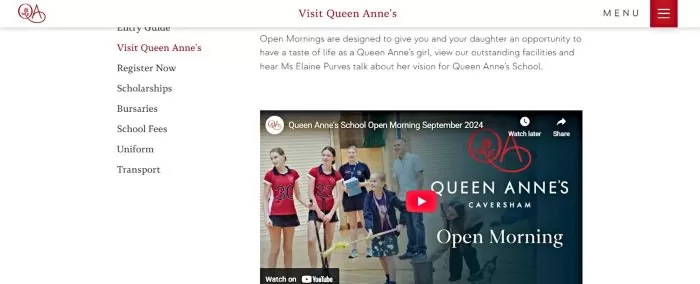
Example: Queen Anne’s School (UK): This independent girls’ school in England structures every recruitment touchpoint to speak to both Gen Alpha students and their millennial parents in tandem. For example, Queen Anne’s hosts Open Mornings that explicitly cater to “you and your daughter.” During these events, girls sample classes and campus life (answering the student’s “Will I have fun and fit in?”), while parents tour facilities and hear the Head’s vision for the school (addressing the parents’ concerns about values and outcomes). The school offers a wide range of visit options – from personal family tours to student “taster days” where 11–13 year olds spend a day on campus – ensuring both audiences are engaged.
3. Establish an “Authenticity System” (UGC and Influencers)
For Generation Alpha, authenticity is the ultimate trust signal. To deliver it consistently, HEM recommends building an Authenticity System, a structured process that continuously produces genuine, student-driven content.
User-Generated Content (UGC) Cadence
Plan for a steady flow of unpolished, real moments. Repost student photos or short TikToks weekly to show campus life through their eyes. Campaigns like #MyCampusMondays, where students share everyday snapshots, keep your content authentic and current. The goal is to make sure that whenever a Gen Alpha prospect visits your social channels, they see real students, not PR gloss.
Student Ambassadors and Creators
Empower students to take part in marketing. Invite ambassadors or micro-influencers to run Instagram takeovers, film vlogs, or stream events. These voices carry credibility because they feel peer-to-peer, not top-down. As HEM research shows, student creators can dramatically increase engagement by making your institution feel accessible and alive.
Authentic Voice and Visuals
Encourage content that sounds natural and looks real. A video filmed on a phone, with casual language or inside jokes, often performs better than a polished shoot. Include candid photos or unscripted clips, authenticity over perfection every time.
Integrate Authentic Content Across Channels
Don’t let UGC live in isolation. Embed student testimonials, quote cards, or video clips directly on program or FAQ pages. Pairing factual info with real student stories creates a persuasive one-two punch.
In short, authenticity shouldn’t happen by accident, it should already be built into your system.
Example: Colorado State University (USA): CSU has built a systematic pipeline for authentic, student-driven content. After officially launching its TikTok, CSU deliberately adopted a “raw” content style – no slick ads, just students with smartphones. It set up a core group of student content creators who post unfiltered clips multiple times a week, giving a continuous stream of real campus moments. In addition, CSU regularly reposts user-generated content from students: from dorm room mini-blogs to everyday campus snapshots. Every week, prospective Gen Alpha students checking CSU’s socials will see new posts by their peers, not just the PR team. By baking student UGC into the content calendar, CSU continuously projects an honest, peer-to-peer voice that Gen Alpha trusts.
4. Embrace Answer-First Content and AI Search Readiness
Generation Alpha searches differently. They ask full questions and expect immediate, concise answers. To connect with them and perform well in AI-driven search, schools need an answer-first content strategy.
Build Q&A Hubs
Create web pages organized by questions and answers, not long paragraphs. For example:
What hands-on experiences will I get in the Nursing program?
What are the career outcomes for graduates? This structure helps both humans and AI bots find what they need quickly. HEM calls these “answer-first hubs,” expanded FAQ-style pages covering dozens of micro-questions. Use data from inquiries and chats to identify what prospects ask most often.
Add Video and Micro-Content
Gen Alpha prefers short, visual responses. Embed 30–60 second video answers from students or staff directly on your pages. A student selfie explaining “What’s the first-year experience like?” feels more authentic than text alone. For parents, include short clips addressing safety or support topics. Repurpose each Q&A across platforms like YouTube Shorts or Reddit for added reach.
Implement Structured Data
Make content machine-readable. Adding FAQ schema markup tells Google and AI assistants what each Q&A covers, improving visibility in featured snippets and AI chat results. HEM research shows this can increase AI-driven visibility by up to 30%.
Write for Voice and Natural Language
Use conversational phrasing such as “How do I apply for financial aid?” instead of standard titles. Ensure each answer short but complete, ideal for AI summaries or voice assistants. Schools already applying this approach have seen measurable boosts in organic traffic and “People Also Ask” placements.
Bottom line: think like an answer engine. Gen Alpha asks questions, so make sure your content answers first.
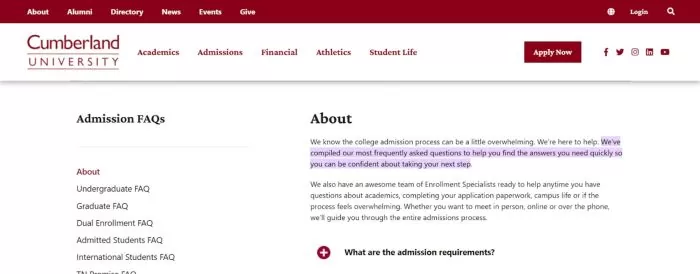
Example: Cumberland University (USA): Cumberland makes information instantly accessible by structuring its admissions content around questions and direct answers. Its website features a comprehensive Admission FAQs hub that compiles “our most frequently asked questions to help you find the answers you need quickly”. Prospective students and parents can click categories like Undergraduate, Graduate, International, etc., and find dozens of bite-sized Q&As (e.g., “What are the application requirements?”, “Is there housing for freshmen?”). Each answer is concise and written in plain language – perfect for Gen Alpha’s tendency to ask full questions in Google or AI assistants. By adopting this answer-first approach (instead of burying info in long paragraphs), Cumberland not only improves user experience but also boosts its visibility on search engines. Many of its FAQ entries use structured data markup, so they often appear as featured snippets or “People Also Ask” results on Google.
5. Treat Your Campus as a Product: Demos and Immersive Experiences
For Generation Alpha, choosing a school feels like choosing a lifestyle brand. They want to experience it before committing. That’s why HEM recommends marketing your campus like a product demo, through in-person and virtual experiences that let students and parents “test-drive” what you offer.
Creator-Hosted Events
Make campus events hybrid and interactive. Invite student creators to livestream open houses or campus days on TikTok, YouTube, or Instagram Live. A student host with a GoPro or phone camera gives the experience authenticity and energy. Let online viewers ask questions in real time while seeing dorms, labs, or the dining hall rush. It’s immersive, engaging, and feels like hanging out with a trusted peer.
Hands-On Campus Trials
When prospects visit in person, let them participate. Replace passive tours with interactive demos, mini labs, culinary workshops, or creative challenges. Some schools have gamified tours, turning them into scavenger hunts or student-led challenges. Participation builds emotional connection and makes visits memorable.
Augmented Reality (AR) and Virtual Worlds
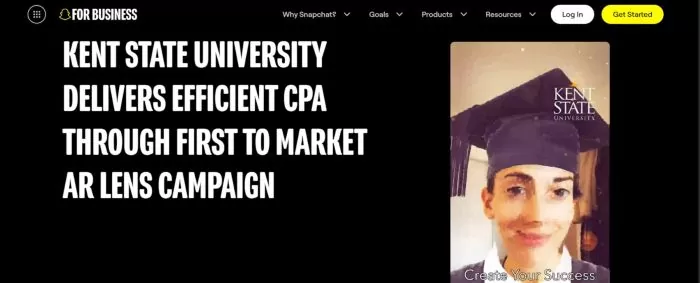
Add AR filters or lenses during events to blend play with information. Imagine scanning a building to reveal fun facts or seeing your mascot in AR. Schools like Kent State University have used Snapchat AR lenses to boost engagement while lowering recruitment costs.
Take it further by creating virtual campuses in platforms like Roblox or Minecraft. Students can explore, play, and imagine life at your school long before applying.
Use Existing Tools
360° tours and virtual events on platforms like YouVisit or CampusTours make immersion easy.
The goal is to let Gen Alpha see themselves on campus. When they can explore, touch, and interact, even virtually, they’re far more likely to enroll.
Examples: Kent State turned its campus into an interactive product demo via augmented reality on Snapchat. In a pioneering campaign (the first of its kind in higher ed), Kent State built a custom AR lens that let prospective students virtually “try on” a piece of the college experience – in this case, placing a Kent State graduation cap on their heads, tassel and all. Users could move and see the tassel shake, and with one tap, were prompted to “apply to the university” right from Snapchat. This immersive lens was deployed to Snapchatters aged 16–18 in Kent State’s key recruiting regions. The results were astounding: engagement soared, and the AR campaign achieved a cost-per-application 24% lower than the university’s goal.
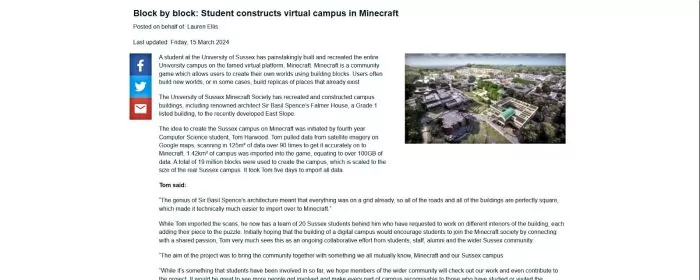
University of Sussex (UK): At Sussex, students themselves have helped create a virtual campus that anyone can explore – effectively offering a perpetual, gamified open house. In 2024, a Sussex Computer Science student led a project to recreate the entire university campus in Minecraft, block by block. Using satellite data, the team imported ~1.4 km² of campus into the game (over 19 million blocks), achieving a 1:1 scale replica of Sussex’s buildings and grounds. Now, a group of 20+ students (and even alumni) is collaboratively adding interiors and details to bring it fully to life.
6. Integrate CRM, SEO, Social Campaigns, and Multilingual Content
Creating next-gen content for Generation Alpha is only half the battle. To convert attention into enrollment, schools need to align these tactics with the systems that power modern digital marketing. Here’s how HEM integrates CRM, SEO, social media, and multilingual strategy into a single recruitment engine.
CRM for Lead Nurturing
A robust education CRM is essential for tracking Gen Alpha inquiries and engaging them across multiple touchpoints—social DMs, event sign-ups, web forms, and more. Automated workflows can send personalized follow-ups instantly, such as a welcome video from a student ambassador or a link to a virtual Q&A. HEM often implements Mautic or HubSpot to manage this process. The result: faster responses, stronger engagement, and less manual work. Segment Gen Alpha students and their parents into complementary streams—student-life content for one, academic and ROI-focused messaging for the other.
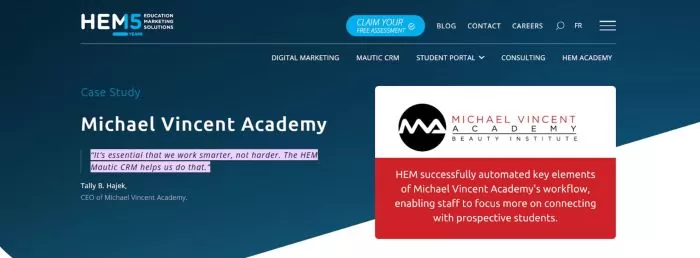
Example: Michael Vincent Academy: Michael Vincent Academy, a private career school in Los Angeles, partnered with HEM to deploy a customized Mautic CRM for student recruitment. “It’s essential that we work smarter, not harder. The HEM Mautic CRM helps us do that,” said Tally B. Hajek, the academy’s CEO. HEM’s CRM solution automated key marketing workflows (such as follow-ups with prospective students) and provided reports to track lead progress and team activities. The system also included a lead-scoring mechanism to identify and prioritize high-value leads, ensuring staff focus on serious, good-fit applicants. As a result, core recruitment processes became automated, allowing the admissions team to spend more time building personal connections with prospects.
All that great content needs visibility. Use SEO to make it discoverable through optimized site structure, keyword strategy, and internal linking. Develop content clusters, interconnected pages and blogs built around key topics, to boost authority. HEM’s SEO overhauls have helped clients like Cumberland College achieve double-digit growth in organic traffic. Technical SEO, schema markup, and fast mobile performance are nonnegotiable for Gen Alpha’s on-demand expectations.
Social Media Campaigns
Meet Gen Alpha where they live: TikTok, YouTube, Snapchat, and Instagram. Blend organic storytelling with paid targeting. Use TikTok Spark Ads or Snapchat placements to amplify authentic student content that already performs well. Combine this with parent-focused Facebook and Google campaigns for a full-funnel strategy. HEM’s campaign for Queen Anne’s School used this dual approach, improving conversion rates from inquiry to enrollment.
Multilingual and International Reach
Gen Alpha is global. Translate or localize key pages and ads to reach families in multiple languages. Include subtitles, translated summaries, and multilingual SEO to capture diverse search traffic. HEM’s work with Wilfrid Laurier University demonstrated that localized messaging in Portuguese and Spanish drove stronger ROI in international markets.
Integrating these elements (CRM, SEO, social, and multilingual content) creates a seamless ecosystem that attracts, nurtures, and converts Gen Alpha prospects efficiently. It’s how institutions move from generating attention to generating results.
Actionable Takeaways for Reaching Gen Alpha
Generation Alpha may still be young, but the time to reach them is now. To connect authentically, schools must meet them where they are and communicate in ways that feel human, immediate, and real.
Be present on the platforms they love, such as YouTube, TikTok, Snapchat, and even gaming spaces, featuring student creators who speak their language. Empower current students and recent graduates to share their stories, building trust through authenticity.
Balance messaging for both students and parents, addressing excitement and reassurance in equal measure. Adopt an answer-first content model using structured FAQs and schema to increase visibility in AI and voice search. Treat campus tours like product demos, creating interactive, hands-on, or virtual experiences that bring your institution to life.
Finally, measure what matters by tracking engagement, conversions, and insights from data to refine continuously. Above all, stay authentic and adaptable. The institutions that start now will lead the next generation of recruitment success.
Frequently Asked Questions
Question: Who is Generation Alpha?
Answer: Generation Alpha refers to children born between 2010 and 2024. They are the first cohort raised entirely in the 21st century, often called the first true digital natives.
Question: Why should institutions start preparing now?
Answer:Institutions must start preparing now because Generation Alpha is already entering the college decision phase, and adapting strategies early allows schools to refine digital, authentic, and parent-inclusive recruitment approaches before their enrollment surge.
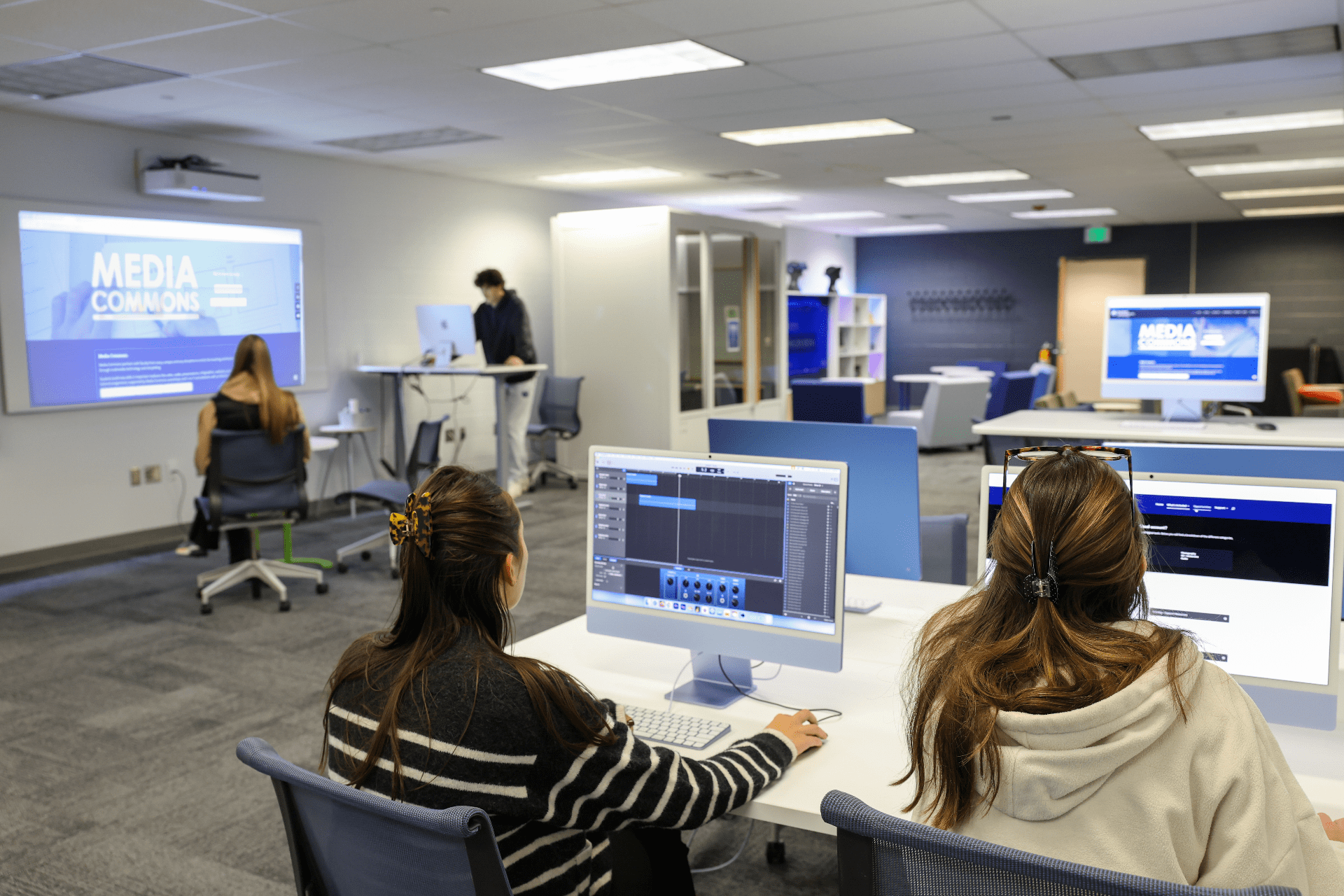
To meet the growing demand for multimedia services at the Pattee Library Media Commons, a new location has officially opened in Shields Building on Penn State’s University Park campus.
The Penn State community is invited to an open house from 1 to 4 p.m. on Monday, Nov. 10, at the Shields Media Commons, 22 Shields Building. Attendees may stop by anytime during the event to explore the new space and get hands-on with the technology. Interested participants can add the open house to their calendars from the TLT event page.
This week on the podcast, live from our Festival in London, we discuss access and social mobility as the Office for Students reshuffles its leadership, and the Sutton Trust publishes a new report that paints a sobering picture.
Plus we discuss university governance and our new paper for the Post-18 Project, and we capture the vibes from our event, from the best quotes to the big debates shaping the sector’s future.
With Alistair Jarvis, Chief Executive at Advance HE, Janet Lord, Deputy Pro Vice Chancellor for Education at Manchester Metropolitan University, and Michael Salmon, News Editor at Wonkhe – and presented by Jim Dickinson, Associate Editor at Wonkhe.
I’ve just returned from a school evaluation visit. One of the things I most enjoy about these visits is having time with schools to discuss their programme development plans. In the case of my recent visit, the plan was about the ATL skills.
Many schools recognise that learning skills is essential – but the question remains WHAT skills – in a recent article I read that 35% of current key skills are projected to change. This implies to me that the most important skills are those that transfer to what is needed outside of school – in life and work.
The Future of Jobs Report 2025 considers skills that will be needed by 2030 given projected changes in global employment, rapid technological advances, and economic instability. The forecast is that 170 million new jobs will be created, but 92 million will disappear – as a result almost 60% of workers will require reskilling over the next 5 years – and this of course has a huge impact on what schools need to teach.
Jobs that require routine skills are declining, whereas jobs that involve digital, analytical and design thinking skills are on the increase. A lot of this is being driven by technology such as automation and AI. Another area of rapid expansion is the “green economy” with a focus on sustainability. These jobs are linked to environmental science, clean energy and sustainable design, requiring skills of systems thinking and ethical reasoning. And in this world of shifting economics and geopolitics, collaboration, strategic thinking and resilience are all called for.
There are demographic shifts driving these changes too – as the world’s population is aging there are more demands for healthcare and caregiving – these require more interpersonal skills such as empathy.
In IB schools we have long recognised that it is not enough to master content – skills need to be explicitly taught and practiced, and woven into learning experiences. Pedagogical approaches such as project-based learning and teaching through transdisciplinary and interdisciplinary units will help students develop transferable skills. And perhaps most important of all, teachers also need to engage in continuous professional learning to keep pace with all these changes.
Through storytelling, we can bring climate-related data to life. Through storytelling, young people can use their voice and the voices of those around them to turn something complex, global and overwhelming, into something local, tangible and meaningful. Through storytelling, young people can help shift narratives and bring to the forefront stories of action and of hope.
This is the idea behind the EYES climate storytelling curriculum.
The Climate Change 101 unit begins with the basics: human activities driving climate change and what temperature increase means for our planet. Students are tasked with producing an article that explains the topic to a younger audience.
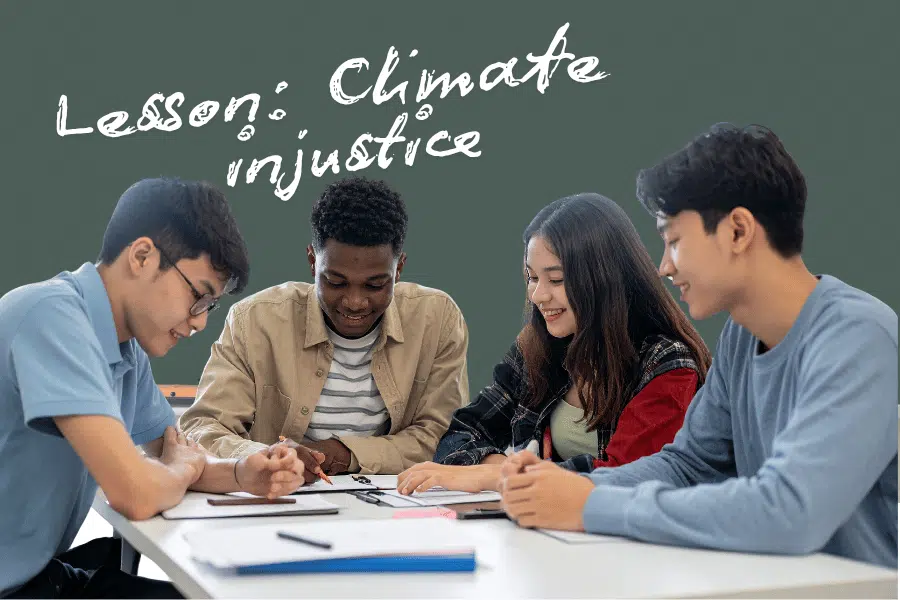
A unit on Climate Injustice walks students through the uncomfortable reality that those causing climate change are suffering the least from its impacts. Those who have contributed the least? They tend to be in the grip of climate change.
Human stories from a man-made disaster
We know that learning about the devastations of the climate crisis can leave young people feeling anxious and angry. We also know from the teachers who piloted the EYES curriculum that it’s important to localise these topics.
So in the Climate Injustice unit, students are tasked with finding a human story: someone to illustrate climate injustice at play in their local area or region.
Hearing stories about people lets us understand the reality of an issue. Telling these stories gives young people a device for meaning-making and a platform for agency.
In our Systemic Change unit, students learn about the interconnected mechanisms that keep our economy rooted in endless economic growth and fossil fuel use. They learn about the ‘deep’ leverage points for making change — the rules, the goals and the mindset of a system. They research case studies on commodity supply chains and form their questions into a story pitch.
In Systemic Solutions to the Climate Crisis, we showcase seven inspiring examples of climate solutions from around the world, from local projects such as community-owned solar panels in Mexico to the transition to renewables in Uruguay, to global movements such as recognising the rights of nature or degrowth in the Global North.
Meaningful action can happen at any scale. By engaging with these case studies, students can see that stories of just and transformative systems change happen all around them.
There are so many stories yet to be told, and that in itself is empowering.
“Storytelling can turn young people into active users of climate knowledge, and even change makers,” said Andreea Pletea, The Environment and Human Rights Academy programme manager. “Students can even help shift dominant narratives by bringing to the surface systemic solutions to the environmental crises that also address inequalities.”
Causes and systems
Aside from storytelling, the main focus of the EYES curriculum is on systems thinking and climate injustice.
“We invite learners to go upstream to the root causes of the crises we face, and question why, despite increasing awareness, meaningful action often lags behind,” Pletea said. “Seeing the big picture particularly through systems thinking and global justice can also help young people make sense of what’s going on in their own local context.”
Pletea said that ultimately, the goal is to plant a seed. “That all of us, including young people, are more than consumers,” she said. “We are citizens with a voice and power to act and demand change, and especially when we come together.”
The EYES project itself began as a seed. TEHRA and News Decoder came together to improve climate change education through storytelling, and created a set of materials that were piloted in multiple education contexts across Europe, Africa and Latin America.
The seeds to stories
In Slovenia, Kenya and Colombia, pilot students exchanged letters on their local experiences of climate change. In Kosovo, a Roma community of young people visualised their personal experience of climate change through art.
At a summer camp in Belgium, students played climate change games, pulled apart the individual carbon footprint and were guided through a nature meditation. In Kenya, students visited the precious Karura national park and wrote stories about tipping points and the value of forests.
The feedback from students and educators, including at a three-day educators workshop in Brussels in October, helped shape and restructure the curriculum. It evolved into a set of off-the-shelf resources that can be used by multiple teachers in one school or independently by learners.
If you are an educator, we invite you to dive into climate change with your students and use the EYES curriculum. Students need to learn about the root causes of the climate crisis so that they know in which direction to head — in their future careers as much as in their personal set of values.
Through storytelling, young people can engage with the reality that is climate change, both as authors and as listeners. Storytelling is the way we understand ourselves: why we act the way we do and how together we can solve the problems that humankind has caused.
Questions to consider:
1. How can storytelling can turn someone into an active user of climate knowledge?
2. What types of climate activities did students in different countries do through the EYES lessons?
3. What stories about climate change have you found interesting to read or hear about?
A career-centered education built on real experience
One of the most transformative aspects of Career and Technical Education is how it connects learning to real life. When students understand that what they’re learning is preparing them for long and fulfilling careers, they engage more deeply. They build confidence, competence, and the practical skills employers seek in today’s competitive economy.
I’ve seen that transformation firsthand, both as a teacher and someone who spent two decades outside the classroom as a financial analyst working with entrepreneurs. I began teaching Agricultural Science in 1987, but stepped away for 20 years to gain real-world experience in banking and finance. When I returned to teaching, I brought those experiences with me, and they changed the way I taught.
Financial literacy in my Ag classes was not just another chapter in the curriculum–it became a bridge between the classroom and the real world. Students were not just completing assignments; they were developing skills that would serve them for life. And they were thriving. At Rio Rico High School in Arizona, we embed financial education directly into our Ag III and Ag IV courses. Students not only gain technical knowledge but also earn the Arizona Department of Education’s Personal Finance Diploma seal. I set a clear goal: students must complete their certifications by March of their senior year. Last year, 22 students achieved a 100% pass rate.
Those aren’t just numbers. They’re students walking into the world with credentials, confidence, and direction. That’s the kind of outcome only CTE can deliver at scale.
This is where curriculum systems designed around authentic, career-focused content make all the difference. With the right structure and tools, educators can consistently deliver high-impact instruction that leads to meaningful, measurable outcomes.
CTE tools that work
Like many teachers, I had to adapt quickly when the COVID-19 pandemic hit. I transitioned to remote instruction with document cameras, media screens, and Google Classroom. That’s when I found iCEV. I started with a 30-day free trial, and thanks to the support of their team, I was up and running fast.
iCEV became the adjustable wrench in my toolbox: versatile, reliable, and used every single day. It gave me structure without sacrificing flexibility. Students could access content independently, track their progress, and clearly see how their learning connected to real-world careers.
But the most powerful lesson I have learned in CTE has nothing to do with tech or platforms. It is about trust. My advice to any educator getting started with CTE? Don’t start small. Set the bar high. Trust your students. They will rise. And when they do, you’ll see how capable they truly are.
From classroom to career: The CTE trajectory
CTE offers something few other educational pathways can match: a direct, skills-based progression from classroom learning to career readiness. The bridge is built through internships, industry partnerships, and work-based learning: components that do more than check a box. They shape students into adaptable, resilient professionals.
In my program, students leave with more than knowledge. They leave with confidence, credentials, and a clear vision for their future. That’s what makes CTE different. We’re not preparing students for the next test. We’re preparing them for the next chapter of their lives.
These opportunities give students a competitive edge. They introduce them to workplace dynamics, reinforce classroom instruction, and open doors to mentorship and advancement. They make learning feel relevant and empowering.
As explored in the broader discussion on why the world needs CTE, the long-term impact of CTE extends far beyond individual outcomes. It supports economic mobility, fills critical workforce gaps, and ensures that learners are equipped not only for their first job, but for the evolution of work across their lifetimes.
CTE educators as champions of opportunity
Behind every successful student story is an educator or counselor who believed in their potential and provided the right support at the right time. As CTE educators, we’re not just instructors; we are workforce architects, building pipelines from education to employment with skill and heart.
We guide students through certifications, licenses, career clusters, and postsecondary options. We introduce students to nontraditional career opportunities that might otherwise go unnoticed, and we ensure each learner is on a path that fits their strengths and aspirations.
To sustain this level of mentorship and innovation, educators need access to tools that align with both classroom needs and evolving industry trends. High-quality guides provide frameworks for instruction, career planning, and student engagement, allowing us to focus on what matters most: helping every student achieve their full potential.
Local roots, national impact
When we talk about long and fulfilling careers, we’re also talking about the bigger picture: stronger local economies, thriving communities, and a workforce that’s built to last.
CTE plays a vital role at every level. It prepares students for in-demand careers that support their families, power small businesses, and fill national workforce gaps. States that invest in high-quality CTE programs consistently see the return: lower dropout rates, higher postsecondary enrollment, and greater job placement success.
But the impact goes beyond metrics. When one student earns a certification, that success ripples outward—it lifts families, grows businesses, and builds stronger communities.
CTE isn’t just about preparing students for jobs. It’s about giving them purpose. And when we invest in that purpose, we invest in long-term progress.
Empowering the next generation with the right tools
Access matters. The best ideas and strategies won’t create impact unless they are available, affordable, and actionable for the educators who need them. That’s why it’s essential for schools to explore resources that can strengthen their existing programs and help them grow.
A free trial offers schools a way to explore these solutions without risk—experiencing firsthand how career-centered education can fit into their unique context. For those seeking deeper insights, a live demo can walk teams through the full potential of a platform built to support student success from day one.
When programs are equipped with the right tools, they can exceed minimum standards. They can transform the educational experience into a launchpad for lifelong achievement.
CTE is more than a pathway. It is a movement driven by student passion, educator commitment, and a collective belief in the value of hard work and practical knowledge. Every certification earned, every skill mastered, and every student empowered brings us closer to a future built on long and fulfilling careers for everyone.
Dr. Richard McPherson is an Agriculture Science Teacher at Rio Rico High School in Arizona. A former financial analyst and CTE advocate, he returned to the classroom with a passion for combining real-world experience with purpose-driven instruction.
Latest posts by eSchool Media Contributors (see all)
UC Berkeley School of Law dean Erwin Chemerinsky spoke at this week’s APLU conference.
Carlos Avila Gonzalez/The San Francisco Chronicle/Getty Images
PHILADELPHIA—The final speech at the Association of Public and Land-grant Universities’ annual conference this week dissected the Trump administration’s “financial assault” on universities and urged the Supreme Court to be a check on a president whom Congress hasn’t reined in.
Erwin Chemerinsky, dean of the University of California, Berkeley, School of Law and a constitutional scholar, also told the attendees of the APLU meeting that their institutions should be united against the administration’s attacks on higher ed.
“The one thing we all learned on the playground is if you give in to a bully, it only makes it worse in the long term,” Chemerinsky said Tuesday, adding—to applause—that “it’s so important that institutions of higher education stand together at this moment and stand together for our shared missions.”
The speech comes after multiple prominent universities, including a few public ones, refused to sign Trump’s proposed “Compact for Academic Excellence in Higher Education,” which asked them to give up significant autonomy in exchange for an unspecified edge in competitions for federal funds.
It also follows legal victories against the administration’s grant cancellations. Litigation by UC researchers against Trump, the Department of Government Efficiency and other federal agencies and officials has restored more than $500 million in federal research grants, which the administration cut at UCLA after the Justice Department accused it of tolerating antisemitism during a spring 2024 pro-Palestinian protest encampment. Chemerinsky, who is Jewish, is representing the researchers in that litigation.
Asked for comment, a White House official told Inside Higher Ed in an email, “UC Berkely clearly needs to make some changes – violence broke out on UC Berkeley’s campus just last night and they have failed to police antisemitism by tolerating an ‘unrelenting’ steam of antisemitic harassment toward Jewish students and faculty.”
Even before the latest cuts, Chemerinsky estimated the Trump administration had already slashed close to $1 billion in funding for faculty and researchers across the UC system, a figure that he said was much higher than DOGE’s tally. The UC system didn’t confirm or deny this estimate or provide a more recent estimate Tuesday, saying the system was closed for Veterans Day.
“I think the termination of grants that we’ve seen, whether it’s to researchers and faculty or to universities, is clearly illegal,” Chemerinsky said. But when it comes to “nonrenewal of grants in the future and funding in the future,” he added, the “government has far more discretion, and there it’s going to be much harder to bring legal challenges.”
Chemerinsky also said federal funding cuts are just one of four financial vulnerabilities the administration has identified in universities: “they’re very dependent” on federal money, tuition, philanthropy and foreign students. Using his own institution as an example, he said Berkeley Law has an L.L.M., or master of laws, degree program that’s exclusively for foreign students and represents $20 million in its annual budget.
He then expressed concern about how the Supreme Court has ruled on the administration’s actions, even beyond higher ed.
“By my count, 39 matters have come to the Supreme Court since [Inauguration Day] Jan. 20, challenging actions of the Trump administration,” he said. “All are instances where the lower courts ruled against the Trump administration, and in 36 of 39, the Supreme Court has ruled in favor of the Trump administration.”
Noting eight of the nine justices graduated from the law schools at either Harvard or Yale Universities (Amy Coney Barrett graduated from the University of Notre Dame), he said, “My optimistic self believes that the United States Supreme Court will stand up for higher education.” Chemerinsky added that since Congress hasn’t served as a check on the president, it’s up to the federal judiciary to uphold the laws and the Constitution.
Fittingly, his speech took place at a Philadelphia hotel about a 15-minute walk from where the founders adopted the Constitution. APLU said more than 1,300 people attended this week’s three-day conference.
“Ultimately, I believe the guardrail of our democracy has to be the courts and the Supreme Court,” Chemerinsky said. “If there is going to be a check on a president who has authoritarian impulses, it’s going to have to be from the restraints of the Constitution—and the only way we can enforce those is the courts.”
Chemerinsky noted that “one characteristic of every authoritarian—or would-be authoritarian—rule is the way they go after universities. What we’ve seen in the last nine and a half months is unprecedented in American history.”
He compared Trump’s actions to McCarthyism, the 1950s-era political persecution of faculty, government employees and others. But Chemerinsky pointed out that back then, “it wasn’t the president of the United States leading the attack on higher education,” and “there wasn’t the financial assault on universities.”
“But the one thing that the McCarthy era should say to all of us is that history will judge us,” he said. “Twenty, 30, 50, 75 years from now, people will look back on us the way we look at university officials in the McCarthy era, and they will judge us as to whether we capitulated or whether we had courage.”