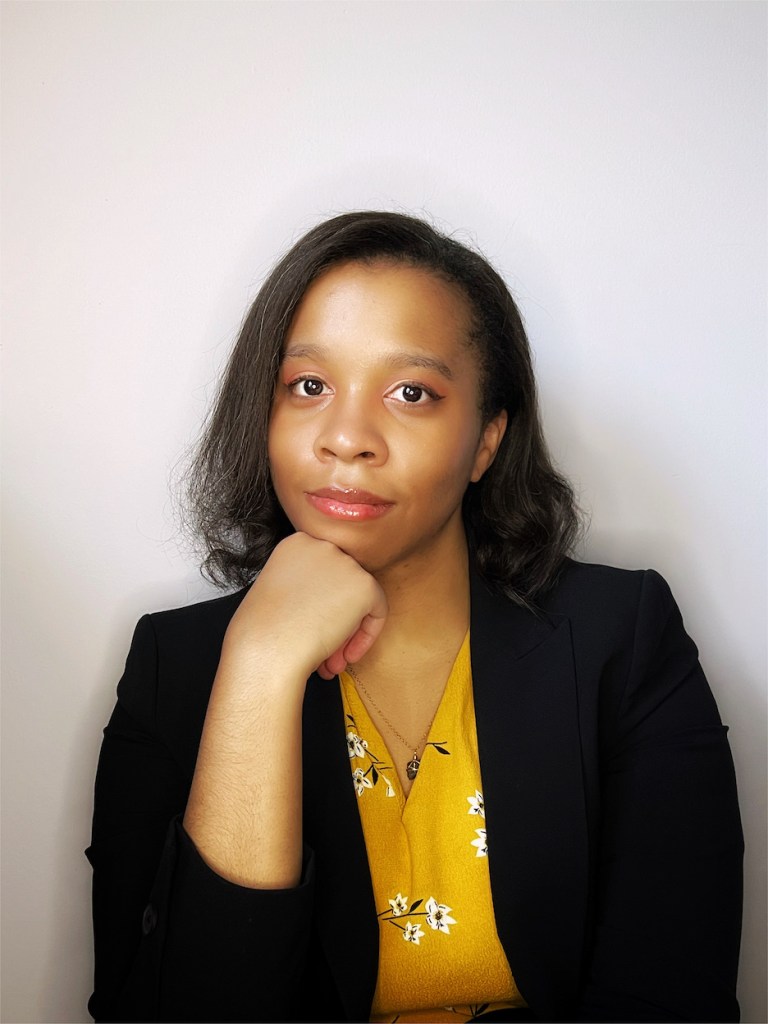
Dr. Zori Paul and Natalie Jeung started a podcast about their geeky passions and mental health. What’s it like to start a podcast with your friend? An academic interview with Jennifer van Alstyne.
JUST LIVE
What’s it like to start a podcast with your friend? Dr. Zori Paul and Natalie Jeung, LCPC, NCC met in their master’s program. Years later, they started a podcast together where two therapists nerd out about their geeky passions and mental health. Video games, movies, and interests they love are a scope for new episodes of the podcast. Zori and Natalie share about their podcasting journey. Not just the process behind getting started, but the emotional and social journey of putting your podcast out there too.
0:00 Meet Zori Paul and Natalie Jeung 2:50 What sparked the idea for having your podcast? 4:31 Social media and video editing for the podcast 6:22 Different methods of doing the podcast 9:24 What’s Therapy on a Tangent about? What Zori and Natalie love to talk about 12:01 Video games, Inside Out, and Miyazaki, and clinical work as therapists 17:50 When is something not quite right for your show? 19:56 Looking back to the start, celebrating 1 year for their show 23:29 Podcasting equipment and skills you’ve grown over time 32:18 What’s it like to share your podcast with people? 39:15 At the heart of their podcast is friendship, trust, and collaboration
A full text transcript will be coming to the blog in the coming week or so. I’ll also be adding English captions to the YouTube video for you too.Thank you! —Jennifer
Therapy on a Tangent Podcast
Hosted by Zori Paul, PhD, LPC, NCC and Natalie Jeung, LCPC, NCC
Bios
Zori Paul, PhD, LPC, NCC
Dr. Zori Paul (she/her) is a Chicago native, licensed professional counselor, counselor educator, and researcher. She is also the co-host of Therapy on a Tangent, a podcast where two therapists nerd out about their geeky passions and mental health. Dr. Paul received her Ph.D. in counseling from the University of Missouri – St. Louis, her M.A. in clinical mental health counseling from Northwestern University, and her B.A. in comparative human development and minor in gender and sexuality studies from the University of Chicago. Her research focuses on the mental health and stressors of individuals with multiple marginalized identities, specifically bisexual+/queer people of color; cross-cultural mentorship in counseling programs; and the ethical use of social media and AI by counselors and other mental health professionals.
Natalie Jeung, LCPC, NCC
Natalie Jeung, LCPC, NCC, is a Licensed Clinical Professional Counselor. She is the owner of Side Quest Counseling Services, which provides counseling services in Illinois, Indiana, and Iowa. She enjoys doing life with people and destigmatizing gamers and geeks in the mental health space. Her passion for working with video gamers came from her journey as a video gamer and desire to bring inclusive care to those who feel marginalized by society. Her clinical work also includes working with people navigating their different identities, family systems and family of origin issues, parenting, and inner child work. When she is not wearing her therapist hat, she enjoys hanging out with her cat, playing video games, being a foodie, and going on random adventures.
Home » Careers in Nursing » Vessi: A Waterproof and Comfortable Shoe, Perfect for in and out of the Hospital
Anyone who works in healthcare knows these jobs can be hard on the body — especially the feet.
That’s why high-quality footwear is key.
Enter Vessi, a waterproof footwear brand praised by healthcare workers, including nurses, for their foot health support and other features that make them practical for work and beyond.
“These are comfortable and reliable for working 10-hour shifts as a nurse. Great shock absorbers that get me through my shift easily,” said Vessi customer Althea R., in one of many testimonials endorsing Vessis.
Practical features
Vessis are an ideal choice for nurses and other healthcare workers because they’re:
Comfortable: Healthcare workers work notoriously long shifts — sometimes upwards of 12 hours at a time. Pain in areas of the body including the feet, legs, and back can happen if proper footwear is foregone. The good news is that Vessis are built to support 8- to 12-hour days of standing, and their cloud-like cushioning midsole keeps you comfortable from first step to last.
100% waterproof: Messes happen, especially in a healthcare setting. Vessis are designed to endure the worst of them with their patented Dyma-tex® waterproof knit, which enables water, spills, and unexpected messes to bead right off. Unlike other waterproof materials, Dyma-tex® is lightweight, breathable, and flexible.
“As a nurse and mom, they can be used for waterproof safety at births or walking to school in the rain!” said Vessi customer Angela B.V.
Easy to care for: If your Vessis need a refresh — whether from a messier shift at work or from routine wear — simply toss them into the washing machine. Some Vessis are machine washable, meaning that keeping them hygienic (and appearing in tip-top shape) is a cinch.
Stylish: Not only can you wear Vessis at work, but you can sport them before and afterward. Consider them your handy, work-to-life (and vice versa!) shoe.
Simple to slip on and off: Yes, this is good for convenience, but it also reduces the transfer of germs — which is key when you work in healthcare.
Discounted for healthcare workers: Nurses and other healthcare workers receive 20% off sitewide with ID.me verification.
Vessi’s Weekend shoe
Popular styles
Fan-favorite styles from Vessi include the Weekend and Pacific collections.
The Weekend Collection is available for men and women, as well as kids. They come with lightweight, cushioned midsoles and an upper portion that is crafted in a breathable knit. Color options range from classic white and neutral tones, including beige to pastels, and brights like green and pink. What’s more, shoes in this collection include sneakers as well as a Chelsea boot style.
Vessi calls its Pacific Sneakers “the most versatile shoe ever,” which means they can handle your long-haul travels as well as everyday errands closer to home. Whether you’re wearing them to bike to work, during the big meeting (and throughout your shift), or walking the dog before bed, the Pacific Sneaker is truly made for everyday and everything. Like those in the Weekend Collection, these shoes have a lightweight cushioning midsole and a breathable upper knit. Available for men and women, the Pacific Sneaker offers shoes in classic neutrals, such as white and black, as well as limited edition hues like the grey-green Grotto colorway.
If the insoles offered in your Vessis don’t work for your health needs, simply swap them out (they’re easy to remove) for your preferred insoles or orthotics.
With Vessis, versatility is the name of the game, helping healthcare workers check off their to-do lists in functional waterproof kicks that are also comfortable while on — and off — the clock.
Where hands-on learning meets visionary research in healthcare
The University of New Hampshire is home to the School of Nursing, where students can help shape the future of healthcare through real-world clinical experience and innovative research opportunities.
UNH’s status as an R1 research institution and its proximity to some of the nation’s premier medical centers provide you with unmatched clinical learning and nursing research opportunities—empowering you to make an impact in healthcare from day one.
Building on 60 years of nursing education excellence at UNH, the newly launched School of Nursing offers programs from pre-licensure through clinical doctorate, both in-person on the Durham campus and online, creating flexible pathways that meet you where you are in your journey toward meaningful impact in healthcare.
Explore different paths in nursing
At UNH’s School of Nursing, you’ll find your perfect fit among bachelor’s, master’s, and doctoral degree options designed to match your goals and aspirations.
Charles Adler discovered his passion through UNH’s hands-on approach. After earning his bachelor’s in nursing and a master’s as a clinical nurse leader, he’s now enrolled in the Family Nurse Practitioner (FNP) program, which offers the flexibility he needs.
“I love the clinical environment, whether it’s a pediatrician’s office or a primary care or hospital setting—that’s where things started to click for me,” Adler said.
The real-world experience that defines UNH’s approach has shaped his entire career trajectory. His senior practicum led directly to a job in an ICU, which opened doors to experience as a travel nurse, clinical nurse leader, and finally to his current role as an FNP.
“I wouldn’t have been able to have the experiences I’ve had if it weren’t for UNH nursing,” Adler reflects.
Where knowledge meets practice
At UNH, you don’t have to choose between rigorous academic learning and real-world practical skills; you get both. Our commitment to hands-on learning means you’ll graduate not just with depth of knowledge and a degree, but with the practical skills and forward-thinking approach that healthcare needs.
Ready to pursue meaningful impact in healthcare? If you’re drawn to a field where you can make a real difference, UNH’s one-of-a-kind School of Nursing offers clinical learning to propel you to exceptional career opportunities that make an impact.
In 1867, the Supreme Court ruled in Cummings v. Missouri that the state could not use loyalty oaths to bar ex-Confederates from teaching, preaching, or practicing law. The oaths themselves were (at the time) lawful, but Missouri was using them to unlawfully punish past conduct — and that was the problem.
“What cannot be done directly cannot be done indirectly,” Justice Stephen Johnson Field wrote for the majority. “The Constitution deals with substance, not shadows.”
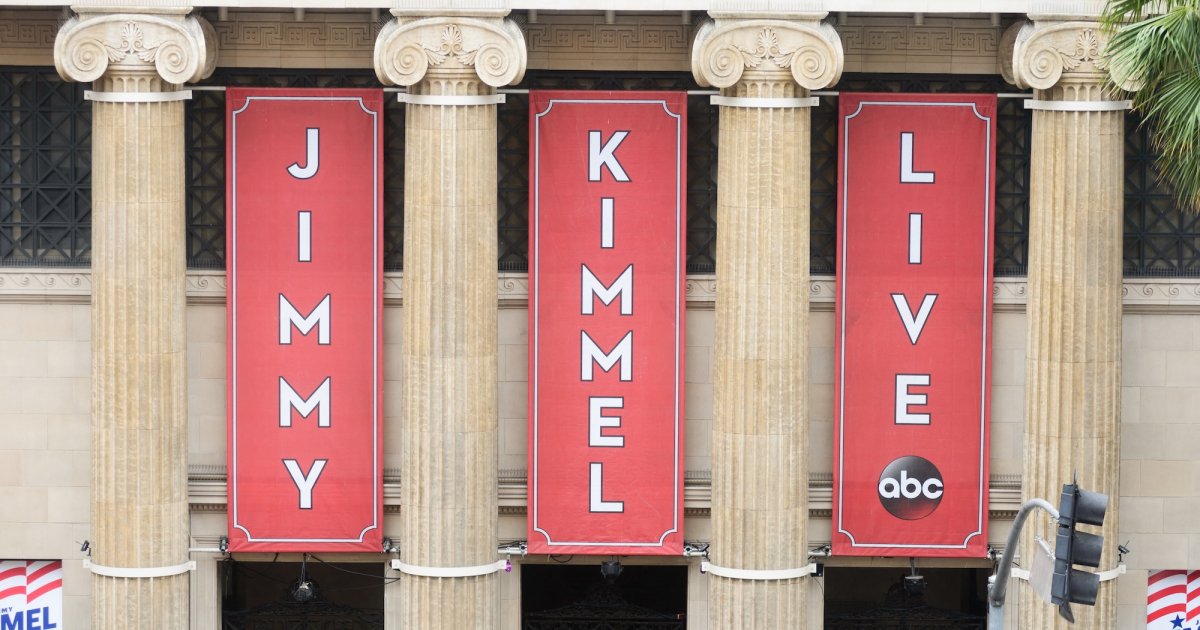
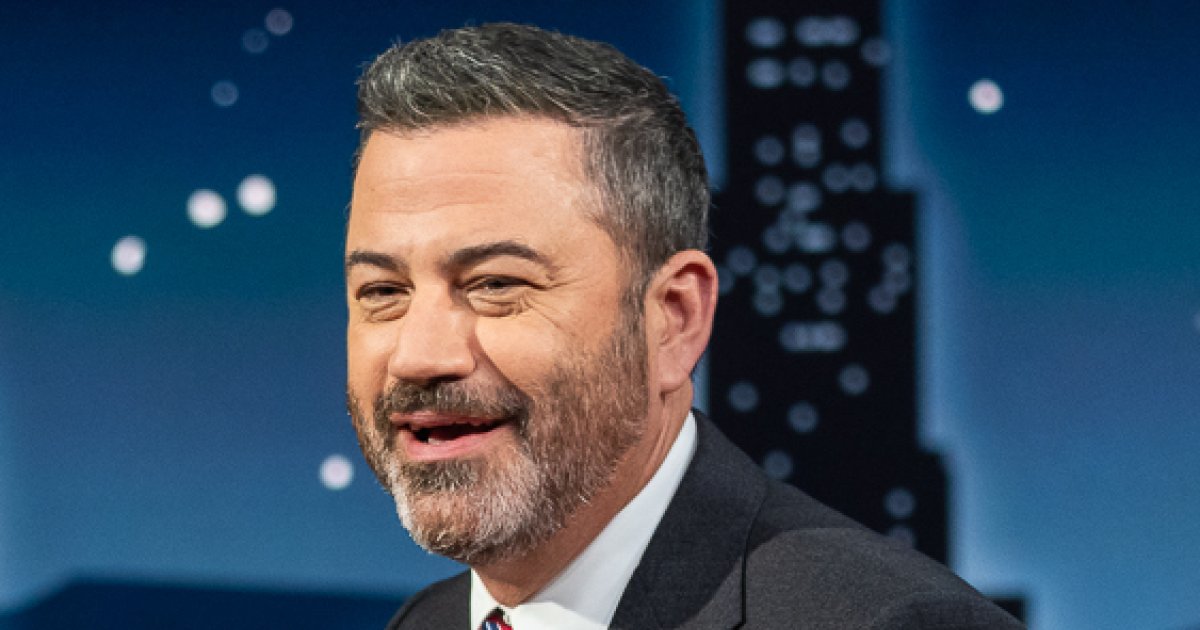
Over 150 years later, ABC suspended Jimmy Kimmel hours after FCC Chair Brendan Carr suggested they could face consequences for remarks Kimmel made in the aftermath of Charlie Kirk’s murder.
Unlike the formal government pressure in Cummings, this was informal government pressure to influence private action, otherwise known as jawboning. But the age-old principle is the same. It was echoed in last year’s landmark jawboning case NRA v. Vullo“a government official cannot do indirectly what she is barred from doing directly.”
Carr’s defenders try to deny any connection between Carr’s threats and Kimmel’s ouster.
This has one big problem. Courts have said it doesn’t matter whether a threat produces results. In Backpage.com v. Dart, the Seventh Circuit held that the constitutionality of government conduct turns on what the threat tries to accomplish, not whether it accomplishes it.
Given that, Carr’s threat still runs headlong into the First Amendment.
The bar was laid out clearly in last year’s Vullo:“to state a claim that the government violated the First Amendment through coercion of a third party, a plaintiff must plausibly allege conduct that, viewed in context, could be reasonably understood to convey a threat of adverse government action in order to punish or suppress the plaintiff ’s speech.”
Let’s see how that squares with the timeline.
July 22 – Days after CBS cancels the Late Show with Stephen Colbert, with the question of FCC approval for parent Paramount Global’s merger with Skydance looming large over it, Trump posts:
August 6 – Trump tells the press pool regarding Kimmel and Late Night host Jimmy Fallon, “They’re next, they’re going to be going — I hear they’re going to be going.”
August 11 – Sinclair Broadcast Group shares surge 27% after it announces efforts to explore merger-and-acquisition opportunities in broadcast TV. Any transfer of broadcast licenses requires FCC approval, which FIRE has written extensively about regarding Carr using the government as a “point of leverage.”
August 19 – Nexstar Media Group, the nation’s largest TV station owner, announces plans to buy rival media giant Tegna in a deal that will require FCC approval and FCC willingness to lift their 39% cap on how many households one company can reach through TV station ownership. Nexstar now has 38.9% of stations covered by the FCC.
September 4 – The Center for American Rights files a complaint with the FCC over Jimmy Kimmel’s alleged bias and conflict of interest towards Democrats. CAR’s 60 Minutes complaint launched the now infamous FCC probe into CBS, which informed Trump lawsuit, and their complaints against ABC and NBC were revived by Carr early this year.
September 10 – Charlie Kirk is murdered while giving a talk at Utah Valley University.
September 15 – Kimmel says in his opening monologue:
We hit some new lows over the weekend with the MAGA gang desperately trying to characterize this kid who murdered Charlie Kirk as anything other than one of them and doing everything they can to score political points from it.
It’s worth noting the accuracy of his statement hinges on whether the “MAGA gang” was trying to avoid association with Kirk’s killer, not on whether the killer was part of the “MAGA gang.” It’s an important distinction when official actions are being considered.
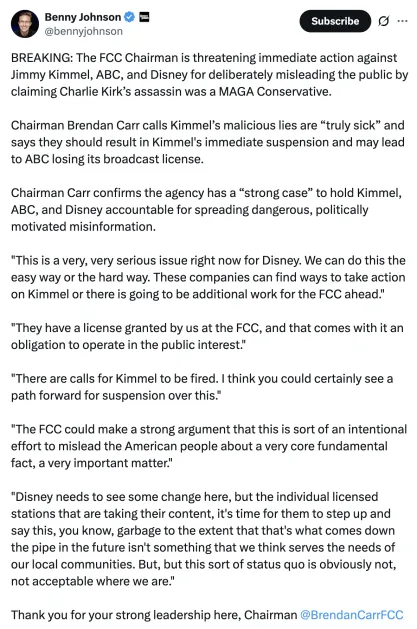
September 17 – Carr appears on The Benny Johnson Show, with Johnson posting a summary at 1:01 pm, Carr addressing ABC parent Disney says:
This is a very, very serious issue right now for Disney. We can do this the easy way or the hard way. These companies can find ways to take action on Kimmel or there is going to be additional work for the FCC ahead.
Carr also addresses the station owners:
Disney needs to see some change here, but the individual licensed stations that are taking their content, it’s time for them to step up and say this, you know, garbage, to the extent that that’s what comes down the pipe in the future, isn’t something that we think serves the needs of our local communities.
6:18 pm – Later that day, it’s reported that Nexstar has said it will suspend Kimmel’s show “indefinitely beginning tonight.”
6:24 pm – Minutes later, it’s reported that Disney’s ABC says it is pulling the show.
8:38 pm – Sinclair says its ABC stations will air a special remembrance of Charlie Kirk this Friday during Jimmy Kimmel Live’s timeslot, adding: “Sinclair also calls upon Mr. Kimmel to issue a direct apology to the Kirk family. Furthermore, we ask Mr. Kimmel to make a meaningful personal donation to the Kirk Family and Turning Point USA.”
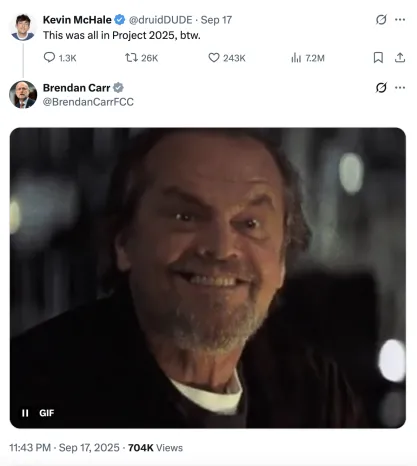
11:43 pm – Carr responds to a post on X saying, “This was all in Project 2025, btw”:
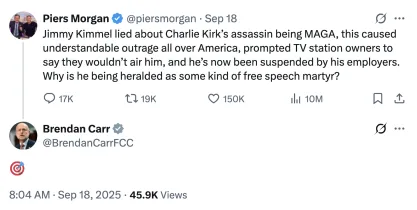
September 18 – Carr replies to a post from British commentator Piers Morgan, attributing Kimmel’s suspension to “outrage all across America.” It’s difficulttofind evidence of “outrage all across America” before September 17.
That’s the timeline, so let’s break it down.
Carr tells ABC that “we can do this the easy way or the hard way” and that “there’s going to be additional work ahead for the FCC” if they don’t “take action.” There’s the threat and the adverse action — possibly in the form of an FCC probe into Carr’s complaint — if they don’t accede to the threat.
We also see Carr prompt affiliate station owners like Nexstar and Sinclair — seeking regulatory favor in pressing business before the government — to dial up the pressure on Disney in the lead up to Kimmel’s ouster. The specter of disfavorable treatment from the government poisons the chain from top to bottom. Finally, Trump and Carr celebrate after ABC suspends Kimmel indefinitely.
Asked to respond to those condemning him for “bullying ABC” on The Scott Jennings Show, Carr says “we’re reinvigorating the public interest standard for broadcasters. If people don’t like that … If you’re a broadcaster and you don’t like being held accountable for the first time, in a long time, to your public interest standard, you can turn your broadcast license in to the FCC.”
The public-interest standard is the nearly century-old mandate that broadcasters use the spectrum medium in service of the public. But the FCC’s public-interest standard has never made it okay to censor people. Even the FCC clearly states in no uncertain terms that “the public interest is best served by permitting free expression of views.”
That’s because the public interest standard is a creature of statute, subordinate to the Constitution and the First Amendment. The FCC’s governing rules accordingly deny the FCC “the power of censorship” as well as the ability to promulgate any “regulation or condition” that interferes with freedom of speech.
And Carr has long understood this. As he wrote in 2019, “The FCC does not have a roving mandate to police speech in the name of the ‘public interest.’”
He’s not alone either.
Republican members of Congress leading telecommunications regulation share his familiarity with the limits on the FCC’s power to regulate speech, as demonstrated by their cold reception to his recent threats. Brett Guthrie, chair of the House Committee on Energy and Commerce, said: “We have to be extremely cautious to try to use the government to influence what people say.”
Senator Ted Cruz, chair of the Senate Committee on Commerce, Science, and Transportation, was more explicit. “That’s right out of Goodfellas. That’s right out of a mafioso coming into a bar going, ‘Nice bar you have here. It’d be a shame if something happened to it’” he said, referring to Carr’s threats.
He went on to make an important point, recognizing that Carr’s “dangerous as hell” action was setting a troubling precedent because his Republican Party won’t always hold the keys to the FCC.
Three years ago, Carr wrote: “The government does not evade the First Amendment’s restraints on censoring political speech by jawboning a company into suppressing it—rather, that conduct runs headlong into those constitutional restrictions, as Supreme Court law makes clear.”
That’s exactly right, and if anyone knows what Brendan Carr is doing right now is unconstitutional jawboning — it’s Brendan Carr, as the record clearly shows.
Why is it that young leaders are in such short supply?
Former Irish President Mary Robinson recently gave one of the most forceful condemnations of Israel’s war on Gaza. Now the UN High Commissioner for Human Rights, Robinson visited Egypt and the Rafah border and called on states to implement “decisive measures” to halt the genocide and famine in Gaza.
“Governments that are not using all the tools at their disposal to halt the unfolding genocide in Gaza are increasingly complicit,” she said.
Robinson is a member of an organization that calls itself “The Elders.” Founded in 2007 by Nelson Mandela, the South African political prisoner turned president, the group advocates peace, human rights and environmental sustainability.
In her comments, Robinson chided today’s leaders for not fulfilling their legal obligations. “Political leaders have the power and the legal obligation to apply measures to pressure this Israeli government to end its atrocity crimes,” she said.
Robinson is 81 years old. Where are the young leaders making such statements? Where are they organizing groups like The Elders?
Youth power
The media’s attention to Robinson was impressive. Her August press conference was followed by several lengthy interviews on major networks. An independent group like The Elders — whose members include former presidents, UN officials and civil society activists — deserves recognition. It also invites reflection on the role of age in today’s accelerated time.
Being elderly and having once held an important position was not always politically positive. “Don’t trust anyone over 30,” was a popular expression in the 1960s. Dr. Martin Luther King Jr. was just 26 when he led the 1955 Montgomery bus boycott and 34 when he delivered his “I Have a Dream” speech during the 1963 Washington rally in front of the Lincoln Memorial. John F. Kennedy was 30 when he was elected to the U.S. Congress and 43 when he was elected president. Student leaders made their marks on U.S. politics in the 1960s.
Mario Savio was 21 when he led the Berkeley Free Speech Movement in California, which demonstrated the political power of student protests.
Mark Rudd was a 20-year-old junior when he led strikes and student sit-ins at Columbia University to push for student involvement in university decision making.
Tom Hayden was 20 when he cofounded Students for a Democratic Society (SDS), a national student movement that opposed the Vietnam War and pushed for a complete reform of the political system. At age 22, he wrote the Port Huron Statement, a political manifesto that called for non-violent student activism and widespread civil disobedience achieve the international peace and economic equality that government leaders had failed to achieve.
Savio, Rudd and Hayden were more than just campus activists; they were front page national news.
Age politics
Where are the student leaders opposing Trump’s attack on universities and freedom of expression now? College presidents, professors and boards of trustees are shouldering the burden. There is a generational vacuum.
Youth and youthful dynamism are no longer viewed as political positives. Today, no one could imagine the 79-year-old Donald Trump playing touch football on a beach in Florida as John F. Kennedy and family did at Hyannis Port on Cape Cod when he was president.
In reality, Kennedy suffered from many serious medical conditions but they were largely hidden from the public; it was crucial that he maintain his youthful image. Trump swinging a golf club and riding in a golf cart is not a youthful image; even his awkward swing shows his age.
Nor are the pictures of the members of his Mar-a-Lago crowd youthful; they look like a meeting of grandparents. As slogans reflecting their times, Make America Great Again is far from the New Frontier which called for an end to poverty and investing in technology and science to send humans to the moon.
Robinson visited the Rafah crossing with another member of The Elders, Helen Clark. Clark is 75 years old, the former Prime Minister of New Zealand and United Nations Development Program administrator.
Generational change
Of her visit Clark said that she was horrified to learn from United Nations Sexual and Reproductive Health Agency that the birth rate in Gaza had dropped by over 40% in the first half of 2025, compared to the same period three years ago. “Many new mothers are unable to feed themselves or their newborn babies adequately, and the health system is collapsing,” Clark said. “All of this threatens the very survival of an entire generation.”
Based on her years of experience, Clark wisely talked of generational change.
Age benefits people who, like Robinson and Clark, have held important positions. Because of that experience, members of The Elders take no political risks by speaking out.
The 83-year-old U.S. Senator Bernie Sanders is a notable exception of an elder speaking out in the United States while still in office. For whatever reasons, the elderly members of the Senate — there are currently seven senators who are in their 80s and 17 are in their 70s — have been particularly silent on issues like Gaza.
In fact, they have been particularly silent on most issues.
Where are the Savio/Rudd/Haydens today? A comparable young leader is Greta Thunberg. Greta was only 15 when she initiated the climate strike movement Fridays for Future. But while Greta initiated the movement, she did not organize it as Tom Hayden did with the formation of the SDS. Thunberg is an important symbol and example of courage — the drone attack on her Gaza-bound “Freedom Flotilla” is beyond reprehensible and consistent with Israel’s total war — but she is not a movement organizer on a national or global level.
What makes statements by people like Robinson and Clark so impressive is that they stand out in a realm of stunning silence.
The New Frontier
The Democratic Party in the United States, for example, has no serious leadership. (The same might be said for Socialists in Europe and the Labour Party in Great Britain.) The Democrats inability to rally around 33-year-old Zohran Mamdani who is running for mayor of New York City is an example of the Party’s cowardice and/or lack of vision.
While the older, established Democrats are quick to criticize Trump, they offer no new strategies or actions.
We are desperately waiting for something new. JFK’s motto The New Frontier touched a foundational American embrace of the frontier, the space between the known and new. Back in 1893, historian Frederick Jackson Turner came up with a theory that the continual expansion of the American frontier westward allowed for continual reinvention and rebirth, and that shaped the character of the American people. This frontier theory is essential to an America’s identity built on always moving forward. In contrast, Trump’s return to the past is anti-frontier. MAGA is nostalgia and passé.
Where are today’s young progressives presenting new political possibilities as Hayden and his cohorts did with Port Huron and SDS? Or does asking that question show that I am being too nostalgic about the past as well?
A version of this article was published previously in the magazine Counterpunch.
Questions to consider:
1. Who are “The Elders” and what are they trying to achieve?
2. What was “The New Frontier” and what did it say about the American character?
3. Do you think you would be more likely to vote for some very old over someone very young for political office? Why?
Jimmy Kimmel just got suspended for having an opinion.
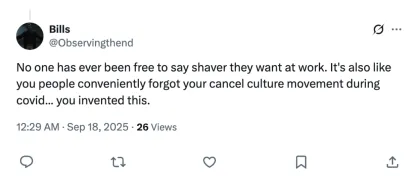
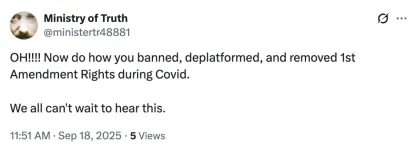
Specifically, ABC pulled Jimmy Kimmel Live! off the air following backlash from the head of the Federal Communications Commission over remarks Kimmel made last week about the murder of Charlie Kirk. We have been vocal in our opposition to this, and as a result, we’ve received some criticism online. So let’s take a minute to consider some of the most common remarks and address those concerns.
We said an extraordinary amount of things. Let’s start with filing amicus briefs in two Supreme Court cases about government pressure on private companies last term, NRA v. Vulloand Murthy v. Missouri.
Vullo was about the superintendent of New York’s Department of Financial Services pressuring insurance companies and banks to stop providing services to the National Rifle Association. The Department didn’t quite order the companies not to work with the NRA. Instead, it met with the groups, pointed out regulatory violations that didn’t have anything to do with the NRA, and suggested the state might be less interested in pursuing those regulations if the companies “ceased providing insurance to gun groups, especially the NRA.”
The First Amendment does not permit the government to censor speech via informal or indirect means. When government officials “invok[e] legal sanctions and other means of coercion, persuasion, and intimidation” to chill disfavored speech, they impose “a scheme of state censorship” just as unlawful as direct regulation.
The Supreme Court unanimously agreed.
In Murthy, the states of Missouri and Louisiana and a handful of individual social media users sued various federal agencies and officials, arguing that content moderation private companies conducted during COVID-19 and the 2020 election was driven by “jawboning” — that is informal, coercive government pressure — from the Biden administration. Our brief argued that such informal pressure violates the First Amendment.
Although much attention has focused on the power of “Big Tech,” it is a bad idea for government officials to huddle in back rooms with corporate honchos to decide which social media posts are “truthful” or “good” while insisting, Wizard of Oz-style, “pay no attention to that man behind the curtain.” No matter how concerning it may be when private decisionmakers employ opaque or unwise moderation policies, allowing government actors to surreptitiously exercise control is far worse.
There’s simply no daylight between our positions in these cases and our position in the current FCC controversy.
In terms of advocacy, we stood up for a professor accused of bias after writing that if you question the lab origin of COVID-19, you should “at least consider that you are an idiot who is swallowing a whole lot of Chinese cock swaddle.” We argued against a University of Iowa policy limiting what faculty could say about masks and the virus. We criticized NYU for telling medical faculty not to talk to the press. We stood up for RAs whose university told them they couldn’t talk about it in Virginia, and RAs told they couldn’t criticize their university’s response in Maryland.
In research, last year we wrote the Fire Report on Social Media 2024, where we expanded on the problem of jawboning, and specifically how it occurred during the Biden administration. We noted, based on a survey from FIRE and IPSOS, that:
The American public is concerned about this issue. Our polling found that 77% of Americans believe it is important for social media companies to “[be] fully transparent about any government involvement in content moderation decisions,” including 79% of Democrats, 75% of Republicans, and 81% of independents.
So, yes. We have been loud, clear, and consistent on this issue for quite some time.
Actually, we have taken a public stand on people’s right to protest on either side of the abortion debate. Until 2022, we were focused on college campuses, so abortion clinics generally weren’t in the mission, but we did stand up for pro-life students and their right to express themselves. Just as we stood up for pro-choice students. And pro-marijuana students. And pro-Nicki Minaj students. (There are no anti-Nicki Minaj students. That’s a scientific fact. But if there were, we’d stand up for them.)
But since we have expanded to cover freedom of expression on campus and off, Sarah McLaughlin, senior scholar of global expression at FIRE, has drawn attention to cases exactly like the one you cite.
Not only did we not ban or deplatform any rights during Covid, we vehemently oppose speech bans and deplatforming. In fact, we keep a Campus Deplatforming Database to help monitor and curb such practices. And we have spoken out against government efforts to police disinformation as well as misinformation.
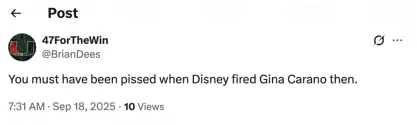
Yes, but we were a campus-only organization at the time, and by the time we expanded in 2022, she had already sued. (Some of us were pissed personally that they ruined The Mandalorian to do it, if that helps.) Also, there’s a difference between a company caving to a cancel-culture campaign like the one that targeted Carano, and a company making a similar decision under threats from the government. Yes, both are bad for free-speech culture. But one is prohibited by the Constitution.
Amid the changes and uncertainty higher ed institutions are navigating, chief HR officers (CHROs) are providing critical leadership to their institutions and workforce. To support those efforts, our new CHRO Conversations offer monthly opportunities for CHROs to hear about strategies being implemented on other campuses, to discuss solutions to emerging challenges, and to connect with one another in a space where conversation is encouraged.
Hosted by CUPA-HR, each 60-minute virtual session features knowledgeable and experienced higher ed HR leaders sharing real-world insights on a timely topic — from workforce planning and HR systems to compensation and strategic leadership. Each session includes breakout discussions to create a high-impact experience tailored to the demands of today’s HR leaders navigating ambiguity and change.
Important:These events are open only to higher ed chief HR officers at CUPA-HR member institutions. Seats are limited to support interaction among participants, so come prepared to engage, reflect and share ideas. These events will not be recorded.
The Growing Movement to Reform Research Assessment and Rankings
By Dean Hoke, September 22, 2025: For the past fifteen years, I have been closely observing what can only be described as a worldwide fascination—if not obsession—with university rankings, whether produced by Times Higher Education, QS, or U.S. News & World Report. In countless conversations with university officials, a recurring theme emerges: while most acknowledge that rankings are often overused by students, parents, and even funders when making critical decisions, few deny their influence. Nearly everyone agrees that rankings are a “necessary evil”—flawed, yet unavoidable—and many institutions still direct significant marketing resources toward leveraging rankings as part of their recruitment strategies.
It is against this backdrop of reliance and ambivalence that recent developments, such as Sorbonne University’s decision to withdraw from THE rankings, deserve closer attention
In a move that signals a potential paradigm shift in how universities position themselves globally, Sorbonne University recently announced it will withdraw from the Times Higher Education (THE) World University Rankings starting in 2026. This decision isn’t an isolated act of defiance—Utrecht University had already left THE in 2023, and the Coalition for Advancing Research Assessment (CoARA), founded in 2022, has grown to 767 members by September 2025. Together, these milestones reflect a growing international movement that questions the very foundations of how we evaluate academic excellence.
The Sorbonne Statement: Quality Over Competition
Sorbonne’s withdrawal from THE rankings isn’t merely about rejecting a single ranking system. It appears to be a philosophical statement about what universities should stand for in the 21st century. The institution has made it clear that it refuses to be defined by its position in what it sees as commercial ranking matrices that reduce complex academic institutions to simple numerical scores.
Understanding CoARA: The Quiet Revolution
The Coalition for Advancing Research Assessment represents one of the most significant challenges to traditional academic evaluation methods in decades. Established in 2022, CoARA has grown rapidly to include 767 member organizations as of September 2025. This isn’t just a European phenomenon—though European institutions have been early and enthusiastic adopters. The geographic distribution of CoARA members tells a compelling story about where resistance to traditional ranking systems is concentrated. As the chart shows, European countries dominate participation, led by Spain and Italy, with strong engagement also from Poland, France, and several Nordic countries. This European dominance isn’t accidental—the region’s research ecosystem has long been concerned about the Anglo-American dominance of global university rankings and the way these systems can distort institutional priorities.
The Four Pillars of Reform
CoARA’s approach centers on four key commitments that directly challenge the status quo:
1. Abandoning Inappropriate Metrics The agreement explicitly calls for abandoning “inappropriate uses of journal- and publication-based metrics, in particular inappropriate uses of Journal Impact Factor (JIF) and h-index.” This represents a direct assault on the quantitative measures that have dominated academic assessment for decades.
2. Avoiding Institutional Rankings Perhaps most relevant to the Sorbonne’s decision, CoARA commits signatories to “avoid the use of rankings of research organisations in research assessment.” This doesn’t explicitly require withdrawal from ranking systems, but it does commit institutions to not using these rankings in their own evaluation processes.
3. Emphasizing Qualitative Assessment The coalition promotes qualitative assessment methods, including peer review and expert judgment, over purely quantitative metrics. This represents a return to more traditional forms of academic evaluation, albeit updated for modern needs.
4. Responsible Use of Indicators Rather than eliminating all quantitative measures, CoARA advocates for the responsible use of indicators that truly reflect research quality and impact, rather than simply output volume or citation counts.
European Leadership
Top 10 Countries by CoARA Membership:
The geographic distribution of CoARA members tells a compelling story about where resistance to traditional ranking systems is concentrated. As the chart shows, European countries dominate participation, led by Spain and Italy, with strong engagement also from Poland, France, and several Nordic countries. This European dominance isn’t accidental—the region’s research ecosystem has long been concerned about the Anglo-American dominance of global university rankings and the way these systems can distort institutional priorities.
The geographic distribution of CoARA members tells a compelling story about where
Prestigious European universities like ETH Zurich, the University of Zurich, Politecnico di Milano, and the University of Manchester are among the members, lending credibility to the movement. However, the data reveals that the majority of CoARA members (84.4%) are not ranked in major global systems like QS, which adds weight to critics’ arguments about institutional motivations.
CoARA Members Ranked vs Not Ranked in QS:
The Regional Divide: Participation Patterns Across the Globe
What’s particularly striking about the CoARA movement is the relative absence of U.S. institutions. While European universities have flocked to join the coalition, American participation remains limited. This disparity reflects fundamental differences in how higher education systems operate across regions.
American Participation: The clearest data we have on institutional cooperation with ranking systems comes from the United States. Despite some opposition to rankings, 78.1% of the nearly 1,500 ranked institutions returned their statistical information to U.S. News in 2024, showing that the vast majority of American institutions remain committed to these systems. However, there have been some notable American defections. Columbia University is among the latest institutions to withdraw from U.S. News & World Report college rankings, joining a small but growing list of American institutions questioning these systems. Yet these remain exceptions rather than the rule.
European Engagement: While we don’t have equivalent participation rate statistics for European institutions, we can observe their engagement patterns differently. 688 universities appear in the QS Europe ranking for 2024, and 162 institutions from Northern Europe alone appear in the QS World University Rankings: Europe 2025. However, European institutions have simultaneously embraced the CoARA movement in large numbers, suggesting a more complex relationship with ranking systems—continued participation alongside philosophical opposition.
Global Participation Challenges: For other regions, comprehensive participation data is harder to come by. The Arab region has 115 entries across five broad areas of study in QS rankings, but these numbers reflect institutional inclusion rather than active cooperation rates. It’s important to note that some ranking systems use publicly available data regardless of whether institutions actively participate or cooperate with the ranking organizations.
This data limitation itself is significant—the fact that we have detailed participation statistics for American institutions but not for other regions may reflect the more formalized and transparent nature of ranking participation in the U.S. system versus other global regions.
American universities, particularly those in the top tiers, have largely benefited from existing ranking systems. The global prestige and financial advantages that come with high rankings create powerful incentives to maintain the status quo. For many American institutions, rankings aren’t just about prestige—they’re about attracting international students, faculty, and research partnerships that are crucial to their business models.
Beyond Sorbonne: Other Institutional Departures
Sorbonne isn’t alone in taking action. Utrecht University withdrew from THE rankings earlier, citing concerns about the emphasis on scoring and competition. These moves suggest that some institutions are willing to sacrifice prestige benefits to align with their values. Interestingly, the Sorbonne has embraced alternative ranking systems such as the Leiden Open Rankings, which highlight its impact.
The Skeptics’ View: Sour Grapes or Principled Stand?
Not everyone sees moves like Sorbonne’s withdrawal as a noble principle. Critics argue that institutions often raise philosophical objections only after slipping in the rankings. As one university administrator put it: “If the Sorbonne were doing well in the rankings, they wouldn’t want to leave. We all know why self-assessment is preferred. ‘Stop the world, we want to get off’ is petulance, not policy.”
This critique resonates because many CoARA members are not major players in global rankings, which fuels suspicion that reform may be as much about strategic positioning as about values. For skeptics, the call for qualitative peer review and expert judgment risks becoming little more than institutions grading themselves or turning to sympathetic peers.
The Stakes: Prestige vs. Principle
At the heart of this debate is a fundamental tension: Should universities prioritize visibility and prestige in global markets, or focus on measures of excellence that reflect their mission and impact? For institutions like the Sorbonne, stepping away from THE rankings is a bet that long-term reputation will rest more on substance than on league table positions. But in a globalized higher education market, the risk is real—rankings remain influential signals to students, faculty, and research partners. Rankings also exert practical influence in ways that reformers cannot ignore. Governments frequently use global league tables as benchmarks for research funding allocations or as part of national excellence initiatives. International students, particularly those traveling across continents, often rely on rankings to identify credible destinations, and faculty recruitment decisions are shaped by institutional prestige. In short, rankings remain a form of currency in the global higher education market.
This is why the decision to step away from them carries risk. Institutions like the Sorbonne and Utrecht may gain credibility among reform-minded peers, but they could also face disadvantages in attracting international talent or demonstrating competitiveness to funders. Whether the gamble pays off will depend on whether alternative measures like CoARA or ROI rankings achieve sufficient recognition to guide these critical decisions.
The Future of Academic Assessment
The CoARA movement and actions like Sorbonne’s withdrawal represent more than dissatisfaction with current ranking systems—they highlight deeper questions about what higher education values in the 21st century. If the movement gains further momentum, it could push institutions and regulators to diversify evaluation methods, emphasize collaboration over competition, and give greater weight to societal impact.
Yet rankings are unlikely to disappear. For students, employers, and funders, they remain a convenient—if imperfect—way to compare institutions across borders. The practical reality is that rankings will continue to coexist with newer approaches, even as reform efforts reshape how universities evaluate themselves internally.
Alternative Rankings: The Rise of Outcome-Based Assessment
While CoARA challenges traditional rankings, a parallel trend focuses on outcome-based measures such as return on investment (ROI) and career impact. Georgetown University’s Center on Education and the Workforce, for example, ranks more than 4,000 colleges on the long-term earnings of their graduates. Its findings tell a very different story than research-heavy rankings—Harvey Mudd College, which rarely appears at the top of global research lists, leads ROI tables with graduates projected to earn $4.5 million over 40 years.
Other outcome-oriented systems, such as The Princeton Review’s “Best Value” rankings, emphasize affordability, employment, and post-graduation success. These approaches highlight institutions that may be overlooked by global research rankings but deliver strong results for students. Together, they represent a pragmatic counterbalance to CoARA’s reform agenda, showing that students and employers increasingly want measures of institutional value beyond research metrics alone.
These alternative models can be seen most vividly in rankings that emphasize affordability and career outcomes. *The Princeton Review’s* “Best Value” rankings, for example, combine measures of financial aid, academic rigor, and post-graduation outcomes to highlight institutions that deliver strong returns for students relative to their costs. Public universities often rise in these rankings, as do specialized colleges that may not feature prominently in global research tables.
Institutions like the Albany College of Pharmacy and Health Sciences illustrate this point. Although virtually invisible in global rankings, Albany graduates report median salaries of $124,700 just ten years after graduation, placing the college among the best in the nation on ROI measures. For students and families making education decisions, data like this often carries more weight than a university’s position in QS or THE.
Together with Georgetown’s ROI rankings and the example of Harvey Mudd College, these cases suggest that outcome-based rankings are not marginal alternatives—they are becoming essential tools for understanding institutional value in ways that matter directly to students and employers.
Rankings as Necessary Evil: The Practical Reality
The CoARA movement and actions like Sorbonne’s withdrawal represent more than just dissatisfaction with current ranking systems. They reflect deeper questions about the values and purposes of higher education in the 21st century.
If the movement gains momentum, we could see:
Diversification of evaluation methods, with different regions and institution types developing assessment approaches that align with their specific values and goals
Reduced emphasis on competition between institutions in favor of collaboration and shared improvement
Greater focus on societal impact rather than purely academic metrics
More transparent and open assessment processes that allow for a better understanding of institutional strengths and contributions
Conclusion: Evolution, Not Revolution
The Coalition for Advancing Research Assessment and decisions like Sorbonne’s withdrawal from THE rankings represent important challenges to how we evaluate universities, but they signal evolution rather than revolution. Instead of the end of rankings, we are witnessing their diversification. ROI-based rankings, outcome-focused measures, and reform initiatives like CoARA now coexist alongside traditional global league tables, each serving different audiences.
Skeptics may dismiss reform as “sour grapes,” yet the concerns CoARA raises about distorted incentives and narrow metrics are legitimate. At the same time, American resistance reflects both philosophical differences and the pragmatic advantages U.S. institutions enjoy under current systems.
The most likely future is a pluralistic landscape: research universities adopting CoARA principles internally while maintaining a presence in global rankings for visibility; career-focused institutions highlighting ROI and student outcomes; and students, faculty, and employers learning to navigate multiple sources of information rather than relying on a single hierarchy.
In an era when universities must demonstrate their value to society, conversations about how we measure excellence are timely and necessary. Whether change comes gradually or accelerates, the one-size-fits-all approach is fading. A more complex mix of measures is emerging—and that may ultimately serve students, institutions, and society better than the systems we are leaving behind. In the end, what many once described to me as a “necessary evil” may persist—but in a more balanced landscape where rankings are just one measure among many, rather than the single obsession that has dominated higher education for so long.
Dean Hoke is Managing Partner of Edu Alliance Group, a higher education consultancy. He formerly served as President/CEO of the American Association of University Administrators (AAUA). Dean has worked with higher education institutions worldwide. With decades of experience in higher education leadership, consulting, and institutional strategy, he brings a wealth of knowledge on colleges’ challenges and opportunities. Dean is the Executive Producer and co-host for the podcast series Small College America.
Things have been bleak in higher education the last couple of years, and no doubt they will remain bleak for a while. But it recently became clear to me how we’ll know that we are turning the corner: it will be the moment when provincial governments start allowing significant rises in domestic tuition.
This became clear to me when I was having a discussion with a senior provincial official (in a province I shall not name) about tuition. I was arguing that with provincial budgets flat and declining international enrolment, domestic tuition needed to increase – and that there was plenty of room to do so given the affordability trends of the last couple of decades.
What affordability trends, you ask? I’m glad you asked. Affordability is a ratio where the cost of a good or service is the numerator and some measure of ability to pay is the denominator. So, let’s look at what it takes to pay average tuition and fees. Figure 1 shows average tuition as a percentage of the median income of couple families and lone-parent families aged 45-54. As you can see, for the average two-couple household, average tuition (which – recall last Wednesday’s blog – is an overestimate for most students) has never been more affordable in the twenty-first century. For lone-parent families, current levels of tuition are at a twenty-year low.
Figure 1: Average Undergraduate Tuition and Fees as a Percentage of Median Family Income, Couple Family and Lone-Parent Families aged 45-54, Canada, 2000-2024
Ah, you say, but that’s tuition as a function of parental ability-to-pay – what about students? Well, it’s basically the same story – calculated as a percentage of the average student wage, tuition has not been this cheap since the turn of the century, and in Ontario, it has dropped by 27% since 2017. And yes, the national story is to a large degree a function of what’s been going on in Ontario, but over the past decade or so, this ratio has been declining in all provinces except Manitoba, Saskatchewan and Alberta.
Figure 2: Number of Hours Worked at Median Hourly Income for Canadians Aged 15-24 Required to pay Average Undergraduate Tuition and Fees, Canada and Ontario, 1997-2024
And that’s before we even touch the issue of student aid, which as you all know is way up this century even after we take student population growth into account. In real dollars, we’ve gone from a $10B/year student aid system to a $20B/year system with the vast majority of growth coming on the non-repayable side, rather than from loans.
Figure 3: Total Student Financial Assistance by Type, Selected years, 1993-94 to 2023-2024, in Millions, in $2023
In fact, student aid expenditures are so high nowadays that across both universities and colleges we spend about $3 billion more in student aid than we take in from tuition fees. That’s NEGATIVE NET TUITION, PEOPLE.
Figure 4: Aggregate Non-Repayable Aid vs Aggregate Domestic Tuition fees, 2007-08 to 2023-24, in Billions, in $2023
So, yeah, affordability trends. They are much more favorable to students than most people think.
Anyway, the provincial official seemed a bit nonplussed by my reply: my sense is that they had never been briefed on the degree to which tuition increases have been thrown into reverse these past few years, and he certainly didn’t know about the huge increase in non-repayable aid over the past few decades. They didn’t push back on any of this evidence, BUT, they insisted, tuition fees weren’t going up because doing so ishard and it’sunpopular.
To which I responded: well, sure. But was raising tuition any easier or less unpopular in 1989 when the Quebec Liberal government more than doubled tuition? Than in the mid-90s when both the NDP and Conservative governments allowed tuition to rise? Than in 2001 when the BC Liberals allowed tuition to increase by 50%? This has been done before. There’s absolutely no reason it can’t be done again. The only thing it will take is the courage to put the requirements of institutions that actually build economies and societies ahead of the cheap, short-term sugar highs of chasing things like “affordability”.
Now, to be fair, I don’t for the moment see any provincial governments prepared to do this. If there is one thing that seems to unite provincial governments these days, it is an inability to make hard decisions. But this particular political moment won’t last forever. It might take a serious, long-term recession to knock it into various heads that no matter how much money we sink into them, natural resources and construction alone won’t run this economy. Eventually, we’re going to have to re-build the great college and university system we’re in the middle of trashing.
And we’ll know that moment has come when provincial governments agree that domestic tuition should rise again.
In a time when higher education grapples with systemic challenges—rising tuition, debt burdens, underfunding, and institutional inertia—the Next System Teach-Ins emerge as a powerful catalyst for critical dialogue, community engagement, and transformative thinking.
A Legacy of Teach-Ins: From Vietnam to System Change
Teach-ins have long functioned as dynamic forums that transcend mere lecturing, incorporating participatory dialogue and strategic action. The concept originated in March 1965 at the University of Michigan in direct protest of the Vietnam War; faculty and students stayed up all night, creating an intellectual and activist space that sparked over 100 similar events in that year alone.
This model evolved through the decades—fueling the environmental, civil rights, and anti-apartheid movements of the 1970s and 1980s, followed by the Democracy Teach-Ins of the 1990s which challenged corporate influence in universities and energized anti-sweatshop activism. Later waves during Occupy Wall Street and Black Lives Matter sustained teach-ins as a tool for inclusive dialogue and resistance.
The Next System Teach-Ins: Vision, Scope, and Impact
Vision and Purpose
Launched in Spring 2016, the Next System Teach-Ins aimed to broaden public awareness of systemic alternatives to capitalism—ranging from worker cooperatives and community land trusts to decentralized energy systems and democratic public banking.
These teach-ins were designed not just as academic discussion forums but as launching pads for community-led action, connecting participants with toolkits, facilitation guides, ready-made curricula, and resources to design their own events.
Highlights of the Inaugural Wave
In early 2016, notable teach-ins took place across the U.S.—from Madison and New York City to Seattle and beyond. Participants explored pressing questions such as, “What comes after capitalism?” and “How can communities co-design alternatives that are just, sustainable, and democratic?”
These gatherings showcased a blend of plenaries, interactive workshops, radio segments, and “wall-to-wall” organizing strategies—mobilizing participants beyond attendee numbers into collective engagement.
Resources and Capacity Building
Organizers were provided with a wealth of support materials including modular curriculum, templates for publicity and RFPs, event agendas, speaker lists, and online infrastructure to manage RSVPs and share media.
The goal was dual: ignite a nationwide conversation on alternative systemic models, and encourage each teach-in host to aim for a specific local outcome—whether that be a campus campaign, curriculum integration, or forming ongoing community groups.
2025: Renewed Momentum
The Next System initiative has evolved. According to a May 2025 update from George Mason University’s Next System Studies, a new wave of Next System Teach-Ins is scheduled for November 1–16, 2025.
This iteration amplifies the original mission: confronting interconnected social, ecological, political, and economic crises by gathering diverse communities—on campuses, in union halls, or public spaces—to rethink, redesign, and rebuild toward a more equitable and sustainable future.
Why This Matters for Higher Education (HEI’s Perspective)
Teach-ins revitalize civic engagement on campus by reasserting higher education’s role as an engine of critical thought and imagination.
They integrate scholarship and practice, uniting theory with actionable strategies—from economic democracy to ecological regeneration—and enrich academic purpose with real-world relevance.
They also mobilize institutional infrastructure, offering student-led exploration of systemic change without requiring prohibitive resources.
By linking the global and the local, teach-ins equip universities to address both planetary crises and campus-specific challenges.
Most importantly, they trigger systemic dialogue, pushing past complacency and fostering a new generation of system-thinking leaders.
Looking Ahead: Institutional Opportunities
Host a Teach-In – Whether a focused film screening, interdisciplinary workshop, or full-scale weekend event, universities can leverage Next System resources to design context-sensitive, action-oriented programs.
Embed in Curriculum – The modular material—especially case studies on democratic economics, energy justice, or communal models—can integrate into courses in sociology, environmental studies, governance, and beyond.
Forge Community Partnerships – By extending beyond campus (to community centers, labor unions, public libraries), teach-ins expand access and deepen impact.
Contribute to a National Movement – University participation in the November 2025 wave positions institutions as active contributors to a growing ecosystem of systemic transformation.
A Bold Experiment
The Next System Teach-Ins represent a bold experiment in higher education’s engagement with systemic change. Combining rich traditions of activism with pragmatic tools for contemporary challenges, these initiatives offer HEI a blueprint for meaningful civic education, collaborative inquiry, and institutional transformation.
As the 2025 wave approaches, universities have a timely opportunity to be centers of both reflection and action in building the next system we all need.