Blog

  • A new international education strategy

    A new international education strategy

    The Westminster government’s newest iteration of the international education strategy commits the UK to three ambitions: to increase the UK’s international standing through education, to recruit high quality international higher education students from a diverse range of countries, and to grow education exports to £40bn a year by 2030.

    Last time we got an International Education Strategy from the government was back in 2019 – famously it committed the government to increase education exports to £35bn per year, and to increase the number of international HE students studying in the UK to 600,000 per year, again: both by 2030.

    The government’s current best estimate for performance against those targets – which deals with the 2022 calendar year – suggests income from education exports was £32.3bn for that year – with around three quarters of that being derived from higher education activity. For a variety of reasons, it isn’t great data.

    And HESA tells us that there were 758,855 international higher education students during the 2022-23 academic year, though numbers have fallen since.

    Diversification across sub-sectors

    Within the higher education sector the perception has been that this decline in international student numbers has been a political choice in the face of wider public concerns around immigration rather than any failing among universities: changes to dependant visa access, a reduction in the length (from 24 months to 18 months) of the graduate visa for postgraduate taught students, reported difficulties in obtaining student visas, and the onset of price rises linked to the forthcoming international student levy.

    Though a lot of the UK’s historic strengths in international education come via its higher education providers, the strategy is at pains to emphasis the full spectrum of what is on offer, noting:

    We see diversification across sub-sectors as key to long-term success

    Accordingly much of the strategy deals with early years and schools, non-HE tertiary education, English language training, special educational needs, and education technology. But, as with higher education, there is little detail: this will be filled in via an action plan developed by a reconstituted Education Sector Action Group (ESAG). This ministerially-chaired forum will bring together government, industry, and sector representative bodies: each representative will lead on a sub-sector action plan to be published within 100 days of appointment.

    Of course, we don’t even know which minister will chair the forum yet – the strategy is owned jointly by the Department for Education, the Department of Business and Trade, and the Foreign and Commonwealth Development Office. We do know that Steve Smith retains his role as international education champion, and that the strategy will be supported by a range of existing tools and programmes: notably for higher education these include research and technology partnerships including Horizon Europe, plus things like Erasmus+ (from 2027) and Turing (newly confirmed for 2026-27).

    The British Council will play a prominent role too – most notably in the expansion of transnational education provision across every part of the sector. Here robust quality assurance will play a key part – we get detail on schools-level accreditation and oversight, but the parallel section on higher education quality assurance and international standards is missing (despite case studies on the University of London, and the India campus of the University of Southampton). The section on the work of the British Council-led Alumni UK programme (launched in 2022) offers recognition of the value of alumni as international ambassadors.

    And what’s in it for higher education?

    The meat of the strategy for higher education providers concerns a “strategic approach to sustainable international student recruitment”. The key words are “well-managed” and “responsible” recruitment, and a quality student experience should lead to world-class outcomes. It is very encouraging to see that support systems and infrastructure (including local housing) are on the radar too.

    Institutions will be “encouraged to diversify their recruitment”, moving away from reliance on any single country”. There’s support for the sector-owned Agent Quality Framework to tackle poor practices, and a suggestion that government will:

    work closely with the sector to ensure that our institutions recruit international higher education students in a way that maintains quality and student experience. This includes considering factors such as skills and entry requirements, adequate infrastructure, local housing, and support systems

    A section on “maintaining a competitive offer” flags the retention of the (18 month) graduate route, the high potential individual route for those graduating from top 100 institutions (nothing to do with helping UK international education expand, but it is in there), and the change in visa conditions enabling graduates to start businesses while transferring to the “investor founder” route. The international student levy clearly does not help to maintain a competitive offer but we get details of that here too:

    The levy will be fully reinvested into higher education and skills, including the reintroduction of targeted maintenance grant for disadvantaged domestic students, helping to break down barriers to opportunity as part of the government’s Plan for Change and making our higher education system more inclusive for the benefit of all students

    However this ends up benefitting home students, there is no detail on how the policy might discourage (via higher prices, for example) international recruitment.

    Indeed, throughout the strategy there is nothing that deals with the restrictions being placed on higher education as the largest single contributor to educational exports, and how that situation will cause problems (despite warm words about “unlocking the full potential of our education sector”) in meeting this expanded and challenging financial target.


    Source link

  • UK unveils new international education strategy

    UK unveils new international education strategy

    • Government aims to grow education exports to £40 billion per year by 2030, growth to come from TNE, ELT, skills and edtech
    • New strategy removes targets on international student numbers with focus on sustainable recruitment
    • Ministerial group known as the Education Sector Action Group (ESAG) to work with sector to deliver action plans tackling key concerns and identifying partnership opportunities

    The long-awaited document marks the first new UK international education strategy (IES) since 2019, which at the time revealed goals to grow international student numbers by 30% by 2030. Education is already one of the UK’s most important exports, bolstering the economy by £32bn per year, with the IES building on 2019’s stated ambition to grow its export value to £35 bn.

    However, after a post-pandemic boom, with international student numbers in the UK reaching 732,285 in 2023/24, the government has moved away from targetting increased enrolments, instead making clear that growth should come from areas such as English language training (ELT), transnational education (TNE) and edtech sectors – worth some £560m, £3bn and £3.89bn in exports respectively.

    The revamped IES outlines three main priorities for UK international education; to grow education exports to a collective $40bn per year, oversee sustainable overseas student recruitment and amplify the UK’s international standing through education – including a focus on cutting red tape for TNE partnerships abroad.

    Elsewhere, the government is drawing on expertise from the international education sector through a reformed ministerial group known as the Education Sector Action Group (ESAG) – a collective tasked with tackling key concerns and identifying partnership opportunities, as well as smoothing the path towards international alliances.

    Each representative will develop an action plan drawing on how its members will support the IES’s three main goals to be published within the first 100 days of their accession to ESAG. As yet it is unclear who will be included in the group.

    Meanwhile, Sir Steve Smith will stay on as the UK’s international education champion, with a remit to “remove barriers to education partnerships” by continuing to engage with India, Indonesia, Nigeria, Saudi Arabia and Vietnam. Sir Steve is also looking into opportunities in “emerging economies” such as Brazil, Mexico, and Pakistan, the IES said.

    By expanding overseas, our universities, colleges and education providers can diversify income, strengthen global partnerships and give millions more access to a world-class UK education on their doorstep, all whilst boosting growth at home
    Bridget Phillipson, education secretary

    The document also signals the publication of more specific strategy documents in the future, including a Soft Power Strategy outlining plans to grow the UK’s global influence through its education, sports, science, governance, development and tech sectors.

    Expanding the UK’s soft power abroad is a key part of the IES, which recognises the power in education as a way to position the country as “a place of learning, openness, research and innovation – building life‐long alliances and deepening trust in the UK”.

    Education secretary Bridget Phillipson said that supporting international partnerships would help institutions to “diversity and strengthen their business models”.

    “By expanding overseas, our universities, colleges and education providers can diversify income, strengthen global partnerships and give millions more access to a world-class UK education on their doorstep, all whilst boosting growth at home,” she added.

    Minister for Trade Chris Bryant branded education exports as a “major UK success story”.

    “We’re on track grow the sector to £40 billion by 2030, powered by world leading providers driving digital learning, AI enabled innovation and future skills development,” he said. 

    Malcolm Press, president of Universities UK welcomed the new document, saying it “signals a renewed commitment to fostering the global reach, reputation and impact of our universities”.

    This is a breaking news story. Check back for updates on this emerging story…

    Source link

  • Realpolitik: 10 points to note about today’s new International Education Strategy

    Realpolitik: 10 points to note about today’s new International Education Strategy

    Author:
    Nick Hillman

    Published:

    HEPI Director, Nick Hillman, takes a look at the new International Education Strategy, which is out today.

    1. It is a relief to have the paper finally out, as it has been a wait. First, the Coalition had their initial 2013 version (which still reads pretty well, except for its comments about MOOCs, even if it had a rather different list of target countries … ); the subsequent Conservative Governments then had their 2019 Strategy, with its clear targets, and subsequent updates in 2021, 2022 and 2023; and, in October 2024, the newly installed Labour Government promised ‘a review of the International Education Strategy’, which is what has now landed. It is good to have clarity: the new paper provides a comprehensive summary of UK strengths, usefully reinvigorates some tired initiatives (like a ‘reformed’ Education Sector Action Group) and commits to achieving £40 billion of educational exports by 2030. I do not underestimate the challenges involved in getting the paper to this stage, which has been overseen like most of its predecessors by the indefatigable Sir Steve Smith (the UK Government’s International Education Champion to whom the sector owes so much), despite my mixed commentary below – given the general rightwards shift in the country, given the differences of opinion across Whitehall on issues like student migration and given all the other energy-sapping issues on Number 10’s plate.
    2. My first impression was that the paper is shorter than we might have expected – c.50 pages of large text, with lots of ‘throat clearing’ (the Introduction arrives on page 10 and the meat doesn’t start until page 17…). In contrast, the 2019 Strategy was of a similar length but with a much smaller text and included 23 clear ‘Actions’, while the 2021 Update was c.70 pages of dense text, including an update on progress towards the specific actions.
    3. Similarly, the three Ministers put up to front the report are, in government terms, second rank (Minister of State) rather than first rank (Secretary of State) and two sit in the unelected Upper Chamber rather than the elected House of Commons. Along with the lowish word count, this sends a slightly unfortunate signal about the seriousness with which education export issues are taken in government. The 2019 Strategy and the 2021 Update each had two Secretaries of State pen the Foreword, for example.
    4. Perhaps none of this matters. It is better to be concise than wordy. Who cares how many pages there are, what font size has been used and which Ministers have written the inoffensive Foreword? I think it probably does matter a bit as there are no areas of education as competitive as international exports, and it is one of the few areas where the UK can still undeniably claim world-class status. Our main competitors read such UK strategies closely, just as the UK’s own initial 2013 strategy emerged partly as a response to the strategies that had already been adopted in other English-speaking countries. A confident country keen to expand its share of a particular global market tends to project itself as such, whereas a thinner paper that hedges its bets may be regarded, perhaps accurately, as reflecting lukewarm support for educational exports in parts of Whitehall.
    5. More importantly, the new Strategy is keen to emphasise that it is a cross-Government initiative: ‘Leadership of this agenda now sits firmly across the government, with the Foreign, Commonwealth and Development Office joining the Department of Education and the Department of Business and Trade as co-owners of the strategy.’ This is welcome. But the Home Office remain notable by their absence, and it is they that have sole control over things like student visas, post-study work rules and Basic Compliance Assessments. Until the Home Office are forced to share responsibility for international students studying in the UK equally with other parts of government or until the Home Office is overridden by the centre of Whitehall, our higher education institutions will continue to have one arm tied behind their back while trying to expand this important export market.
    6. The Home Office ministers and mandarins will still, however, have had to sign the new paper off and their behind-the-scenes influence is evident. While the paper is full of commitments to ‘leverage’, ‘champion’ and ‘continue’ doing things, it eschews the opportunity to set clear new targets for higher education. The 2013 paper looked to increase the number of international students studying in the UK at higher education ‘by 15-20% over the next five years.’ The 2019 Strategy had a target of increasing students ‘in the UK to 600,000 per year’ by 2030. Now, however, there is an overall goal of increasing all ‘education exports to £40 billion per year’ by the end of this decade but, on higher education students specifically, we only get a commitment to ‘support the sustainable recruitment of higher-quality international students’, warm words about ‘Well-managed and responsible recruitment’ and an objective of ‘building a more resilient, diverse and long-term pipeline of international talent.’ How many more synonyms are there for ‘reducing’ the number of new student arrivals in the UK, I wonder. The Department for Education’s press release suggests TNE (transnational education), with all its challenges and opportunities, has displaced students coming to the UK as the flavour of the month.
    7. As it is a UK-wide document, so the rUK or the ‘rest of the UK’ as it is known in Whitehall get a brief look in. There are nice words about Scotland’s (in truth poor-performing) schools system and the controversial Curriculum for Excellence, which may be rather useful to Scottish policymakers as they look ahead to the 2026 elections to the Scottish Parliament, when education is expected to feature quite heavily.
    8. There are a surprising number of lengthy references to things that are clearly part of modern education but which do not immediately seem directly relevant to establishing a stronger framework for encouraging UK educational exports around the globe, and which are perhaps included to flesh out the text. For example, climate change appears in the very first sentence of the document and page 22 elaborates: ‘the UK Government expects all nurseries, schools and colleges to have a climate action plan, and in collaboration with leading environmental and education organisations, provides direct support through the innovative Sustainability Support Programme. The programme ensures educational settings are inspired to act and supported to plan and deliver meaningful climate action to embed sustainability, climate awareness and connection with nature.’ One can fully subscribe to the idea of man-made climate change and a climate emergency, as well as the need for action to address these, but still be left scratching one’s head at quite what the purpose of such text is in a short paper promoting the UK’s educational exports.
    9. The paper inadvertently reveals a long-standing and tricky issue for policymakers, which is the gap in our general attitudes towards delivering education to people at home and selling UK education to people from overseas. For example, as a nation we are as favourable towards soft power abroad, by making friends in high places through education, as we are opposed to old boys’ networks at home. In England, we tightly regulate who gets to university via Access and Participation Plans, yet when it comes to overseas students, we rely on the very high fees (plus an incoming International Student Levy) that only upper-middle class students can afford and we don’t even worry too much if, on occasion, the extra international students squeeze out home students. (Those attacking Trinity Hall for advertising their outreach work to a handful of UK independent schools tend to ignore that the entire higher education system is propped up by some of the wealthiest people from other countries.)
    10. There is another contradiction illustrated by the new International Education Strategy too: while Ministers block Eton College from working with partners to set up a school for disadvantaged Brits in Middlesborough, the new Strategy celebrates famous independent schools establishing footprints abroad. So Charterhouse Lagos is, we are told, ‘a model for future school partnerships abroad, strengthening bilateral ties and delivering long-term educational and economic benefits.’ It seems to be Floreat Carthusia abroad and Pereat Etona at home (please correct my Latin in the Comments section below … ), which doesn’t in all honesty seem to make much logical sense. At least, there is a German word for it all: realpolitik. 

    Source link

  • How academics are making lectures more engaging – Campus Review

    How academics are making lectures more engaging – Campus Review

    Commentary

    Breaking content into mini episodes and investing in quality audio are some ways academics are creating a more engaging learning experience

    A lecture is no longer synonymous with a room full of students and a wall of text. Something new is happening at our universities.

    Please login below to view content or subscribe now.

    Membership Login

    Source link

  • After L.A.’s Wildfires, Reshaping Disaster Response to Address Children’s Needs – The 74

    After L.A.’s Wildfires, Reshaping Disaster Response to Address Children’s Needs – The 74


    Get stories like this delivered straight to your inbox. Sign up for The 74 Newsletter

    As the one-year anniversary of the Los Angeles wildfires passes, rebuilding efforts continue to lag despite assurances to the contrary and many families are still navigating their search for a return to normalcy. For children in particular, the effects of a disaster do not end when the smoke clears or the debris is removed. 

    As more people’s lives are upended each year due to climate disasters communities — and our political leaders at the local, state and federal levels — must do more to ensure the needs of children and families are met during these emergencies.

    During wildfires and other disasters, we continually see the familiar pattern of school closures, child care disruption, families moving into temporary housing and routines essential to children’s sense of safety abruptly severed. Communities and political leaders at every level must confront a hard truth: Our emergency systems were not designed with children in mind. 

    During wildfires, schools and child care systems are among the first institutions to fail. Children are displaced from classrooms, separated from trusted adults and thrust into shelters or hotel rooms never designed to support their physical, emotional or developmental needs. Studies show that stress brought on by exposure to natural disasters can have an outsized impact on children and lead to lifelong trauma. This trauma can lead to socio-emotional impairments; health-risk behaviors, such as alcohol and drug abuse; and even early death, according to the Adverse Childhood Experiences study published in 2011 by the Centers for Disease Control and Prevention and Kaiser Permanente. 

    This past year has made it clear that local jurisdictions can no longer rely on federal disaster systems to carry the full burden of recovery. As the future of entities such as the Federal Emergency Management Agency becomes more uncertain, states, cities and counties must assume greater responsibility for protecting their most vulnerable citizens. 

    This starts with treating schools as critical infrastructure. While schools became formally recognized as part of critical infrastructure — specifically within the Education Facilities subsector in 2003 under Homeland Security Presidential Directive-7 (HSPD-7) — they are not allocated commensurate resources and protections for security as other designated critical infrastructure. 

    The Covid-19 pandemic underscored the central role that schools play in economic stability, as widespread closures rapidly disrupted labor markets and productivity. Treating schools as critical infrastructure would align education with other essential public systems that underpin public health, safety and economic performance; as such, it merits long-term investment.

    Second, schools need contingency plans that ensure continuity of in-person education when normal operations are disrupted. After the LA wildfires, many schools scrambled to set up alternate sites or transitioned to online learning. Students are still making up learning losses from the pandemic, and it is unclear whether those losses can be stemmed. Online learning should be used only when all other options have been exhausted, given the devastating impacts on student learning. The planning needs to begin now, not after disaster strikes.  

    Third, practice is key to success. Emergency plans often fail children not because they are poorly written but because they are never written with children in mind. Children experience disasters differently than adults, and procedures designed without them can inadvertently heighten fear and trauma. Age-appropriate drills, school-based tabletop exercises and responder training in developmentally appropriate communication can dramatically improve outcomes. 

    Local governments can formally integrate school districts, child care providers and pediatric health systems into emergency planning rather than treating them as afterthoughts once a crisis unfolds. Practicing with children builds familiarity, reduces panic and accelerates recovery — not just for young people, but for entire communities.

    Finally, funding structures must reflect the realities families face after disasters. While billions are allocated for fire suppression and mitigation, far fewer resources are earmarked for sustaining schools, child care and pediatric mental health in the months and years that follow. Local and state governments should establish dedicated funding streams for child- and family-centered recovery — supporting school continuity, mental health care and family stabilization — since these investments can reduce long-term social and economic costs.

    Implementing a family-centric disaster response model isn’t just a moral imperative. Adverse childhood experiences lead to an economic burden of  hundreds of billions of dollars annually in the U.S, much of it absorbed by taxpayers through Medicaid and Medicare spending, special education, disability programs and lost lifetime tax revenue. When disaster responses destabilize children, short-term emergencies are converted into long-term public liabilities, driving government inefficiency and reactive spending. These failures also spill into insurance markets, increasing claims, raising premiums and deepening reliance on federal backstops that distort risk pools and shift costs to the public.

    In an era of escalating disasters and constrained budgets, policies that protect family stability during crises are not social add-ons but high-return investments: reducing future taxpayer exposure, stabilizing insurance systems and limiting the need for costly federal intervention after the fact.

    The one-year mark of the Los Angeles wildfires should not serve as a memorial to what was lost, but as a reckoning with what must change. Disasters will continue to test our systems, but allowing children to bear the brunt of those failures is a policy choice, not an inevitability. Protecting children during emergencies necessitates radical change. If we fail to act, we are not merely accepting risk: We are knowingly passing preventable harm and long-term costs onto the next generation.


    Did you use this article in your work?

    We’d love to hear how The 74’s reporting is helping educators, researchers, and policymakers. Tell us how

    Source link

  • Basing K-12 Funding on California School Enrollment Could Bring Problems – The 74

    Basing K-12 Funding on California School Enrollment Could Bring Problems – The 74


    Get stories like this delivered straight to your inbox. Sign up for The 74 Newsletter

    This story was originally published by CalMatters. Sign up for their newsletters.

    For years, California schools have pushed to change the way the state pays for K-12 education: by basing funding on enrollment, instead of attendance. That’s the way 45 other states do it, and it would mean an extra $6 billion annually in school coffers.

    But such a move might cause more harm than good in the long run, because linking funding to enrollment means schools have little incentive to lure students to class every day, according to a report released Tuesday by the nonpartisan Legislative Analyst’s Office. Without that incentive, attendance would drop, and students would suffer.

    If the Legislature wants to boost school funding, analysts argued, it should use the existing attendance-based model and funnel more money to schools with high numbers of low-income students, students in foster care and English learners.

    When it comes to attendance, money talks, the report noted. For more than a century, California has funded schools based on average daily attendance – how many students show up every day. In the 1980s and ’90s, the state started to look at alternatives. A pilot study from that time period showed that attendance at high schools rose 5.4% and attendance at elementary schools rose 3.1% when those schools had a financial incentive to boost attendance.

    This is not the time to ease up on attendance matters, the report said. Although attendance has improved somewhat since campuses closed during the pandemic, it remains well below pre-COVID-19 levels. In 2019, nearly 96% of students showed up to school every day. The number dropped to about 90% during COVID-19, when most schools switched to remote learning, but still remains about 2 percentage points below its previous high.

    Attendance is tied to a host of student success measurements. Students with strong attendance tend to have higher test scores, higher levels of reading proficiency and higher graduation rates.

    “It’s a thoughtful analysis that weighs the pros and cons,” said Hedy Chang, president of the nonprofit research and advocacy organization Attendance Works. “For some districts there might be benefits to a funding switch, but it also helps when districts have a concrete incentive for encouraging kids to show up.”

    True cost of educating kids

    Schools have long asked the Legislature to change the funding formula, which they say doesn’t cover the actual costs of educating students, especially those with high needs. The issue came up repeatedly at a recent conference of the California School Boards Association, and there’s been at least one recent bill that addressed the issue.

    The bill, by former Sen. Anthony Portantino, a Democrat from the La Cañada Flintridge area, initially called for a change to the funding formula, but the final version merely asked the Legislative Analyst’s Office to study the issue. The bill passed in 2024.

    A 2022 report by Policy Analysis for California Education also noted the risks of removing schools’ financial incentive to prioritize attendance. But it also said that increasing school funding overall would give districts more stability.

    Enrollment is a better funding metric because schools have to plan for the number of students who sign up, not the number who show up, said Troy Flint, spokesman for the California School Boards Association.

    He also noted that schools with higher rates of absenteeism also tend to have higher numbers of students who need extra help, such as English learners, migrant students and low-income students. Tying funding to daily attendance — which in some districts is as low as 60% — brings less money to those schools, ultimately hurting the students who need the most assistance, he said.

    “It just compounds the problem, creating a vicious cycle,” Flint said.

    To really boost attendance, schools need extra funding to serve those students.

    Switching to an enrollment-based funding model would increase K-12 funding by more than $6 billion, according to the Legislative Analyst’s Office. Currently, schools receive about $15,000 annually per student through the state’s main funding mechanism, the Local Control Funding Formula, with an additional $7,000 coming from the federal government, block grants, lottery money, special education funds and other sources. Overall, California spent more than $100 billion on schools last year, according to the Legislative Analyst.

    Motivated by money?

    Flint’s group also questioned whether schools are solely motivated by money to entice students to class.

    “Most people in education desperately want kids in class every day,” Flint said. “These are some of the most dedicated, motivated people I’ve met, and they care greatly about students’ welfare.”

    Josh Schultz, superintendent of the Napa County Office of Education, agreed. Napa schools that are funded through attendance actually have lower attendance than schools that are considered “basic aid,” and funded through local property taxes. Both types of schools have high numbers of English learners and migrant students.

    “I can understand the logic (of the LAO’s assertion) but I don’t know if it bears out in reality, at least here,” Schultz said. “Both kinds of schools see great value in having kids show up to school every day.”

    This article was originally published on CalMatters and was republished under the Creative Commons Attribution-NonCommercial-NoDerivatives license.


    Did you use this article in your work?

    We’d love to hear how The 74’s reporting is helping educators, researchers, and policymakers. Tell us how

    Source link

  • The danger of overdoing over-the-counter medicine

    The danger of overdoing over-the-counter medicine

    In 2023, David Mitchener, 89, was admitted to a hospital in Surrey, England where he died. His death was attributed, in part, to high levels of Vitamin D, which he had been taking for nine months before his death.

    It turns out that using herbal remedies and nutritional supplements could put your health at risk.

    In a 2020 study at a Canadian naturopathic clinic, 42% of participants said they did not discuss their use of natural health products, including herbal remedies and vitamins, with their doctor. It turns out there are risks associated with not disclosing that you’re taking herbal remedies and supplements.

    Some people are aware of the risks and are careful when using these products, but some people aren’t, said Frances Atcheson, a community pharmacist based in Northern Ireland. “There is a danger with people thinking that they’re always safe to take, just because they’re natural.”

    Lezley-Anne Hanna, chair of pharmacy education at Queen’s University Belfast, said that the products could interfere with a patient getting a correct diagnosis. “If you didn’t disclose that you were on an herbal medicine, well, that could actually be causing your symptoms in the first place,” Hanna said.

    Drug interactions

    A major risk, Atcheson said, is that the natural medicines will interact negatively with with conventional medicine. Increased bleeding risk, for example, is associated with using herbal remedies such as ginkgo biloba, cranberry juice and ginger at the same time as blood-thinning medication, such as warfarin and aspirin.

    In 2014, the Medicines and Healthcare products Regulatory Agency (MHRA), which regulates medicines in the United Kingdom, warned about the interaction between hormonal contraceptives and St. John’s wort, a herbal supplement that is used to alleviate mild depression and anxiety.

    Such interaction has been blamed for unplanned pregnancies. St. John’s wort can also cause serotonin syndrome when used with other antidepressants. This can show up as high blood pressure, shivering and mania.

    Ayurvedic medicine, which originated in India, uses many herbal remedies. The products can also include metals. However, in December 2025, the U.S. Food and Drug Administration issued a warning about the possibility of heavy metal poisoning, such as lead and mercury, when using Ayurvedic products.

    This could lead to infertility, kidney and brain damage and convulsions.Taking herbal remedies and supplements when there aren’t specific symptoms or illnesses has risks too.

    Side effects of natural remedies

    While taking Vitamin D supplements is recommended for everyone in the United Kingdom by the Department of Health and Social Care, too much Vitamin D can lead to bone pain, loss of appetite and abdominal pain in otherwise healthy patients.

    Liver injury caused by herbal remedies and supplements has been reported in Australia, the United States and Spain, in some cases so serious that it led to the need of a liver transplant.

    Seema Haribhai, a 37-year-old woman from North London, became concerned about the potential side effects of conventional medication and turned to herbal remedies to treat psoriatic arthritis — a type of arthritis that causes pain and swelling in joints. A coroner’s report attributed her death to liver failure that might have been aggravated by herbal remedies recommended by an Ayurvedic medicine practitioner. “All medicines can cause harm, even those that are herbal based,” the report said.

    Eva Delaney, 24, of Belfast takes the herbal supplement ginkgo biloba to improve brain function and Kalms tablets, which contain the herb valerian root, to reduce stress. She says she found out about the supplements in the pharmacy where she worked and consulted a pharmacist at her work before buying the products. “It probably should be the thing where you should always go to your pharmacist first,” she said.

    Hanna said that pharmacists should be able to discuss these products in the context of patient safety. “Pharmacists are the expert in the safe and effective use of medicine,” she said.

    Discussing herbal medicine with doctors

    What form the herbal remedies and supplements take, Delaney said, play a role in whether people tell a healthcare professional they’re taking them. “I think if it’s a tablet, you’d be more inclined to tell someone, ‘Oh, I’m taking this’,” Delaney said. “But if it was anything else, like a syrup … I think it would be harder to consider that as a medicine.”

    In a 2021 study, more than 90% of pregnant women in Ethiopia using herbal remedies throughout their pregnancies did not discuss this with their health-care professionals. The most common reason they gave was that the healthcare professional did not ask.

    Atcheson said that she wouldn’t normally ask about herbal remedies specifically. But she will ask patients: “Are you on any other prescribed medication or do you take anything over the counter? And sometimes they will volunteer information if they’re taking herbal remedies or supplements.”

    Hanna said that healthcare professionals need to ask specific questions in order to learn about patients’ use of herbal remedies and supplements. “If you want to know if somebody’s on a herbal medicine,” she said, “you need to ask.”

    It is also important for healthcare professionals to know their own limitations, and to know how to find the information they lack. “It’s about accepting that you may not know that particular product or you may not know that name,” Hanna said. “But where can you go and find out reliable information? Where could you advise the person to go?”

    Finding reliable resources

    Atcheson said that she uses the online Cochrane Library as a resource when presented with a patient question she can’t answer. The Cochrane Library provides evidence-based information on herbal remedies and supplements and their effectiveness in different medical conditions. Unfortunately, she said, there aren’t many other readily available resources. “Apart from the Cochrane Library, I’m just going onto Google Scholar looking for reviews,” she said.

    Atcheson recalls telling a patient not to take collagen supplements because the patient had chronic kidney disease. “There’s something about collagen where it can actually interfere with the kidneys when you take it orally,” she said.

    Many young people find misinformation on the internet, she said. “I’ve heard about people buying supplements and herbal remedies for weight loss,” Atcheson said. “It’s especially risky when you’re buying things on the internet. Then there’s no point of contact at all.”

    In the UK, people can look for a  Traditional Herbal Registration symbol on product packaging when deciding whether to buy a herbal remedy. This symbol means the product has met the safety and quality standards set by the MHRA.

    Hanna said that discussing over-the-counter products with a health-care professional can help patients feel empowered about their own health and provide them with unbiased information.

    “It really would be a missed opportunity to not use a healthcare professional,” she said, “and to help you whenever you’re thinking about a herbal medicine.”


    Questions to consider:

    1. Why don’t many people discuss herbal medicines with their medical doctors?

    2. What are some things you need to consider before taking vitamins or herbal remedies?

    3. If you or someone you know takes vitamins, how did you or they decide to do that?

    Source link

  • Trump’s admissions data collection strains college administrators

    Trump’s admissions data collection strains college administrators

    by Jill Barshay, The Hechinger Report
    January 19, 2026

    Lynette Duncan didn’t expect to spend 20 hours over the past two weeks digging through a mothballed computer system, trying to retrieve admissions data from 2019.

    Duncan is the director of institutional research at John Brown University, a small Christian university in northwest Arkansas, an hour’s drive from Walmart’s headquarters. She runs a one-person office that handles university data collections and analyses, both for internal use and to meet government mandates. Just last year, she spent months collecting and crunching new data to comply with a new federal rule requiring that colleges show that their graduates are prepared for good jobs.

    Then, in mid-December, another mandate abruptly arrived — this one at the request of President Donald Trump. Colleges were ordered to compile seven years of admissions data, broken down by race, sex, grades, SAT or ACT scores, and family income.

    “It’s like one more weight on our backs,” Duncan said. “The workload – it’s not fun.”

    Related: Our free weekly newsletter alerts you to what research says about schools and classrooms.

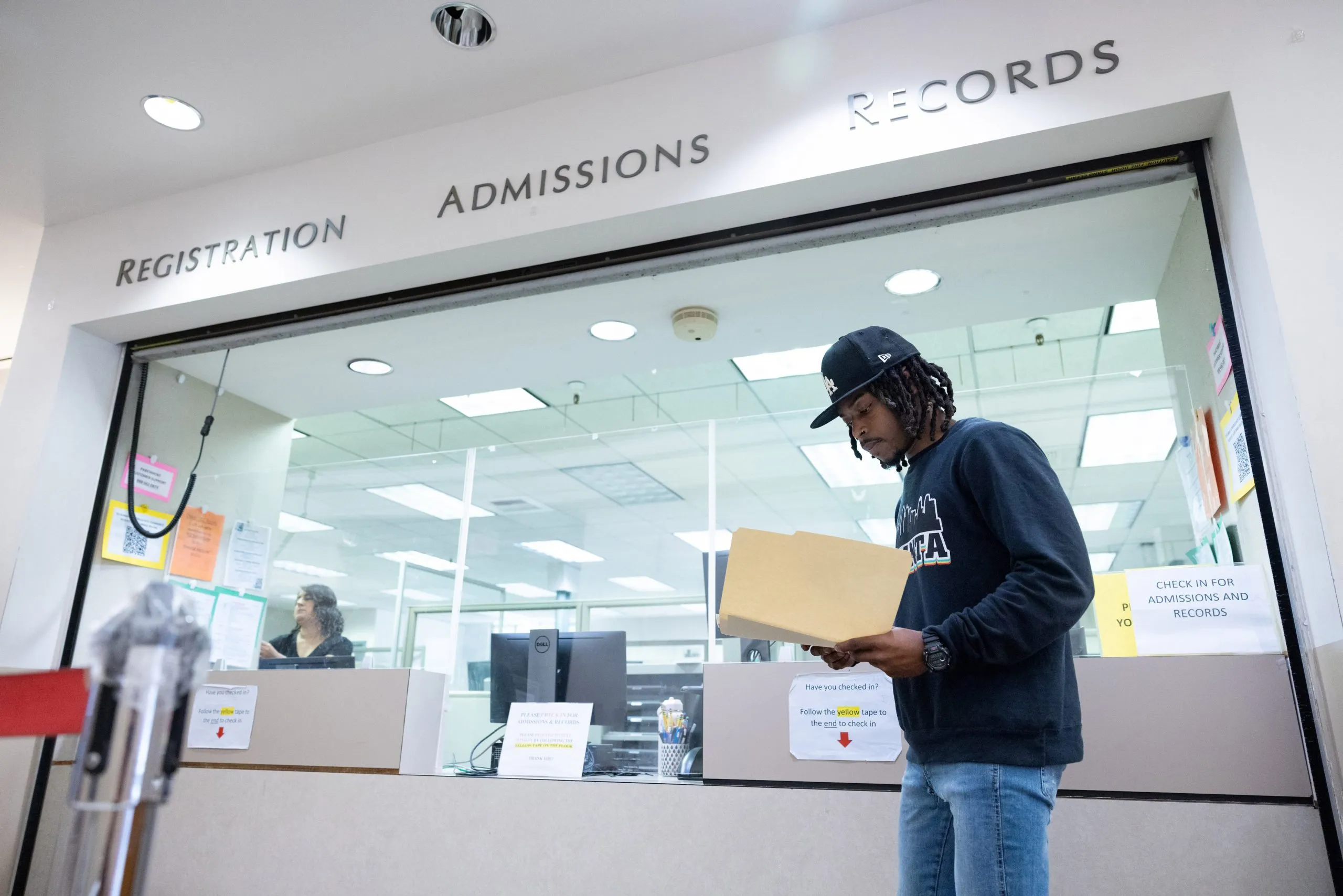
    John Brown University is one of almost 2,200 colleges and universities nationwide now scrambling to comply by March 18 with the new federal reporting requirement, formally known as the Admissions and Consumer Transparency Supplement, or ACTS. By all accounts, it’s a ton of work, and at small institutions, the task falls largely on a single administrator or even the registrar. Failure to submit the data can bring steep fines and, ultimately, the loss of access to federal aid for students.

    After the Supreme Court’s 2023 decision banning affirmative action in college admissions, the Trump administration suspected that colleges might covertly continue to give racial preferences. To police compliance, the White House directed the Department of Education to collect detailed admissions data from colleges nationwide.

    The data collection was unusual not only in its scope, but also in its speed. Federal education data collections typically take years to design, with multiple rounds of analysis, technical review panels, and revisions. This one moved from announcement to launch in a matter of months.

    A rush job

    One tiny indication that this was a rush job is in the Federal Register notice. Both enforce and admissions are misspelled in a proposal that’s all about admissions enforcement. Those words are spelled “admssions” and “enforece.” 

    A December filing with the Office of Management and Budget incorrectly lists the number of institutions that are subject to the new data collection. It is nearly 2,200, not 1,660, according to the Association for Institutional Research, which is advising colleges on how to properly report the data. Community colleges are exempt, but four-year institutions with selective admissions or those that give out their own financial aid must comply. Graduate programs are included as well. That adds up to about 2,200 institutions. 

    Related: Inaccurate, impossible: Experts knock new Trump plan to collect college admissions data

    In another filing with the Office of Management and Budget, the administration disclosed that none of the five remaining career Education Department officials with statistical experience had reviewed the proposal, including Matt Soldner, the acting commissioner of the National Center for Education Statistics. Most of the department’s statistical staff were fired earlier this year as a first step to eliminating the Education Department, one of Trump’s campaign promises. RTI International, the federal contractor in North Carolina that already manages other higher education data collections for the Education Department, is also handling the day-to-day work of this new college admissions collection. 

    During two public comment periods, colleges and higher-education trade groups raised concerns about data quality and missing records, but there is little evidence those concerns substantially altered the final design. One change expanded the retrospective data requirement from five to six years so that at least one cohort of students would have a measurable six-year graduation rate. A second relieved colleges of the burden of making hundreds of complex statistical calculations themselves, instead instructing them to upload raw student data to an “aggregator tool” that would do all the math for them. 

    The Trump administration’s goal is to generate comparisons across race and sex categories, with large gaps potentially triggering further scrutiny.

    Missing data

    The results are unlikely to be reliable, experts told me, given how much of the underlying data is missing or incomplete. In a public comment letter, Melanie Gottlieb, executive director of the American Association of Collegiate Registrars and Admissions Officers, warned that entire years of applicant data may not exist at many institutions. Some states advise colleges to delete records for applicants who never enrolled after a year. “If institutions are remaining compliant with their state policies, they will not have five years of data,” Gottlieb wrote.

    The organization’s own guidance recommends that four-year colleges retain admissions records for just one year after an application cycle. One reason is privacy. Applicant files contain sensitive personal information, and purging unneeded records reduces the risk of exposing this data in breaches.

    In other cases, especially at smaller institutions, admissions offices may offload applicant data simply to make room for new student records. Duncan said John Brown University has all seven years of required data, but a switch to a new computer system in 2019 has made it difficult to retrieve the first year.

    Even when historical records are available, key details may be missing or incompatible with federal requirements, said Christine Keller, executive director of the Association for Institutional Research, which previously received a federal contract to train college administrators on accurate data collection until DOGE eliminated it. (The organization now receives some private funds for a reduced amount of training.) 

    Related: Chaos and confusion as the statistics arm of the Education Department is reduced to a skeletal staff of 3

    Standardized test scores are unavailable for many students admitted under test-optional policies. The department is asking colleges to report an unweighted grade-point average on a four-point scale, even though many applicants submit only weighted GPAs on a five-point scale. In those cases, and there may be many of them, colleges are instructed to report the GPA as “unknown.”

    Some students decline to report their race. Many holes are expected for family income. Colleges generally have income data only for students who completed federal financial-aid forms, which many applicants never file. 

    Ellen Keast, a spokeswoman for the Education Department, said in an email, “Schools are not expected to provide data they don’t have.” She added, “We know that some schools may have missing data for some data elements. We’ll review the extent of missing data before doing further calculations or analyses.”

    Male or female

    Even the category of sex poses problems. The Education Department’s spreadsheet allows only two options: male or female. Colleges, however, may collect sex or gender information using additional categories, such as nonbinary. 

    “That data is going to be, in my estimation, pretty worthless when it comes to really showing the different experiences of men and women,” Keller said. She is urging the department to add a “missing” option to avoid misleading results. “I think some people in the department may be misunderstanding that what’s needed is a missing-data option, not another sex category.”

    The new “aggregator tool” itself is another source of anxiety. Designed to spare colleges from calculating quintile buckets for grades and test scores by race and sex, it can feel like a black box. Colleges are supposed to fill rows and rows of detailed student data into spreadsheets and then upload the spreadsheets into the tool. The tool generates pooled summary statistics, such as the number of Black female applicants and admitted students who score in the top 20 percent at the college. Only the aggregated data will be reported to the federal government.

    At John Brown University, Duncan worries about what those summaries might imply. Her institution is predominantly white and has never practiced affirmative action. But if high school grades or test scores differ by race — as they often do nationwide — the aggregated results could suggest bias where none was intended.

    “That’s a concern,” Duncan said. “I’m hopeful that looking across multiple years of data, it won’t show that. You could have an anomaly in one year.”

    The problem is that disparities are not anomalies. Standardized test scores and academic records routinely vary by race and sex, making it difficult for almost any institution to avoid showing gaps.

    A catch-22 for colleges

    The stakes are high. In an emailed response to my questions, the Education Department pointed to Trump’s Aug. 7 memorandum, which directs the agency to take “remedial action” if colleges fail to submit the data on time or submit incomplete or inaccurate information.

    Under federal law, each violation of these education data-reporting requirements can carry a fine of up to $71,545. Repeated noncompliance can ultimately lead to the loss of access to federal student aid, meaning students could no longer use Pell Grants or federal loans to pay tuition.

    That leaves colleges in a bind. Failing to comply is costly. Complying, meanwhile, could produce flawed data that suggests bias and invites further scrutiny.

    The order itself contradicts another administration goal. President Trump campaigned on reducing federal red tape and bureaucratic burden. Yet ACTS represents a significant expansion of paperwork for colleges. The Office of Management and Budget estimates that each institution will spend roughly 200 hours completing the survey this year — a figure that higher-education officials say may be an understatement.

    Duncan is hoping she can finish the reporting in less than 200 hours, if there are no setbacks when she uploads the data. “If I get errors, it could take double the time,” she said.

    For now, she is still gathering and cleaning old student records and waiting to see the results… all before the March 18 deadline.

    Contact staff writer Jill Barshay at 212-678-3595, jillbarshay.35 on Signal, or [email protected].

    This story about college admissions data was produced by The Hechinger Report, a nonprofit, independent news organization focused on inequality and innovation in education. Sign up for Proof Points and other Hechinger newsletters.

    This <a target=”_blank” href=”https://hechingerreport.org/proof-points-admissions-data-collection-strains-colleges/”>article</a> first appeared on <a target=”_blank” href=”https://hechingerreport.org”>The Hechinger Report</a> and is republished here under a <a target=”_blank” href=”https://creativecommons.org/licenses/by-nc-nd/4.0/”>Creative Commons Attribution-NonCommercial-NoDerivatives 4.0 International License</a>.<img src=”https://i0.wp.com/hechingerreport.org/wp-content/uploads/2018/06/cropped-favicon.jpg?fit=150%2C150&amp;ssl=1″ style=”width:1em;height:1em;margin-left:10px;”>

    <img id=”republication-tracker-tool-source” src=”https://hechingerreport.org/?republication-pixel=true&post=114400&amp;ga4=G-03KPHXDF3H” style=”width:1px;height:1px;”><script> PARSELY = { autotrack: false, onload: function() { PARSELY.beacon.trackPageView({ url: “https://hechingerreport.org/proof-points-admissions-data-collection-strains-colleges/”, urlref: window.location.href }); } } </script> <script id=”parsely-cfg” src=”//cdn.parsely.com/keys/hechingerreport.org/p.js”></script>

    Source link

  • Week in review: Federal lawmakers reject drastic cuts to scientific research

    Week in review: Federal lawmakers reject drastic cuts to scientific research

    This audio is auto-generated. Please let us know if you have feedback.

    Most clicked story of the week: 

    Senate lawmakers have rejected the Trump administration’s proposal to vastly reduce federal funding for scientific research. Instead the Senate advanced proposals last week that would provide $188.3 billion for scientific research — 21.3% more than the Trump administration proposed. 

    The Senate passed those bipartisan measures Thursday in a 82-15 vote, sending them to President Donald Trump’s desk. The House passed them in a 397-28 vote earlier in the month

    Number of the week: 5.9% 

    The decline in graduate international students enrolled in U.S. colleges in fall 2025 compared to the year before, according to final figures from the National Student Clearinghouse Research Center. However, enrollment ticked up 1% overall, thanks to a 1.2% increase in undergraduate students. 

    The latest on mergers, closures and financial distress: 

    • The California College of the Arts, a 120-year-old institution, announced that it will close at the end of the 2026-27 academic year and hand over its campus to Nashville-based Vanderbilt University. Despite a major fundraising push, CCA President David Howse said the arts college’s “tuition-driven business model is not sustainable.”

    • Oregon’s Higher Education Coordinating Commission recently passed a report that in part advises all of Oregon’s public colleges to collaborate and craft plans for “targeted institutional integration.”. Those plans could range from two colleges sharing programs to fully merging, according to the report. 

    • Hampshire College, a private nonprofit in Massachusetts that narrowly avoided closing five years ago, is once again in potential financial trouble. According to its latest audit, the institution could shutter if it can’t refinance its debt. 

    ‘A year of catastrophe’ for higher ed: 

    PEN America, a free expression group, found that 21 bills across 15 states were enacted in 2025 that censor higher education. “For higher education in America, 2025 was a year of catastrophe,” researchers wrote in a report summarizing the findings. 

    The researchers found the laws were a “result of a relentless, years-old campaign to exert ideological control over college and university campuses.” Although the conservative-led push began before President Donald Trump’s second term, researchers noted the campaign was “greatly exacerbated” by his administration

    Now, over 50% of college students are studying in states with at least one law on the books that censors higher education. “This is a staggering figure that should give us all pause,” they wrote.

    Source link

  • Teaching visual literacy as a core reading strategy in the age of AI

    Teaching visual literacy as a core reading strategy in the age of AI

    Key points:

    Many years ago, around 2010, I attended a professional development program in Houston called Literacy Through Photography, at a time when I was searching for practical ways to strengthen comprehension, discussion, and reading fluency, particularly for students who found traditional print-based tasks challenging. As part of the program, artists visited my classroom and shared their work with students. Much of that work was abstract. There were no obvious answers and no single “correct” interpretation.

    Instead, students were invited to look closely, talk together, and explain what they noticed.

    What struck me was how quickly students, including those who struggled with traditional reading tasks, began to engage. They learned to slow down, describe what they saw, make inferences, and justify their thinking. They weren’t just looking at images; they were reading them. And in doing so, they were rehearsing many of the same strategies we expect when reading written texts.

    At the time, this felt innovative. But it also felt deeply intuitive.

    Fast forward to today.

    Students are surrounded by images and videos, from photographs and diagrams to memes, screenshots, and, increasingly, AI-generated visuals. These images appear everywhere: in learning materials, on social media, and inside the tools students use daily. Many look polished, realistic, and authoritative.

    At the same time, AI has made faking easier than ever.

    As educators and school leaders, we now face urgent questions around misinformation, academic integrity, and critical thinking. The issue is no longer just whether students can use AI tools, but whether they can interpret, evaluate, and question what they see.

    This is where visual literacy becomes a frontline defence.

    Teaching students to read images critically, to see them as constructed texts rather than neutral data, strengthens the same skills we rely on for strong reading comprehension: inference, evidence-based reasoning, and metacognitive awareness.

    From photography to AI: A conversation grounded in practice

    Recently, I found myself returning to those early classroom experiences through ongoing professional dialogue with a former college lecturer and professional photographer, as we explored what it really means to read images in the age of AI.

    A conversation that grew out of practice

    Nesreen: When I shared the draft with you, you immediately focused on the language, whether I was treating images as data or as signs. Is this important?

    Photographer: Yes, because signs belong to reading. Data is output. Signs are meaning. When we talk about reading media texts, we’re talking about how meaning is constructed, not just what information appears.

    Nesreen: That distinction feels crucial right now. Students are surrounded by images and videos, but they’re rarely taught to read them with the same care as written texts.

    Photographer: Exactly. Once students understand that photographs and AI images are made up of signs, color, framing, scale, and viewpoint, they stop treating images as neutral or factual.

    Nesreen: You also asked whether the lesson would lean more towards evaluative assessment or summarizing. That made me realize the reflection mattered just as much as the image itself.

    Photographer: Reflection is key. When students explain why a composition works, or what they would change next time, they’re already engaging in higher-level reading skills.

    Nesreen: And whether students are analyzing a photograph, generating an AI image, or reading a paragraph, they’re practicing the same habits: slowing down, noticing, justifying, and revising their thinking.

    Photographer: And once they see that connection, reading becomes less about the right answer and more about understanding how meaning is made.

    Reading images is reading

    One common misconception is that visual literacy sits outside “real” literacy. In practice, the opposite is true.

    When students read images carefully, they:

    • identify what matters most
    • follow structure and sequence
    • infer meaning from clues
    • justify interpretations with evidence
    • revise first impressions

    These are the habits of skilled readers.

    For emerging readers, multilingual learners, and students who struggle with print, images lower the barrier to participation, without lowering the cognitive demand. Thinking comes first. Language follows.

    From composition to comprehension: Mapping image reading to reading strategies

    Photography offers a practical way to name what students are already doing intuitively. When teachers explicitly teach compositional elements, familiar reading strategies become visible and transferable.

    What students notice in an image What they are doing cognitively Reading strategy practiced
    Where the eye goes first Deciding importance Identifying main ideas
    How the eye moves Tracking structure Understanding sequence
    What is included or excluded Considering intention Analyzing author’s choices
    Foreground and background Sorting information Main vs supporting details
    Light and shadow Interpreting mood Making inferences
    Symbols and colour Reading beyond the literal Figurative language
    Scale and angle Judging power Perspective and viewpoint
    Repetition or pattern Spotting themes Theme identification
    Contextual clues Using surrounding detail Context clues
    Ambiguity Holding multiple meanings Critical reading
    Evidence from the image Justifying interpretation Evidence-based responses

    Once students recognise these moves, teachers can say explicitly:

    “You’re doing the same thing you do when you read a paragraph.”

    That moment of transfer is powerful.

    Making AI image generation teachable (and safe)

    In my classroom work pack, students use Perchance AI to generate images. I chose this tool deliberately: It is accessible, age-appropriate, and allows students to iterate, refining prompts based on compositional choices rather than chasing novelty.

    Students don’t just generate an image once. They plan, revise, and evaluate.

    This shifts AI use away from shortcut behavior and toward intentional design and reflection, supporting academic integrity rather than undermining it.

    The progression of a prompt: From surface to depth (WAGOLL)

    One of the most effective elements of the work pack is a WAGOLL (What A Good One Looks Like) progression, which shows students how thinking improves with precision.

    • Simple: A photorealistic image of a dog sitting in a park.
    • Secure: A photorealistic image of a dog positioned using the rule of thirds, warm colour palette, soft natural lighting, blurred background.
    • Greater Depth: A photorealistic image of a dog positioned using the rule of thirds, framed by tree branches, low-angle view, strong contrast, sharp focus on the subject, blurred background.

    Students can see and explain how photographic language turns an image from output into meaningful signs. That explanation is where literacy lives.

    When classroom talk begins to change

    Over time, classroom conversations shift.

    Instead of “I like it” or “It looks real,” students begin to say:

    • “The creator wants us to notice…”
    • “This detail suggests…”
    • “At first I thought…, but now I think…”

    These are reading sentences.

    Because images feel accessible, more students participate. The classroom becomes slower, quieter, and more thoughtful–exactly the conditions we want for deep comprehension.

    Visual literacy as a bridge, not an add-on

    Visual literacy is not an extra subject competing for time. It is a bridge, especially in the age of AI.

    By teaching students how to read images, schools strengthen:

    • reading comprehension
    • inference and evaluation
    • evidence-based reasoning
    • metacognitive awarenes

    Most importantly, students learn that literacy is not about rushing to answers, but about noticing, questioning, and constructing meaning.

    In a world saturated with AI-generated images, teaching students how to read visually is no longer optional.

    It is literacy.

    Author’s note: This article grew out of classroom practice and professional dialogue with a former college lecturer and professional photographer. Their contribution informed the discussion of visual composition, semiotics, and reflective image-reading, without any involvement in publication or authorship.

    Source link