From the mid‑19th century to today, U.S. interventions in Latin America and the Caribbean have consistently combined military force, political influence, and economic pressure. Across this long arc, millions of lives have been shaped—often shattered—by policies that prioritize strategic advantage over human flourishing. Today’s geopolitical tensions with Venezuela are the latest flashpoint in a historical pattern that rewards elites while exacting profound human costs.
Note on Timing: This article is intentionally posted on Christmas Day 2025, a day traditionally associated with peace, goodwill, and reflection, to underscore the contrast between those ideals and the ongoing human toll of U.S. militarism and intervention abroad. The symbolic timing is a reminder that while many celebrate, others suffer the consequences of policies driven by power, profit, and geopolitics.
A Critical Warning for Students and Young People
As Higher Education Inquirer has repeatedly argued, the United States’ military footprint—its wars, recruitment programs, and entanglements with higher education—has deep consequences not just abroad but at home. ROTC programs and military enlistment are often marketed as pathways to education and economic stability, but they also funnel young people into systems with long‑term obligations, moral hazards, and psychological risk. Prospective enlistees and their families should think twice before committing to military pathways that may bind them to morally questionable conflicts and institutional control.
Moreover, U.S. higher education has become deeply entwined with kleptocracy, militarism, and colonialism, supporting war economies and benefiting from federal research contracts with defense and intelligence partners that obscure the real human costs of empire. These warnings are especially salient in the context of Venezuela and similar interventions, where human toll and geopolitical stakes demand deeper scrutiny.
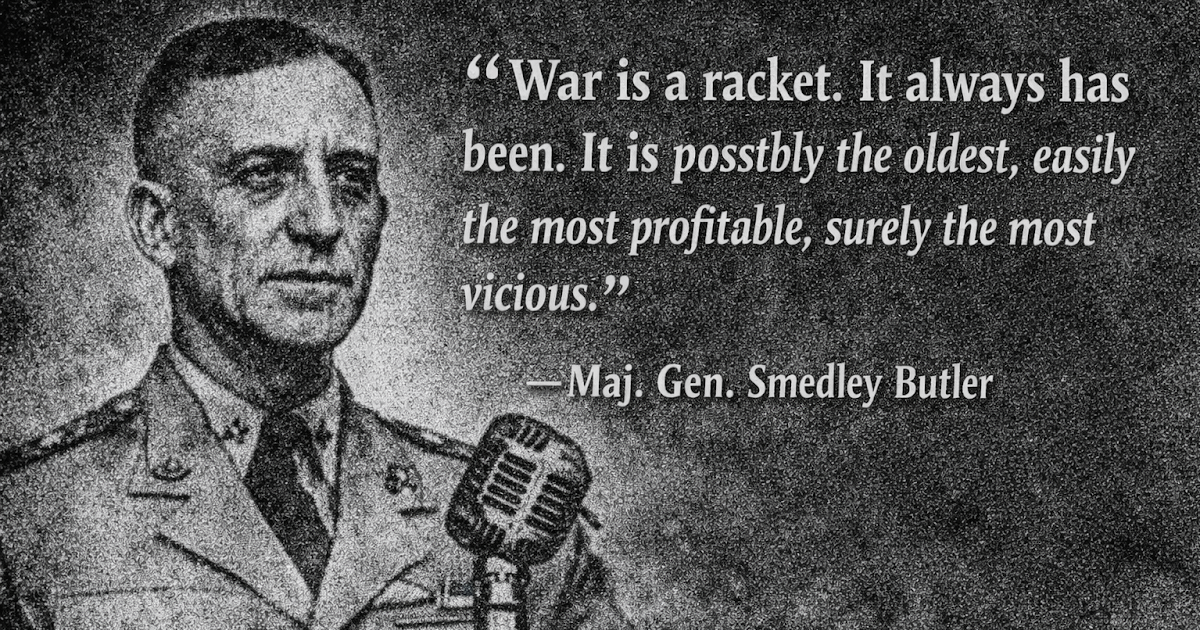
Smedley Butler: War Is a Racket and the Business Plot
Major General Smedley D. Butler, among the most decorated U.S. Marines, became one of the U.S. military’s most outspoken critics. In his 1935 War Is a Racket, Butler rejected romantic notions of military glory and exposed the economic motives behind many interventions:
“War is a racket. It always has been. It is possibly the oldest, easily the most profitable, surely the most vicious.”
“I spent 33 years and four months in active military service… being a high‑class muscle man for Big Business, for Wall Street and for the bankers. In short, I was a racketeer for capitalism.”
“Only a small inside group knows what it is about. It is conducted for the benefit of the very few at the expense of the masses.”
Butler’s warnings were not abstract. In 1933, he was approached to lead a coup against President Franklin D. Roosevelt, known as the Business Plot, which he publicly exposed. His testimony before Congress revealed how elite interests sought to use military power to overthrow democratic government, an episode that underscores his critique of war as a tool for entrenched interests at the expense of ordinary people.
Historical Interventions and Their Toll
Below is a timeline of major U.S. interventions in the Americas, with estimated deaths, showing the human cost of policies that often served strategic or economic interests over humanitarian ones:
Period
Location
Event / Nature of Intervention
Estimated Deaths
1846–1848
Mexico
Mexican-American War: Territorial conquest
~25,000 Mexicans
1898
Cuba/P.R.
Spanish-American War: U.S. seized P.R.; Cuba protectorate
~15,000–60,000 (90% disease)
1914
Mexico
Occupation of Veracruz: U.S. port seizure
~300 Mexicans
1915–1934
Haiti
Military Occupation: Suppression of rebellions
~3,000–15,000
1916–1924
Dominican Rep.
Marine Occupation: Control of customs/finance
~4,000
1954
Guatemala
Op. PBSuccess: CIA coup against Árbenz; led to civil war
150,000–250,000*
1965
Dominican Rep.
Op. Power Pack: U.S. intervention during civil war
Naval Blockade: Active maritime strikes and standoff
100+ (to date)
*Estimates include civilian casualties and deaths indirectly caused by U.S.-supported interventions.
Venezuela and the Global Politics of Intervention
Venezuela’s 2025 crisis is the latest in a long history of U.S. pressure in the hemisphere. A naval blockade—accompanied by maritime strikes and political isolation—has already produced more than 100 confirmed deaths. Historically, interventions like this have often prioritized U.S. strategic or economic interests over local welfare.
The situation is further complicated by global geopolitics. Former President Donald Trump, who recently pardoned key figures involved in controversial interventions, including Iran‑Contra actors, also maintains strategic ties with China and Russia, highlighting how interventions are entangled with global power plays that affect universities, recruitment pipelines, and domestic politics alike.
A Call to Rethink Intervention and Recruitment
Smedley Butler’s critique remains urgent: to “smash the racket,” profit must be removed from war, military force should be strictly defensive, and decisions about war must rest with those who bear its consequences. From Mexico to Venezuela—and including covert operations like Iran‑Contra—the historical record shows how interventions serve a narrow elite while imposing massive human costs.
HEI’s warnings underscore that higher education, ROTC programs, and military recruitment pipelines are not neutral pathways but deeply embedded parts of systems that reproduce extraction, militarism, and inequality. Students, educators, and families must critically evaluate the incentives and promises of military pathways and demand institutions that serve learning, opportunity, and justice rather than empire.
Sources
Butler, Smedley D. War Is a Racket. Round Table Press, 1935.
U.S. Congressional Record and Butler testimony on the Business Plot, 1934.
Kinzer, Stephen. Overthrow: America’s Century of Regime Change from Hawaii to Iraq.
Scott, Peter Dale. Cocaine Politics: Drugs, Armies, and the CIA in Central America.
Reporting on Trump pardons, Iran‑Contra participants, and global alliances (2020–2025).
Higher Education Inquirer, “Kleptocracy, Militarism, Colonialism: A Counterrecruiting Call for Students and Families,” December 7, 2025. (link)
Higher Education Inquirer, “The Hidden Costs of ROTC — and the Military Path,” November 28, 2025. (link)
Historical records on U.S. interventions: Mexican‑American War, Spanish‑American War, Guatemala (1954), Chile (1973), Argentina (1976–1983), El Salvador, Nicaragua, Panama, Venezuela (2025).
eSchool News is counting down the 10 most-read stories of 2025. Story #5 focuses on a math platform that offers AI coaching for maximum impact.
Math is a fundamental part of K-12 education, but students often face significant challenges in mastering increasingly challenging math concepts.
Many students suffer from math anxiety, which can lead to a lack of confidence and motivation. Gaps in foundational knowledge, especially in early grades and exacerbated by continued pandemic-related learning loss, can make advanced topics more difficult to grasp later on. Some students may feel disengaged if the curriculum does not connect to their interests or learning styles.
Teachers, on the other hand, face challenges in addressing diverse student needs within a single classroom. Differentiated instruction is essential, but time constraints, large class sizes, and varying skill levels make personalized learning difficult.
To overcome these challenges, schools must emphasize early intervention, interactive teaching strategies, and the use of engaging digital tools.
Edia aligns with Illustrative Mathematics’ IM Math, which New York City Public Schools adopted in 2024 as part of its “NYC Solves” initiative–a program aiming to help students develop the problem-solving, critical thinking, and math skills necessary for lifetime success. Because Edia has the same lessons and activities built into its system, learning concepts are reinforced for students.
FDR started using Edia in September of 2024, first as a teacher-facing tool until all data protection measures were in place, and now as an instructional tool for students in the classroom and at home.
The math platform’s AI coaching helps motivate students to persevere through tough-to-learn topics, particularly when they’re completing work at home.
“I was looking for something to have a back-and-forth for students, so that when they need help, they’d be able to ask for it, at any time of the day,” said Salvatore Catalano, assistant principal of math and technology at FDR.
On Edia’s platform, an AI coach reads students’ work and gives them personalized feedback based on their mistakes so they can think about their answers, try again, and master concepts.
Some FDR classes use Edia several days a week for specific math supports, while others use it for homework assignments. As students work through assignments on the platform, they must answer all questions in a given problem set correctly before proceeding.
Jeff Carney, a math teacher at FDR, primarily uses the Edia platform for homework assignments, and said it helps students with academic discovery.
“With the shift toward more constructivist modes of teaching, we can build really strong conceptual knowledge, but students need time to build out procedural fluency,” he said. “That’s hard to do in one class session, and hard to do when students are on their own. Edia supports the constructivist model of discovery, which at times can be slower, but leads to deeper conceptual understanding–it lets us have that class time, and students can build up procedural fluency at home with Edia.”
On Edia, teachers can see every question a student asks the AI coach as they try to complete a problem set.
“It’s a nice interface–I can see if a student made multiple attempts on a problem and finally got the correct answer, but I also can see all the different questions they’re asking,” Carney said. “That gives me a better understanding of what they’re thinking as they try to solve the problem. It’s hugely helpful to see how they’re processing the information piece by piece and where their misconceptions might be.”
As students ask questions, they also build independent research skills as they learn to identify where they struggle and, in turn, ask the AI coach the right questions to target areas where they need to improve.
“We can’t have 30 kids saying, ‘I don’t get it’–there has to be a self-sufficient aspect to this, and I believe students can figure out what they’re trying to do,” Carney said.
“I think having this platform as our main homework tool has allowed students to build up that self-efficacy more, which has been great–that’s been a huge help in enabling the constructivist model and building up those self-efficacy skills students need,” he added.
Because FDR has a large ELL population, the platform’s language translation feature is particularly helpful.
“We set up students with an Illustrative Math-aligned activity on Edia and let them engage with that AI coaching tool,” Carney said. “Kids who have just arrived or who are just learning their first English words can use their home languages, and that’s helpful.”
Edia’s platform also serves as a self-reflection tool of sorts for students.
“If you’re able to keep track of the questions you’re asking, you know for yourself where you need improvement. You only learn when you’re asking the good questions,” Catalano noted.
The results? Sixty-five percent of students using Edia improved their scores on the state’s Regents exam in algebra, with some demonstrating as much as a 40-point increase, Catalano said, noting that while increased scores don’t necessarily mean students earned passing grades, they do demonstrate growth.
“Of the students in a class using it regularly with fidelity, about 80 percent improved,” he said.
Laura Ascione is the Editorial Director at eSchool Media. She is a graduate of the University of Maryland’s prestigious Philip Merrill College of Journalism.
Undaunted by the murder of Turning Point USA founder Charlie Kirk, students are fighting to keep the light shining on truth and freedom on college campuses all across the country.
In the month that followed Kirk’s death, TPUSA reported receiving more than 62,000 requests to start or join a chapter.
Since then, some students have faced death threats, and others battles with administrators and student governments. But the September tragedy stirred up courage in many young adults – and with it came new hope for the future.
The College Fix has covered many of these efforts. Here are a few of the highlights:
Welcoming debate
This essay by Benjamin Ellis, a student at University of North Carolina Asheville and a Democrat, captured wide-spread attention after Ellis described his surprise at finding the campus TPUSA club was more welcoming of him than the College Democrats.
Battling death threats
TPUSA chapter president Jacob York, a sophomore at Olivet Nazarene University, received graphic death threats linked to his attempts to get his chapter officially recognized. York told The College Fix that those who stand for truth should expect persecution, and he is not backing down.
If at first you don’t succeed: TPUSA students at Fort Lewis College in Colorado refused to take “no” for an answer when the student government rejected their request for official recognition. After the situation garnered attention online, including from state lawmakers, the student government quickly reversed course and granted the chapter’s request.
Finding strength in community
Madailein McDonough, president of University of Mary Washington’s newly formed TPUSA chapter, told The College Fix that her ultimate goal is to be “confident in our beliefs, respectful in our approach, and fearless in defending free speech.”
“When you join TPUSA, you’re not standing alone; you’re joining a network of students nationwide who have your back. Our chapter prioritizes safety, respect, and support, and we believe that strength comes from standing together peacefully and proudly,” she said.
Denied but not defeated
Meanwhile, students at private institutions like Seton Hall, Vanguard, and Point Loma Nazarene universities have faced obstacles from administrators and student government leaders. Their requests for official recognition have been denied, but TPUSA students at those schools continue to make their voices heard.
While TPUSA was the name that dominated, other students and conservative organizations also served as beacons of light on their campuses, dedicating their efforts to liberty, faith, family, and our Constitutional rights.
Consider the thriving Catholic campus ministry at Arizona State University and the revival spreading through a Bible study that University of Pittsburgh athletes started earlier this year.
There are the young pro-life women who started a scholarship for parenting moms at Queens College, and the Massachusetts college student who has given out 15,000 pro-life bumper stickers to spread the word about unborn babies’ human rights.
Others fought administrators, including a Young Americans for Freedom chapter that succeeded in lobbying the University of Alabama to grant a waiver to omit gender ideology language from the club’s organizational constitution.
And there are the bold, lone voices of the de-transitioners – students who share their heartbreaking personal stories about transgenderism in an effort to help their peers avoid the same painful mistakes.
These young adults are exhibiting strength in difficult times. They are refusing to compromise or deny their beliefs even in the face of a very real danger.
And they give us another reason to hope this season.
As the leaves begin to turn across Central Ohio and your students head back to campus in the fall each year, we often focus on the excitement of the new semester — the football games, the homecoming dance, and the bright futures ahead. But as financial planners, we also know that life can change in an instant.
A few years ago, I witnessed a tragedy that hit close to home. A local family was suddenly upended when a father — the sole breadwinner of the household — passed away unexpectedly during his son’s sophomore year of college.
The family was left reeling, navigating a dual crisis: the emotional weight of their loss and the financial reality of how to keep their son in school.
The Silent Hero: A Proactive FAFSA filing
While the family’s previous income level had originally disqualified them from receiving need-based aid, they had made one critical, proactive decision: they filed the FAFSA earlier that year.
Because that document was already on file, the university didn’t have to start from scratch. They had a baseline — a “before” and “after” snapshot of the family’s reality. This allowed the school to move swiftly, recalculating the student’s eligibility in real-time.
The “Angel” in the Financial Aid Office – A Lifeline in Record Time
When the tragedy struck, a compassionate financial aid administrator stepped in. Because the FAFSA was already on file, the university had an immediate baseline. They collected additional information, of course, but they didn’t have to wait for new tax returns or start from scratch.
Within just a few weeks, the university awarded the student an additional$8,000 per semester. That grant allowed the son to stay in school, providing a sense of stability when everything else felt like it was falling apart. It was the difference between the student dropping out or taking on a mountain of debt.
What is a “Special Circumstance Appeal”?
In the world of higher education, the story above is a perfect example of what is known as a Special Circumstance Appeal (sometimes called “Professional Judgment”).
Many families believe that once a financial aid package is set, it’s written in stone. In reality, financial aid offices have the authority to adjust your aid if your current financial reality no longer matches the “prior-prior” tax year data used on the FAFSA.
New Federal Requirements: The Law is on Your Side
Under the FAFSA Simplification Act (fully implemented for the 2024-2025 and 2025-2026 cycles), the federal government now mandates that every college have a process for “Professional Judgment.”
Colleges are no longer allowed to have a “no-appeal” policy. They are required by law to:
Publicly disclose that students can request an adjustment for special circumstances.
Review every request on a case-by-case basis.
Provide a clear process for families to submit their documentation.
As a reminder, ALWAYS file the FAFSA. Even if you think you make “too much” for aid, filing creates a financial “snapshot” that serves as an insurance policy of sorts if your circumstances change mid-year. And also, keep your records organized. Having easy access to tax returns and financial aid forms allows you (or your advocate) to act swiftly during a crisis.
How the Process Works
If your family experiences a significant financial shift, you don’t need to “wait until next year.” As the story above shows, you should reach out to the college’s financial aid office to request a review as soon as possible. You will typically be asked to:
Write an Appeal Letter: Factual and concise, explaining the change in circumstances. Most schools have a form that you will be required to fill out, or a section of the school’s student portal.
Provide Documentation: Such as termination letters, medical bills, or death certificates.
Complete a Verification: The school will verify your current income to determine a new, more accurate “Student Aid Index.”
What Qualifies? (It’s more than you might think)
While the loss of a parent is a clear catalyst for an appeal, schools can also reconsider your aid for several other reasons:
Job Loss or Significant Income Reduction: A layoff, a forced career change, or even a major reduction in overtime pay.
Unreimbursed Medical Expenses: High out-of-pocket costs (usually exceeding 7.5–11% of your income) that weren’t covered by insurance.
Divorce or Separation: When a household splits after the FAFSA has already been filed.
Natural Disasters: Costs associated with repairing a home or business after a flood, fire, or storm.
One-Time Income Spikes: If a one-time IRA distribution or inheritance artificially inflated your income on your tax return, you can ask for it to be excluded.
Our Role as Your Partners
If there is one thing we know for sure, it is that life is going to throw us curveballs. No one can control the future, but as financial planners, we help prepare for the worst and hope for the best. At Capstone, we don’t just manage portfolios and push paper; we help you navigate these complex life transitions.
If your family is facing a change in circumstances, book a Complimentary College Consultation with me. I can help you gather the necessary documentation and coordinate with financial aid offices to ensure your student’s education stays on track.
Artificial intelligence has rapidly evolved from experimental pilots into practical tools in higher education. Colleges and universities are now adopting AI agents, intelligent, autonomous systems designed to perform tasks, learn continuously from data, and act proactively to support students and staff throughout the entire enrollment and student journey.
Unlike traditional chatbots that offer scripted responses, AI agents for colleges can analyze behavior, adapt to changing inputs, and take meaningful actions based on goals or context. They can handle tasks like personalized communication, lead nurturing, application guidance, and even predicting student attrition, all with minimal human intervention.
For higher ed leaders, enrollment managers, and marketing teams, the question is no longer if AI will play a role in education; it’s how to use it strategically, ethically, and effectively. The potential is significant: smarter outreach, streamlined operations, and stronger support for students.
In this article, we’ll unpack what AI agents are, how they differ from simpler tools, how institutions are using them today, and what practical steps schools can take to get started or scale up AI-powered initiatives.
Are you prepared for the next evolution of enrollment and student support?
What Is an AI Agent?
An AI agent is a dynamic, intelligent system designed to perform tasks autonomously on behalf of users or institutions. Unlike static tools or rule-based chatbots, AI agents can analyze data, interpret complex intent, and act independently in pursuit of defined goals. They are capable of:
Understanding and responding to user intent across multiple interactions
Taking proactive actions based on predefined goals, real-time context, or behavioral triggers
Continuously learning and improving from user inputs and outcomes
Integrating with core institutional platforms such as CRMs, student information systems (SIS), learning management systems (LMS), and communication tools
In a higher education context, AI agents are not simply answering questions; they’re helping institutions solve problems. These agents can assist with lead nurturing, application guidance, appointment scheduling, academic advising, and more. Their ultimate purpose is to support institutional goals such as improving enrollment conversion, enhancing student engagement, and reducing the manual workload on admissions, marketing, and student services teams.
Key Characteristics of AI Agents in Higher Education
AI agents for colleges are defined by several core capabilities that set them apart from traditional tools or scripted chatbots:
Autonomy: They operate independently, completing tasks or initiating interactions without requiring constant human oversight.
Context Awareness: AI agents can recognize a student’s position within the enrollment or academic lifecycle and adjust their responses accordingly.
Goal-Oriented Behavior: They are built with specific institutional outcomes in mind, such as increasing conversion rates, reducing summer melt, or improving retention.
Continuous Learning: These systems improve over time by analyzing data patterns and learning from past interactions.
Together, these characteristics enable AI agents to act as proactive, adaptive partners in student engagement, going well beyond static digital assistants to drive meaningful institutional impact.
AI Agent vs. Chatbot: What’s the Difference?
A common source of confusion in higher education is the distinction between traditional chatbots and AI agents. While the terms are sometimes used interchangeably, the capabilities and strategic impact of each are vastly different.
Traditional Chatbots
Chatbots are typically rule-based or scripted tools that respond to user prompts. They are reactive rather than proactive, meaning they wait for a user to initiate contact. Most chatbots are limited in scope: they may answer FAQs or provide links to resources, but they cannot understand context or evolve. Their utility is often confined to narrow use cases like answering admissions deadlines or sharing campus event information.
AI Agents
AI agents, by contrast, are intelligent, goal-driven systems that can operate autonomously across platforms. They are capable of interpreting complex intent, initiating actions, and retaining memory across sessions and channels. These agents integrate with CRMs, SIS, and learning platforms to deliver personalized experiences. More importantly, AI agents can adapt their strategies based on behavioral data and outcomes. For example, an AI agent might detect that an admitted student has not opened key onboarding emails and proactively reach out with a nudge or alternative format.
The Key Distinction
What makes an AI agent different from a chatbot?AI agents are autonomous, goal-driven systems that understand context, learn over time, and take proactive actions. Unlike chatbots, which respond to scripted prompts, AI agents can guide users through processes and initiate engagement across multiple platforms.
In essence, chatbots answer questions, but AI agents help move students through a process. They not only provide information but also drive outcomes like enrollment completion, financial aid submission, and course registration. As institutions seek to improve service quality and efficiency at scale, AI agents offer a more strategic, integrated approach than chatbots alone.
Why AI Agents Matter for Colleges Today
Higher education is undergoing a seismic shift. Institutions are under mounting pressure from multiple directions: growing competition for a shrinking pool of prospective students, fluctuating domestic enrollment in many regions, rising expectations for personalized and digital-first engagement, and increasingly limited internal resources. In this environment, colleges and universities need tools that enable them to do more with less without sacrificing student experience.
AI agents offer a powerful solution. These intelligent systems enable colleges to shift from reactive service models to proactive, anticipatory engagement across the student lifecycle. Whether guiding prospective applicants through the admissions process or supporting enrolled students with course selection and financial aid navigation, AI agents help scale operations while preserving a sense of personal touch.
Core Education AI Use Cases for Colleges
1. AI in Enrollment Management
One of the most transformative applications of AI agents is in enrollment management. Traditional outreach methods often rely on bulk communications and static timelines. AI agents, by contrast, enable real-time, tailored engagement based on where each student is in the funnel.
Key functions include:
Sending automated, personalized nudges to incomplete applicants
Identifying prospects who show signs of disengagement or drop-off
Providing 24/7 responses to common admissions questions
Supporting post-admit engagement and reducing summer melt
Rather than replacing admissions professionals, these agents act as digital extensions of the team, helping manage volume while maintaining quality interactions.
2. Intelligent Assistants in Higher Education Recruitment
On websites, landing pages, and student portals, intelligent AI assistants for higher ed help convert interest into action. These systems can dynamically guide users to the most relevant content or next steps based on browsing behavior, geography, or persona.
Use cases include:
Directing students to matching academic programs
Surfacing key dates and requirements based on applicant type
Offering localized content or multilingual support for international visitors
Capturing high-intent inquiries for CRM integration and follow-up
When embedded at strategic touchpoints, these tools improve the prospective student experience and boost lead conversion rates.
3. Student Services and Academic Support
Beyond recruitment, AI agents are increasingly being used to reduce administrative burden and expand access to essential student services. This is especially valuable for institutions serving diverse populations, including adult learners, international students, and part-time students who may need help outside of regular office hours.
Key areas of support:
Assisting with course registration logistics and policies
Answering financial aid questions and helping students navigate fees
Referring students to on-campus services based on need (e.g., mental health, tutoring, IT help)
Acting as a triage point for academic advising requests
By handling routine inquiries, AI agents free up staff to focus on more complex or sensitive cases.
4. Retention and Student Success
Student success teams often lack real-time visibility into which students are disengaging. AI agents can analyze signals such as missed logins, dropped classes, or overdue assignments to flag early risk indicators.
Once identified, agents can:
Trigger automated check-ins or reminders
Recommend helpful resources (e.g., peer tutoring)
Notify academic advisors or success coaches
Encourage re-engagement through timely, personalized outreach
These interventions help prevent attrition by reaching students before they fully disengage.
5. Marketing and Communications Automation
AI agents also bring efficiency to enrollment marketing operations. They can support:
Real-time content personalization on websites
Automated follow-up workflows based on behavior (e.g., abandoned form fill)
Cross-channel engagement across email, SMS, and chat
Handling campaign-related inquiries or call-to-action responses instantly
For marketing teams, this means campaigns can scale without losing relevance. AI ensures that prospective students receive the right message, at the right time, via the right channel, improving conversion rates and ROI.
In short, AI agents are not a future-facing concept. They’re a current strategic advantage. By embedding intelligence and automation into student engagement, colleges can improve outcomes, reduce strain on staff, and create experiences that meet the expectations of today’s digital-native learners.
How Are Colleges Using AI Agents Today?
Across Canada, the United States, and internationally, colleges and universities are already deploying AI agents to support critical areas like enrollment, student services, academic advising, and marketing. These are no longer just experimental tools or isolated pilot projects. Instead, many institutions are integrating AI agents into their core strategies, using them to improve responsiveness, personalize outreach, and ease the burden on staff.
From automating admissions follow-ups to guiding students through financial aid, real-world use cases are multiplying. The focus has shifted from “if” to “how best” to implement these tools.
(See the curated examples at the end of this article.)
Do AI Agents Replace College Staff?
This is a common concern, and the answer is no. AI agents are not designed to replace college staff, but to support them.
These intelligent tools handle routine, high-volume, and time-sensitive tasks that can overwhelm busy teams. They can respond instantly to frequently asked questions, guide users to resources, and even operate around the clock, especially useful during evenings, weekends, or high-traffic application periods.
By managing first-line support, AI agents free up staff to concentrate on what matters most: personalized advising, meaningful relationship-building, and strategic planning. They also surface real-time data and student behavior insights that staff can use to make more informed decisions.
Importantly, human expertise remains essential for nuanced conversations, equity-based support, and complex decision-making. Rather than replacing staff, AI agents extend their capacity, allowing institutions to offer more consistent, timely, and personalized service without adding headcount. When implemented thoughtfully, AI agents strengthen, not diminish, the human touch in education.
Ethical and Practical Considerations
As colleges adopt AI agents, ethical implementation is paramount. Institutions must ensure these tools align with institutional values and uphold trust.
Data Privacy and Security: AI agents must comply with relevant privacy laws such as PIPEDA or GDPR. Clear, transparent data usage policies help reassure users and safeguard institutional integrity.
Bias and Fairness: To prevent unintended bias, especially in areas like admissions or advising, institutions should conduct regular audits, use diverse training data, and maintain human oversight in high-stakes decisions.
Governance and Oversight: Successful AI initiatives require clear accountability. Define who owns the AI agent, how it’s monitored, and when human staff should step in.
Ultimately, AI agents should enhance equitable access, not compromise it. Thoughtful design and oversight are essential.
How Can Colleges Get Started with AI Agents?
For colleges and universities exploring AI agents for the first time, a phased and strategic approach ensures alignment with institutional goals while minimizing risks.
Step 1: Identify High-Impact Use Cases Start by targeting clear, high-volume needs where automation delivers immediate value. Common entry points include admissions inquiries, application follow-ups, and frequently asked questions in student services. These areas typically require timely, consistent responses and are ideal for early pilots.
Step 2: Align with Enrollment and Marketing Strategy AI agents should reinforce your institution’s enrollment goals, not operate in a silo. Ensure that the use cases support broader priorities such as inquiry-to-application conversion, yield improvement, or retention. Collaboration between admissions, marketing, and IT is key.
Step 3: Integrate with Existing Systems To be effective, AI agents must connect with your existing technology stack. Integrate them with CRM platforms, student portals, and marketing automation tools to ensure seamless data flow and actionable insights.
Step 4: Pilot, Measure, Optimize Launch a limited-scope pilot with clear objectives. Track metrics like reduced response times, increased application completion, or staff time saved. Use feedback and data to refine both the agent’s responses and its integration with team workflows.
Step 5: Scale Thoughtfully Once the agent has proven value, consider expanding to new functions (e.g., academic support or financial aid). Establish governance policies, ensure ongoing training and monitoring, and communicate transparently with users.
With the right foundation, AI agents can scale intelligently, becoming a long-term asset for your institution.
Examples of Higher Education Institutions Demonstrating AI Agent Use
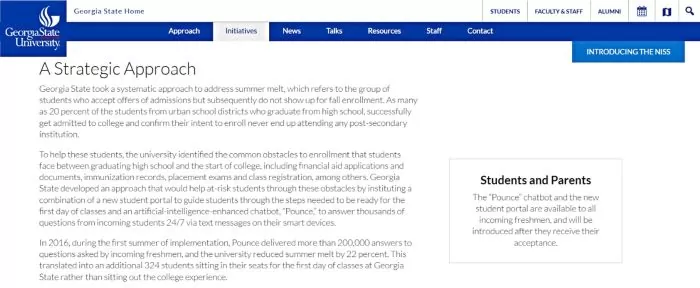
Georgia State University (USA): Georgia State pioneered an AI chatbot named “Pounce” to assist incoming students with admissions queries, financial aid forms, and other enrollment steps. By answering thousands of questions 24/7 via text messages, Pounce helped reduce “summer melt” (admitted students failing to enroll) by 22% in its first year, meaning hundreds more freshmen made it to campus. This AI assistant continues to guide students through registration and financial processes, improving support for new Panthers.
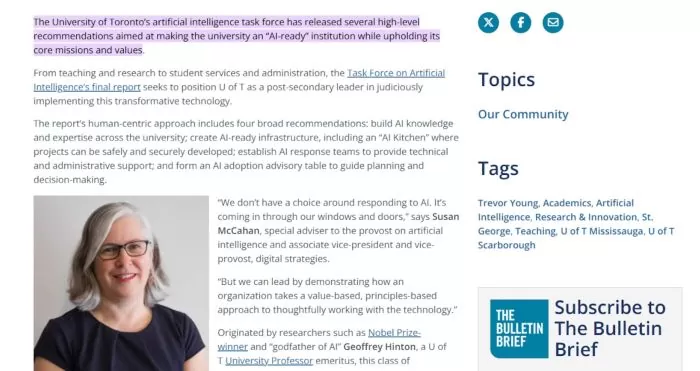
University of Toronto (Canada): U of T is actively exploring AI-driven tools to enhance student advising and services. A university-wide AI task force has recommended integrating AI into student support and administration. Initiatives include pilot projects for AI chatbots and data analytics to assist academic advisors, streamline routine administrative queries, and personalize student services. By embracing these technologies with a human-centric approach, U of T aims to improve how students receive guidance and navigate campus resources.
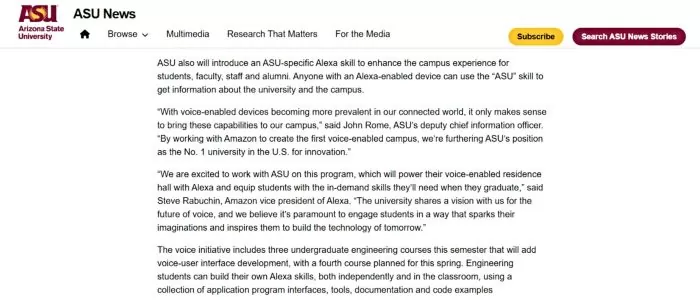
Arizona State University (USA): ASU has implemented AI-enabled digital assistants (including voice-activated tools) to guide prospective and current students. Notably, ASU partnered with Amazon to create a voice-based campus chatbot via Alexa, allowing users to ask the “ASU” skill about campus events, library hours, dining menus, and more. In residence halls, students received Echo Dot devices as part of a smart campus initiative, making it easy to get instant answers about enrollment or campus life. These AI assistants augment student engagement by conversationally providing on-demand information and support.
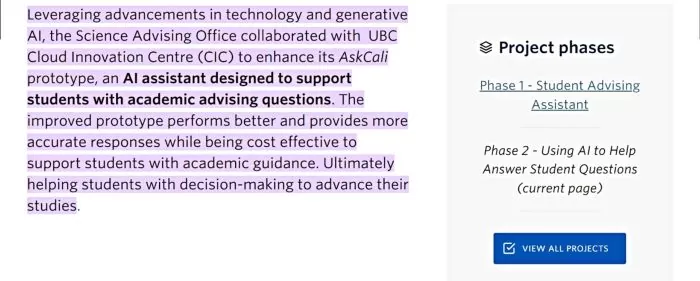
University of British Columbia (Canada): UBC leverages AI in both research and practical applications to improve student experiences. The university deploys AI chatbots and advising assistants to help answer student questions and streamline services. For example, UBC’s “AskCali” project is an AI-driven advising tool that uses generative AI to answer academic planning questions and direct students to resources. UBC Okanagan’s campus also introduced an AI chatbot across departments like IT support and Student Services, automating routine inquiries and reducing wait times by handling ~99% of chats, which frees up staff for complex issues. Through these efforts, UBC enhances student support while improving operational efficiency.
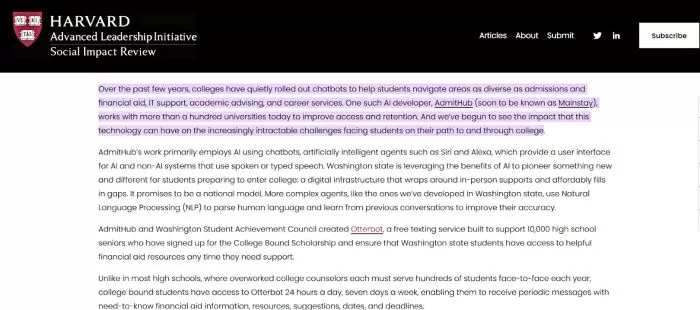
Harvard University (USA): Harvard is applying AI systems to enhance academic advising, streamline administrative tasks, and bolster student engagement. The university’s digital strategy encourages responsible use of AI in advising and student services. For example, Harvard has explored AI chatbots for answering routine student questions and experimented with AI tutors to augment academic advising. These AI initiatives are aimed at improving the efficiency of advising processes and enriching how students interact with academic support, all while maintaining a human-centered approach (Harvard’s advisors and faculty guide AI use to ensure it aligns with educational values).
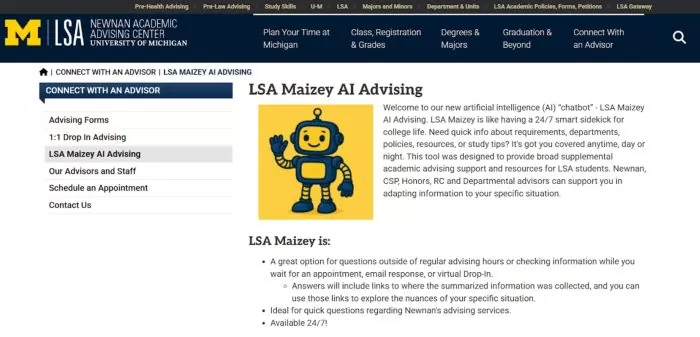
University of Michigan (USA): U-M has rolled out AI-powered tools to support student services, including conversational assistants for advising and campus information. The College of LSA launched “Maizey,” a 24/7 AI academic advising chatbot that answers questions on course requirements, policies, and study tips, providing a “smart sidekick” for students seeking guidance after hours. Additionally, U-M developed “MiMaizey,” a personalized AI campus assistant that helps students find information on dining, events, organizations, and more in a chat interface. By deploying these AI-supported services, Michigan offers instant help and tailored support to students while complementing its human advisors.
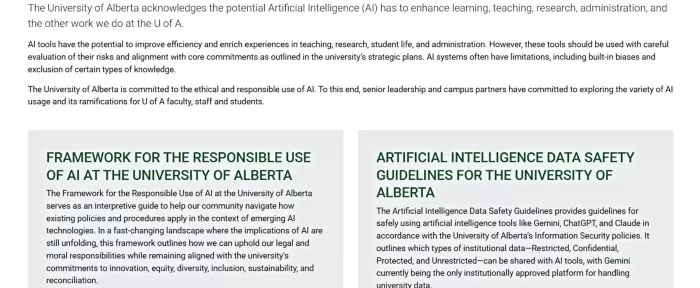
University of Alberta (Canada): UAlberta is integrating AI into student services and campus operations to improve efficiency and support. The university’s AI committees explicitly guide the use of AI to “improve university operations, services, resource management, and administrative tasks.” This means deploying AI tools in areas like student advising, where chatbots or predictive analytics can assist with inquiries, and in back-office processes, where automation can streamline workflows. By embracing these technologies, the U of A seeks to enhance the student service experience (faster responses, 24/7 support) and optimize institutional decision-making and resource use.
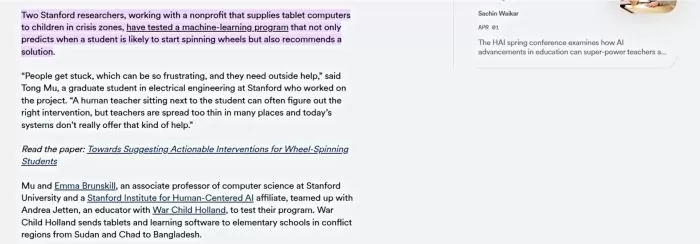
Stanford University (USA): Stanford has been a leader in leveraging AI agents for student support, learning analytics, and administrative innovation. Researchers at Stanford have developed AI systems that detect when students are struggling in digital courses and then recommend interventions to instructors, effectively acting as an AI tutor/assistant to keep students on track. In student services, Stanford has experimented with chatbots and AI-driven data analysis to personalize learning and improve advising. These efforts—from AI “teaching assistants” that answer student questions to predictive models that inform advisors—illustrate Stanford’s use of AI to enhance learning outcomes and streamline academic administration.
AI agents represent a transformative opportunity for colleges and universities that approach them with purpose and alignment. When embedded within broader strategies for enrollment management, student success, and marketing, these tools can significantly enhance institutional impact.
By automating high-volume tasks and providing real-time, personalized support, AI agents help institutions engage students earlier in their journey, offer more relevant touchpoints, and deliver a seamless digital experience that today’s learners expect. At the same time, they free up staff to focus on strategic, human-centered work, creating a more agile and efficient institution.
The real value lies not in simply deploying AI tools, but in how they’re integrated across departments and designed to serve long-term goals. For higher education leaders, this means shifting the conversation from technology for its own sake to technology as an enabler of student-centric transformation. With thoughtful implementation, AI agents can become a cornerstone of modern, resilient, and responsive institutions.
Are you prepared for the next evolution of enrollment and student support?
Frequently Asked Questions
Question: What makes an AI agent different from a chatbot? Answer: AI agents are autonomous, goal-driven systems that understand context, learn over time, and take proactive actions. Unlike chatbots, which respond to scripted prompts, AI agents can guide users through processes and initiate engagement across multiple platforms.
Question: How are colleges using AI agents today? Answer: Across Canada, the United States, and internationally, colleges and universities are already deploying AI agents to support critical areas like enrollment, student services, academic advising, and marketing.
Question: Do AI agents replace college staff? Answer: This is a common concern, and the answer is no. AI agents are not designed to replace college staff, but to support them. These intelligent tools handle routine, high-volume, and time-sensitive tasks that can overwhelm busy teams.
Did you know that just about any advisor can call themselves a financial planner even though they derive all of their income from sales commissions?
It’s frustrating when I hear stories about “financial planners” who take advantage of families seeking reasonable advice and guidance. With so much industry jargon out there, it can be tough for families to determine which financial planner is right for them—and which firms are just trying to sell them a non-ideal product to make a commission.
When looking for a financial advisor and planner, here are a few steps I recommend to determine whether or not they’re the right fit and whether they’ll have your best interests at heart.
Empowerment Over Fear
Are you hesitating because you’ve heard scary stories about financial planners? I’ve heard them too. I recently had a client share a story about a visit to a different advisor who used high-pressure sales tactics of fear and stress. The client literally left the office and cried all the way home.
Your advisor should help you feel empowered — not afraid.
Do They Consider Your Needs?
Maybe this sounds like you: You have hit a point in your life when things are coming together. You are seeing success in your career. Your family is growing. You have a 401k for your retirement and 529 plans for your children. All is good. Why would you need a financial advisor when everything seems fine?
Or maybe you’ve lost a parent. Many of us have experienced this or are about to, and according to the latest research from Cerulli Associates, an epic $84.4 trillion (and by some estimates up to $124 trillion) will be passed down from baby boomers to Generation X and millennials through 2045. What happens to their money after they are gone? Are you afraid to make a misstep?
Perhaps you worry about retirement. Yes, you have a 401k, but is it enough? Could you be doing more? And then there is paying for college — likely the largest purchase you make besides your home. How will you get that done? What’s the best way to set your children up for long-term success?
Your advisor needs to not only consider your current financial status and investments, but also look ahead to your future goals, needs, and dreams.
How to Pick a Financial Advisor Who Puts Your Interests First
You will want to answer these questions to start:
What type of advisor are they? What is their fee structure, and can it influence the recommendations they give to you?
Do they have credentials valued by the industry, holding them to the highest standards of ethics and competency?
Is their expert knowledge a fit for your unique needs (like college funding or tax planning)?
The Three Types of Advisors
The types of financial advisors break down into three categories:
The Broker or “Registered Representative”: Employed by broker-dealer companies. They earn fees based on portfolio value but can also sell products like annuities and mutual funds to collect commissions. They are, primarily, salespeople.
The “Fee-Based” Advisor: Often associated with large brokerage firms. They collect an annual fee or a percentage of assets, but they also can collect commissions on products they sell to you. They often serve two masters: you and their brokerage firm.
The Fiduciary (Fee-Only): Merriam-Webster defines fiduciary as “involving a confidence or trust.” These advisors must make recommendations in your best interest by law. They cannot earn commissions. They are often Registered Investment Advisors (RIAs) focused on education and long-term success. (This is the type of advisor you’ll find at Capstone Wealth Partners.)
Check Their Credentials
In an industry full of “alphabet soup” (CFP®, CIMA, CPWA, CFA, ChFC, etc.), the CERTIFIED FINANCIAL PLANNER™ (CFP®) remains the gold standard for ethics and competency. But you should never take an advisor’s word for it. Verify them directly using the CFP Board’s Verification Tool.
Find a Niche Expert
Brokers are experts in products. Niche advisors are experts in people like you. While some focus on specific employee groups or doctors, at Capstone, our primary focus is on families with college-bound children.
In today’s college planning landscape, you need an advisor who understands the nuances of the FAFSA Simplification Act and how it impacts your specific financial aid eligibility and tax strategy. A “generalist” might miss the thousands of dollars in savings that a college-planning specialist can uncover.
Questions to Ask in Your First Meeting
Here’s a quick rundown of the questions you should ask when you first meet a potential advisor and planner.
What is your planning process and how many meetings will we have?
Do you use technology (like client portals) to track progress?
Will you help me implement the plan, or just hand me a folder?
How do you stay updated on changing college-funding laws?
As niche fiduciaries, Capstone takes great pride in our responsibility to deliver the best, individually tailored plans to families looking to save for college and beyond. If you’d like to find out if we’re the right fit for your family, please schedule some free time to meet with us and ask the questions above.
Across the United States, higher education is undergoing a dramatic and dangerous transformation. Corporate contractors, private equity firms, automated learning systems, and predatory loan servicers increasingly dictate how the system operates—while regulators remain absent and the media rarely reports the scale of the crisis. The result is a university system that serves investors and advertisers far more effectively than it serves students.
This evolution reflects a broader pattern documented by Harriet A. Washington, Alondra Nelson, Elisabeth Rosenthal, and Rebecca Skloot: institutions extracting value from vulnerable populations under the guise of public service. Today, many universities—especially those driven by online expansion—operate as financial instruments more than educational institutions.
The OPM Machine and Private Equity Consolidation
Online Program Managers (OPMs) remain central to this shift. Companies like Academic Partnerships—now Risepoint—and the restructured remnants of Wiley’s OPM division continue expanding into public universities hungry for tuition revenue. Revenue-sharing deals, often hidden from the public, let these companies keep up to 60% of tuition in exchange for aggressive online recruitment and mass-production of courses.
Much of this expansion is fueled by private equity, including Vistria Group, Apollo Global Management, and others that have poured billions into online contractors, publishing houses, test prep firms, and for-profit colleges. Their model prioritizes rapid enrollment growth, relentless marketing, and cost-cutting—regardless of educational quality.
Hyper-Deregulation and the Dismantling of ED
Under the Trump Administration, the federal government dismantled core student protections—Gainful Employment, Borrower Defense, incentive-compensation safeguards, and accreditation oversight. This “hyper-deregulation” created enormous loopholes that OPMs and for-profit companies exploited immediately.
Today, the Department of Education itself is being dismantled, leaving oversight fragmented, understaffed, and in some cases non-functional. With the cat away, the mice will play: predatory companies are accelerating recruitment and acquisition strategies faster than regulators can respond.
Servicers, Contractors, and Tech Platforms Feeding on Borrowers
A constellation of companies profit from the student loan system regardless of borrower outcomes:
Maximus (AidVantage), which manages huge portfolios of federal student loans under opaque contracts.
Navient, a longtime servicer repeatedly accused of steering borrowers into costly options.
Sallie Mae, the original student loan giant, still profiting from private loans to risky borrowers.
Chegg, which transitioned from textbook rental to an AI-driven homework-and-test assistance platform, driving new forms of academic dependency.
Each benefits from weak oversight and an increasingly automated, fragmented educational landscape.
Robocolleges, Robostudents, Roboworkers: The AI Cascade
AI has magnified the crisis. Universities, under financial pressure, increasingly rely on automated instruction, chatbot advising, and algorithmic grading—what can be called robocolleges. Students, overwhelmed and unsupported, turn to AI tools for essays, homework, and exams—creating robostudents whose learning is outsourced to software rather than internalized.
Meanwhile, employers—especially those influenced by PE-backed workforce platforms—prioritize automation, making human workers interchangeable components in roboworker environments. This raises existential questions about whether higher education prepares people for stable futures or simply feeds them into unstable, algorithm-driven labor markets.
FAFSA Meltdowns, Fraud, and Academic Cheating
The collapse of the new FAFSA system, combined with widespread fraudulent applications, has destabilized enrollment nationwide. Colleges desperate for students have turned to risky recruitment pipelines that enable identity fraud, ghost students, and financial manipulation of aid systems.
Academic cheating, now industrialized through generative AI and contract-cheating platforms, further erodes the integrity of degrees while institutions look away to protect revenue.
Advertising and the Manufacture of “College Mania”
For decades, advertising has propped up the myth that a college degree—any degree, from any institution—guarantees social mobility. Universities, OPMs, lenders, test-prep companies, and ed-tech platforms spend billions on marketing annually. This relentless messaging drives families to take on debt and enroll in programs regardless of cost or quality.
College mania is not organic—it is manufactured. Advertising convinces the public to ignore warning signs that would be obvious in any other consumer market.
A Media Coverage Vacuum
Despite the scale of the crisis, mainstream media offers shockingly little coverage. Investigative journalism units have shrunk, education reporters are overstretched, and major outlets rely heavily on university advertising revenue. The result is a structural conflict of interest: the same companies responsible for predatory practices often fund the media organizations tasked with reporting on them.
When scandals surface—FAFSA failures, servicer misconduct, OPM exploitation—they often disappear within a day’s news cycle. The public remains unaware of how deeply corporate interests now shape higher education.
The Emerging Picture
The U.S. higher education system is no longer simply under strain—it is undergoing a corporate and technological takeover. Private equity owns the pipelines. OPMs run the online infrastructure. Tech companies moderate academic integrity. Servicers profit whether borrowers succeed or fail. Advertisers manufacture demand. Regulators are missing. The media is silent.
In contrast, many other countries maintain strong limits on privatization, enforce strict quality standards, and protect students as consumers. As Washington and Rosenthal argue, exploitation persists not because it is inevitable but because institutions allow—and profit from—it.
Unless the U.S. restores meaningful oversight, reins in private equity, ends predatory revenue-sharing models, rebuilds the Department of Education, and demands transparency across all contractors, the system will continue to deteriorate. And students, especially those already marginalized, will pay the price.
Sources (Selection)
Harriet A. Washington – Medical Apartheid; Carte Blanche
Rebecca Skloot – The Immortal Life of Henrietta Lacks
Elisabeth Rosenthal – An American Sickness
Alondra Nelson – Body and Soul
Stephanie Hall & The Century Foundation – work on OPMs and revenue sharing
Robert Shireman – analyses of for-profit colleges and PE ownership
GAO (Government Accountability Office) reports on OPMs and student loan servicing
ED OIG and FTC public reports on oversight failures (various years)
National Student Legal Defense Network investigations
Federal Student Aid servicer audits and public documentation
When Cara Romero’s daughter was 11, she became interested in dolls. Romero, who is an enrolled member of the Chemehuevi Indian Tribe in Southern California, began to think about doll culture more deeply and what it can convey to the next generation.
Romero’s husband grew up collecting G.I. Joes, and her mother-in-law had her own Victorian-style porcelain doll collection. For Romero, though, her daughter’s doll phase reminded her of the Native American dolls she grew up seeing at truck stops along I-40.
The dolls were often dressed in plastic pony beads and fake buckskin that parroted the Native American Halloween costumes she knew all too well as dehumanizing stereotypes. So Romero, who is a photographer and artist, set out to create a series of photos that broke down these tropes.
Each photograph in the “First American Doll” series features a life-sized doll box that she designed and crafted, where she poses the women with objects that represent their families, traditions and unique stories.
She wanted her daughter to be proud of her heritage. “I come from a community where women are allowed to have a voice, allowed to be really strong,” she said. “So [I was] wanting to pass down good self esteem and a strong sense of self and identity,” she said. “That’s what we aim to do as moms.”
She started the series with artist and powwow dancer Wakeah Jhane, who is of Kiowa, Comanche and Blackfeet descent. While the Plains Tribes that she is from are the models for stereotypical dolls and costumes, Romero’s photograph captures her intricate buckskin regalia, which was made by her family. Also on display are her moccasins and a fan.
“You can see the stark contrast between what she’s wearing and the Halloween costumes that people portray Plains people as,” she said. “I really wanted to kind of own it and be like, “You guys even have this wrong.’”
She has since published nine photographs for the series, the most recent featuring Fawn Douglas, an artist, activist and enrolled member of the Las Vegas Paiute Tribe, who is posed with handcrafted baskets and a gourd rattle made by her family. The box is bordered by a Las Vegas playing card motif.
Cara Romero (Getty Images)
The current day symbolism and high fashion lighting communicates that these women are also contemporary, Romero said. “When artwork, and specifically photography, is devoid of modern context, it does something psychologically, it perpetuates [this idea] that we’re gone and only living in history.”
Naming each of the pieces after the models was also meant to humanize Indigenous women in a way that they weren’t in historical photos. “A lot of times in the ethnographic photographs, they didn’t even say their name,” she said. “We don’t know who they were.”
Some of the photographs from the series are currently traveling the country as part of Romero’s first solo museum exhibition, titled: “Panûpünüwügai (Living Light).” They will be on display next at the Phoenix Art Museum in Arizona starting in February.
Understanding what motivates and excites students is at the heart of teaching. Whether it’s discovering their favorite hobbies, their goals, or the way they prefer to learn, gathering this kind of data helps educators tailor lessons that truly connect with their students. One of the best ways to gather this information is through student interest surveys.
With interest surveys for students, you can collect actionable information to use throughout the school year. You can make a student survey that is super simple and offers insights that can enhance classroom engagement, strengthen relationships, and support differentiated instruction, too.
What is a Student Interest Survey?
A student interest survey is a tool designed to gather information about students’ preferences, hobbies, goals, and ways they like to learn. These surveys help educators better understand what motivates their students. You can use the information you gather to connect with students on a personal level and create lessons that resonate.
For example:
In an elementary classroom, surveys might ask about favorite books, hobbies, or after-school activities.
In middle school, they might explore topics students are curious about within a subject area, like what parts of history or science excite them most.
For high school students, surveys can include questions about career interests or their preferred methods of learning, such as videos, group work, or hands-on activities.
By tailoring the questions to the grade level and classroom context, you can design surveys that give you valuable insights about students.
Why is Making a Student Interest Survey Important?
Student interest surveys play a critical role in creating a positive and engaging learning environment.
Building Relationships
Surveys show students that their opinions and interests are valued. This can foster trust and create a more inclusive and welcoming classroom culture. For example, if a student shares their passion for basketball, incorporating that into lessons can help them feel seen and appreciated.
Enhancing Engagement
When lessons connect with students’ interests, their engagement can increase. A math problem involving sports statistics or a science experiment about underwater habitats can make abstract concepts more relatable and exciting.
If you’ve joined me for a webinar or workshop this year, you might have seen the example I often share about using a chatbot to generate activity ideas based on student interest. I often demo the prompt, “I’m teaching [topic] to [grade], and they love [interests]. Make a list of connections that can help them stay engaged and retain knowledge.”
Supporting Differentiation
Surveys can help educators adapt teaching strategies to address the different ways kids like to learn. For instance, if a student prefers independent work over group activities, you can use this information to guide project assignments or seating arrangements.
What to Include When Making a Student Interest Survey
A well-designed survey gathers a mix of personal, academic, and classroom-specific information. Here are a few things to include:
General Information: Start with basics like name, class period, and favorite subjects.
Personal Interests: Ask about hobbies, favorite books or movies, and extracurricular activities. Open-ended questions work well here, but younger students might benefit from multiple-choice options.
Learning Preferences: Include questions about group work versus individual tasks, preferred classroom activities, and how students like to receive information (e.g., videos, reading, hands-on projects).
Goals and Aspirations: These could range from short-term academic goals to long-term career interests. For example, high schoolers might share their dream jobs, while elementary students could talk about a skill they hope to master.
Classroom-Specific Questions:
Elementary: “What’s your favorite part of the school day?”
Middle School: “If you could learn about anything, what would it be?”
High School: “What skills do you hope to gain this year?”
Optional Questions: Questions like “What’s something you wish your teacher knew about you?” can provide deeper insights and open doors for meaningful conversations.
Using Digital Tools for Efficiency
Digital tools make creating and analyzing surveys faster and more efficient. Platforms like Google Forms, Jotform, and Microsoft Forms offer features like multiple-choice questions, dropdowns, and Likert scales. All of these can simplify the data collection process. These tools, and others like them, also automatically organize responses (like a Google Sheet), saving time for educators.
For younger students, tools like Padlet can be used to gather video or audio responses. You might also ask students to make a collage of their favorite things.
4 Tips for Creating Effective Surveys
To make sure your surveys give you actionable information, here are a few best practices to take into consideration.
Keep It Short: Limit surveys to 5–10 questions to avoid overwhelming students.
Use Clear Language: Adapt the wording to the age group. For younger students, you might want to provide examples or visuals to clarify questions.
Review the Data: Use visual charts or spreadsheets to identify trends and personalize your approach.
Follow Up: Let students know how their input will be used. Share how their responses are shaping lessons, group projects, or classroom routines.
Making a Student Interest Survey
Student interest surveys are a powerful tool for building connections, fostering engagement, and personalizing learning. By taking the time to understand what excites and motivates your students, you can create a classroom environment where every learner feels valued and inspired.
Whether you’re designing your first survey or refining an existing one, remember that the ultimate goal is to use the insights gained to make meaningful changes. Start small, experiment with different formats, and, most importantly, show students that their voices matter!
Do you have a student interest survey success story? Reply to my weekly newsletter (sign up here) and let me know all about it.
Find more posts featuring personalized learning tips & resources: