Blog

  • The high costs of cheap food

    The high costs of cheap food

    From New York to Jakarta, the scene is the same: Shelves overflowing with cheap, ultra-processed snacks and sugary drinks have become the new normal for millions of children. As a result, for the first time in history, more children are obese than underweight.

    UNICEF’s new Feeding Profit report explains why: Across the globe, cheap and intensely marketed ultra-processed foods dominate what families are able to put on the table, while nutritious options remain out of reach.

    Across the world, one in 20 children under five and one in five children and adolescents aged five to 19 are overweight. The number of overweight children and teens in 2000 almost doubled by 2022, with South Asia experiencing an increase of almost 500%. In East Asia, the Pacific, Latin America, the Caribbean, the Middle East and North Africa, the increase was at least 10%.

    Ultra-processed foods and beverages, defined as industrially formulated, are composed primarily of chemically-modified substances extracted from foods, together with additives and preservatives to enhance taste, texture and appearance as well as shelf life.

    These foods — which are often cheaper, nutrient poor and higher in sugar, unhealthy fats and salt — are now more prevalent than traditional, nutritious foods in children’s diets.

    Can we wean ourselves off ultra-processed foods?

    Studies show there’s a direct link between eating a lot of ultra-processed foods and an increased risk of overweight and obesity among children and adolescents. Among teens aged 15-19 years, 60% consumed more than one sugary food or beverage during the previous day, 32% consumed a soft drink and 25% consumed more than one salty processed food.

    Today, children’s paths to healthy eating are shaped less by personal choice than by the food environments that surround them. Those are the places where and conditions under which people make decisions about what to eat. They connect a person’s daily life with the broader food system around them, and are shaped by physical, political, economic and cultural factors that help determine what foods are available, affordable, appealing and regularly eaten.

    Such environments are steering children toward ultra-processed, calorie-dense options, even when healthier foods are available.

    Around the world, countries are beginning to push back. In Mexico, where nearly four million children aged 4-10 are obese, the government took a bold step in March 2025. It banned the sale of ultra-processed foods and sugary drinks in schools.

    The new rules go beyond restriction: Schools must offer fresh, regional foods such as fruits, vegetables and seeds, promote water as the default beverage, and establish health education programs. The policy also calls for regular health monitoring, mandatory fortification of wheat and corn flours, and more opportunities for physical activity, with penalties for schools that fail to comply.

    Taking steps to slim down our diets

    In September 2025, Malaysia’s Ministry of Education followed similar steps. It now prohibits 12 categories of ultra-processed foods and drinks in school canteens, from instant noodles and skewered snacks to frozen desserts and candy.

    But even as countries rewrite their food policies, millions of families still face difficult choices at the market.

    Shauna Downs, associate professor of food policy and public health nutrition at Rutgers University, has seen firsthand how hunger and obesity can coexist within the same communities in her research on informal settlements in Nairobi, Kenya.

    “People are able to find nutrient-rich foods, like leafy greens, fruits, and vegetables, and animal-source foods, but they’re often expensive, and what they can get that’s cheaper is things like mandazi [fried dough], which provide energy, and they taste good, but they’re not getting the nutrients they need,” she said.

    Families that want to buy the nutrient-rich foods are forced into heartbreaking choices, Downs said.

    “So now they’re making a decision between ‘Am I gonna buy this food from the market, which my family needs, or am I gonna pay for my child to go to school?’” she said.

    Looking at food environments

    By spotlighting the food environment, consumers and researchers alike can move past the tired “eat less, move more” narrative to fight childhood obesity and ask a better question: Why wasn’t the healthy plate the obvious, easy and most affordable choice in the first place?

    Long before ultra-processed foods flooded grocery shelves, they quietly took over another key part of children’s lives: school cafeterias. Back in 1981, the Reagan administration cut US$1.5 billion in U.S. school food funding, pushing public institutions to rely on convenience over nutrition.

    Pamela Koch, associate professor of nutrition and education at Teachers College, Columbia University, said that one of the things cut was for funding for schools  upgrade their kitchens.

    “That was the same time as the food supply was becoming more and more [saturated] with highly-processed food, and a lot of food companies realized, ‘Wait, we could have a market selling to schools. Schools don’t have money to buy supplies’,” Koch said.

    Companies began offering deals: Sign a long-term contract and receive a free convection oven to reheat ultra-processed foods. For schools facing budget cuts and limited staffing, the decision was simple. The cost of that convenience would echo for decades.

    Let’s start with school meals.

    The nonprofit Global Child Nutrition Foundation, highlights school meals as an essential lever for transforming food systems: Create demand for nutritious foods, improve the livelihoods of those working in the food system and promote climate-smart foods. However, the cost of scaling up national programs depends on the strength of supply chains, underlying food markets, logistics and procurement models.

    Countries that depend on imported food, already challenged by infrastructure and expensive trading costs, will face additional challenges in delivering healthy school meals.

    In much of the world, climate stress and weak infrastructure are making nutritious food both more difficult to grow and more expensive to purchase.

    Small-scale farmers, sheep and cattle farmers, forest keepers and fishers — known collectively as smallholder farmers — grow much of the food in low-income countries. They face worsening yields due to climate change, land degradation and lack of access to the technology and resources that support sustainable food production.

    At the same time perishable foods are becoming more expensive because the global supply chain — how food gets shipped from a farm in one country through distribution networks to store shelves in another country — is increasingly threatened by political tension, the lasting effects of the COVID-19 pandemic and climate change.

    Durability over nutrition

    Kate Schneider, assistant professor of sustainable food systems at Arizona State University, said that smallholder farmers grow food as their livelihood. “They’re not able to grow enough food, which is partly a story of climate change,” Schneider said. “Multiple generations now have been farming … year after year on the same land, but without external inputs –– fertilizers and modern, high-yielding seeds –– they are resulting in very low yields.”

    Even when fresh fruits and vegetables are available, logistical barriers make it easier to sell ultra-processed foods. Fresh produce is heavy, vulnerable to spoilage and expensive to move, especially in countries with poor transport networks.

    “When we’re thinking about fresh items, they’re perishable, and they need a cold chain,” Schneider said. “You’re paying, when you buy an apple, for the three that also rotted.”

    Meanwhile, ultra-processed products like soda avoid this problem entirely: “It’s cheaper for them to have a ton of different bottling plants around countries than to distribute long distances,” Schneider said.

    The result of these challenges is a global system that rewards durability over nutrition and continues to make healthy food increasingly out of reach.

    Connecting sustainability of diets and the environment

    The EAT-Lancet Commission 2.0, a scientific body redefining healthy and sustainable diets, offers a different view: The ultra-processed foods fuelling obesity are also pushing food systems beyond climate and biodiversity limits.

    Its newly published report says that nearly half the world’s population can’t afford a healthy diet, while the richest 30% generate more than 70% of food-related environmental damage.

    The planetary health diet suggests a plant-rich diet that consists of whole grains, fruits, vegetables, nuts and beans, with only moderate or small amounts of fish, dairy and meat.

    To build healthier and more just food systems, experts also recommend a whole list of other things: make nutritious diets more accessible and affordable; protect traditional diets; promote sustainable farming and ecosystems; reduce food waste.

    And all of this should be done with the participation of diverse sectors of the society.

    The responsibility of transforming food systems falls not only on governments but also on donors and financial partners, development and humanitarian organizations, academic institutions and civil society. The stakes are high, but so is the potential to change. With bold, coordinated action, the next generation of children can be nourished by healthy food, while building food systems that sustain both people and the planet


    Questions to consider:

    1. How is obesity connected to the environment?

    2. What are some governments doing to try to tackle the obesity crisis?

    3. What changes could you make to your diet to make it healthier?
     

    Source link

  • Do male teachers make a difference? Not as much as some think

    Do male teachers make a difference? Not as much as some think

    by Jill Barshay, The Hechinger Report
    November 17, 2025

    The teaching profession is one of the most female-dominated in the United States. Among elementary school teachers, 89 percent are women, and in kindergarten, that number is almost 97 percent.

    Many sociologists, writers and parents have questioned whether this imbalance hinders young boys at the start of their education. Are female teachers less understanding of boys’ need to horse around? Or would male role models inspire boys to learn their letters and times tables? Some advocates point to research that lays out why boys ought to do better with male teachers.

    But a new national analysis finds no evidence that boys perform or behave better with male teachers in elementary school. This challenges a widespread belief that boys thrive more when taught by men, and it raises questions about efforts, such as one in New York City, to spend extra to recruit them.

    “I was surprised,” said Paul Morgan, a professor at the University at Albany and a co-author of the study. “I’ve raised two boys, and my assumption would be that having male teachers is beneficial because boys tend to be more rambunctious, more active, a little less easy to direct in academic tasks.”

    Related: Our free weekly newsletter alerts you to what research says about schools and classrooms.

    “We’re not saying gender matching doesn’t work,” Morgan added. “We’re saying we’re not observing it in K through fifth grade.”

    Middle and high school students might see more benefits. Earlier research is mixed and inconclusive. A 2007 analysis by Stanford professor Thomas Dee found academic benefits for eighth-grade boys and girls when taught by teachers of their same gender. And studies where researchers observe and interview a small number of students often show how students feel more supported by same-gender teachers. Yet many quantitative studies, like this newest one, have failed to detect measurable benefits for boys. At least 10 since 2014 have found zero or minimal effects. Benefits for girls are more consistent.

    This latest study, “Fixed Effect Estimates of Teacher-Student Gender Matching During Elementary School,” is a working paper not yet published in a peer-reviewed journal.* Morgan and co-author Eric Hu, a research scientist at Albany, shared a draft with me.

    Morgan and Hu analyzed a U.S. Education Department dataset that followed a nationally representative group of 8,000 students from kindergarten in 2010 through fifth grade in 2017. Half were boys and half were girls. 

    More than two-thirds — 68 percent — of the 4,000 boys never had a male teacher in those years while 32 percent had at least one. (The study focused only on main classroom teachers, not extras like gym or music.)

    Among the 1,300 boys who had both male and female teachers, the researchers compared each boy’s performance and behavior across those years. For instance, if Jacob had female teachers in kindergarten, first, second and fifth grades, but male teachers in third and fourth, his average scores and behavior were compared between the teachers of different genders.

    Related: Plenty of Black college students want to be teachers, but something keeps derailing them

    The researchers found no differences in reading, math or science achievement — or in behavioral and social measures. Teachers rated students on traits like impulsiveness, cooperation, anxiety, empathy and self-control. The children also took annual executive function tests. The results did not vary by the teacher’s gender.

    Most studies on male teachers focus on older students. The authors noted one other elementary-level study, in Florida, that also found no academic benefit for boys. This new research confirms that finding and adds that there seems to be no behavioral or social benefits either.

    For students at these young ages, 11 and under, the researchers also didn’t find academic benefits for girls with female teachers. But there were two non-academic ones: Girls taught by women showed stronger interpersonal skills (getting along, helping others, caring about feelings) and a greater eagerness to learn (represented by skills such as keeping organized and following rules).

    When the researchers combined race and gender, the results grew more complex. Black girls taught by women scored higher on an executive function test but lower in science. Asian boys taught by men scored higher on executive function but had lower ratings on interpersonal skills. Black boys showed no measurable differences when taught by male teachers. (Previous research has sometimes found benefits for Black students taught by Black teachers and sometimes hasn’t.)**

    Related: Bright black students taught by black teachers are more likely to get into gifted-and-talented classrooms

    Even if data show no academic or behavioral benefits for students, there may still be compelling reasons to diversify the teaching workforce, just as in other professions. But we shouldn’t expect these efforts to move the needle on student outcomes.

    “If you had scarce resources and were trying to place your bets,” Morgan said, “then based on this study, maybe elementary school isn’t where you should focus your recruitment efforts” to hire more men.

    To paraphrase Boyz II Men, it’s so hard to say goodbye — to the idea that young boys need male teachers.

    *Clarification: The article has not yet been published in a peer-reviewed journal but has undergone some peer review.

    **Correction: An earlier version incorrectly characterized how researchers analyzed what happened to students of different races. The researchers focused only on the gender of the teachers, but drilled down to see how students of different races responded to teachers of different genders. 

    Contact staff writer Jill Barshay at 212-678-3595, jillbarshay.35 on Signal, or [email protected].

    This story about male teachers was produced by The Hechinger Report, a nonprofit, independent news organization focused on inequality and innovation in education. Sign up for Proof Points and other Hechinger newsletters.

    This <a target=”_blank” href=”https://hechingerreport.org/proof-points-male-teachers-elementary-school/”>article</a> first appeared on <a target=”_blank” href=”https://hechingerreport.org”>The Hechinger Report</a> and is republished here under a <a target=”_blank” href=”https://creativecommons.org/licenses/by-nc-nd/4.0/”>Creative Commons Attribution-NonCommercial-NoDerivatives 4.0 International License</a>.<img src=”https://i0.wp.com/hechingerreport.org/wp-content/uploads/2018/06/cropped-favicon.jpg?fit=150%2C150&amp;ssl=1″ style=”width:1em;height:1em;margin-left:10px;”>

    <img id=”republication-tracker-tool-source” src=”https://hechingerreport.org/?republication-pixel=true&post=113362&amp;ga4=G-03KPHXDF3H” style=”width:1px;height:1px;”><script> PARSELY = { autotrack: false, onload: function() { PARSELY.beacon.trackPageView({ url: “https://hechingerreport.org/proof-points-male-teachers-elementary-school/”, urlref: window.location.href }); } } </script> <script id=”parsely-cfg” src=”//cdn.parsely.com/keys/hechingerreport.org/p.js”></script>

    Source link

  • Teaching math the way the brain learns changes everything

    Teaching math the way the brain learns changes everything

    Key points:

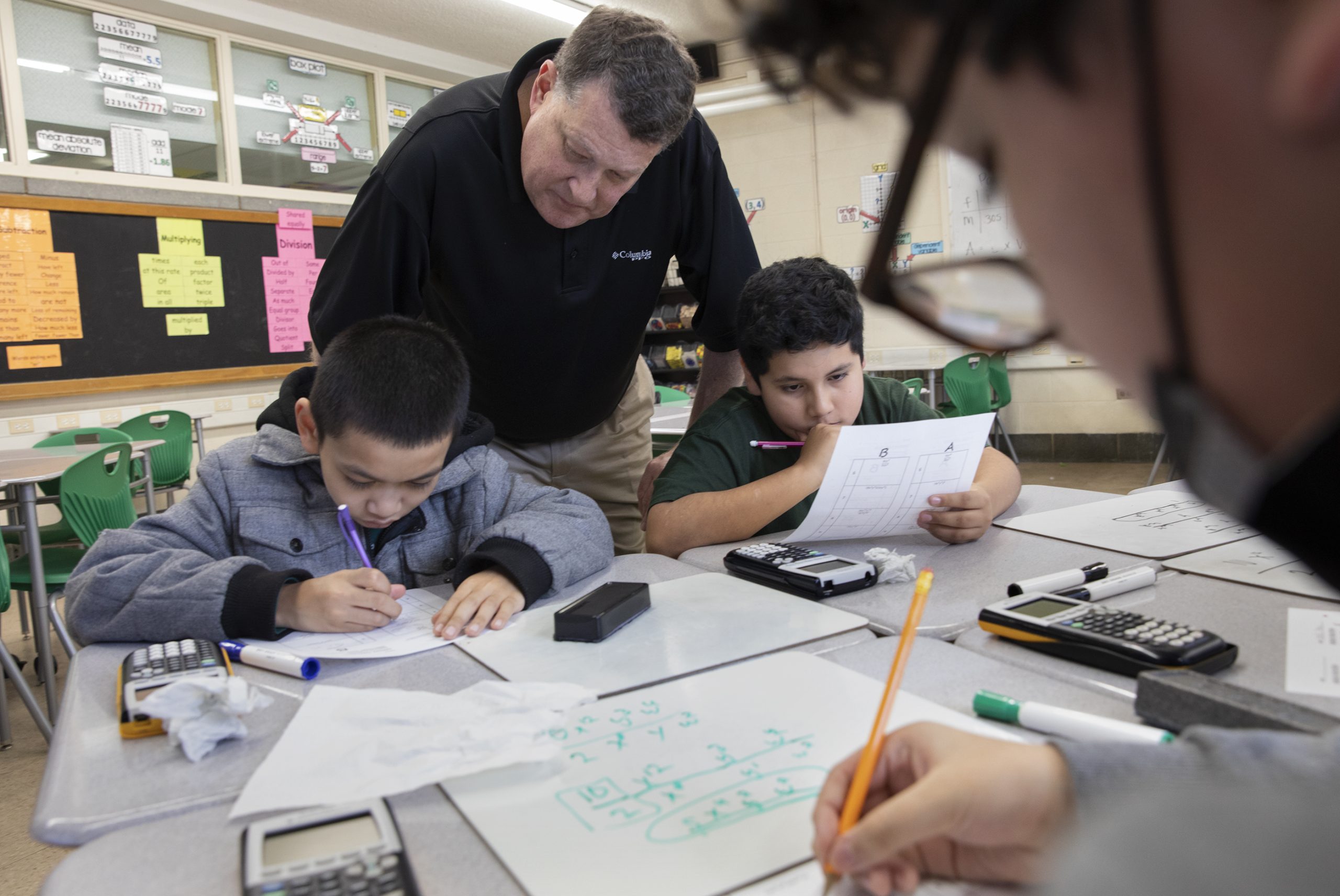
    Far too many students enter math class expecting to fail. For them, math isn’t just a subject–it’s a source of anxiety that chips away at their confidence and makes them question their abilities. A growing conversation around math phobia is bringing this crisis into focus. A recent article, for example, unpacked the damage caused by the belief that “I’m just not a math person” and argued that traditional math instruction often leaves even bright, capable students feeling defeated.

    When a single subject holds such sway over not just academic outcomes but a student’s sense of self and future potential, we can’t afford to treat this as business as usual. It’s not enough to explore why this is happening. We need to focus on how to fix it. And I believe the answer lies in rethinking how we teach math, aligning instruction with the way the brain actually learns.

    Context first, then content

    A key shortcoming of traditional math curriculum–and a major contributor to students’ fear of math–is the lack of meaningful context. Our brains rely on context to make sense of new information, yet math is often taught in isolation from how we naturally learn. The fix isn’t simply throwing in more “real-world” examples. What students truly need is context, and visual examples are one of the best ways to get there. When math concepts are presented visually, students can better grasp the structure of a problem and follow the logic behind each step, building deeper understanding and confidence along the way.

    In traditional math instruction, students are often taught a new concept by being shown a procedure and then practicing it repeatedly in hopes that understanding will eventually follow. But this approach is backward. Our brains don’t learn that way, especially when it comes to math. Students need context first. Without existing schemas to draw from, they struggle to make sense of new ideas. Providing context helps them build the mental frameworks necessary for real understanding.

    Why visual-first context matters

    Visual-first context gives students the tools they need to truly understand math. A curriculum built around visual-first exploration allows students to have an interactive experience–poking and prodding at a problem, testing ideas, observing patterns, and discovering solutions. From there, students develop procedures organically, leading to a deeper, more complete understanding. Using visual-first curriculum activates multiple parts of the brain, creating a deeper, lasting understanding. Shifting to a math curriculum that prioritizes introducing new concepts through a visual context makes math more approachable and accessible by aligning with how the brain naturally learns.

    To overcome “math phobia,” we also need to rethink the heavy emphasis on memorization in today’s math instruction. Too often, students can solve problems not because they understand the underlying concepts, but because they’ve memorized a set of steps. This approach limits growth and deeper learning. Memorization of the right answers does not lead to understanding, but understanding can lead to the right answers.

    Take, for example, a third grader learning their times tables. The third grader can memorize the answers to each square on the times table along with its coordinating multipliers, but that doesn’t mean they understand multiplication. If, instead, they grasp how multiplication works–what it means–they can figure out the times tables on their own. The reverse isn’t true. Without conceptual understanding, students are limited to recall, which puts them at a disadvantage when trying to build off previous knowledge.

    Learning from other subjects

    To design a math curriculum that aligns with how the brain naturally learns new information, we can take cues from how other subjects are taught. In English, for example, students don’t start by memorizing grammar rules in isolation–they’re first exposed to those rules within the context of stories. Imagine asking a student to take a grammar quiz before they’ve ever read a sentence–that would seem absurd. Yet in math, we often expect students to master procedures before they’ve had any meaningful exposure to the concepts behind them.

    Most other subjects are built around context. Students gain background knowledge before being expected to apply what they’ve learned. By giving students a story or a visual context for the mind to process–breaking it down and making connections–students can approach problems like a puzzle or game, instead of a dreaded exercise. Math can do the same. By adopting the contextual strategies used in other subjects, math instruction can become more intuitive and engaging, moving beyond the traditional textbook filled with equations.

    Math doesn’t have to be a source of fear–it can be a source of joy, curiosity, and confidence. But only if we design it the way the brain learns: with visuals first, understanding at the center, and every student in mind. By using approaches that provide visual-first context, students can engage with math in a way that mirrors how the brain naturally learns. This shift in learning makes math more approachable and accessible for all learners.

    Source link

  • HBCUs Gifted Nearly $300M in Scott’s Latest Donation Flurry

    HBCUs Gifted Nearly $300M in Scott’s Latest Donation Flurry

    Five historically Black colleges and universities have recently announced gifts of $50 million or more in unrestricted funds from billionaire philanthropist MacKenzie Sott. 

    Prairie View A&M University, North Carolina Agricultural and Technical State University, Bowie State University, Norfolk State University and Winston-Salem State University are the latest HBCUs to benefit from Scott’s philanthropy—she has already donated to at least eight other institutions this year.

    On Friday, Prairie View and North Carolina A&T said they received $63 million each, the largest single gifts ever received in their histories, which follow previous gifts from Scott in 2020—$50 million to Prairie View and $45 million to N.C. A&T. Her support for each institution totals $113 million and $108 million, respectively.

    Also last week, Bowie State, Winston-Salem State and Norfolk State each announced record-breaking gifts of $50 million following donations from Scott in 2020—$25 million, $30 million and $40 million, respectively.

    “This gift is more than generous—it is defining and affirming,” said Prairie View A&M president Tomikia LeGrande in a statement. “MacKenzie Scott’s investment amplifies the power and promise of a Prairie View A&M University education as we advance our vision of becoming a premier public, research-intensive HBCU that serves as a national model for student success.”

    Voorhees University also received a $19 million donation from Scott earlier this month, following a $4 million gift in 2020.

    The five universities said they would use the donations to progress their strategic plans through funding scholarships, growing endowments, improving teaching and research, and supporting student success.

    In 2019, Scott pledged to give away half her wealth in her lifetime. By 2023, her donations to educational institutions exceeded $1 billion. This year, Scott has donated $80 million to Howard University in Washington, D.C.; $38 million to the University of Maryland Eastern Shore; and $38 million each to Spelman College and Clark Atlanta University in Georgia.

    “No investor in higher education history has had such a broad and transformational impact across so many universities,” said N.C. A&T chancellor James R. Martin II in a statement.

    “North Carolina A&T is deeply grateful for Ms. Scott’s reaffirmed belief in our mission and for the example she sets in placing trust in institutions like ours to drive generational change through education, discovery and innovation.”

    Source link

  • Budget WARs

    Budget WARs

    This is hypothetical, but the concept it’s illustrating is real.

    Let’s say you’re in charge of a college budget, and there’s money for a new staff position. You have multiple requests for positions, so you need to pick the winner.

    For the sake of the example, let’s stipulate that the salaries are close enough that they don’t tip the balance and that the relative staffing levels in each area are about equally suboptimal.

    The contenders are:

    • A math tutor
    • A librarian
    • An adviser
    • A financial aid staffer

    Which do you choose? And, more to the point, why?

    I hear a lot about “data-based” or “evidence-based” decision-making. But it’s not clear to me what data or evidence would settle the question. How would you know which one is the best choice?

    I assume that any of the four would make a positive difference in student outcomes. Students who fail math are much likelier to drop out than students who don’t, and tutors help students pass. Librarians are crucial for students to learn to do research, especially in the age of AI. Academic advisers help students avoid wasting time on courses that won’t help them. Financial aid staffers enable students to get the money they need to go to college. They’re all helpful, and they’re all important. But how do you weigh one against the others?

    In baseball, people with too much time on their hands came up with a single statistic to rule them all: wins above replacement. A player’s WAR score—seriously, that’s what they call it—indicates how many more (or fewer) games a team would expect to win in a given season if they used this player, as opposed to an average player at the same position. That way, a team could measure the value of a particular pitcher against the value of a particular outfielder.

    We don’t have a number like that. How much more, or less, would a new tutor affect our graduation rate than a new adviser? And how would we know?

    Any ambitious and quantitatively minded students in higher education administration graduate programs, you can have this research question pro bono. I’d love to see empirical evidence.

    Until the dissertations come rolling in, though, I’d love to hear from my wise and worldly readers. Is there a good way to weigh these positions against each other? If anyone comes up with something good, I’ll be happy to share it in a subsequent column. As always, send your thoughtful responses to deandad (at) gmail (dot) com. Thanks!

    Source link

  • Fewer International Students Came to the U.S. This Fall

    Fewer International Students Came to the U.S. This Fall

    One week after President Donald Trump contradicted his own policies by stressing how important international students are to sustaining university finances, there’s new evidence that his administration’s crackdown on visas and immigration is hurting international student enrollment and the American economy.

    While overall international student enrollment has declined only 1 percent since fall 2024, new enrollment has declined 17 percent, according to fall 2025 snapshot data in the annual Open Doors report, published Monday by the Institute for International Education. The 825 U.S.-based higher learning institutions that responded to the fall snapshot survey host more than half of all international students in the country.

    “It gives us good insight into what is happening on campuses as of this fall,” Mirka Martel, head of research, evaluation and learning at IIE, said on a press call last week. “Some of the changes we’re seeing in new enrollment may be related to some of the more recent factors related to international students.”

    Fewer New Graduate Students

    Those factors include cuts to federal research funding, which has historically helped support graduate students. Although graduate students made up roughly 40 percent of the 1.2 million total international students studying in the U.S during the 2024–25 academic year, they’re now driving the enrollment decline—a trend that started before Trump retook the White House.

    While the total number of new international students fell by 7 percent last academic year, new graduate enrollment dropped by 15 percent, according to the Open Doors report—a decline that was partially offset by new undergraduate enrollment, which grew by 5 percent.

    The fall 2025 snapshot data shows that pattern continuing.

    Colleges and universities reported a 2 percent increase in undergraduate students, a 14 percent increase in Optional Practical Training students and a 12 percent decrease in graduate students.

    The 2024–25 Open Doors report also includes more details about international students during the last academic year—broken down by country of origin, field of study and primary funding sources—though that data reflects trends from last fall, before Trump took office and initiated restrictions that experts believe have deterred some international students.

    It shows that international enrollment in the United States jumped 5 percent between fall 2023 and fall 2024, continuing to rebound from a 15 percent pandemic-induced drop during the 2020–21 academic year. That’s in line with the fall 2024 snapshot data, which indicated 3 percent growth in international student totals.

    However, the majority (57 percent) of colleges and universities that responded to IIE’s fall 2025 snapshot survey reported a decline in new international enrollment. And 96 percent of them cited visa concerns, while 68 percent named travel restrictions as the reason for the drop.

    Meanwhile, 29 percent of institutions reported an increase in new international enrollment and 14 percent reported stable enrollment. For those institutions that saw an uptick this fall, 71 percent attributed the growth to active recruitment initiatives, and 54 percent cited outreach to admitted students.

    The Open Doors data also confirms earlier projections from NAFSA: Association of International Educators and recent analyses from The New York Times and Inside Higher Ed about the Trump administration’s immigration policies leading to falling international student enrollment, as well as hardship for university budgets and the broader national economy.

    According to the report, international students accounted for 6 percent of the total population enrolled in a higher education institution last academic year and contributed nearly $55 billion to the U.S. economy in 2024.

    “International students come to the United States to advance their education and contribute to U.S. colleges and communities,” Jason Czyz, president and CEO of IIE, said in a news release. “This data highlights the impact international students have in driving innovation, advancing scholarship, and strengthening cross-cultural understanding.”

    Trump’s Changing Stance

    But since Trump took office in January, his administration has cast international students—the majority (57 percent) of whom come to the U.S. to study in high-demand STEM fields—as threats to national security and opportunity for American-born students rather than economic stimulants.

    International university students attending wealthy, selective universities are “not just bad for national security,” Vice President JD Vance said in March. “[They’re] bad for the American dream for a lot of kids who want to go to a nice university and can’t because their spot was taken by a foreign student.”

    But as the Open Doors data shows, it’s not just wealthy, private institutions that host international students. During the 2024–25 academic year, 59 percent attended public institutions. Meanwhile, among all institution types, community colleges experienced the fastest rate of international student growth, at 8 percent.

    And that’s despite the Trump administration’s concerted effort to deter them. So far this year, the federal government has detained foreign student activists, stripped students’ SEVIS statuses and visas, implemented social media vetting processes, paused new visa issuances, and moved to limit how long students can stay in the country.

    In May, Secretary of State Marco Rubio threatened to “aggressively revoke” Chinese students’ visas, including those “with connections to the Chinese Communist Party or studying in critical fields.”

    Although the Open Doors report shows that enrollment among Chinese students declined 4 percent between the 2023–24 and 2024–25 academic years, China is still the second-most-popular country of origin for international students, making up 23 percent of all international students; India—which surpassed China as the No. 1 source in 2023—produced 31 percent of all international students living in the U.S. during the 2024–25 academic year.

    But as of late, Trump has walked back some of his hostility toward international students. Over the summer, he proposed allowing 600,000 Chinese students into the country. And last week, he defended the economic benefit of international students during an interview with Fox News’ Laura Ingraham.

    “We take in trillions of dollars from students,” he said. “You know, the students pay more than double when they come in from most foreign countries. I want to see our school system thrive. And it’s not that I want them, but I view it as a business.”

    Economic Consequences

    According to the Open Doors Report, roughly half (52 percent) of international students funded their education primarily with their own money during the 2024–25 academic year. And the 17 percent drop in new international enrollment this fall translates into more than $1.1 billion in lost revenue and nearly 23,000 fewer jobs, according to a new analysis from NAFSA, also published Monday.

    The report explained that the reasons for that vary but may be tied in part to the disproportionate decline in international graduate student enrollment and uptick in OPT students.

    The decline in graduate students on college campuses is “cutting into higher-spending populations that typically contribute more through tuition, living costs, and accompanying dependents,” the report said. Meanwhile, “the increased share of students pursuing OPT (up 14 percent) reduced the amount of campus-based spending [on] tuition, housing and dining.”

    Source link

  • Belonging Intervention Improves Pass Rates

    Belonging Intervention Improves Pass Rates

    Sense of belonging is a significant predictor of student retention and completion in higher education; students who believe they belong are more likely to bounce back from obstacles, take advantage of campus resources and remain enrolled.

    For community colleges, instilling a sense of belonging among students can be challenging, since students often juggle competing priorities, including working full-time, taking care of family members and commuting to and from campus.

    To help improve retention rates, the California Community Colleges replicated a belonging intervention developed at Indiana University’s Equity Accelerator and the College Transition Collaborative.

    Data showed the intervention not only increased students’ academic outcomes, but it also helped close some equity gaps for low-income students and those from historically marginalized backgrounds.

    What’s the need: Community college students are less involved on campus than their four-year peers; they’re also less likely to say they’re aware of or have used campus resources, according to survey data from Inside Higher Ed.

    This isolation isn’t desired; a recent survey by the ed-tech group EAB found that 42 percent of community college students said their social life was a top disappointment. A similar number said they were disappointed they didn’t make friends or meet new people.

    Methodology

    Six colleges in the California Community Colleges system participated in the study, for a total of 1,160 students—578 in the belonging program and 582 in a control group. Students completed the program during the summer or at the start of the term and then filled out a survey at the end.

    Moorpark Community College elected to deliver the belonging intervention during first-semester math and English courses to ensure all students could benefit.

    How it works: The Social Belonging for College Students intervention has three components:

    1. First, students analyze survey data from peers at their college, which shows that many others also worry about their academic success, experience loneliness or face additional challenges, to help normalize anxieties about college.
    2. Then, students read testimonies from other students about their initial concerns starting college and how they overcame the challenges.
    3. Finally, students write reflections of their own transition to college and offer advice to future students about how to overcome these concerns or reassure them that these feelings are normal.

    The goal of the exercise is to achieve a psychological outcome called “saying is believing,” said Oleg Bespalov, dean of institutional effectiveness and marketing at Moorpark Community College, part of the Ventura Community College District in California.

    “If you’ve ever worked in sales, like, say I worked at Toyota. I might not like Toyota; I just really need a job,” Bespalov said. “But the more I sell the Toyota, the more I come to believe that Toyota is a great car.” In the same way, while a student might not think they can succeed in college, expressing that belief to someone else can change their behaviors.

    Without the intervention, students tend to spiral, seeing a poor grade as a reflection of themselves and their capabilities. They may believe they’re the only ones who are struggling, Bespalov said. Following the intervention, students are more likely to embrace the idea that everyone fails sometimes and that they can rebound from the experience.

    At Moorpark, the Social Belonging for College Students intervention is paired with teaching on the growth mindset, explained Tracy Tennenhouse, English instructor and writing center co-coordinator.

    “Belonging is a mindset,” Bespalov said. “You have to believe that you belong here, and you have to convince the student to change their mindset about that.”

    The results: Students who participated in the belonging program were more likely to re-enroll for the next term, compared to their peers in the control group. This was especially true for students with high financial need or those from racial minorities.

    In the control group, there was a 14-percentage-point gap between low- and high-income students’ probability of re-enrolling. After the intervention, the re-enrollment gap dropped to six percentage points.

    Similarly, low-income students who participated in the intervention had a GPA that was 0.21 points higher than their peers who did not. Black students who participated in the exercise saw average gains of 0.46 points in their weighted GPA.

    To researchers, the results suggest that students from underrepresented backgrounds had more positive experiences at the end of the fall term if they completed the belonging activity. Intervention participants from these groups also reported fewer identity-related concerns and better mental and physical health, compared to their peers who didn’t participate.

    What’s next: Based on the positive findings, Moorpark campus leaders plan to continue delivering the intervention in future semesters. Tennenhouse sees an opportunity to utilize the reflection as a handwritten writing sample for English courses, making the assignment both a line of defense against AI plagiarism and an effective measure for promoting student belonging.

    Administrators have also considered delivering the intervention during summer bridge programs to support students earlier in their transition, or as a required assignment for online learners who do not meet synchronously.

    In addition, Tennenhouse would like to see more faculty share their own failure stories. Research shows students are more likely to feel connected to instructors who open up about their own lives with students.

    How does your college campus encourage feelings of belonging in the classroom? Tell us more here.

    Source link

  • Faith-Based Colleges Swept Up in Higher Ed Policy Changes

    Faith-Based Colleges Swept Up in Higher Ed Policy Changes

    Leaders of faith-based colleges and universities have spoken out on a slew of political issues in recent months, sometimes standing alongside secular universities and at other times differentiating themselves and defending their unique standing and missions.

    The Council for Christian Colleges and Universities and the Association of Catholic Colleges and Universities signed on to an October statement from the American Council on Education opposing the administration’s higher education compact, for example. Over the summer, CCCU also came out with a statement on the One Big Beautiful Bill Act that echoed those of secular associations and institutions, expressing concern that “it ultimately falls short in supporting student access and success.”

    ACE’s Commission on Faith-Based Colleges and Universities was among the higher ed groups that lobbied hard against Pell Grant cuts, later dropped from the bill. At the same time, the University of Notre Dame and other faith-based institutions fought for an exemption for religious institutions from the higher education endowment tax, ultimately left out of the legislation’s final version.

    Like their secular peers, faith-based colleges and universities have been buffeted by the rapid-fire policy changes roiling higher ed this year. Some leaders of religious colleges say their institutions are enjoying renewed support that they hope sets a precedent for future policymakers across party lines. At the same time, some advocates fear religious colleges—and their missions—are suffering collateral damage in Trump’s war against highly selective universities, and they’re making careful decisions about when and how to speak out.

    “I knew change would be coming,” said David Hoag, president of CCCU, “but I never expected the pace to be this fast.”

    Raising Concerns

    Under any administration, CCCU’s job is to “make it possible for our institutions to achieve their missions,” Hoag said. But some recent policy changes pose an obstacle to that.

    Christian colleges—which tend to be small, enrolling about 2,500 students on average—can’t afford to join Trump’s proposed compact for higher ed, he said. He believes some of the compact’s demands, such as freezing tuition for five years, are a tall order with campus expenses on the rise. He also opposes the compact’s standardized test mandate when so many Christian colleges offer broad access, and he’s concerned by the possibility that government could have some control over curriculum, though he said the compact was unclear on that score.

    “On the curriculum side, most of our institutions are conservative. We have a solid Christian mission,” Hoag said. “I’m fine with civics being a part of some of the work that we do, but it, to me, starts to … step over academic freedom.”

    Christian colleges are also balking at the new $100,000 fee for H-1B visas, which these institutions use to bring in visiting professors from other countries.

    “Our institutions can’t afford anything like that,” Hoag said. Such a fee might be more easily affordable for tech or other industries that use H-1B visas to hire foreign employees, he said, “but for nonprofit colleges and Christian colleges, that’s a big financial burden.”

    He’s also alarmed by some of the provisions in the One Big Beautiful Bill Act, including the requirement that programs prove students will earn more than high school graduates in order to access federal loans. Hoag worries that won’t bode well for institutions where a significant portion of students go into ministry, social work or other public service jobs that don’t necessarily pay high wages. He said the end of the Grad PLUS program is also poised to hurt Christian colleges; graduate students borrowed about $460 million annually to attend CCCU institutions, he said. Now he expects many will struggle to pay. Caps on loans for professional school students are also going to affect those earning master’s degrees in divinity.

    Donna Carroll, president of the Association of Catholic Colleges and Universities, said Catholic institutions are hardly “immune” to the challenges rocking the rest of higher ed. She said her nonpartisan organization has decided to speak up on a particular set of policy issues, including financial aid and supports for low-income students, autonomy for faith-based institutions, and immigration policy and access for international students. For example, the association signed on to a statement by U.S. bishops condemning “indiscriminate mass deportation” as an “affront to God-given human dignity.”

    “There are some issues and situations where there is consensus and a unity across Catholic institutions,” Carroll said. “There are other situations where different institutions have different perspectives.”

    In a similar vein, Clark G. Gilbert, commissioner of the church educational system for the Church of Jesus Christ of Latter-day Saints and chair of the Commission on Faith-Based Colleges and Universities, said members of his coalition had mixed views on parts of the bill involving federal loans—he’d like to see colleges drop their prices—but they collectively pushed hard against proposed cuts to Pell Grants, which didn’t make it into the legislation.

    “We’re concerned about first-generation and low-income students. That’s not a partisan issue,” Gilbert said.

    ‘Not Like Some of These Ivies’

    A mounting frustration for some faith-based institution leaders is the blowback their campuses face from Trump administration policies targeting expensive, highly selective private universities, even though they view their missions as distinct.

    Hoag pointed out that, while some Christian colleges are pricier, the average tuition costs about $30,600 per year, not including room and board, and the average tuition discount rate is about 52 percent.

    “Christian schools are very affordable, and we’re not like some of these Ivies that have tuition from $80,000 to $100,000 a year,” Hoag said. Yet “I do feel that they’re … putting everybody in the same category.”

    Some faith-based institutions, led by the University of Notre Dame, sought to distinguish themselves from other higher ed institutions when they pushed for a religious exemption from the One Big Beautiful Bill Act’s endowment tax.

    Gilbert said Brigham Young University joined that effort because university leaders viewed the situation as a religious freedom issue.

    “We feel like there are public goods of faith-based schools that are often ignored,” such as research from faith-based perspectives, he said. “Without the internal funding at these schools, it wouldn’t happen. We feel like there is a religious liberty issue at stake there.”

    “I’m sure secular schools would feel their unique missions need that protection, too—that’s not my job to write and defend that,” he added.

    Gilbert said he feels a particular need to advocate on behalf of religious colleges, compared to higher ed as a whole, because he believes faith-based institutions are too often maligned. He said such institutions are doing research on topics ignored by their secular counterparts—like how family structures affect intergenerational poverty or how faith and religious community resources affect health outcomes—but these projects struggle to get federal funding or recognition from secular peers. He also stressed that these institutions provide a campus climate religious students can’t find elsewhere.

    “Many Jewish students do not feel safe at Columbia and at Harvard and at UCLA. Many LDS students do not feel welcome in certain programs,” he said. “Faith-based schools do feel like they need to preserve their rights.” He emphasized that doesn’t mean he wants to see any university lose out on cancer research funding, for example, but “faith-based scholars are doing things that no one else is doing, and why isn’t that getting the attention, the funding and the support, regardless of who the administration is?”

    Despite their policy disagreements, some leaders of faith-based institutions believe the Trump administration is offering them a warmer reception than they’ve perhaps received in the past. The president issued an executive order in February founding a task force on eradicating “anti-Christian bias” within government. In May, Trump’s Education Department also rescinded a $37.7 million fine levied by the Biden administration on Grand Canyon University, a private Christian institution, for allegedly misleading doctoral students about its cost. And the Trump administration recently partnered with Hillsdale College, a conservative Christian campus in Michigan, on a series of videos for the country’s 250th anniversary. The president of Yeshiva University, Rabbi Ari Berman, gave the benediction at Trump’s inauguration.

    Amid renewed outreach to faith-based institutions under Trump, Gilbert said he’s trying to walk a fine line, advocating for more attention and resources for faith-based institutions’ research but doing so in a way that remains apolitical.

    “We don’t care about party politics. We care about the American family. We care about alleviating poverty,” he said. “We’re going to continue to help shine a light on the contributions these schools make in the current climate, but not so overboard that when things may change, and they will, that we can’t make the same arguments using the same principles with a different administration.”

    Source link

  • Ky. Professor “Reassigned” After Call for War on Israel Sues

    Ky. Professor “Reassigned” After Call for War on Israel Sues

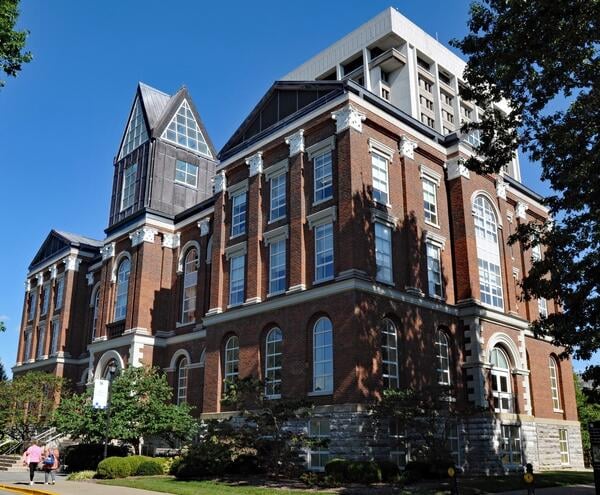
    BD Images/iStock Editorial/Getty Images Plus

    The University of Kentucky law professor who was removed from teaching amid his calls for a global war on Israel to end its existence as a state is now suing his institution and the U.S. education secretary.

    On his website, antizionist.net, Ramsi Woodcock asks fellow legal scholars to sign a “Petition for Military Action Against Israel.” He says Israel is a colony and war is needed to decolonize, and he calls for the war to continue until “Israel has submitted permanently and unconditionally to the government of Palestine everywhere from the Jordan River to the Mediterranean Sea.”

    In his lawsuit, filed Thursday in U.S. District Court for the Eastern District of Kentucky, Woodcock asks a judge to order the university and top officials to restore his normal teaching and other duties, allow him back into the College of Law building, end the university’s investigation of him, and pay monetary damages. But he also asks the judge to order Education Secretary Linda McMahon to “refrain from requiring or using” the controversial International Holocaust Remembrance Alliance definition of antisemitism when enforcing Title VI of the Civil Rights Act of 1964.

    The IHRA says antisemitism “might include the targeting of the state of Israel,” “comparisons of contemporary Israeli policy to that of the Nazis” or claims “that the existence of a State of Israel is a racist endeavor.” Earlier this year, Kentucky state lawmakers ordered public universities to use the IHRA definition in their policies combating antisemitism. Woodcock is also asking the judge to declare that that order violates the First Amendment.

    His lawsuit alleges the state and federal actions are related to his “suspension,” saying the university’s tolerance of his speech “ended in summer 2025” after the federal government threatened to withdraw funding from universities and moved to enforce the IHRA definition. He also cited the passage of the state legislation that “enabled and pressured administrators to suppress speech critical of Israel and Zionism.”

    The Education Department didn’t respond to requests for comment Friday. A university spokesperson said Woodcock hasn’t been suspended but was “reassigned pending the outcome of an investigation,” adding that the university will be “limited in our comments while that investigation is ongoing.”

    In an email to Inside Higher Ed, Woodcock responded, “Israel is a colonization project that practices apartheid and is currently exterminating two million Palestinians in Gaza. The scandal is not that I am calling for immediate military action to end Israel but that the university is willing to violate our nation’s constitution in order to preserve Israel. Every American scholar has a First Amendment right to oppose Israel and I look forward to holding the university accountable for breaking the law.”

    Source link

  • Hiring Flat for 2026 Grads

    Hiring Flat for 2026 Grads

    fizkes/iStock/Getty Images Plus

    Forty-five percent of employers consider the job market to be “fair,” and they are projecting a 1.6 percent year-over-year increase in hiring for the Class of 2026, according to a new report from the National Association of Colleges and Employers.

    The last time a plurality of employers gave the job market a “fair” rating was in 2021, when hiring projections were also flat. During the four interim years, most employers rated the job market as “good” or “very good,” the report shows.

    About 60 percent of the 183 employers NACE polled for the 2026 Job Outlook Survey said they are planning to keep the number of people they hire stable next year. A quarter of employers said they plan to increase the number of hires, primarily citing a commitment to succession planning and the talent pipeline, as well as company growth, as key reasons. The top five industries for projected hiring growth are miscellaneous professional services; engineering services; construction; finance, insurance and real estate; and management consulting.

    About 14 percent of employers said they plan to decrease the number of people they hire next year, citing reductions in business needs and projects, an uncertain economy and budget cuts. These employers are primarily concentrated in the chemical pharmaceutical manufacturing, transportation, wholesale trade, food and beverage manufacturing, and miscellaneous manufacturing industries.

    NACE surveyed employers between Aug. 7 and Sept. 22 of this year for their thoughts on the job market, hiring trends and salaries. About 40 percent of employers plan to increase salaries for bachelor’s degree holders in 2026, and 28.3 percent will do the same for master’s degree holders. No employers reported plans to decrease salaries for either group next year, the report states.

    Skills-based hiring remains popular—69.5 percent of employers reported they use the approach. Asked how students can best prepare for a skills-based hiring process, employers primarily said applicants should “prepare for interviews that demonstrate their skills,” “participate in experiential learning or work during college” and “translate college coursework into a skills language.”

    Meanwhile, fewer employers care about applicants’ GPAs—only 42.1 percent of employers plan to screen GPAs in 2026, compared with 73.3 percent in 2019. Academic majors, industry experience and internships, and internships at the employer’s organization are top decision-making factors for employers that don’t screen for GPAs.

    Artificial intelligence is also top of mind, but many employers are still figuring out exactly how AI will integrate into their business, said Christine Cruzvergara, chief education strategy officer at the job and internship platform Handshake. NACE data reflects a similar sentiment toward AI among employers—nearly 59 percent said they are not planning to or unsure whether they’ll augment entry-level jobs with AI, and 25 percent said they’re currently discussing it. About 13 percent of jobs require AI skills, the report shows, and 10.5 percent of entry-level jobs include AI in their descriptions.

    “I think the majority of employers are still experimenting with how AI will supplement or augment the work that their employees are doing from entry level all the way to more senior folks,” Cruzvergara said. “And I think some functions have probably already started to figure that out a little bit more, like in some of the technical roles, or marketing is another big one, versus customer success or some of the other types of roles that people have. It’s a varied spectrum that you’re seeing at the moment.”

    The percentage of fully hybrid jobs has declined since spring 2025, from 47 percent to 42 percent, while the percentage of fully in-person jobs increased from 43 percent to 48 percent, the report shows. The percentage of fully remote jobs has held steady at 10 percent. More entry-level jobs are fully in-person—50 percent—and fewer are fully remote, 6 percent.

    Ashley Mowreader contributed to this report.

    Source link